Most of us have learned, somewhere along the way, an unfortunate communication pattern: we expect the people who love us to read our minds.
We hint. We complain. We get frustrated when no one comes to the rescue. We escalate to snapping. We tell ourselves that if they really cared, they would have noticed. And the relationships erode quietly, not because anyone meant harm, but because the request was never actually made.
In Make It Happen Blueprint, business coach Michelle McCullough is candid about her own version of this. The week before a major event for her company, she was overwhelmed and exhausted, saying things to her husband like “there’s so much to do” and “I don’t know how I’m going to get all of this done.” In her head, these were obvious cries for help. To him, they were just observations. When she finally snapped — “Don’t you remember I have a big event this week?” — he calmly replied, “Yes, I do. Did you need my help? You seemed organized and like you had everything under control.“
She was hurt. She was also wrong. She hadn’t actually asked.
This article is about the alternative McCullough teaches — a simple four-step formula she calls Enrollment. It’s the practice of getting people genuinely on board with your goals through clear communication rather than hinting, manipulation, or mind-reading. The technique works on spouses, employees, friends, family members, and (with some adjustment) young children. It’s one of the most practical chapters in her book, and it costs you nothing to start using it tomorrow.
What Enrollment Is (And Isn’t)
Enrollment is a specific kind of conversation: one where you share your vision with someone, discuss the outcome you want, and agree on a course of action together.
It isn’t manipulation. McCullough makes this distinction sharply — persuasion can easily slide into manipulation if you’re not careful. The difference is intent. Manipulation tries to get the result you want regardless of what serves the other person. Enrollment tries to find an agreement that genuinely works for both parties.
It also isn’t just asking for a favor. A favor is transactional and limited. Enrollment is bigger — it’s getting someone authentically invested in a vision, so their support comes from desire rather than obligation.
The four steps are simple, almost embarrassingly so. The skill is in actually using them.

Step 1: Share the Vision
Start by explaining what you want and why it matters. Help the other person understand the passion driving you and what achieving this will mean.
This step gets skipped constantly. People dive straight into the ask — can you help me with X? — without giving any context for why X matters. The result is that the other person says yes (or no) based on the task in isolation, without any connection to the larger thing it serves.
Vision communicates importance. When someone understands why something matters to you, their willingness to help shifts from grudging to genuine. They’re not just doing a task. They’re contributing to something they now care about, even a little, because you shared it.
The key is to make this short and authentic. You’re not pitching them. You’re letting them in on what you’re up to.
Step 2: Commit to the Goal
Tell them you’ve thought this through. You’re not asking them to invest in another fleeting whim — you’re committed.
McCullough notes this step is especially important if you have a history of starting things and not finishing them. People learn to discount the enthusiasm of others whose follow-through has been spotty. Saying explicitly I’ve thought this out, and I’m committed helps cut through the skepticism.
This step also forces clarity for you. If you can’t honestly say you’ve thought it through and are committed, that’s important information — both about whether to proceed and about whether you should be asking for support yet.
Step 3: Explain the Plan and the Support You Need
Here’s where the actual ask happens — but in a specific way. You explain how you plan to accomplish this and where the other person fits in. What roles do they play? Do you need general encouragement, or are there specific tasks?
This step requires you to have actually thought about it. Can you support me? is too vague to be useful. Can you take care of dinner this week and watch the baby Thursday evening while I prepare for the event? is concrete and answerable.
McCullough also makes a critical point about this step: be open. The other person may raise valid questions, surface circumstances you hadn’t considered, or have constraints of their own. Enrollment isn’t dictation. Be willing to adjust the plan to create something that actually works for both of you. The conversation is genuinely collaborative, not a presentation of a finished offer.
Step 4: Ask the Question of Support
The fourth step is what McCullough calls the handshake of the conversation — the explicit question that asks for commitment.
It can be as simple as: Can I get your support on this?
A more powerful version, she suggests: Under what circumstances could I get your support on this? This phrasing assumes their support is possible and invites them to define what would make it work for them.
The question matters because it changes the conversation from a monologue into an agreement. Without it, you can leave a conversation thinking you’ve enrolled someone when they’ve actually said nothing of the kind. The question forces clarity.
What This Looks Like in Practice
Here’s McCullough’s example of how she should have approached her husband about that event week, using all four steps:
Step 1 (vision): “Hi honey. You’ve probably seen on the calendar that our big event is coming up next week. I’m feeling overwhelmed by it all. This event is important to our business. We have more than 150 women coming from all across the country, and I really want everything to run smoothly so we can make a good impression.”
Step 2 (commitment): “I know in the past I’ve left a lot of things to the last minute, and I’m committed to working over the next couple of days so I’m not crazy two days before the event.”
Step 3 (plan and ask): “There are a lot of ways I could use your help. I’m going to need some extra help with the baby this week and I’d also really appreciate if you could take care of dinner. If you have some extra time at night, I could use your help putting together packets and typing name tags.”
Step 4 (question of support): “What things would you be willing to help me do?”
Notice how different this feels from the version that actually happened — the hinting, the frustration, the eventual snap. The four-step version takes maybe two minutes. It’s clear, kind, and almost impossible for a reasonable person to misunderstand.
Beyond the Spouse: Other Applications
The formula adapts to almost any relationship. McCullough walks through several examples.
Asking a friend for accountability on a weight loss goal:
- I want to lose 40 pounds this year — here’s why it matters to me
- I’ve talked to my doctor and have a plan I’m committed to
- I’m going to need you not to bring me cookies when you bake, and I’d love to check in once a week for accountability
- Could you support me with those two things?
Delegating a project to a team member at work:
- We’re launching a new product and the initial buzz is strong
- We’re taking preorders three weeks in advance and our campaign is in full swing
- I’d like you to work with Adam on the social media strategy and keep us on the posting schedule
- Are you on board with this? Do you have other priorities we’d need to reassign?
Even talking to young kids about your schedule:
- Hi doll baby, I’m going on a plane this week to help some people
- I’ll be gone a few days, but when I get back we’ll have two days off and go to the park
- Can you give me a hug before I go?
McCullough is candid that even when her kids were toddlers speaking in three-word sentences, she walked them through some version of this. The point isn’t that they understood every word. The point was teaching the pattern early.
Where Most People Go Wrong
A few common failure modes worth flagging.
Skipping the vision step. Diving straight to the ask without context. People comply transactionally instead of supporting you authentically. The help is shallow.
Not actually committing in your own mind first. If you’re asking for support on something you’re half-hearted about, the other person can tell. Get clear with yourself before asking anyone else.
Asking too vaguely. Can you be more supportive? is not an enrollment conversation. It’s a complaint. Be specific about what would actually help.
Closing without the question of support. Just because you laid out the case doesn’t mean they agreed. Without an explicit ask, you don’t know whether you have enrollment or just a willing listener.
Treating the conversation as one-way. If the other person has questions or concerns, hear them. The conversation should change you a little, not just them. Genuine enrollment includes negotiation.
When You Need to Apologize First
One of McCullough’s smartest pieces of advice: if there are trust issues or broken agreements from past requests, apologize first.
A simple, honest apology — and time for it to sink in before you launch into another ask — can transform a difficult enrollment conversation. I know I’ve asked for help with things in the past and then not followed through. I’m sorry. I’m trying to do this differently now. Then wait a day or two before asking for support on the next thing.
This applies to professional relationships too, not just personal ones. If your team has been let down by past commitments that didn’t hold, owning that — sincerely, without excuses — usually does more than another round of enthusiastic pitching.
The Deeper Principle: Quality Time Wins
McCullough closes her chapter on persuasion with what may be the most important point in it: when quantity is low, quality has to be especially high.
People will support you with your goals when they know they’re still important to you. When your goals start to feel like they’re more important than the people themselves, the support evaporates. The enrollment formula isn’t a magic trick that gets people to do things for you. It’s a structure for genuine communication — but it only works inside relationships where people actually feel seen and valued by you.
If you’re noticing that your enrollment conversations aren’t working, the question isn’t usually about the formula. It’s usually about whether the people in your life feel like priorities or like crew members in your project. The fix starts with how you show up between asks, not just during them.
Try It Tomorrow
Pick one conversation you’ve been avoiding or fumbling. Maybe it’s asking your partner for help with something specific. Maybe it’s delegating a project at work that you keep failing to actually hand off. Maybe it’s asking a friend for accountability on a goal you keep almost-but-not-quite committing to.
Before the conversation, write out the four steps on a piece of paper.
What’s the vision? Why does this matter to you?
How will you signal commitment?
What specifically would help, and how does it fit your plan?
What’s your question of support?
Then have the conversation. It will likely feel slightly awkward the first few times — most people aren’t used to communicating this clearly. The awkwardness fades quickly. What replaces it is something most people don’t realize they’ve been missing: the experience of being actually heard, and of actually getting help, without the mind-reading expectations that erode relationships in the meantime.
The simplest skill is sometimes the hardest. Try it.
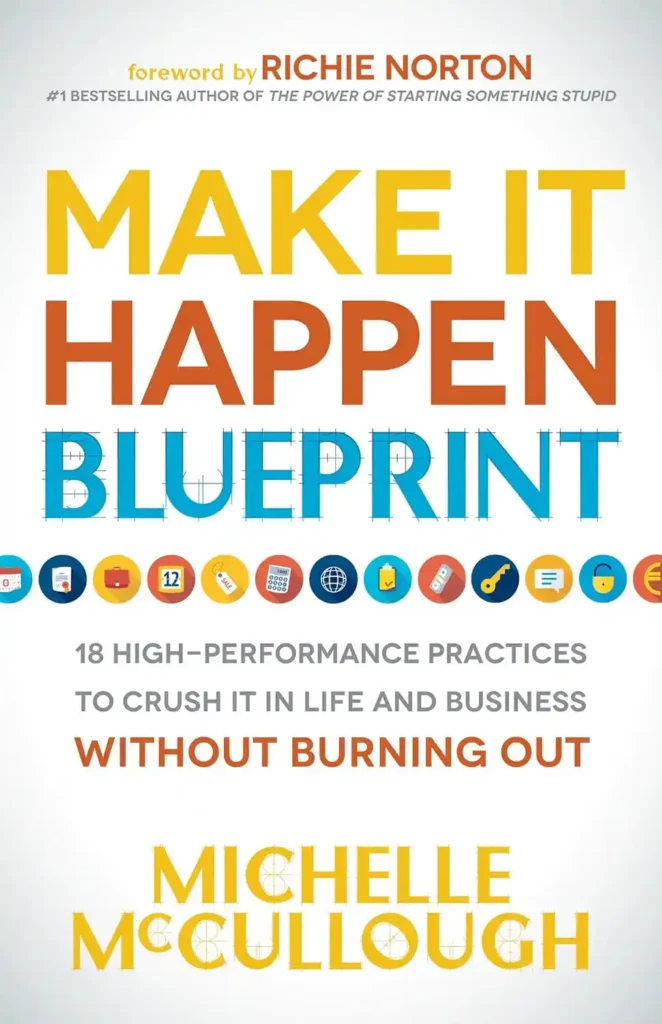
This article is inspired by the chapter on Persuasion in Make It Happen Blueprint: 18 High-Performance Practices to Crush It in Life and Business Without Burning Out by Michelle McCullough (Morgan James Publishing, 2017).
Related posts:
 How to Set Goals and Achieve Them With Audacious: A Bold Guide to Building the Life and Career You Want and Deserve
 How to Create a Vision Board That Actually Works (And Why Most People Fail)
 Make It Happen Blueprint: 18 High-Performance Practices to Crush It in Life and Business Without Burning Out (Full Summary & Course)
 The Power Team Pyramid: Who You Need Around You to Reach Big Goals
 Time Blocking Made Simple: The Time Map Method Explained