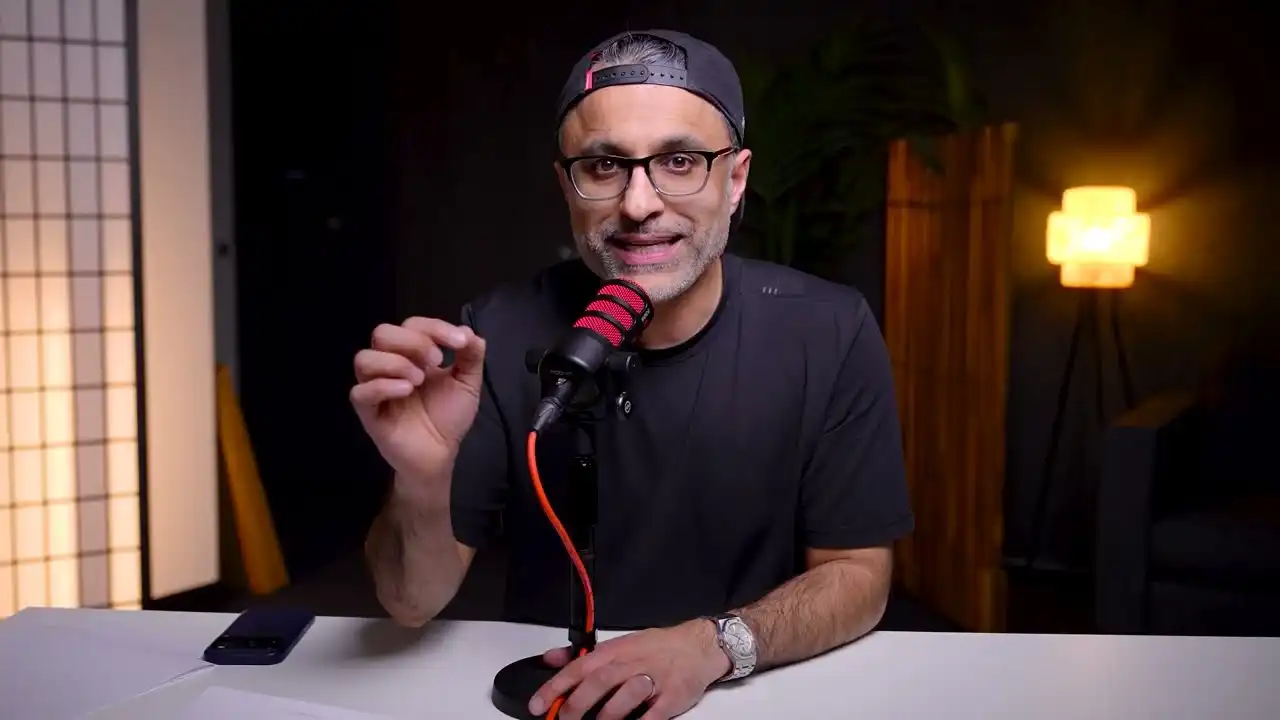
Most men who try to build a personal brand don’t quit because they’re lazy or untalented; they quit because they’re solving the wrong problem for the stage they’re in. Entrepreneur Neel Dhingra treats personal branding like a video game with six levels, each unlocked by one specific skill. Here’s how to find your level, the skill it demands, and what the research says about why each one works.
Eighteen months of posting. Three times a week, every week, exactly as the advice said. Good lighting, a decent mic, captions on everything. Four hundred followers, most of them people he already knew, and not one enquiry from a stranger.
If that’s you, the problem probably isn’t effort. It’s level. Most personal-brand advice is written as if there’s one game with one set of rules: be consistent, post more, find your niche. In practice the game changes as you go, and the skill that got you through one stage is often the thing keeping you stuck in the next. Applying level-four thinking to a level-one problem is how capable men grind for years and go nowhere.
Why Most Personal Brands Stall: The Game Has Levels
The framework comes from Neel Dhingra, who went from debt in his mid-thirties to building two multi-seven-figure businesses — a mortgage and real estate practice and the education company Forward Academy — almost entirely through personal brand content. His model is simple enough to remember and blunt enough to be useful: building a personal brand is a video game with six levels, and each level has one skill you have to unlock before you can advance.
| Level | Where you are | The skill to unlock |
|---|---|---|
| 1 | Posting, but invisible | A unique point of view |
| 2 | Good ideas, inconsistent reach | Packaging |
| 3 | Followers, but no clients | A bridge to a transaction |
| 4 | Revenue, but you’re the bottleneck | The right people |
| 5 | The business runs without you at the centre | Letting go as a CEO |
| 6 | The brand outlives you | Enterprise value |
The value of thinking in levels is diagnostic. It stops you copying the tactics of someone three stages ahead, and it tells you which single problem deserves your attention right now. Everything else can wait.
Level 1: You’re Invisible — The Perspective Problem
At level one you exist online, but you might as well not. You’re posting, nothing is landing, and the standard advice — be consistent, fix your lighting, post at better times — isn’t moving anything. Dhingra’s diagnosis is uncomfortable and usually correct: you sound like everyone else.
Commodity content — tips, hacks, market updates, “three ways to do X” — is now everywhere, and AI has made it close to free. If a thousand people in your industry could publish the same post, consistency only makes you quietly invisible on schedule. The way out isn’t technical. It’s a point of view: content shaped by what you’ve learned the hard way. Two questions help find it. What do people keep coming to you for, and why are they being sent to you? And what lesson cost you something that you now tell everyone?
There’s a reason those lessons work. When marketing researchers pooled two decades of studies on what they call narrative transportation — the experience of getting lost in a story — they found that stories which pull people in tend to shift beliefs, attitudes and intentions, and that realistic stories with identifiable characters and vivid imagery transport people best. A specific, lived story isn’t decoration on top of the advice. It’s the delivery mechanism.
That’s the line between commodity content and perspective content. Commodity content builds an audience of consumers. Perspective content builds an audience of believers: people who adopt your way of seeing a problem, so that when they’re ready to hire someone, you’re the obvious choice. And notice what that means for your past. The failed business, the bad hire, the year you got it wrong — none of it was wasted. It’s the raw material nobody else can copy, including any AI.
Level 2: You Have Ideas, But Nothing’s Landing — The Packaging Problem
At level two you’ve found your perspective and you’re growing a little, but views swing wildly and nothing catches fire. The instinct is to make more content. Dhingra’s point is that the problem is packaging — how an idea is presented in its first few seconds — and that the same idea, reframed with a different opener, can perform many times better than the original.
Treat it as testing, not guessing. Take one strong idea and publish two versions that differ only in the opening: the first line, the on-screen text, the background, the music. You’re looking for the version that interrupts the scroll. One format he finds especially effective is the quote flip: open with a belief your viewer already holds or keeps hearing, then answer it with your perspective. You stop lecturing and join a conversation already happening in their head.
Packaging is also delivery. The man on screen is part of the wrapper, and most men who feel stiff on video are fighting a pacing problem rather than a content problem. Practising how to talk on camera without a script and showing up as yourself rather than a performance will do more for your reach than another lighting upgrade. Same ideas, better packaging, very different results.
Level 3: You Have Followers, But No Clients — The Bridge Problem
Level three is the frustrating one. People watch, follow and comment, and still nobody hires you. The call to action at the end of your videos lands in silence. The usual conclusion — I need more followers — is wrong. The problem is structural: there’s no bridge between your content and a transaction.
Most people watching are what Dhingra calls the not-yet people. They may hire someone like you one day, but they won’t make a serious financial decision off a sixty-second clip. They need a next step that moves them closer without asking them to leap: a genuinely useful lead magnet, a longer video, or best of all a live training or webinar, where in thirty to sixty minutes a casual viewer gets real value and a much fuller sense of what you can do. His rule is to sell the step in the middle, not the end thing.
Psychology has studied this pattern for decades under the name foot-in-the-door. Psychologist Jerry Burger’s review of that research found that agreeing to a small first request can make a larger later request more likely — but only under certain conditions, and when it’s pushed too fast or felt as pressure it can backfire. That nuance matters. The middle step works when it’s honestly valuable on its own, not when it’s a trick to extract a yes. Give people something worth their hour and the trust that follows is real. If you want a fuller system for this stage, the free STAR marketing course lays out the funnel side in detail, and the canvas strategy of helping others first explains why generosity tends to outperform pitching.
Level 4: The Business Works, But You’re the Bottleneck — The People Problem
Level four is success and trap at once. Revenue is real, content is reaching people, conversion events work, and you’re exhausted. You can’t out-work this problem because the hours don’t exist, and AI tools, useful as they are, don’t solve it either. What level four demands is people.
Dhingra’s first hire is an executive assistant or chief of staff to run the operational layer of your day: calendar, bookings, messages, logistics. The tasks matter less than what happens next — you start seeing clearly what you should be doing, what you shouldn’t, and what someone else could own entirely. His second is a dedicated content creator who takes your raw material all the way to published, not just an editor who trims it.
Many ambitious men resist this. Paying someone feels like an indulgence, or an admission that you can’t carry it all. The research points the other way. When Harvard Business School’s Ashley Whillans and colleagues surveyed more than six thousand adults across four countries, people who spent money to buy themselves time reported greater life satisfaction, and in a follow-up experiment working adults felt happier after a time-saving purchase than after a material one. Few people do it, even when they can afford to. Buying back your hours isn’t softness; it’s how you stay useful. If the strain is already showing, learn your personal early signs of burnout before the business teaches you them.
The distinction that moves you on is between helpers and leaders. Helpers do tasks when told. Leaders own outcomes. Build a team of people accountable for results rather than activity, which is the logic behind assembling a power team around a big goal, and you stop being the operator of your business and start becoming its CEO. Systems matter too — task and project management, eventually bringing functions like media buying in-house — but the people come first.
Level 5: You’re No Longer the Bottleneck — The CEO Transition
At level five the character of the game changes. Until now the business has been built around you: your ideas, your energy, your face. Now work moves through the organisation without routing back to you for every decision. Dhingra describes his own company as moving toward this stage, which makes his account of it more credible, not less.
The difficulty is psychological. The habits that built the business — personal involvement, high standards enforced by watching everything, the quiet belief that nobody will do it quite like you — become the ceiling. Level five asks you to trust leaders to own outcomes and to accept that their version will sometimes differ from yours. Do your part, set the standard, then let go of the outcome. It’s also where leadership stops being about output and starts being about culture: a team that gets stronger over time instead of depending on one man’s sustained effort.
Level 6: Your Brand Outlives You — Building Enterprise Value
Level six is the horizon most creators never need to reach, but it’s worth understanding because it reframes what you’re building. Most personal brands carry keyman risk: remove the person and the value disappears. Level six is the deliberate work of reducing that dependency through systems, a team, intellectual property and a community that hold value without any single face or voice.
That doesn’t mean erasing your personality. It means building something larger around it — an asset rather than only an income stream, something that could be sold, scaled or handed on. For men who think in decades, it overlaps with the legacy project worth building in midlife. For many, a profitable, fulfilling business that never reaches level six is the right answer, and choosing it is a decision, not a failure.
Design Your Life Before Your Business
Underneath the tactics sits the part of Dhingra’s thinking that matters most: design the life you want first, then build the business to fit it. Building an exhausting, all-consuming company is one of the easiest things an ambitious man can do. Building one that pays well, serves real people and doesn’t hollow you out takes intention from the start.
That’s why this level arguably comes before level one. Decide what enough looks like — in hours, income, presence at home — and the levels become a route rather than a treadmill. It’s the same reasoning behind treating time as the currency to measure first and building an entrepreneurial life that serves all five types of wealth. You can’t control how fast the market rewards you. You can control whether the thing you’re building is one you’d still want when it works.
How to Find Your Level and Start This Week
You already know more about your level than you think. Look at three numbers: reach, conversations and revenue. Low reach with generic content is level one. Erratic reach with a clear point of view is level two. Steady attention with no enquiries is level three. Enquiries you can’t keep up with is level four. Name your level honestly, pick the one skill it demands, and ignore advice aimed at the others for the next ninety days.
Then run one small test this week. If you’re at level one, write down the hardest-won lesson of your career and film two minutes on it. If you’re at level two, publish one idea with two different openers. If you’re at level three, outline a thirty-minute free training you could deliver this month. Do the work, then let the numbers say what they say; one week is information, not a verdict. And show it to one person whose judgment you trust before you decide what it means. Personal branding in the AI era rewards the same thing every level does — a brand built with AI tools that still sounds like you, grounded in a reputation you build on purpose.
Which level are you really on — and what’s the one skill you’ve been avoiding because it’s the one that would actually move you?
Which Level Are You On? 7 Questions About Building Your Personal Brand
Read these like an outside adviser going through someone else’s business, then answer as the owner. The gap between the two answers is usually the next level.
- Open your last ten posts: how many are commodity tips anyone in your industry could publish, and how many carry a lesson that actually cost you something?
- If clients aren’t coming because there’s no bridge rather than too few followers, which part of that gap is yours to build, and which part have you been calling bad luck?
- Right after you post, notice how quickly your hand reaches back for the phone to check the numbers: what is that reach asking for, and what would quiet it?
- If you could hand off only one task to an assistant tomorrow, which would free your best hours, and what has kept you holding on to it?
- Picture yourself at eighty looking back at this business: which level would he say was enough for the life he wanted, and which levels were ambition talking?
- If your most loyal follower told a friend what he’d learned from you, what would he say first, and how could you serve that person more directly?
- Finish this without editing: “The lesson I learned the hard way and still haven’t shared is…”
From Invisible to In Demand: 5 Questions to Move Your Personal Brand Up a Level
Use a simple stop, start, keep review to turn your level into a plan for the next thirty days.
- Which piece of commodity content will you stop making from this week, and where will the hours it frees go instead?
- Before Friday, which learned-the-hard-way story will you film, and which two openers, including one quote flip, will you test it with?
- What in your content, offer or routine is already working, and how will you protect it while you change everything around it?
- Who could own one outcome for you, not just one task, and on what day this month will you have that conversation with him or her?
- Write it as: “When my next post underperforms, I will ___ instead of ___.” What would it look like to judge this month by the work rather than the numbers?
Every level starts the same way: one true thing, said clearly, to someone who needed to hear it.
FAQ: How to Build a Personal Brand
What are the 6 levels of personal branding?
In Neel Dhingra’s framework, level one is being invisible (solved by a unique point of view), level two is inconsistent reach (solved by packaging), level three is followers without clients (solved by a bridge to a sale), level four is being the bottleneck (solved by hiring), level five is the CEO transition and level six is building a brand that outlives you.
What is the most important skill when starting a personal brand?
A clear point of view. Generic tips blend into the noise, especially now that AI can produce them instantly. Content built on lessons you’ve learned the hard way is hard to copy and builds trust, because people come to share your way of seeing a problem.
Why am I getting followers but no clients?
That’s a level-three problem: there’s no bridge between your content and a transaction. Most viewers aren’t ready to hire you from a short video. A genuinely useful middle step, such as a free training, webinar or lead magnet, moves them closer without demanding a big decision.
What is perspective content?
Perspective content is built on your specific experience, beliefs and hard-won lessons rather than generic advice. Unlike commodity content, competitors and AI can’t replicate it. It builds an audience of believers who adopt your thinking, rather than consumers who take a tip and move on.
When should I hire help for my personal brand?
When revenue is real but growth is limited by your own hours, which is level four. The first hires are usually an executive assistant and a dedicated content creator. Hiring before you’ve solved perspective, packaging and conversion usually adds cost without adding growth.
How long does it take to build a personal brand?
There’s no fixed timeline; it depends on your field, your starting audience and how quickly you solve the skill your current level demands. Men who diagnose their level honestly and focus on one problem at a time tend to progress faster than those who try to fix everything at once.
References
- Dhingra, N. (n.d.). Treat social media like a video game and get rich [Video podcast episode]. The Neelhome Show.
- Burger, J. M. (1999). The foot-in-the-door compliance procedure: A multiple-process analysis and review. Personality and Social Psychology Review, 3(4), 303–325.
- van Laer, T., de Ruyter, K., Visconti, L. M., & Wetzels, M. (2014). The extended transportation-imagery model: A meta-analysis of the antecedents and consequences of consumers’ narrative transportation. Journal of Consumer Research, 40(5), 797–817.
- Whillans, A. V., Dunn, E. W., Smeets, P., Bekkers, R., & Norton, M. I. (2017). Buying time promotes happiness. Proceedings of the National Academy of Sciences, 114(32), 8523–8527.
This article draws on ideas shared in a video by the Forward Academy creator, an entrepreneur Neel Dhingra who has built two multi-seven-figure businesses through personal brand content. His work focuses on the intersection of content strategy, business systems, and sustainable entrepreneurship.
Related posts:
 Ron Dorff Review: Is the Quiet Luxury Menswear Brand Worth It?
 How to Build a Personal Brand With AI Without Faking It
 25 Essential Lessons from Jeffrey Pfeffer’s Power: Key Takeaways That Will Transform Your Career
 What Makes Work Meaningful? The 5 Components Research Says You Need
 63% of Young Men Are Single. The Real Reasons Aren’t What You Were Told.