Yapping might sound like meaningless chatter—but done right, it’s a powerful social skill that builds connection, confidence, and presence. In today’s culture, “yapping” refers to talking freely and at length, often in a casual or expressive way, whether online or in real life. This article breaks down how to yap effectively—keeping conversations engaging, natural, and socially aware instead of overwhelming or awkward. If you want to communicate better, be more interesting, and connect faster, mastering how to “yap” is a skill worth developing.
Most people assume that talking on camera is a gift — something charismatic people are born with, like an easy laugh or a talent for commanding a room. It isn’t. It’s a skill. And more than that, it’s quietly becoming one of the most leveraged skills a person can develop in the modern economy.
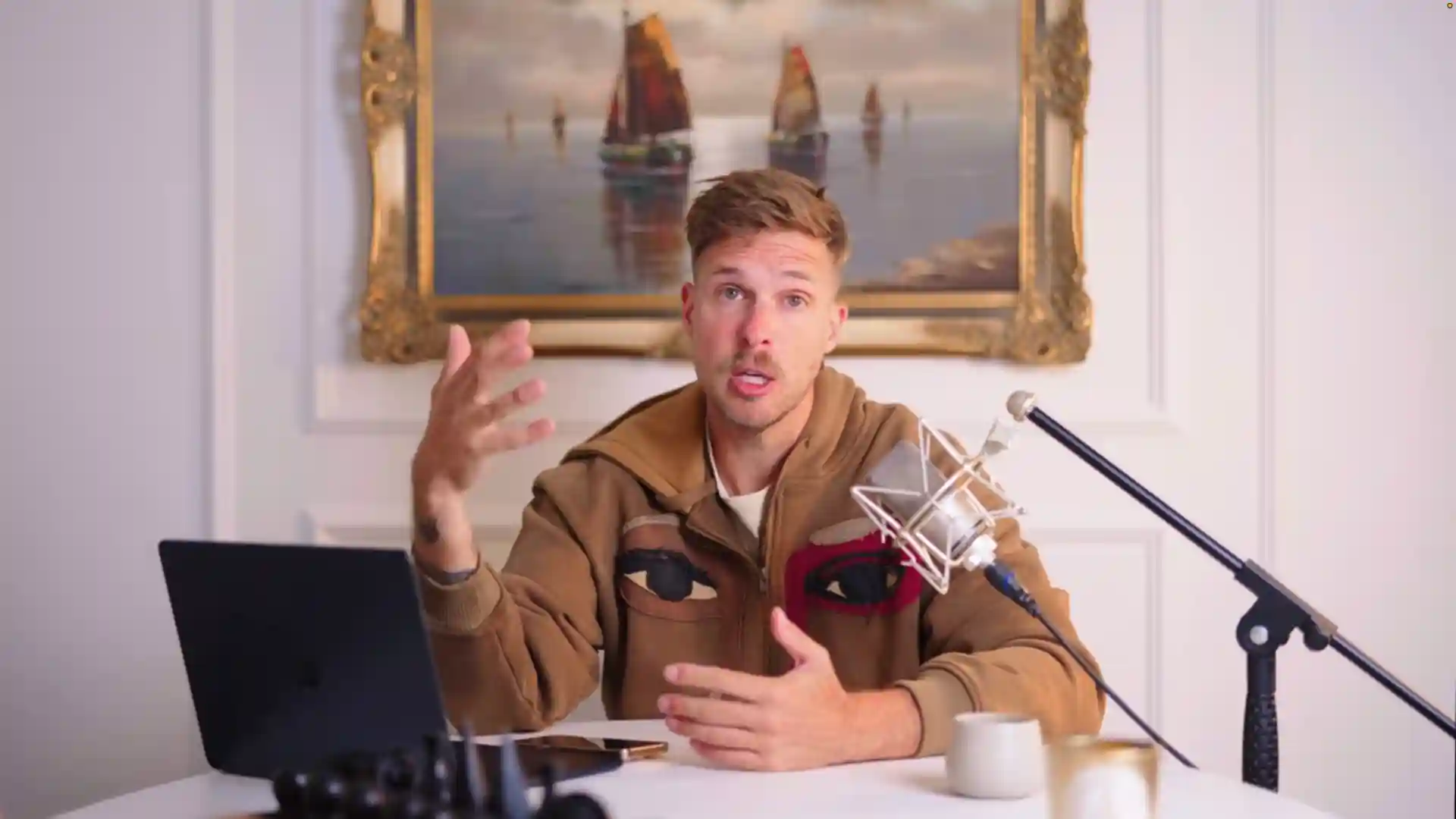
In a recent video from Oren John — creative director, brand strategist, and founder of the short-form content bootcamp Cut30 — he lays out what he calls the art of yapping: the deceptively simple practice of pointing your iPhone at your face and talking. No studio. No crew. No production budget. Just an idea, a perspective, and the willingness to press record.
What follows is not just a tutorial. It’s an argument — a quietly persuasive one — for why learning how to talk on camera might matter more right now than almost any other professional skill you could develop.
Why Short-Form Video Is Now the Primary Language of Communication
We talk about “content creation” as if it’s a niche pursuit for influencers and teenagers. But the landscape tells a different story. Instagram, TikTok, LinkedIn, X — every major platform is now built around short-form video. Netflix is introducing vertical video. Even B2B professionals are sharing reels in Slack groups and internal team chats.
“The primary method of business and personal communications now is short form video,” Oren states plainly.
This isn’t just a media trend. It’s a fundamental shift in how ideas move through the world. If you work in marketing, sales, leadership, or any field where communication matters — and that’s most fields — the ability to speak clearly and compellingly on camera is no longer a nice-to-have. It’s a baseline professional competency.
The good news is that you don’t need expensive equipment, a professional editor, or a polished on-screen persona to start. You need a phone, a modest clip-on microphone, and the willingness to practice.
The Hidden Benefit Nobody Talks About: Becoming a Better Thinker
Here’s what makes Oren John’s framework genuinely interesting: it isn’t primarily about views or followers. The deepest benefit of learning how to talk on camera, he argues, is becoming a better communicator in every area of your life.
Oren started making content at 37 — self-described as quieter and more introverted — and found that the discipline of creating short videos changed how he thought. Suddenly every idea had to be structured. Every message had to have a hook, a point, and a reason for someone to keep watching.
“It’s made me a better salesperson. It’s made me a better marketer. It’s made me better at articulating ideas,” he explains.
This tracks with what we know about communication as a craft. When you’re forced to explain something in 60 seconds — to a stranger, with no facial feedback, no back-and-forth, no chance to clarify — you get ruthlessly clear about what you actually believe and why. That clarity doesn’t stay in the video. It shows up in meetings, in negotiations, in difficult conversations.
Learning how to talk on camera, in this sense, is really about learning how to think.
The Types of Yaps: A Beginner’s Framework
One of the more practical contributions of Oren’s approach is a clear taxonomy of yapping styles. Before you script a video, it helps to know what kind of video you’re making.
The standard yap is just you, sitting or standing, talking directly to camera. No graphics, no overlays, no movement. It’s the most basic form and — done well — the most powerful. Authenticity doesn’t require production value.
The walking yap adds motion. You move through a space, talking candidly, as if on a FaceTime call with a friend. It creates a sense of energy and informality that sits well on algorithmic feeds.
The car yap is exactly what it sounds like — sitting in your vehicle, speaking naturally, with the ambient environment creating an oddly intimate setting.
Then there are graphic yaps: videos where you layer images or clips over your talking footage. Oren’s rule of thumb here is roughly one visual every two seconds, which sustains attention without overwhelming the message.
The format matters far less than the decision to start. Pick one and use it consistently until it feels natural.
What to Actually Talk About: The Five Core Frameworks
The hardest part of learning how to talk on camera isn’t the camera. It’s knowing what to say. Oren offers five frameworks that cover the vast majority of content you’ll ever want to make.
The strong take is the foundation. Pick something you genuinely believe — a product, a place, a perspective — and defend it. This forces conviction, and conviction drives engagement. “Forcing yourself into a strong take means you have to have conviction,” Oren explains.
The strong take into education uses a bold opener as a hook and then pivots into genuine teaching. You’re not being clickbait — you’re starting a conversation and delivering real value on the back end.
The small epiphany is the relatable observation: “Have you noticed that…?” These videos build community through shared recognition. People feel seen, and that sense of belonging keeps them watching.
Humor yaps and story time round out the framework. Story time, in particular, is one of the most underused formats by beginners who assume their lives aren’t interesting enough. They are. The mundane is more relatable than the exceptional.
Oren is direct about what doesn’t work: “I didn’t say my top three favorite whatever. I didn’t say three ways on an ecom or this is my motivational speech.” Generic lists without narrative or opinion rarely land. Strong takes, small epiphanies, and story time account for most of what actually connects with audiences.
Building Your Yap Map: A Daily Habit for Content Ideas
Oren recommends something he calls a yap map — a running list of potential topics built incrementally throughout your day. The goal is simple: three to five ideas a day, drawn from the natural texture of your life.
This means noticing what came up at work, what conversations lingered, what you found yourself turning over in the shower, what you read or watched that provoked a reaction. Content, at its best, is just observation made deliberate.
The discipline of keeping a yap map has a secondary effect: it trains you to pay attention. When you know you’re always looking for ideas, the world becomes more interesting. Meetings become material. Conversations become springboards. You become a more curious person — which tends to make you a more interesting one.
The Technical Minimum: What You Actually Need
Short-form video content creation for beginners doesn’t require much. Oren’s own setup is a roughly $50 tripod with a Bluetooth remote and a plug-in USB-C microphone. That’s the complete kit.
One principle worth internalizing early: audio quality matters more than video quality. People will forgive a slightly shaky frame. They won’t forgive distorted, muffled, or echo-heavy audio. A simple plug-in microphone — Oren uses a Rode model — makes an immediate and audible difference.
For recording, he recommends the recut method: speak naturally, pause freely when you need to think, maintain eye contact with the lens during silences, and then cut the dead air in post using an app like ReCut. This removes the performance pressure of delivering a perfect, uninterrupted take and gives your thoughts room to land properly.
One final tip that consistently improves results: re-record your intro at the end of your session. The opening of a video determines whether someone keeps watching — but it’s also the moment you’re stiffest and least warmed up. Redo it after you’ve finished the rest of the recording, when you’re loose and in flow. The difference is usually obvious.
For editing, Oren recommends CapCut or Edits, both of which allow you to add captions, a title card, and graphic overlays without needing professional software.
Who This Is Actually For
There’s a persistent myth that content creation is for a certain type of person — young, extroverted, already possessing an audience. Oren is explicit in dismantling this.
He started at 37. He describes himself as introverted. He wasn’t a natural on camera. He built a business and a community around it anyway — including Cut30, a 30-day accountability bootcamp that runs every six weeks and gives participants a structured path to showing up consistently online.
More to the point, he argues that the audience you’re speaking to doesn’t need you to be polished or famous. They need you to be slightly ahead of them. “People want to hear from people that are at their level or a level right above them,” he says.
That’s a liberating reframe. You’re not competing with professional media. You’re just having a slightly more organized conversation — one that happens to be recorded and shareable.
The Compounding Return of Talking on the Internet
Learning how to talk on camera is, ultimately, a compounding investment. Every video you record makes the next one slightly easier. Every framework you internalize makes you a clearer thinker. Every story you tell publicly makes you more comfortable with your own voice.
Oren’s philosophy, and the ethos of Cut30, isn’t really about going viral. It’s about becoming someone who can communicate with clarity, warmth, and presence — on camera and off. In a world increasingly mediated by screens, that capacity is one of the most durable skills you can build.
The camera is just the mirror. What it reflects is up to you.
Frequently Asked Questions
Q: Do I need expensive equipment to start talking on camera? A: No. A smartphone, a basic plug-in microphone (around $50–$80), and a simple tripod are all you need to start. Oren John’s own setup costs under $100 total. Audio clarity matters more than visual production quality on most short-form platforms.
Q: How long should my first videos be? A: Start with 60 to 90 seconds. It’s long enough to develop an idea and short enough to hold attention on TikTok, Instagram Reels, or LinkedIn. As your comfort and clarity develop, your length can grow with them.
Q: What if I don’t know what to talk about? A: Start a yap map — a daily running list of observations, questions, opinions, and stories drawn from your real life. Three to five ideas a day builds a significant content library within weeks, without any pressure to be original from scratch each time.
Q: How do I get better at talking on camera quickly? A: Volume and consistency beat perfection. Record regularly, even if you don’t publish everything. Use the recut method to remove dead silence in post, and always re-record your intro at the end of your session when you’re warmed up and relaxed.
Q: Is short-form video actually useful for professional or business purposes? A: Yes — and LinkedIn in particular is a significantly underused platform for professional short-form content. As Oren points out, even a modest number of views from the right professional audience can meaningfully shift a career or business trajectory.
Related posts:
 The Simple Communication Framework That Improves Every Relationship
 How to Make a Powerful First Impression (Without Trying Too Hard)
 Why Talking About Your Goals Makes Success Less Likely
 Curiosity in Children: Why Protecting It Matters More Than Teaching It
 Our Place Titanium Pro Cookware Review: NoCo Tech Tested