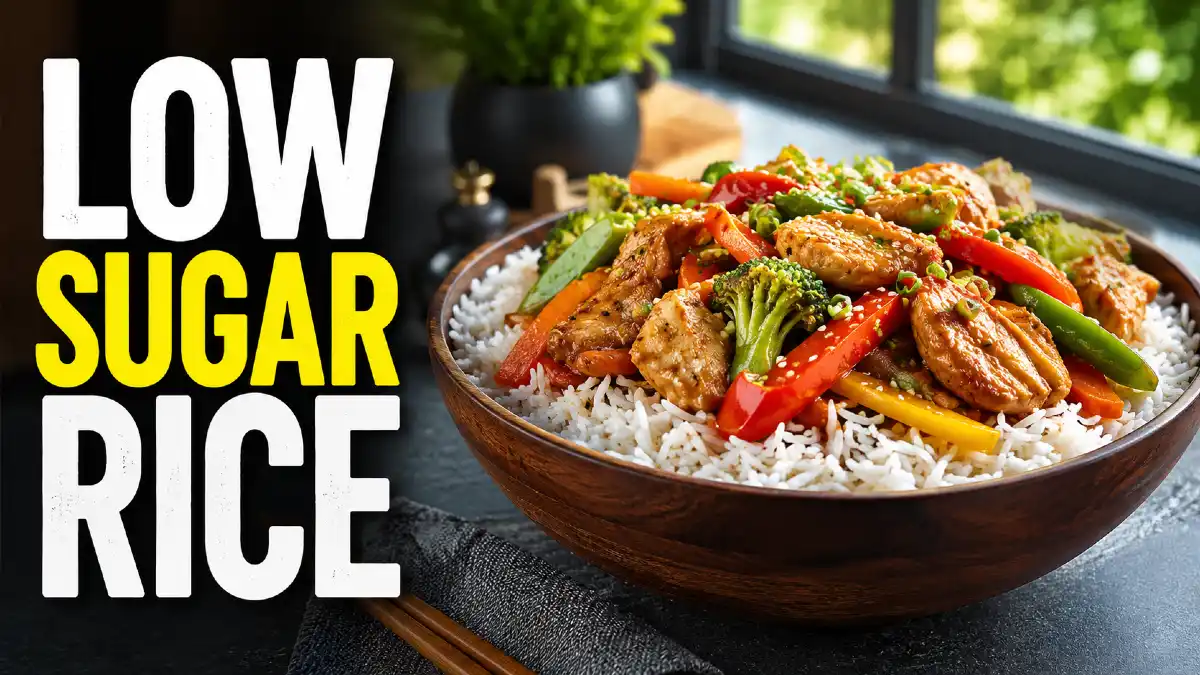
Somewhere in the last decade, “brown rice good, white rice bad” became one of those nutrition facts nobody questions. It sits alongside “carbs are the enemy” and “eat six small meals a day” — repeated so often it stopped sounding like an opinion and started sounding like a law of physics.
It isn’t.
Stand two bags of white rice next to each other on a grocery store shelf. Same price. Same color. Roughly the same calories. And yet one of them will spike your blood sugar hard and fast, while the other barely moves the needle — and over time may even work in your favor. Meanwhile, the brown rice in the next aisle, the one you’ve been buying out of guilt-driven virtue, might be doing less for you metabolically than you assumed.
This isn’t a takedown of rice. It’s an invitation to actually understand it, so you can make a better call the next time you’re standing in the aisle wondering which bag to grab. Once you know the one variable that actually matters, you won’t need a chart, an app, or a dietitian’s phone number. You’ll be able to look at a plate of cooked rice and have a reasonable sense of what it’s about to do to your body.
Why This Question Matters More Than It Seems
Blood sugar control isn’t just a concern for people managing diabetes. Every time you eat a meal that spikes glucose sharply, your pancreas releases a matching surge of insulin to bring it back down. Do that often enough, meal after meal, year after year, and your cells can start responding less efficiently to insulin’s signal — a slow drift toward insulin resistance that shows up later as stubborn fat around the midsection, energy crashes two hours after lunch, and eventually, for some men, prediabetes or type 2 diabetes. It can also feed into the frustrating cycle explored in Why Am I Still Hungry After Eating Healthy Food, where a fast glucose spike and crash leaves you reaching for more food an hour later.
Rice is one of the most commonly eaten starches on earth, and for a lot of men it’s a near-daily staple — with chicken and vegetables, under a curry, next to steak. If the type of rice you default to is quietly working against you three or four times a week, that’s not a small variable. That’s a repeated decision that compounds.
The encouraging part is that fixing it doesn’t require giving up rice, adopting a fad diet, or overhauling how you eat. It just requires understanding one thing your rice is made of.
The One Variable That Actually Determines the Blood Sugar Effect
Every single grain of rice you’ve ever eaten — white, brown, jasmine, basmati, sushi rice, doesn’t matter — is built from the same two molecular components: amylose and amylopectin. These are the two types of starch, and the ratio between them in a given rice variety is, more than anything else, what determines how that rice affects your blood sugar.
Amylopectin is the fast, easy-to-digest starch. Structurally, it’s a huge, heavily branched molecule — sometimes made up of tens of thousands of glucose units linked together with branches shooting off in every direction. That branching matters because it changes the physical structure of the starch granule: it’s looser, less dense, and when you cook it in water, it gelatinizes easily. Your digestive enzymes can attack it from multiple angles at once, so it breaks down fast. The result is glucose hitting your bloodstream quickly and a sharper spike in blood sugar.
Amylose is the opposite story. It’s a smaller molecule, made of far fewer glucose units, arranged in long, straight, largely unbranched chains. Because it’s linear rather than branched, it packs tightly into parts of the starch granule that digestive enzymes have a much harder time reaching. That structural difference means amylose is inherently slower and harder to digest. A meaningful portion of it survives the trip through your small intestine intact and reaches your colon, where — instead of turning into a blood sugar spike — it becomes food for your gut bacteria, functioning much like a fiber. That’s a completely different outcome from the same category of food.
So the ratio of these two starches inside a given rice variety is the entire game. High amylopectin, low amylose: fast spike. High amylose, lower amylopectin: slow, gentler release, with some of it not raising your blood sugar meaningfully at all.
The Part You Can Actually See With Your Own Eyes
Here’s what makes this genuinely useful instead of just interesting trivia: you don’t need a lab test or a glycemic index chart taped inside your pantry door to estimate where a rice falls. You can see it. You can feel it on your fork.
Rice that cooks sticky and clumps together on the plate is high in amylopectin. Think about the rice under a piece of nigiri, or the short-grain rice in a Chinese takeout container that sticks to itself in one mass. That texture is the branched, easily-gelatinized starch structure showing up in real time, right in front of you.
Rice that stays separate, light, and fluffy when cooked is higher in amylose. Think about a well-made pot of basmati, where each grain stays distinct and slightly firm, refusing to clump no matter how long it sits in the pot.
Sticky equals fast spike. Separate and fluffy equals slower, more forgiving release. That’s the entire rule of thumb, and it holds up remarkably well across the varieties you’ll actually encounter in a grocery store or a restaurant.
Where the Common Varieties Actually Fall
With that ratio in mind, here’s how the rice you’re most likely to run into sorts itself out.
Jasmine rice and short-grain sticky rice (the type used in most sushi) sit at the high-amylopectin end of the spectrum. They’re bred and prized specifically for that soft, clingy, slightly sweet texture — which is exactly the structural profile that digests fast and spikes blood sugar quickly. If jasmine rice is your go-to at the Thai place or with your stir-fry, understand that texture you love is a direct readout of how fast it’s going to hit your bloodstream.
Basmati rice and other true long-grain rice varieties sit at the far better end. They’re naturally higher in amylose, digest more slowly, and send a meaningfully larger fraction of their starch to your gut intact rather than into your blood as glucose. If you’re standing in front of two white rice options and don’t know anything else about either bag, defaulting to basmati or a non-jasmine long-grain rice is the single highest-leverage decision you can make.
That’s the headline answer to the question at the center of this article: among common rice varieties, white basmati and other true long-grain rices generally have the least impact on blood sugar, because they carry the highest amylose content of the widely available options — not because they’re brown, and not because of any marketing on the bag.
Where Brown Rice Actually Fits (And Why the Conventional Wisdom Misses the Point)
This is the part that tends to surprise people, because “brown rice is the healthy one” has been repeated so often it feels like settled science.
Brown rice does have real advantages. It retains the bran layer, which adds fiber and various micronutrients that get stripped away in white rice. But that bran also comes with phytic acid, an anti-nutrient compound that can interfere with mineral absorption — a tradeoff that rarely makes it into the conversation.
Here’s the bigger issue for blood sugar specifically: a short-grain brown rice is still, fundamentally, a short-grain rice. The bran coating doesn’t change the amylose-to-amylopectin ratio of the starch underneath it. Strip the bran off a short-grain brown rice and you’ve got the same high-amylopectin white rice that spikes blood sugar quickly — with a slightly fibrous jacket wrapped around it. Meanwhile, a white basmati rice is naturally high in amylose without any bran at all.
Which means, counterintuitively, a man eating short-grain brown rice because he assumes “brown equals better” might genuinely be doing worse for his blood sugar than the guy across the table eating white basmati. Variety is the bigger lever. Color and bran are the smaller lever — real, but secondary.
To be clear, this doesn’t make brown rice worse than white rice across the board — within the same variety, brown consistently outperforms white, since the bran and extra fiber still slow things down somewhat. Brown basmati beats white basmati. But if you’re choosing between varieties rather than colors, which starch type you’re eating matters more than which color you’re eating. A hot brown jasmine rice is still likely to spike you harder than a hot white basmati.
The One Kitchen Trick That Improves Almost Any Rice
There’s a second lever here, and it costs you nothing except a little patience: how you store and reheat the rice after it’s cooked.
When you cook rice, cool it in the refrigerator overnight, and then eat it cold or lightly reheated the next day, something interesting happens at the molecular level. The starches undergo a process called retrogradation — they recrystallize into a tighter, more ordered structure that your digestive enzymes struggle to break down as efficiently as they could when the rice was fresh and hot. This is technically referred to as forming “resistant starch.”
The practical effect: more of that rice passes through your small intestine without being fully broken down into glucose, and reaches your colon intact, where it feeds your gut bacteria instead of feeding your bloodstream. Same rice. Same calories on the label. Meaningfully different metabolic outcome, purely because of how it was prepared and stored.
This stacks on top of the variety effect rather than replacing it. A cooled basmati beats a hot basmati. A cooled jasmine beats a hot jasmine. But a hot basmati still generally beats a cooled jasmine — variety is the dominant factor, and cooling is the bonus adjustment layered on top of whatever you’re starting with.
One caveat worth knowing: sushi rice, despite typically being served cold or at room temperature (which should help), often has sugar added to it during preparation, which works against the benefit. If you’re eating sushi regularly and trying to manage blood sugar, that’s worth keeping in mind.
How to Actually Apply This the Next Time You’re Shopping or Ordering
You don’t need to memorize a chart of every rice variety on earth. The whole framework collapses down to three simple habits.
First, default to basmati or a non-jasmine long-grain rice as your baseline. Make it the rice you reach for without thinking, the way you might default to olive oil over vegetable oil. That single substitution does more for your blood sugar than almost any other change you could make to how you eat rice.
Second, if you’re specifically choosing brown rice, lean toward longer-grain brown varieties rather than short-grain. Long-grain brown rice exists and isn’t hard to find — it gives you both levers working in your favor at once: the amylose advantage of the grain shape, plus the fiber and nutrients of the bran.
Third, treat jasmine rice and sushi-style rice as occasional dishes rather than your everyday default. Order it when the meal genuinely calls for it — with a specific Thai dish, with sushi — rather than defaulting to it out of habit at the grocery store. And when you do cook rice at home, consider making extra and refrigerating the leftovers. Cold rice reheated the next day is doing more for you metabolically than the same rice eaten fresh and hot, even if it doesn’t win any awards for taste.
That’s genuinely the whole system. Long-grain is better than short-grain. Long-grain brown is better still. Long-grain brown, cooled and reheated, is about as good as it gets without changing what’s actually on your plate.
If you want to go a step further, pairing a smarter rice choice with more fiber overall is one of the most underrated moves in nutrition — something we go deeper on in Fiber-Maxxing: The Unsexy Health Habit That Might Be the Most Important Thing You’re Not Doing.
The Bigger Pattern Underneath This
There’s a broader lesson buried in the rice question that’s worth sitting with for a second, because it shows up constantly in nutrition advice: the category of food matters less than the specific structure of what’s inside it.
“Carbs” isn’t a single thing any more than “rice” is a single thing. The same is true of sugar — the sugar in a spoonful of raw honey behaves differently in your body than the sugar in a soda, not because your body is being fooled, but because the surrounding compounds, fiber, and molecular structure change how it’s absorbed and used. It’s the same reasoning that separates a food that quietly undermines your energy and metabolic health from one that supports it, even when both foods would get grouped under the same broad label on a nutrition chart.
This is worth remembering any time you’re handed a blanket rule — brown good, white bad, carbs bad, fat bad. Almost none of these blanket rules survive contact with the actual biochemistry. It’s the same reason a grain like buckwheat, often overlooked as a complete-protein alternative to rice, doesn’t get the credit it deserves — the category “grain” hides more differences than it reveals. The men who manage their health well over the long run tend to be the ones who get curious enough to ask “wait, what’s actually going on here” instead of outsourcing the thinking to whatever rule went viral first.
The Bottom Line
If someone asks you which type of rice has the least impact on blood sugar, the honest answer isn’t “brown rice” — it’s basmati and other true long-grain white or brown varieties, because of their naturally high amylose content. Texture is your built-in test: separate and fluffy beats sticky and clumped, almost every time. Brown rice still has real advantages worth keeping, but color is the smaller lever compared to variety. And cooling your rice overnight before eating it again is a nearly free upgrade you can stack on top of whatever rice you’re already eating.
None of this requires eliminating rice, adopting extremes, or treating a bowl of food with more anxiety than it deserves. It just requires knowing what you’re actually looking at — which, more often than people expect, turns out to be the difference that matters most. It’s one small deposit into what we’d call your body budget — the kind of quiet, compounding choice that doesn’t look like much on any single day, but adds up to a very different decade.
Source:
Related posts:
 Why Men Crave Sexual Variety: The Evolutionary Psychology Behind Male Desire
 Buckwheat benefits for Men: The Complete-Protein Superfood Everyone Overlooks
 Herbs That Oxygenate the Blood: A Science-Based Guide to Better Circulation, Delivery, and Cellular Energy
 Is Willpower Limited? The Science Behind Mental Strength and Self-Control
 Why Am I Still Hungry After Eating Healthy Food: The Ghrelin Response That Sabotages Every Diet