There’s a certain category of health advice that men consistently ignore — not because it’s difficult, not because it requires expensive equipment or an iron will, but because it’s boring. It doesn’t come with a dramatic before-and-after photo. It doesn’t involve cold plunges or fasted sprints or a supplement stack that reads like a chemistry textbook. It just works, quietly and reliably, in the background of your life.
Fiber is that thing.
And “fiber-maxxing” — the practice of deliberately and consistently maximizing dietary fiber intake — is one of the most impactful, evidence-backed, and ironically undervalued habits a man can build. Not as a replacement for strength training or sleep or emotional regulation. As a foundation. The kind of quiet infrastructure that makes everything else work better.
This isn’t a lecture about eating more salad. It’s a serious look at what fiber actually does in the body, why men specifically tend to chronically undereat it, what the consequences of that are over time, and how to fix it without turning every meal into a joyless exercise in nutritional discipline.
What Fiber Actually Is (and Why the Simple Definition Sells It Short)
Most men, if asked what fiber does, would say something like: “Keeps you regular.” And that’s true, in the same way that saying sleep “stops you from being tired” is technically accurate but spectacularly misses the point.
Dietary fiber is the portion of plant-based food that your small intestine can’t digest. It passes mostly intact into the large intestine, where something remarkable happens: trillions of bacteria — your gut microbiome — go to work on it. This is where the simple story about “roughage” falls apart and something genuinely interesting begins.
There are two broad categories of fiber. Soluble fiber dissolves in water and forms a gel-like substance in the digestive tract. It slows digestion, blunts blood sugar spikes after meals, and feeds specific strains of gut bacteria that produce compounds with measurable benefits throughout the body. Good sources include oats, legumes, apples, and flaxseed. Insoluble fiber doesn’t dissolve — it adds bulk, speeds transit time, and helps prevent constipation. You find it in whole grains, nuts, and most vegetables.
Most fiber-rich foods contain both types in varying ratios, so obsessing over which you’re getting is less important than just getting more of it overall.
What matters — and what most people genuinely don’t know — is what happens when fiber is fermented in the colon. The gut bacteria that feed on it produce short-chain fatty acids (SCFAs), particularly butyrate, propionate, and acetate. These compounds are, in the understated language of nutrition science, quite important. Butyrate is the primary fuel source for colonocytes, the cells lining your colon. It regulates inflammation. It influences gene expression. It plays a role in insulin sensitivity and metabolic health. Propionate travels to the liver and affects glucose and lipid metabolism.
This is the real story of fiber: it feeds an ecosystem inside you that quietly governs a staggering amount of your biological function. Your immune system, your mood, your metabolic health, your cognitive performance, your long-term disease risk — all of it is connected, in ways researchers are still actively mapping, to what’s happening in your gut.
The Numbers Most Men Are Living With
The recommended daily intake of fiber for adult men is around 38 grams per day. The average American man eats roughly 16 to 18 grams. That’s not a slight shortfall. That’s less than half of what the evidence suggests is optimal.
This is often called the “fiber gap,” and it’s one of the most consistent and underreported nutrition deficiencies in the developed world. We don’t talk about it the way we talk about vitamin D deficiency or low protein intake, but its implications are comparably significant.
It’s worth sitting with that number for a moment: most men are getting less than half the fiber they need, and they’ve normalized this so completely that they don’t experience it as a deficiency at all. It’s just… baseline. It’s how their digestive system has always felt, how their energy has always run, how their body has always worked. The low-fiber reality has become invisible because it’s been constant.
That invisibility is part of what makes fiber-maxxing an interesting intervention. You’re not correcting a dramatic problem. You’re gradually shifting a baseline. And the effects, when you pay attention to them, turn out to be significant.
What a Chronically Low-Fiber Diet Actually Costs You
Let’s talk specifically about what men with chronically low fiber intake tend to experience — not in catastrophic terms, but in the accumulated, ordinary costs that erode quality of life over years.
Metabolic instability. Soluble fiber slows the absorption of sugars into the bloodstream, moderating postprandial glucose spikes. Without adequate fiber, those spikes are sharper and more frequent. Over time, this contributes to insulin resistance — a condition that quietly degrades energy, increases fat storage (particularly visceral fat), and sets the stage for type 2 diabetes. Insulin resistance also correlates with lower testosterone levels, which is worth noting for any man who cares about hormonal health but has overlooked fiber as a relevant variable.
Elevated cardiovascular risk. The evidence here is robust and has been for decades. Higher fiber intake — particularly soluble fiber — is associated with significantly reduced LDL cholesterol. Large meta-analyses consistently show that men with higher dietary fiber intake have meaningfully lower rates of cardiovascular disease. The mechanism involves fiber’s ability to bind bile acids in the gut, which are then excreted rather than reabsorbed, prompting the liver to pull cholesterol from the blood to synthesize new ones.
Compromised gut microbiome diversity. This is the area of research that has exploded in the last decade, and the findings are difficult to overstate. A low-fiber diet is essentially a starvation diet for your gut bacteria. The species that thrive on fermentable fiber start to die off. Diversity decreases. And a less diverse microbiome is associated with increased systemic inflammation, weakened immune regulation, reduced production of neurotransmitter precursors, and — this one tends to get men’s attention — higher rates of anxiety and depression.
The gut-brain axis is real. It operates primarily via the vagus nerve, and the communication is bidirectional: your gut affects your brain, and your brain affects your gut. The bacteria that produce the SCFAs we discussed earlier also influence the production of serotonin (roughly 90% of which is produced in the gut) and other neuroactive compounds. A depleted, low-diversity microbiome is not a neutral factor in your mood, your cognitive performance, or your psychological resilience.
Colorectal cancer risk. Colorectal cancer is the third most common cancer in men, and it is one of the most fiber-associated malignancies we know of. The protective effect of dietary fiber on colorectal cancer risk is one of the most replicated findings in nutritional epidemiology. Butyrate — that SCFA produced by fiber fermentation — directly inhibits the proliferation of colorectal cancer cells and promotes their apoptosis (programmed cell death). This is not speculative. It is among the strongest diet-disease relationships the field has established.
None of these costs are dramatic on any given Tuesday. That’s precisely the problem. They accumulate across years and decades, compounding in the background while life continues normally. The man who’s been eating 15 grams of fiber a day for twenty years hasn’t been in crisis — he’s just been running on a substrate that was slowly, quietly underperforming.

The Fiber-Maxxing Approach: What It Actually Looks Like
Fiber-maxxing doesn’t mean turning your diet into a joyless parade of bran muffins and psyllium husk shakes. It means making a deliberate, consistent effort to hit your fiber targets — roughly 35 to 50 grams per day for most men — in a way that’s sustainable and that you can actually enjoy.
Here’s what the research and practical experience suggest works.
Start slowly. This is not a caveat — it’s essential. If you’ve been eating 15 grams of fiber per day and suddenly shift to 45, your gut microbiome is not ready for that. The bacteria that ferment fiber need time to proliferate. Moving too fast produces significant bloating, gas, and discomfort, which most men interpret as evidence that fiber is “not agreeing with them,” when it’s actually just the expected response to abrupt change. Increase your intake by roughly 5 grams per week, giving your microbiome time to adapt.
Think in food terms, not supplement terms. Fiber supplements — psyllium husk, inulin powder, methylcellulose — are useful as supplements, meaning they supplement a real food foundation. They are not adequate substitutes for whole food fiber, which comes packaged with micronutrients, phytochemicals, and diverse fermentable substrates that isolated supplements can’t replicate. The goal is to restructure what you’re eating, not to add a powder to an otherwise unchanged diet.
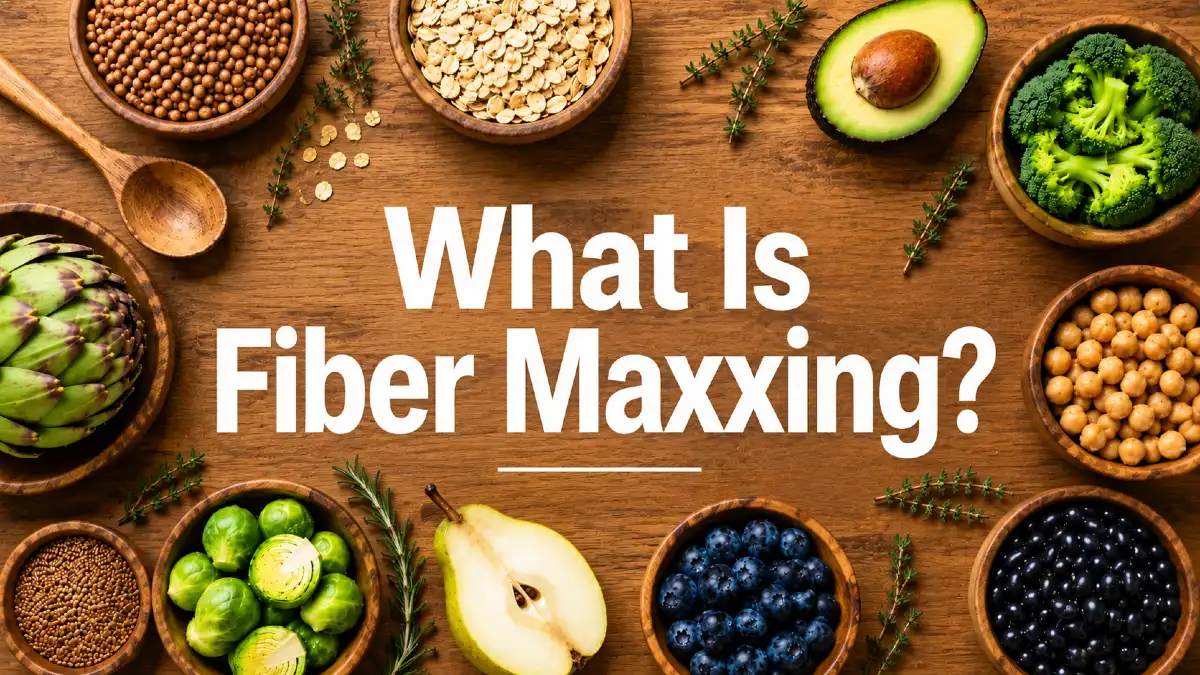
The highest-density fiber foods — in practical, everyday terms — are legumes (beans, lentils, chickpeas), whole grains (oats, barley, farro), vegetables (especially artichokes, broccoli, Brussels sprouts, and root vegetables), fruits (particularly raspberries, pears, and apples with skin), nuts and seeds (especially chia seeds, flaxseed, and almonds), and whole grain bread and pasta in place of refined versions.
A single cup of cooked lentils contains roughly 16 grams of fiber. A cup of raspberries contains about 8 grams. Two tablespoons of chia seeds in a morning drink add another 10 grams. You can meaningfully close the fiber gap without overhauling your entire food culture — it typically requires a handful of deliberate substitutions and additions, not a complete reinvention.
Hydration matters more than you think. Fiber absorbs water. Significantly increasing your fiber intake without also increasing your fluid intake is a reliable path to constipation rather than relief from it. Most men fiber-maxxing who forget the hydration component end up with the exact digestive symptom they were hoping to avoid. Add at least two additional glasses of water per day for every 10 grams of fiber you add.
Track it initially, then internalize it. You don’t need to log your food indefinitely. But spending two to four weeks tracking fiber intake builds an accurate sense of where the food you eat actually sits on the spectrum. Most men are surprised to discover that foods they thought were high-fiber (like iceberg lettuce or white bread with “wheat” in the name) are negligible contributors, while foods they may have overlooked — like a modest serving of black beans — are fiber powerhouses.
The Performance Angle
For men invested in physical performance, the case for fiber-maxxing adds another dimension worth understanding.
Blood sugar stability — which adequate fiber directly supports — has direct implications for energy and cognitive performance. The postprandial crash that follows a low-fiber, high-refined-carbohydrate meal isn’t just an annoyance. It affects focus, decision quality, and mood. Building meals around fiber-rich foods fundamentally changes the energy curve of your day.
There is also emerging research connecting gut microbiome health with exercise recovery. The specific bacteria that thrive on fermentable fiber appear to play roles in reducing exercise-induced inflammation and supporting muscle protein synthesis. This is an area of active research, and definitive claims would be premature. But the directional evidence is interesting, and the broader anti-inflammatory effect of a fiber-rich diet is well established.
Finally, the relationship between fiber intake and testosterone is indirect but real. Visceral fat — the deep abdominal fat that accumulates with insulin resistance and metabolic dysfunction — is a site of aromatase activity, the enzyme that converts testosterone to estrogen. Reducing visceral fat through better metabolic health (which fiber-maxxing supports) tends to improve the testosterone-to-estrogen ratio. It’s not a testosterone hack in any direct sense. But it removes a significant obstacle.
Making It Stick
The habit challenge with fiber-maxxing is different from most health habits. It doesn’t require scheduling, equipment, or willpower in the conventional sense. It requires restructuring what you put on your plate. That sounds easy. In practice, for men with established food habits and food environments, it involves genuine friction.
A few things that help.
Anchor fiber to meals you already eat consistently. If you eat the same breakfast most mornings, make that breakfast high-fiber — overnight oats with chia seeds and fruit is a legitimate 15-gram fiber breakfast that takes two minutes to prepare. One meal fully optimized removes a third of your daily target from daily decision-making.
Keep legumes as a staple, not an occasional ingredient. A batch of cooked lentils or black beans in the fridge takes minutes to add to a meal and transforms its nutritional profile. Men who eat legumes regularly — even just three or four times per week — tend to hit fiber targets far more consistently than those who rely primarily on vegetables and fruits.
Swap reflexively rather than adding separately. Swap white rice for brown rice or farro. Swap regular pasta for whole grain. Swap white bread for genuine whole grain bread. These are not nutritionally equivalent replacements — the fiber content differences are substantial — but they slot into the same meals with minimal adjustment.
What You’re Actually Building
Fiber-maxxing is, at one level, just a nutritional strategy. But it’s worth considering what you’re actually cultivating when you commit to it over time.
You’re building a more resilient metabolic foundation. You’re feeding an internal ecosystem — your microbiome — that influences your immune function, your mood, your cognition, and your long-term disease risk. You’re making a disciplined, informed choice about your health that doesn’t rely on being visible, impressive, or immediately rewarding.
That kind of long-game discipline — caring for the invisible infrastructure of your body with the same seriousness you might bring to strength training or career development — is itself an expression of something. It’s the decision to take your own health seriously as a daily practice, not just when something goes wrong.
The men who build real, enduring health over decades tend to share certain habits: they sleep consistently, they exercise, they manage their stress, and they eat, without drama, in ways that their bodies can actually sustain over time. Fiber-maxxing belongs in that category. Not glamorous. Not viral. Just quietly, consistently worth doing.
Start at 20 grams if you’re currently at 15. Drink more water. Add a cup of lentils to your week. Let the microbiome adapt. Increase gradually. Give it a month before you assess the results.
You might be surprised by how different your baseline feels — once you discover what your actual baseline is supposed to be.
Related posts:
 Carbon Diet Coach: The Science-Based Macro Tracking App Created by Dr. Layne Norton That’s Revolutionizing Nutrition Coaching
 Hume Band Review: Does This Stress-Tracking Wearable Actually Work?
 Ridge Wallet Review (2026): Is the Minimalist Metal Wallet Actually Worth It?
 Sea Moss Benefits for Men: The Underrated Mineral Stack Modern Performance Forgot
 Why Am I Still Hungry After Eating Healthy Food: The Ghrelin Response That Sabotages Every Diet