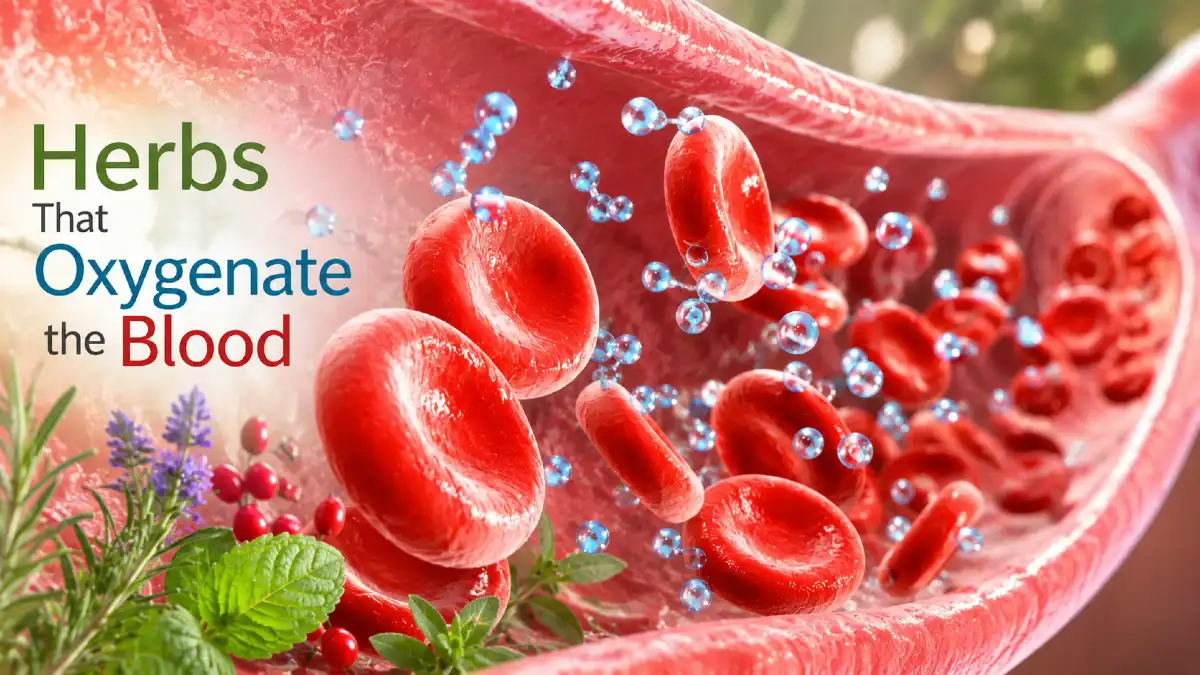
If you’ve ever searched for herbs that oxygenate the blood, you’ve probably noticed something: most articles get the biology slightly wrong. Herbs cannot add oxygen to your blood — that’s what your lungs do. What certain plants can do, and what the better research actually supports, is help your body deliver oxygen more efficiently, carry it in higher amounts, and use it more effectively at the cellular level.
That distinction matters, because it tells you which herb to reach for depending on what’s happening in your body. Cold hands and brain fog from poor circulation is a different problem than low hemoglobin from a thin diet, which is a different problem from poor endurance because your mitochondria are sluggish. Different mechanisms, different herbs.
This guide breaks down the strongest herbs that oxygenate the blood by the four mechanisms that actually matter: vasodilation, nitric oxide production, red blood cell support, and cellular oxygen utilization. You’ll get the science behind each, practical dosing notes, safety warnings, and an honest look at when herbs aren’t the answer.
What “Oxygenating the Blood” Actually Means
Oxygen enters your bloodstream when you inhale. It binds to hemoglobin inside red blood cells, then travels through arteries to your tissues, where it’s released and used by mitochondria to produce energy. Carbon dioxide flows back the other way and gets exhaled.
A healthy person at sea level already has blood that’s about 95–100% oxygen-saturated. You can’t push that number much higher with any pill or plant. What you can influence are four separate factors:
- Vasodilation — how wide and relaxed your blood vessels are. Wider vessels mean more oxygenated blood reaching tissues per minute.
- Nitric oxide production — the signaling molecule your endothelium uses to widen vessels and regulate pressure.
- Red blood cell and hemoglobin support — the carrying capacity of your blood. More functional hemoglobin means more oxygen per unit of blood.
- Cellular oxygen utilization — how efficiently your mitochondria actually extract and burn the oxygen they receive.
A genuinely useful herb works on at least one of these four. Most of the well-known herbs work on more than one, which is why they keep showing up in traditional medicine across cultures.
Herbs That Improve Circulation Through Vasodilation
Vasodilation is the most direct way to increase oxygen delivery. When the smooth muscle lining your arteries relaxes, more oxygenated blood reaches your brain, extremities, and organs per heartbeat.
Ginkgo Biloba
Ginkgo is the most-studied circulation herb in Western research. Its flavonoids and terpene lactones (ginkgolides) thin the blood mildly and stimulate nitric oxide release from endothelial cells. The result is improved blood flow to the brain and extremities, which is why ginkgo has been investigated for cognitive decline, intermittent claudication, and tinnitus.
A 2020 Cochrane Review of ginkgo for age-related cognitive issues found moderate effects, with the strongest signal in patients with vascular components to their cognitive symptoms. Typical doses are 120–240 mg per day of a standardized extract (24% flavone glycosides, 6% terpene lactones).
Hawthorn (Crataegus)
Hawthorn berries and leaves contain oligomeric proanthocyanidins and flavonoids that strengthen the heart muscle’s contraction, dilate coronary vessels, and reduce peripheral resistance. Traditional Western herbalism uses it for mild hypertension and heart tone; modern research backs both uses, with several trials showing modest blood pressure reductions and improvements in mild heart failure symptoms.
Hawthorn is gentle and slow-acting. Expect to take it consistently for six to eight weeks before noticing changes. Standard dose is 160–900 mg of standardized extract daily.
Cayenne (Capsicum annuum)
Capsaicin, the compound that makes cayenne hot, is one of the most powerful natural vasodilators known. It triggers a sensory response that releases substance P, which in turn prompts the release of nitric oxide, widening blood vessels and improving peripheral circulation. It’s the reason cold hands warm up after a spicy meal.
Cayenne also has antiplatelet properties and may help reduce arterial plaque buildup over time. A pinch in warm water, capsules of 30,000–100,000 SHU material, or simply heavy use in food all count. Sensitive stomachs should start low.
Ginger
Ginger contains gingerols and shogaols that mildly thin the blood, reduce inflammation, and promote vasodilation. It improves circulation enough that traditional Asian medicine considers it warming — meaning the periphery actually feels warmer after consumption.
Fresh ginger tea (a one-inch piece, simmered for ten minutes) is the most common preparation. Capsules of 250–1,000 mg also work.
Herbs That Boost Nitric Oxide Production
Nitric oxide (NO) is a gas your endothelium produces to signal blood vessel relaxation. As you age, NO production naturally declines, which is part of why circulation worsens with age. Several plant compounds either supply nitrate precursors or stimulate the enzymes that produce NO directly.
Garlic (Allium sativum)
Garlic’s sulfur compounds, particularly allicin, support nitric oxide synthase activity and provide hydrogen sulfide, a related signaling gas that also relaxes blood vessels. Meta-analyses consistently show garlic produces modest reductions in systolic and diastolic blood pressure in hypertensive individuals.
Raw garlic is more potent than cooked, but aged garlic extract (often standardized to 1.2% S-allyl cysteine) is gentler on the stomach and has strong evidence behind it. Typical dose: 600–1,200 mg of aged extract daily.
Beetroot
Beetroot isn’t an herb in the strict sense — it’s a root vegetable — but it deserves inclusion because its effect on oxygen delivery is one of the best-documented in the entire plant world. Beets are high in dietary nitrates, which oral bacteria and your enzymes convert to nitric oxide. The result is measurable improvements in endurance, blood pressure, and even cognitive blood flow.
Studies on beetroot juice show athletes can sustain higher workloads with less perceived effort. A practical dose is 500 ml of juice or 5–8 g of concentrated powder two to three hours before activity.
Turmeric
Curcumin, turmeric’s active polyphenol, increases endothelial nitric oxide production and reduces oxidative stress in the vascular lining. Several trials show curcumin supplementation improves endothelial function comparably to moderate aerobic exercise.
Turmeric is notoriously poorly absorbed in plain form. Look for formulations combined with piperine (black pepper extract) or in phospholipid-bound preparations like Meriva, which can increase absorption 20–30 fold. Doses of 500–1,500 mg of standardized curcuminoids are typical.
Herbs That Support Red Blood Cells and Hemoglobin
If your blood doesn’t have enough functional hemoglobin, no amount of vasodilation will fix the problem. Iron-rich, chlorophyll-rich, and blood-building herbs help your body produce more capacity to carry oxygen in the first place — and they’re especially relevant if you’ve been told your ferritin is low.
Nettle Leaf (Urtica dioica)
Nettle is a traditional blood tonic across European herbalism. It contains plant-based iron, vitamin C (which improves iron absorption), chlorophyll, and a range of trace minerals. It’s used historically for mild iron-deficiency anemia and as a postpartum recovery herb.
Nettle tea (one tablespoon of dried leaf steeped for fifteen minutes) is the simplest preparation. Long infusions overnight in a covered jar extract more minerals.
Yellow Dock (Rumex crispus)
Yellow dock root is another classic blood-building herb. Unlike nettle, its iron content is modest, but it appears to improve the body’s ability to absorb and use iron from food. Herbalists pair it with nettle for the combined effect.
It also acts as a mild bitter and laxative, which can be helpful or unhelpful depending on your situation. Tincture (1–3 ml three times daily) is the most common form.
Spirulina
Spirulina is a blue-green algae, not technically a plant, but it’s so often grouped with herbal supplements it belongs in any honest list. It’s rich in iron, B vitamins, and phycocyanin, a pigment with antioxidant properties. Small trials in iron-deficient populations have shown spirulina supplementation can increase hemoglobin levels.
Three to five grams daily is a typical dose. Quality matters — source from suppliers with third-party testing for heavy metals, since spirulina can concentrate contaminants from poor-quality growing environments.
Moringa (Moringa oleifera)
Moringa leaves are nutritionally dense, with significant amounts of iron, vitamin C, vitamin A, and protein. Studies in adolescent girls and pregnant women in developing countries have shown moringa supplementation improves hemoglobin levels in those with deficiency. A heaping teaspoon of moringa powder daily, mixed into food or smoothies, is the standard approach.
Echinacea
Echinacea is best known as an immune herb, but it’s also been studied as an aerobic performance aid based on the theory that it stimulates erythropoietin (EPO) production, which would in turn boost red blood cell counts. The research is mixed: some trials show modest increases in EPO and VO₂ max, others show no effect. If you try it for this purpose, give it a six-week trial at 8,000 mg daily of standardized root extract before deciding.
Adaptogens That Improve Oxygen Utilization
Even if your blood is rich in oxygen and your circulation is excellent, your tissues still need to use that oxygen effectively. This is where mitochondrial and adaptogenic herbs come in. They don’t increase oxygen supply — they improve oxygen extraction and energy production.
Cordyceps
Cordyceps is a fungus (not a plant), traditionally harvested from the Tibetan plateau, where it’s been used for centuries to support stamina at altitude. Modern research has investigated its effects on VO₂ max and exercise capacity. A 2017 study found that three weeks of Cordyceps militaris supplementation improved tolerance to high-intensity exercise in healthy adults, with continued improvement at twelve weeks.
The mechanism appears to involve improved mitochondrial efficiency and ATP production, plus modulation of the body’s stress response. Doses of 1,500–4,000 mg of fruiting body extract are typical.
Rhodiola Rosea
Rhodiola is an Arctic adaptogen with strong evidence for reducing perceived exertion during physical and mental work. Its rosavins and salidroside appear to enhance the body’s ability to use available oxygen under stress, partly through effects on mitochondrial function and partly through central nervous system modulation.
Standard dose is 200–600 mg daily of an extract standardized to 3% rosavins and 1% salidroside, taken in the morning. Rhodiola can be stimulating, so avoid it late in the day.
Gotu Kola (Centella asiatica)
Gotu kola contains triterpenoid saponins (asiaticoside, madecassoside) that strengthen connective tissue in vein walls and capillaries. Research supports its use for chronic venous insufficiency, where weak veins cause pooling and reduced return flow. By improving microcirculation, it indirectly improves oxygen delivery at the tissue level.
Typical dose is 60–180 mg of standardized extract daily, split into two or three doses.
How to Use These Herbs Safely
Once you’ve identified which mechanism you want to support, the practical question is how to actually use the herb. A few principles cover most situations.
Forms matter. Teas extract water-soluble compounds; tinctures (alcohol extracts) pull both water- and fat-soluble compounds; standardized capsules give you predictable doses of specific active compounds. For circulation herbs, capsules and tinctures generally outperform casual tea use because the active doses are higher and more consistent.
Start low. Begin with a quarter to half of the recommended dose for the first week. This lets you spot sensitivity reactions before they become a problem. Especially with cayenne, ginger, and garlic, your stomach will tell you if you’ve gone too fast.
Give it time. Circulation and blood-building herbs are not painkillers. They work over weeks. Six to eight weeks is a reasonable evaluation window. If you’ve noticed nothing by then, either the herb isn’t right for you, the dose is too low, or the underlying problem isn’t herbal in nature.
Cycle longer-term use. Adaptogens like rhodiola and cordyceps tend to be used in eight-to-twelve-week cycles with one-to-two-week breaks. Continuous use without breaks can blunt the effect over time.
Combine thoughtfully. Stacking five herbs at once makes it impossible to know what’s helping. Start with one. Add a second only after you’ve assessed the first. The exception is traditional formulas where the combination has its own history and rationale — for example, hawthorn and motherwort for heart tone, or nettle and yellow dock for blood building.
Drug Interactions and Who Should Avoid These Herbs
This section is the one most herbal articles skip, and it’s the one that matters most. Several of these herbs interact with common medications.
Blood thinners. Ginkgo, garlic, ginger, and turmeric all have mild antiplatelet or anticoagulant effects. Combined with warfarin, aspirin, clopidogrel, or other blood thinners, they can increase bleeding risk meaningfully. If you take any of these medications, do not add these herbs without your doctor’s input.
Heart medications. Hawthorn potentiates the effects of cardiac glycosides like digoxin and may interact with beta blockers, ACE inhibitors, and calcium channel blockers. Anyone on heart medication should treat hawthorn as a prescription-grade intervention.
Blood pressure medications. Garlic, beetroot, hawthorn, and cordyceps can all lower blood pressure. Combined with antihypertensives, they may drop pressure too far. Monitor closely if you’re already medicated.
Diabetes medications. Cinnamon, gymnema, and bitter melon (not in this guide but worth flagging) lower blood sugar. Combined with insulin or oral hypoglycemics, the combination can cause hypoglycemia.
Surgery. Any herb with antiplatelet effects (ginkgo, garlic, ginger, turmeric, ginseng) should be stopped at least two weeks before scheduled surgery to reduce bleeding risk.
Pregnancy and breastfeeding. Many of these herbs lack adequate safety data in pregnancy. Cayenne, ginger (in food amounts) and nettle are generally considered low risk, but always confirm with a qualified provider. Avoid ginkgo, high-dose turmeric, and most adaptogens during pregnancy unless specifically cleared.
When Herbs Aren’t Enough: When to See a Doctor
If you actually feel breathless, exhausted, dizzy on standing, or noticeably short of oxygen, herbs are not the right first move. They’re support, not diagnosis.
The symptoms most people interpret as “low blood oxygen” often have specific, treatable causes:
- Iron-deficiency anemia is the most common cause of fatigue and apparent breathlessness in adults, especially in menstruating women. A simple ferritin and complete blood count tells you immediately.
- B12 or folate deficiency produces a similar picture and is common in vegetarians, vegans, and people on long-term acid-blocking medications.
- Sleep apnea repeatedly drops oxygen saturation overnight and leaves people exhausted during the day. A sleep study, not an herb, is the answer.
- Cardiovascular disease, COPD, asthma, and pulmonary embolism can all cause genuine hypoxemia and need medical workup.
- Thyroid issues, anxiety disorders, and deconditioning also commonly masquerade as oxygen problems.
A basic blood panel — CBC, ferritin, B12, TSH, vitamin D — and a doctor visit will rule out the common medical causes within a week. From there, herbs become a sensible support strategy for whatever’s actually going on, rather than a guess.
Lifestyle Factors That Multiply Herbal Effects
Herbs work better when the basics are in place. Anyone serious about blood oxygenation should pair them with:
- Aerobic exercise — the most reliable way to improve circulation, vessel elasticity, and mitochondrial density. Twenty to thirty minutes of brisk walking, cycling, or swimming most days outperforms any supplement.
- Breathwork — practices like box breathing, slow nasal breathing, and the Wim Hof method improve CO₂ tolerance and breathing efficiency. Five to ten minutes daily is enough to notice changes.
- Iron- and nitrate-rich foods — leafy greens, beets, beans, red meat (if you eat it), and dark chocolate hit multiple mechanisms at once.
- Sleep — erythropoietin production peaks during deep sleep. Chronic short sleep blunts red blood cell turnover.
- Cold exposure — short cold showers or plunges stimulate vascular tone and mitochondrial biogenesis. Start gradually.
Quick Reference: Choosing the Right Herb for Your Situation
If you’re not sure where to start, match the herb to the symptom pattern you actually have:
- Cold hands and feet, brain fog, sluggish circulation → Cayenne, ginkgo, ginger. Start with cayenne for fast feedback and add ginkgo for steady long-term effects.
- High blood pressure or stiff vessels → Hawthorn, garlic, beetroot. These work over weeks and pair well with reduced sodium intake.
- Fatigue with confirmed low ferritin or borderline anemia → Nettle, yellow dock, moringa, spirulina. Pair with vitamin C-rich foods at meals to improve absorption, and recheck ferritin in three months.
- Poor endurance, slow recovery, low energy under stress → Cordyceps and rhodiola. These don’t add oxygen but they extract more from what’s there.
- Heavy legs, varicose tendencies, swelling → Gotu kola, hawthorn. Combine with regular walking and elevation.
Sensible Stacking Strategies
If you want to combine herbs, do it by complementary mechanism rather than by piling on more of the same effect. Three combinations that work well for most people:
The circulation stack: Ginkgo (morning) + cayenne (with meals) + ginger tea (afternoon). Hits vasodilation through three different pathways without much redundancy. Discontinue at least two weeks before any surgery.
The blood-building stack: Nettle infusion (daily) + yellow dock tincture (with meals) + a dietary boost of iron-rich foods and vitamin C. Best for people whose bloodwork actually shows low ferritin.
The endurance stack: Cordyceps (morning) + rhodiola (morning) + beetroot juice (90 minutes pre-workout). Used by athletes for sustained output; cycle on for eight weeks, off for two.
Avoid stacking multiple blood thinners (ginkgo + garlic + ginger + turmeric all at once is too much), and don’t combine adaptogens with caffeine in large amounts — the combined stimulation often produces anxiety rather than energy.
Frequently Asked Questions
Can herbs really increase the oxygen level in my blood? Not directly, in healthy people at sea level. They can improve how oxygen is delivered, carried, and used — which often produces the energy and clarity benefits people are actually looking for.
How long until I notice a difference? Vasodilator herbs (cayenne, ginger) can produce same-day effects on warmth and circulation. Blood-building herbs (nettle, yellow dock, spirulina) typically need four to eight weeks. Adaptogens (cordyceps, rhodiola) usually show effects within two to four weeks.
What’s the best herb for cold hands and feet? Cayenne is the most reliable. Ginkgo is the longer-term, gentler option. Most people benefit from combining them.
Are these herbs safe to take long-term? Most are safe with sensible cycling and dosing, but long-term use without breaks isn’t ideal for adaptogens. Anyone on medication or with a chronic condition should have herbal use reviewed by a qualified provider annually.
Final Thought
The phrase “herbs that oxygenate the blood” is a useful search term but a slightly inaccurate one. Your lungs handle oxygenation. Your blood vessels handle delivery. Your red blood cells handle carrying capacity. Your mitochondria handle use. A thoughtful herbal approach picks the mechanism that matches the symptom, layers it on top of solid lifestyle basics, and respects the limits of plants in the face of actual disease.
Used that way, herbs aren’t magic. They’re an old, well-tested set of tools for tuning a system that’s been running on the same basic design for several hundred thousand years. The body still knows what to do with them.
Related posts:
 Buckwheat benefits for Men: The Complete-Protein Superfood Everyone Overlooks
 Sea Moss Benefits for Men: The Underrated Mineral Stack Modern Performance Forgot
 Which Type of Rice Has the Least Impact on Blood Sugar (It’s Not the One You Think)
 David Robson’s Expectation Effect: The Science Behind Mind-Body Connection
 Why Brand-Name Pills Work Better Than Generic: The Placebo Effect Doctors Don’t Always Explain