There’s a moment in many careers when learning quietly stops. The person becomes competent at their job, gets a few wins under their belt, and starts to coast on the knowledge they already have. The reading slows down. The conferences get skipped. The feedback gets dismissed. The industry shifts, and they don’t notice because they’ve stopped paying attention.
A few years later, this person is being passed by colleagues who never stopped growing. They wonder what happened. The answer is usually nothing dramatic — just a slow erosion of the habit of staying teachable.
In Make It Happen Blueprint, business coach Michelle McCullough names this practice with a borrowed word from biology: plasticity. The Merriam-Webster definition she cites: the quality or state of being plastic; especially: the capacity for being molded and altered. High performers, she argues, retain plasticity throughout their careers. They don’t assume past success guarantees future relevance. They keep learning as a deliberate practice, not just when they have to.
This article is about why plasticity matters more than most people realize, what it actually looks like in practice, and how to build a learning routine that compounds over years instead of fizzling out by February.
What Plasticity Actually Means in Practice
Plasticity isn’t just reading more books. It’s something deeper — a willingness to be changed by what you encounter.
Many people consume content without changing because of it. They listen to podcasts while commuting and arrive at the office with the same operating assumptions they had yesterday. They attend conferences and come back with notes they never review. They read books and underline passages they never apply. The information passes through but doesn’t reshape anything.
Plasticity is the willingness to actually be reshaped. To take feedback and adjust. To encounter a new framework and try it on. To watch how the industry is moving and update your approach accordingly. To realize you’ve been wrong about something and change your mind.
McCullough offers a memorable image: be a sieve, not a sponge or a rock. The sponge absorbs everything indiscriminately, including things that don’t serve you. The rock absorbs nothing. The sieve takes everything in, separates what’s valuable from what isn’t, and lets the rest pass through. That’s the discipline of a lifelong learner — open enough to consider, discerning enough to choose what actually applies.
The Three Areas to Stay Current In
McCullough’s chapter is organized around three categories of learning that high performers tend to maintain. Each one matters, and people commonly neglect at least one.
Industry-specific knowledge
The most obvious. If you’re in tires, keep up with the latest models and performance data. If you’re in software, study user interface, design, and functionality. If you’re in coaching, pay attention to what other coaches are doing.
This is table stakes for staying competitive in your field. The mechanics matter: subscribe to the leading trade publications. Follow the key blogs in your space. Attend at least one annual conference. Join a relevant trade association if one exists. The point isn’t to consume every piece of content produced — that way lies overwhelm. The point is to maintain enough exposure that you’d notice a major shift in your industry within weeks of it happening, not months or years later.
McCullough makes a related point about market awareness: it’s not enough to keep up with what your industry is producing. You also need to know what your customers are reading, listening to, and watching. The best products and marketing emerge from people who actually understand the people they’re trying to reach.
Job-function knowledge
The second category cuts across industries. Whatever your role — sales, leadership, project management, content creation, design — there’s a body of knowledge specific to that function that you can deepen indefinitely.
A salesperson should be reading about sales even if the source has nothing to do with their industry. A leader should be reading about leadership across sectors. A creator should be studying creators outside their niche. Cross-pollination is one of the great underrated sources of insight — the breakthrough often comes from someone in your function who works in a completely different field and does it differently.
Outside-your-profession knowledge
The third category is the one most people skip entirely, and the one McCullough makes a particular point about. Learn things that have nothing to do with your work.
History. Art. Science. Astronomy. Literature. A new language. An instrument. A craft. The category doesn’t matter. What matters is exercising the part of your mind that doesn’t get exercised by your day job.
This serves two purposes. First, it makes you a more interesting person, which has practical professional benefits — you’re better in conversations, you make connections others can’t, you bring perspectives to your work that purely-trained colleagues don’t have. Second, and more deeply, it keeps you whole. A mind narrowed entirely to its specialty atrophies in the parts that aren’t being used. People who only know their job become hollow versions of themselves over time.
McCullough mentions her own favorites: art, astronomy, nature, history. Pick yours. Make space for it. The point isn’t mastery. The point is curiosity that keeps you growing as a human, not just as a professional.

How to Actually Build a Learning Routine
Most people fail at this not because they don’t believe in learning but because they don’t structure it. Here’s a practical approach.
Schedule it. McCullough recommends 5-10% of your working hours go to active learning. For a forty-hour week, that’s two to four hours. She personally has two one-hour blocks on her calendar each week — protected like any other appointment.
If you work for someone else, talk to your boss about this. Many employers will support learning time, especially if you offer to share what you find with the team. If your employer won’t support it, do it on your own time. The investment will pay for itself in your career trajectory.
Use natural downtime. McCullough calls her car a “roaming university” — audiobooks during the commute, podcasts in the car. Other people do their best learning during exercise, while doing dishes, getting ready in the morning, or waiting in lines. The dead time in your week is much more abundant than you think. Used well, it can do real work.
Vary your inputs. A diet of only books gets stale. So does a diet of only podcasts. Mix mediums — books for depth, podcasts for breadth, articles for currency, conversations for application, courses for skill-building, conferences for community. Different formats serve different purposes.
Schedule application time. This is the step most people skip and the one that converts learning into actual change. After you finish a book or attend an event, schedule time the following week to review your notes and tackle implementing what you learned. McCullough’s framing: information may be power, but application equals paychecks. Without the application step, you’re just consuming content.
Don’t let learning eat productivity. It’s possible to spend so much time learning that you don’t actually do anything. McCullough names this trap directly. Learning should be a meaningful slice of your week, not the whole pie. Keep the proportion right. Information needs to feed action, not replace it.
What to Read When You Don’t Know What to Read
If you’ve been out of the learning habit for a while, the question of where to start can be paralyzing. A few practical filters help.
Start with what’s already on your shelf. Most people have books they bought with good intentions and never read. Pick the one that still calls to you. Read it. The barrier to entry is essentially zero.
Ask three people whose minds you respect what they’ve been reading. People love to recommend books and podcasts they’re excited about. Their recommendations are often better than algorithm-generated suggestions because they come with context.
Follow a thread. When you find a writer or thinker who lights you up, find out who influenced them. Read their influences. Then read those people’s influences. Following intellectual lineages is one of the best ways to deepen rather than just broaden your reading.
Subscribe to one or two newsletters in your field. Not ten. One or two that consistently surface things worth reading. Curated feeds beat doom-scrolling for finding genuinely useful content.
On Receiving Feedback
McCullough’s chapter on plasticity also addresses something many people quietly resist: feedback.
High performers, she writes, are open to constructive feedback from peers, bosses, and employees. The instinct most people have is to defend, dismiss, or get hurt. The discipline of plasticity is to receive — really hear — and then decide what to do with it.
This doesn’t mean accepting every piece of feedback as gospel. Some feedback is useful, some isn’t. The sieve principle applies. But the discipline is to actually let the feedback through your filter rather than shutting it down at the door because it stings.
A useful question when you receive criticism: what’s the most charitable interpretation of what this person is trying to tell me? Even feedback that’s poorly delivered often contains information you can use, if you’re willing to extract it from the packaging.
The Compound Effect of Staying Teachable
Plasticity, like persistence, is a compounding habit. The benefits are small in any given week and enormous over years.
The person who reads a serious book every two months for twenty years has read 120 books — far more than most people in their field. The person who attends one good conference per year for a decade has been exposed to ten years of evolving thinking — which, in fast-moving fields, is the difference between being current and being obsolete. The person who deliberately seeks out feedback and adjusts based on it ends up far more competent than the person who waits for feedback to arrive uninvited and then resists it.
You don’t have to be impressive in any given month to become impressive over years. You just have to keep learning.
What Stops Most People
Two things, mainly.
The first is comfort. Once you’re competent at your job, the daily pressure to keep learning drops. Nobody’s going to fire you next week if you don’t read this month’s industry update. The slow erosion happens precisely because the consequences of skipping it are invisible in the short term.
The second is identity. Some people, often unconsciously, attach their sense of self to being the smart one in the room. Learning means admitting you don’t already know things, which threatens the identity. People with this pattern often become passive consumers of content that confirms what they already think, while avoiding anything that might require genuine update.
The cure for both: build the habit before you need it. Make learning part of who you are early enough that it doesn’t feel like a special activity. By the time it would have been hard to maintain, it’s just what you do.
Start This Week
You don’t need a five-year learning plan. You need a small first step.
This week, do three things. Pick one book in your field that’s been on your list and start it. Subscribe to one newsletter or podcast that consistently surfaces good content. Block one hour next week on your calendar — non-negotiable — for learning time.
Repeat next week. Then the week after.
The career-defining knowledge you’ll have in ten years is being built in the small consistent learning hours you take this year. The people who pass you in your field aren’t more talented. They’re just still teachable.
Stay teachable. The rest takes care of itself.
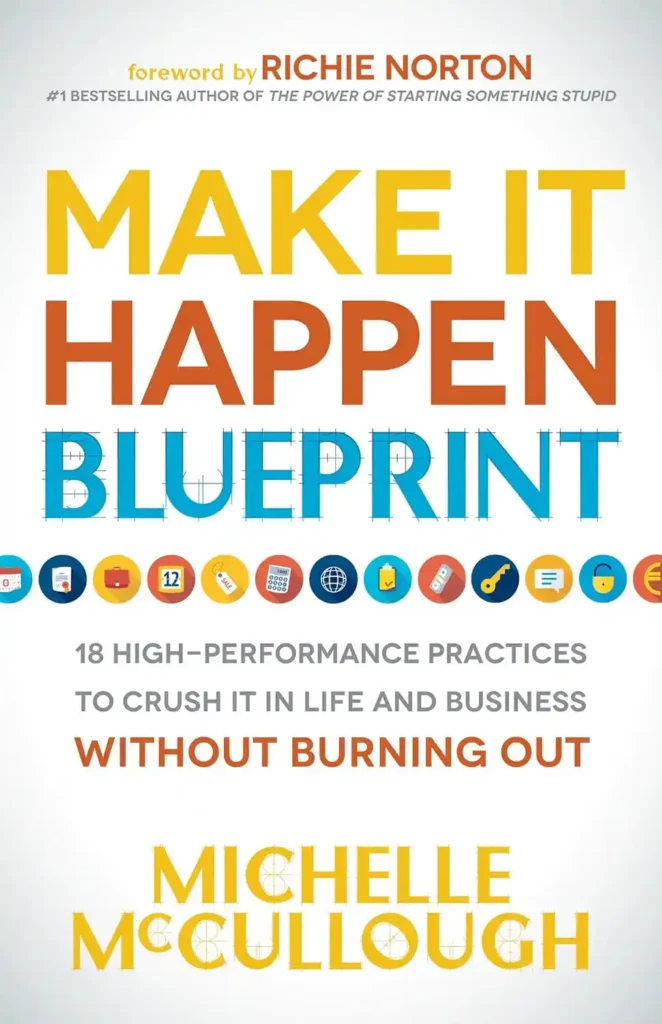
This article is inspired by the chapter on Plasticity in Make It Happen Blueprint: 18 High-Performance Practices to Crush It in Life and Business Without Burning Out by Michelle McCullough (Morgan James Publishing, 2017).
Related posts:
 Lifelong Learning Tips: Four Pillars for Staying a Student
 Curiosity in Children: Why Protecting It Matters More Than Teaching It
 Student Mindset for Lifelong Learning: Stay Sharp for Life
 Make It Happen Blueprint: 18 High-Performance Practices to Crush It in Life and Business Without Burning Out (Full Summary & Course)
 The Power Team Pyramid: Who You Need Around You to Reach Big Goals