There’s a particular kind of tiredness that sleep doesn’t fix. You log eight hours, drink your coffee, and still feel scattered, reactive, depleted by 11 AM. Most people assume this is just how modern life feels — too many inputs, too many demands, not enough hours. They power through. They add another task to the list. They wonder why they’re so exhausted by people who don’t seem to be doing more than they are.
In Make It Happen Blueprint, business coach Michelle McCullough offers a counterintuitive answer: the missing variable isn’t more rest. It’s more silence.
Specifically, what she calls “inner voice appointments” — short blocks of intentional quiet, scheduled into the middle of the day, with no agenda except letting the mind catch up with itself. McCullough confesses she’s not naturally good at stillness. As an ambitious entrepreneur with three businesses and two young kids, “busy but good” was her default answer to how are you? until a friend pointed it out. Now she treats peace as a high-performance practice — not optional, not woo-woo, but operationally necessary.
This article explains what inner voice appointments are, why they work, and how to start a practice this week that will pay back many times what it costs in time.

The Cost of Constant Noise
Take an honest inventory of an average day. From the moment you wake up — or really, from the moment you reach for your phone before getting out of bed — your attention is being shaped by external input. Notifications. Email. News. Music or podcasts during the commute. Meetings. Conversations. More notifications. Lunch with a screen. More meetings. Dinner with the TV on. A few hours of scrolling before bed.
When, in any of that, does your mind have unstructured space to process what it’s been absorbing?
For most people, the honest answer is: never. Even sleep doesn’t fully count, because the brain is doing different work then. What’s missing is waking quiet — time when nothing is being added and the system can integrate what’s already there.
McCullough is direct: this world is overrun with technology, and our brains need quiet time to relax. Sleep alone isn’t enough.
The cost of skipping this shows up in patterns most people misattribute. The chronic low-grade anxiety. The decision fatigue by mid-afternoon. The sense that creativity has dried up. The reactive snappiness with people you love. The vague feeling that you’re moving too fast through your own life and missing it. These aren’t separate problems with separate solutions. They’re often symptoms of a brain that hasn’t had room to breathe.
What Inner Voice Appointments Are
The practice is simple enough to describe in a sentence: block out time in the middle of the day to sit and think, without phone, without input, without agenda.
McCullough learned the practice from a friend who specialized in helping people connect with their inner wisdom. She blocks out anywhere from ten to thirty minutes, depending on what the day allows. Sometimes she has to do a little brain dumping first — writing out what’s on her mind so it stops circling. Then she sits.
What happens during the appointment isn’t the point. Sometimes useful insights arrive. Sometimes nothing happens. Sometimes she clarifies something she’d been wrestling with. Sometimes she just notices how tired she is. The practice isn’t about producing anything. It’s about creating the conditions in which the deeper parts of the mind can speak.
This is different from meditation, though it shares some DNA. Meditation typically has a specific technique — focused attention on breath, mantra, body scan, visualization. Inner voice appointments are looser. The instruction is essentially: be quiet, don’t reach for input, see what shows up.
It’s also different from prayer, though McCullough does both. Prayer, in most traditions, involves directed communication. Inner voice appointments involve listening.
Why It Works
The mechanism isn’t mystical. It’s how the mind processes.
When you’re constantly absorbing new input, your conscious attention is occupied with the input. The integration work — connecting things, noticing patterns, surfacing important questions, recognizing what matters — happens in the background, often imperfectly. When you give that background system room to work, it surfaces things the foreground system was missing.
Most people have had the experience of finally figuring out a difficult problem in the shower, on a long drive, or while doing dishes. That’s not coincidence. Those are the rare moments when the constant input is paused and the integration system can do its job.
Inner voice appointments are essentially scheduling more of those moments. You’re not waiting for the shower to give you the answer. You’re building shower-equivalents into your day on purpose.
McCullough notes a specific benefit she’s experienced: the appointments often produce inspiration on how to be a better parent, spouse, and business owner. Not by trying. By stopping trying long enough to let it surface.
How to Start the Practice This Week
You don’t need to begin with thirty minutes a day. Most people who try that quit by Wednesday. Start small.
This week: ten minutes, three days. Pick three days that feel realistic. Block ten minutes mid-day on your calendar — between lunch and your next meeting works for most people. Treat it as a real appointment.
No phone. Leave it in another room or face down with notifications off. The practice doesn’t work if you’re glancing at the screen.
No agenda. This is the harder part. The temptation will be to use the time productively — to think through a specific problem, plan an upcoming task, mentally organize your week. Resist. The point is openness, not directedness. If your mind wants to wander, let it. If a thought comes, notice it without grabbing it.
A notebook nearby is fine. McCullough often does some brain dumping at the start of an appointment to clear what’s already churning. If thoughts keep cycling, write them down so they stop demanding attention. Then return to the quiet.
Don’t force insights. Some appointments will be productive. Some won’t. The value is cumulative, not session-by-session. Like exercise, a single workout doesn’t transform your fitness. The practice maintained over time does.
The Three Questions
McCullough offers a related practice that pairs well with inner voice appointments: a three-question check-in for any area of life that feels stuck or out of whack.
What’s working?
What’s not working?
What needs to change?
These questions are deceptively simple. Most people don’t ask them regularly because the answers can be uncomfortable — they may reveal that something you’ve been doing isn’t actually serving you, or that something you’ve been avoiding actually needs your attention.
Run them through any domain. Your work. Your marriage. Your health. Your finances. Your friendships. The answers may surprise you.
McCullough suggests writing the three questions on a 3×5 card and keeping them somewhere accessible. When something feels off, take five minutes to run the diagnostic. Often the answer is sitting just below your conscious awareness, waiting for the questions to give it permission to surface.
What This Looks Like in a Real Week
The objection most people raise: I don’t have time for this.
The honest response: you don’t have time not to do this, because the chronic distraction and reactivity that come from skipping it are costing you more time than the practice itself takes.
A realistic week might look like this. Monday: ten minutes of quiet after lunch. Tuesday: a longer walk in nature without your phone. Wednesday: another ten-minute appointment. Thursday: time stays full and you skip the practice. Friday: a thirty-minute appointment to integrate the week and prepare mentally for the weekend.
That’s roughly an hour total across five days. Compare that to the hours lost to distraction, decision fatigue, and reactive scrambling — and the math becomes obvious.
McCullough also recommends time in nature on a regular basis. There’s something about being among trees, water, or open sky that does something quiet appointments alone can’t. Bare feet on grass. Lunch in a park. A weekend walk where you leave the phone at home. Nature is, as she puts it, nurturing and peaceful in ways the indoor world isn’t.
When the Practice Feels Difficult
Some people, when they first try this, find it deeply uncomfortable. The discomfort is usually a signal that the practice is needed.
If sitting in quiet feels unbearable, that’s worth noticing. What is the discomfort about? Often it’s the avoidance of something — a feeling, a question, a knowing — that’s been waiting for attention. The constant input we surround ourselves with isn’t accidental. It’s often serving a function: keeping us busy enough that we don’t have to face whatever the silence might reveal.
This isn’t a problem to be eliminated. It’s information. Whatever surfaces in the quiet is worth paying attention to. You don’t have to solve it immediately. You just have to stop avoiding it.
For people with active anxiety or unprocessed grief, the practice might initially feel worse before it feels better. If that’s happening, scale down the duration and consider doing it with the support of a therapist or trusted person who can hold space for what comes up. Inner voice appointments aren’t a substitute for actual support when you need it.
The Compound Effect
The strange thing about this practice is that it doesn’t feel like much at first. Ten quiet minutes don’t seem like they should change anything. But over weeks, things begin to shift.
You catch yourself reacting less and responding more. You make decisions with greater clarity. You notice what matters earlier, before it becomes an emergency. Your relationships get easier because you’re more present in them. The chronic background tension loosens.
McCullough is honest that none of this happens because you’ve meditated your way to enlightenment. It happens because you’ve given the system room to function. The brain wasn’t designed for the constant input modern life delivers. Inner voice appointments restore something the system needs in order to operate well.
Start Tomorrow
Don’t wait for a day when this feels easy. It probably won’t.
Pick a ten-minute window tomorrow. Put it on the calendar. Treat it like a real appointment — one you wouldn’t cancel for someone else. Sit somewhere quiet. Put the phone away. See what happens.
Whatever happens, do it again the next day. And the next. The practice isn’t about any single session. It’s about restoring a capacity most modern lives have systematically eroded.
You’ll know it’s working when the world starts to feel slightly less loud. Not because the world has changed. Because you have.
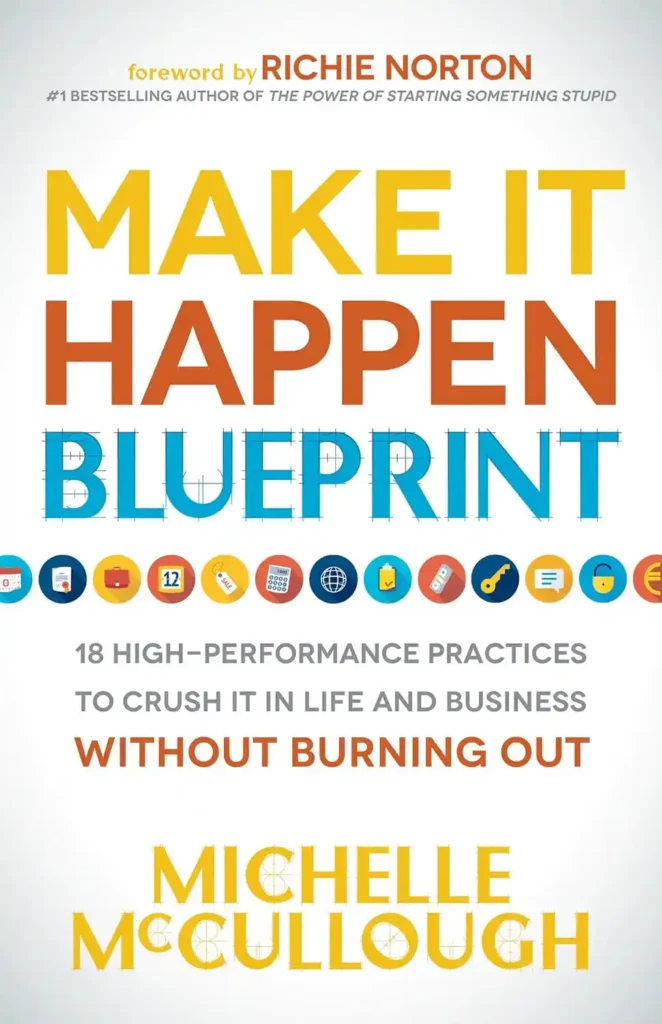
This article is inspired by the chapter on Peace in Make It Happen Blueprint: 18 High-Performance Practices to Crush It in Life and Business Without Burning Out by Michelle McCullough (Morgan James Publishing, 2017).
Related posts:
 The Morning and Evening Routines That Set High Performers Apart
 Make It Happen Blueprint: 18 High-Performance Practices to Crush It in Life and Business Without Burning Out (Full Summary & Course)
 Time Blocking Made Simple: The Time Map Method Explained
 4 Bulletproof Ways to Become More Productive
 The Power Team Pyramid: Who You Need Around You to Reach Big Goals