There’s a moment many of us recognize, even if we don’t like to. Someone asks how a part of our life is going — work, marriage, health, finances — and we hear ourselves explain why it isn’t better. The economy. The boss. The family of origin. The partner who doesn’t get it. The kids. The timing.
None of these explanations are necessarily wrong. Circumstances are real. Constraints are real. But explanation slides into something else without us noticing: a quiet handing-off of authorship. The story stops being what I’m doing about my life and becomes why my life is happening to me.
In Make It Happen Blueprint, business coach Michelle McCullough places this single shift — from passenger to driver — at the foundation of every other high-performance practice. She calls it the Pledge. And she is direct about it: nothing else in her book will work if you skip this step.
This article unpacks what taking 100% responsibility actually means, why it isn’t the same as self-blame, and how to begin practicing it without turning your inner monologue into a drill sergeant.
The Free Car Nobody Drives
McCullough opens her chapter with a sharp little parable. Imagine someone offers you any car you want, free. You pick it. You sign the paperwork. Then they hand the keys to a stranger who says, “I drive. You sit in the passenger seat.” The stranger then proceeds to run his own errands. Your car. His route.
It sounds absurd. But the principle, McCullough argues, plays out constantly in real lives. We let bosses dictate our days, employers dictate our worth, family members dictate our self-image, circumstances dictate our possibilities. We complain about the route while quietly refusing to take the wheel.
The Pledge is the decision to stop. Not in some grand once-and-for-all way, but as a daily reorientation: this is my life, my choices, my consequences.
What 100% Responsibility Actually Means
Here’s the part that gets misunderstood. Taking full responsibility doesn’t mean blaming yourself for everything that happens to you. It doesn’t mean denying that some hands of cards are harder than others. It doesn’t mean pretending injustice, illness, or circumstance aren’t real.
What it means, in McCullough’s framing, is this: regardless of what’s happened, the response is yours. The next move is yours. The story you tell yourself about it is yours. And the future built from here is yours to author.
Jack Canfield — whose work McCullough cites — puts it this way: “If you want to be successful, you have to take 100% responsibility for everything that you experience in your life.” The emphasis isn’t on guilt. It’s on agency. There’s a difference.
A useful distinction: blame looks backward and asks who’s at fault. Responsibility looks forward and asks who’s going to do something about it. Blame is paralyzing. Responsibility is generative.
The “No Control Column”
One of the most practical tools in the chapter comes from a therapist McCullough worked with after her first divorce. McCullough was venting one day about untruthful things her ex-husband’s family had reportedly said about her, and the therapist introduced what she called the No Control Column.
It works like this. Take a piece of paper. Draw a line down the middle. On one side, write “Control.” On the other, write “No Control.” List the circumstances of whatever situation is consuming you. Sort each one into the right column.
What others are saying about you behind your back? No control. The economy? No control. Whether your boss happens to be in a good mood? No control. How a family member reacted to a decision you made? No control.
What you do today? Control. How you respond to what people say? Control. The conversations you initiate? Control. The boundaries you set? Control. The next email you send, the next move you make, the next thought you choose to dwell on? All control.
The exercise is shockingly clarifying. Most of us spend an enormous percentage of our daily mental energy on the No Control side — replaying conversations we can’t change, anticipating reactions we can’t control, resenting circumstances we can’t immediately alter. And we leave the Control side largely unworked. The Pledge is the practice of noticing this and reallocating.
Why This Is the First Step
McCullough is clear that this practice has to come before everything else, and the reason is structural. If you don’t own your life, you have no foundation to build on. Every productivity hack, every goal-setting framework, every relationship strategy will be undermined by an underlying belief that someone or something else is in charge.
You can have the best Time Map in the world — but if you secretly believe your day is at the mercy of other people’s interruptions, you’ll let it be. You can write the clearest goals in your industry — but if you secretly believe your circumstances determine your outcomes, you’ll wait for circumstances to cooperate. You can build a solid power team — but if you blame your relationships for your dissatisfaction, no amount of new people will fix it.
The Pledge isn’t about changing your situation overnight. It’s about changing the underlying assumption that someone else holds the keys.
What This Looks Like in Practice
Taking 100% responsibility shows up in small, often invisible decisions throughout the day. Here are some of the patterns to watch for.
The complaint that goes nowhere. When you catch yourself describing a problem for the fifth time without taking any action on it, that’s a signal. Either it’s a No Control item you need to release, or it’s a Control item you need to act on. Repeated complaint without action is the passenger seat.
The borrowed offense. McCullough is direct about this one: don’t allow yourself to be offended to prove a point or be right. Other people’s opinions of you are theirs, and as she puts it, none of your business. Carrying around grievances from old conversations is a way of letting other people drive long after they’ve left the car.
The blame habit. Notice how often the word “because” enters your explanations of why something hasn’t happened. Because of the boss. Because of the budget. Because of the timing. Sometimes those reasons are real constraints. Often they’re places you’ve stopped trying.
The invisible “yes.” Many of us are letting other people’s needs run our days because we keep saying yes to things we could decline. Owning your life often means learning to disappoint people on purpose — not from rudeness, but from clarity about what your time is for.
What It Doesn’t Look Like
It’s worth being clear about what radical responsibility isn’t, because the concept gets weaponized.
It isn’t pretending you have power you don’t have. Some situations are genuinely out of your control. Naming that honestly is part of taking responsibility, not the opposite of it.
It isn’t beating yourself up. Self-flagellation is just blame turned inward. It produces the same paralysis that outward blame does. Responsibility is a stance of agency, not punishment.
It isn’t doing it all alone. Owning your life includes choosing who you want help from, and asking for it clearly. (McCullough has an entire chapter on this — she calls it Persuasion or “enrollment.”) Independence isn’t isolation.
It isn’t ignoring real injustice. Naming systemic problems, advocating for change, and demanding accountability from others are all things you can do while taking responsibility for your own next move. The two aren’t opposed.
The Daily Pledge
McCullough recommends a small ritual that makes this practice tangible. Write on a card, where you’ll see it: “I choose to own my life. From this point forward I choose to create a future and a life I love.” Read it daily. Say it aloud if you can.
Write it on a sticky note on the bathroom mirror. Set it as a reminder on your phone. Whatever it takes to make it harder to forget than to remember.
She also suggests keeping what she calls a “pledge journal” — a place to note when you catch yourself slipping into blame, and to write what you can do to take responsibility instead. The journal isn’t for self-criticism. It’s for noticing patterns. Over time, you start catching the slip earlier. Eventually you catch it before it leaves your mouth.
The Surprising Lightness on the Other Side
One thing McCullough doesn’t dwell on but is worth naming: there’s an unexpected freedom in taking radical responsibility. When you stop waiting for circumstances to change, for other people to validate you, for the right time to arrive, an enormous amount of mental energy comes back online.
The energy you were spending on resentment, on rehearsed grievances, on waiting — that energy was costing you something. Reclaiming it doesn’t make life easier in the sense that the work goes away. But it makes life lighter in the sense that you stop dragging around the weight of your own postponed authorship.
There’s also something else: the people around you start treating you differently. Not because you’ve demanded it, but because you carry yourself differently. The person who owns their life is harder to push around, harder to manipulate, easier to respect. None of that requires saying anything about it.
Start Today
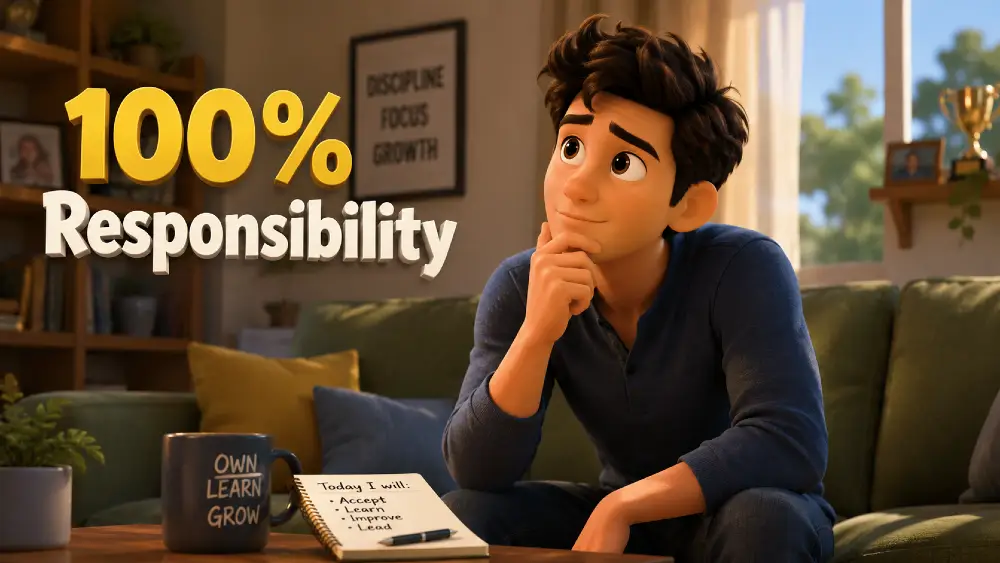
McCullough’s whole framework rests on this practice, and the rest of the book is essentially a series of refinements on what it looks like to live this out. But you don’t have to read the whole book to start. You can start now, in the next ten minutes.
Pick one thing in your life you’ve been quietly blaming on circumstances. Sort it into the Control / No Control columns. Notice what’s actually in your power. Do one thing — small is fine — toward that.
Then notice how it felt. Notice the small click of moving from passenger to driver, even on something tiny.
That click is the Pledge. The rest is just doing it again tomorrow.
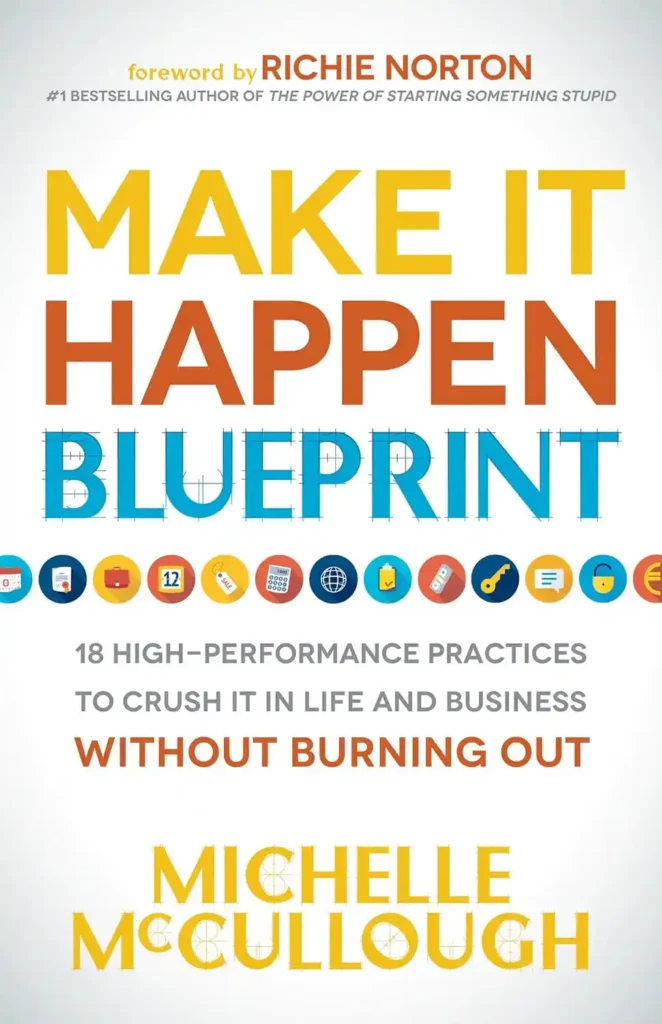
This article is inspired by the chapter on Pledge in Make It Happen Blueprint: 18 High-Performance Practices to Crush It in Life and Business Without Burning Out by Michelle McCullough (Morgan James Publishing, 2017).
Related posts:
 Self Discipline and Personal Responsibility: Stop Blaming, Start Growing
 Make It Happen Blueprint: 18 High-Performance Practices to Crush It in Life and Business Without Burning Out (Full Summary & Course)
 Personal Responsibility: The Skill That Determines Freedom, Power, and Success
 How to Create a Vision Board That Actually Works (And Why Most People Fail)
 How to Give Yourself Permission to Succeed (When No One Else Will)