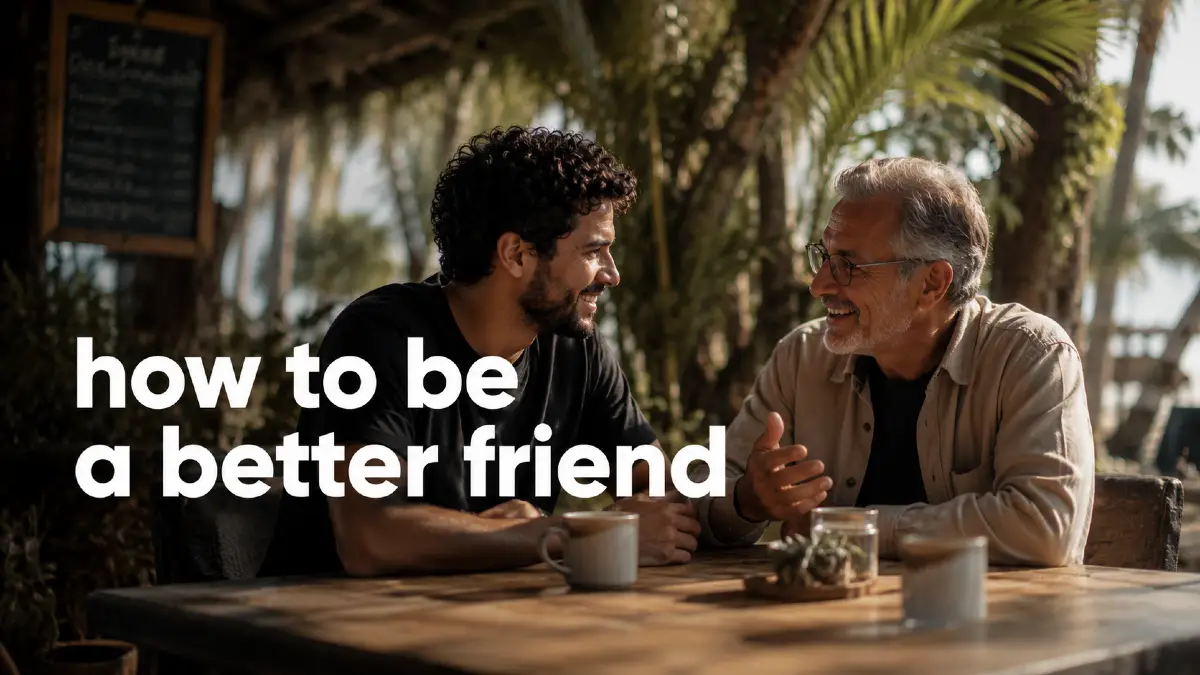
Ask most people what they want in a relationship and they’ll answer fluently — but entirely in terms of the other person. I want someone supportive. Someone who’s there when I need them. Someone fun, who gets me, who shows up. It’s a reasonable wishlist. It’s also missing the only variable you actually control.
Because here’s the question that wishlist never asks: what kind of person do you have to be for that someone to want to stay in your life? Yolanda Renteria puts this plainly in Attuned and Attached, and it’s one of those ideas that’s mildly annoying to hear and genuinely freeing to absorb.
The common denominator
Pay honest attention to your relationships and you’ll notice something uncomfortable: most of them feel oddly similar. Different people, same dynamics. The same kinds of conflicts, the same disappointments, the same distance creeping in at roughly the same point.
There’s a reason. Your environment shapes how you respond, but your core personality is consistent across relationships — which means if your relationships keep rhyming and you keep ending up dissatisfied, you are the common denominator. You’re in every single one of them.
This is not a beat-yourself-up observation. It’s the opposite. If the common factor were other people, you’d be stuck forever fishing for better ones. But because the common factor is you, you have actual leverage. Yes, sometimes you do need better relationships. But you also have to become someone who can recognize, attract, and sustain the healthier ones when they show up. This builds directly on the patterns in why you push people away.
Reciprocity is the whole game
Healthy relationships are reciprocal. This sounds obvious until you watch how often people violate it without noticing.
You say you want a supportive friend — but when someone offers you support, you brush it off, because receiving help feels too vulnerable. You say you want depth — but you keep every conversation light, because depth feels exposing. You say you want someone fun — but you’re too guarded to actually let loose. In each case, you’re asking for a quality you won’t let yourself receive or give. The relationship can’t form because one half of the circuit is missing.
So Renteria’s reframe is to flip the wishlist into a mirror. If you want someone supportive, dependable, and fun, what you’re really describing is someone empathetic, caring, and playful — and to find and keep that person, you need to be able to receive care, connect through empathy, and openly engage in fun yourself. You attract and sustain what you can actually meet. We explore the receiving-care side in getting comfortable with being disliked and the giving side throughout this cluster.
What to do with “fake it till you make it”
People misuse this phrase to mean pretending to be someone you’re not, which is bad advice — it just builds a more elaborate mask. Renteria reclaims it differently, and the distinction matters.
You’re not faking a false self. You’re practicing the realer self that your protective patterns have kept hidden. Acting warmer than you feel, more open than is comfortable, more curious than your guarded reflex allows — that’s not fraud. It’s rehearsal for who you’re becoming. The defensiveness and guardedness you think of as “just how I am” are traits of your protective state, not your true personality. Practicing the warmer version isn’t pretending; it’s letting the real you out of protective custody.
The discomfort you feel doing it is exactly the discomfort of growth. Your body will want to snap back to the familiar guarded default. Each time you gently guide it back to the warmer choice, you’re rewiring what “natural” means.
Concrete ways to become that better friend
Becoming someone others look forward to being around is made of small, repeatable moves:
- Show genuine curiosity. Ask real questions and actually listen to the answers instead of waiting to talk. Few things make a person feel more valued than being authentically asked about.
- Point out people’s good qualities. Tell people specifically what you appreciate about them. It’s simple, it’s rare, and it builds connection fast.
- Let yourself receive. When someone offers support, care, or a compliment, practice taking it in instead of deflecting. Receiving graciously is its own gift to the giver.
- Be dependable in small things. Reliability over time — showing up, following through — is what turns acquaintances into people who trust you.
- Engage, don’t perform. You don’t have to be the most impressive person in the room. You have to be present and willing to play.
None of this requires a personality transplant. It requires turning your attention outward and practicing the qualities you’ve been waiting to receive. For the friendships-over-time angle, see how to maintain adult friendships.
The shift that changes everything
The deepest move here is from a posture of demand to a posture of contribution — from “what am I getting?” to “who am I being?” That’s not self-sacrifice; reciprocity means you give and receive. It’s a recognition that the quality of your relationships rises to meet the quality of your presence in them.
Become the friend you’re looking for, and a strange thing happens: you stop looking quite so hard, because you’ve turned into someone the right people are drawn to. For the full arc of this work, see our main guide to emotional disconnection in relationships and the final piece on finding your people.
The friend you’ve been waiting for might be the one you’re becoming.
This article draws on Yolanda Renteria’s Attuned and Attached, recommended reading on building the relationships you actually want.
Related posts:
 How to Read People Like the CIA in Business and Life
 Attachment Styles in Male Friendship: Why Some Friendships Go Deep and Others Stay Surface
 The Four Ways to Meet Women in 2026: A Modern Dating Strategy for Men
 What Is Love Bombing? How Intense Affection Can Be Used to Influence You
 The Observer Effect in Human Relationships: A New Theory on How Other People Shape Who You Become