
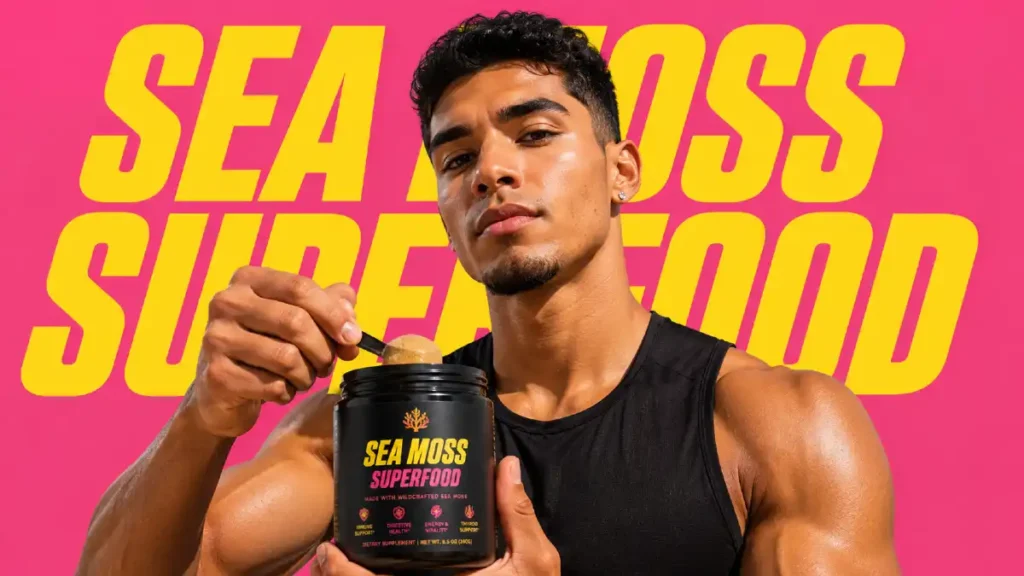
Sea moss is a red algae rich in iodine, zinc, magnesium, potassium, and iron — minerals that support thyroid function, recovery, gut health, and hormone production in men. Two tablespoons of properly sourced gel per day is the standard dose.
Walk into any wellness store in 2026 and sea moss is everywhere — gels in the cooler, capsules on the shelf, gummies at the counter. Kim Kardashian put it in a smoothie a few years back, and ever since, the algae has been treated like a magic spell: take it, get glowing skin, lose weight, fix your thyroid, live forever. Most of that is marketing noise.
But strip out the hype and something interesting remains. Sea moss is a dense, low-calorie source of minerals that modern men are quietly deficient in — iodine, zinc, magnesium, potassium, iron — and the way those minerals stack happens to map almost perfectly onto the things men actually care about: energy, recovery, hormones, libido, focus. The mainstream wellness world has been selling sea moss to women for skin and “detox.” Almost nobody is talking to men about it the way it deserves to be talked about: as a cheap, food-based way to plug nutrient gaps that show up as bad sleep, low drive, soft muscles, and brain fog.
This is the honest, blue-ocean breakdown — what the research actually says, what’s hype, and how to use it without wrecking your thyroid.
What Sea Moss Actually Is
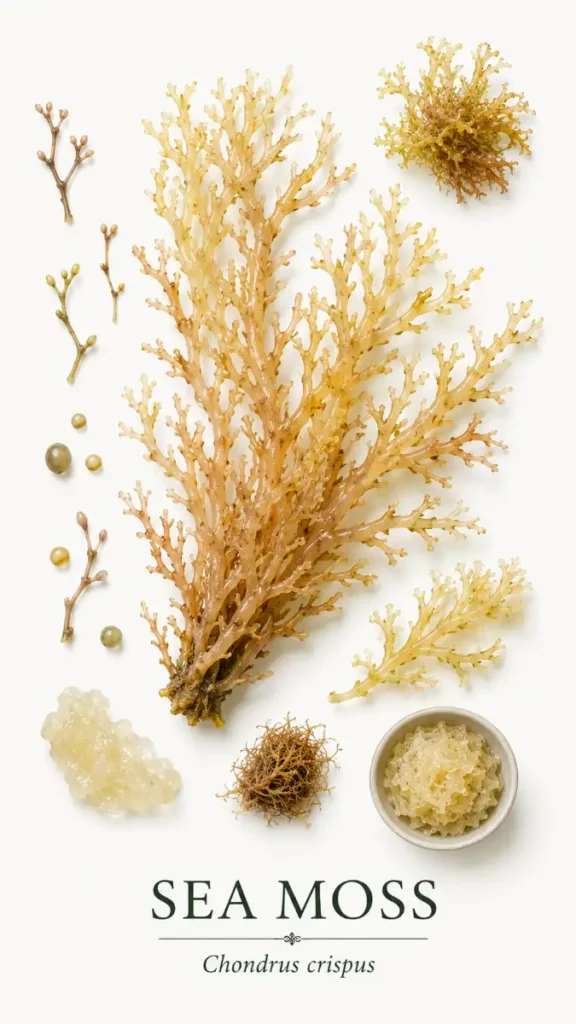
Sea moss isn’t moss. It’s a red algae — most commonly the species Chondrus crispus, also called Irish moss — that grows on the rocky Atlantic coasts of Europe and North America. Some people call it Irish sea moss; it’s a cousin of seaweed and has a mild fishy taste, which is why it almost always shows up blended into smoothies, soups, or sauces rather than eaten straight.
It has a quiet history. Sea moss has long been used as a food-thickening agent and is the only natural source of carrageenan, the gelling compound found in ice cream, almond milk, and yogurt. In Ireland, people boiled it during famine. In the Caribbean, men drink it as a stamina tonic — Jamaicans have a saying that sea moss “puts the back in your back,” which tells you exactly what they were using it for long before Western wellness rebranded it.
What changed recently is that the algae jumped from cultural staple to global supplement category. The science hasn’t caught up to the marketing yet — most of the health claims floating around sea moss actually come from studies on seaweed in general, not sea moss specifically — but the nutritional profile is real, and that’s where the value lives.
The Blue Ocean: Why Men Should Pay Attention
The sea moss conversation online is almost entirely aimed at women. Skin, hair, hormones in the female sense, weight loss. That’s a red ocean — saturated, repetitive, mostly hype.
The blue ocean is what nobody’s saying: most modern men are walking around chronically depleted in the exact minerals sea moss contains. We don’t eat organ meats. We don’t eat seaweed. We over-train, under-sleep, drink too much coffee, and most of us sweat out electrolytes daily without replacing them properly. Add ultra-processed food and the picture gets worse. The result is the cluster of complaints every man over thirty starts to recognize — flat energy, slow recovery, libido that comes and goes, sleep that doesn’t restore.
This isn’t a testosterone-booster pitch. Sea moss is not a steroid. But the minerals it delivers — iodine for thyroid (which sets your metabolic rate and indirectly your hormone production), zinc for testosterone synthesis, magnesium for sleep and nerve recovery, iron for oxygen transport, potassium for muscle contraction — are the actual upstream inputs your body uses to make energy and hormones in the first place. Most men trying to optimize performance go straight to fancy supplements and ignore the boring foundation. Sea moss is a foundation play.
If you’ve ever asked yourself why you’re always tired despite “doing everything right,” mineral status is one of the first places to look — and sea moss is one of the cheapest interventions to test.

The Nutritional Profile of Sea Moss
Sea moss gets sold as a “nature’s multivitamin” and that’s mostly accurate. The often-repeated claim is that it contains 92 of the 102 minerals the human body needs, including calcium, magnesium, potassium, and iodine. Take that figure with mild skepticism — it’s repeated everywhere and rarely sourced — but the underlying point is fair: sea moss concentrates a wide range of trace minerals from seawater.
The headline nutrients that matter for men:
Iodine. This is the big one. On average, sea moss contains about 4 to 7 micrograms of iodine per gram, meaning a tablespoon of sea moss gel delivers roughly 56 to 98 micrograms — about 37% to 65% of an adult’s daily recommended intake. Iodine is the raw material your thyroid uses to make thyroid hormone, and thyroid hormone sets your metabolic floor. Under-iodized = sluggish, cold, brain-fogged, low-libido.
Fiber. Sea moss has a higher fiber content than most vegetables, which is good for the heart and overall health. The fiber in question is mostly soluble, and a big part of it is sulfated polysaccharide (including carrageenan) that ferments in the gut.
Trace minerals. Calcium, potassium, magnesium, folate, zinc, iron — all the boring electrolyte and co-factor minerals that drive enzyme function. Researchers have noted that important minerals like calcium accumulate in seaweeds at much higher levels than in terrestrial foodstuffs.
Antioxidants. Red seaweeds like sea moss contain antioxidants that help protect cells from oxidative damage — the same kind of damage that builds up from training stress, alcohol, poor sleep, and pollution.
Amino acids and protein. Small but real. Sea moss is rich in the amino acid taurine, which supports muscle-building. Taurine is one of the more under-rated performance compounds — most pre-workouts contain it for a reason.
What sea moss is not a great source of: calories, complete protein, vitamin C, vitamin D. It’s a mineral-and-fiber play, not a meal replacement.

The Real Benefits — What the Evidence Actually Supports
1. Thyroid Function (If You Need It)
This is the most evidence-backed use. Iodine deficiency slows the thyroid, which slows everything else: metabolism, energy, recovery, libido. In iodine-deficient individuals, adequate iodine intake supports normal thyroid function.
The catch: more is not better. Iodine has a narrow therapeutic window. The recommended dietary allowance for adults is 150 mcg per day, with a tolerable upper limit of 1,100 mcg, and exceeding it can increase the risk of developing a thyroid problem. If you eat iodized salt regularly, take a multivitamin, eat dairy, and then pile sea moss on top, you can overshoot — which causes the same symptoms as deficiency. Pick a lane.
2. Gut Health and Digestion
Sea moss is a prebiotic. The soluble fiber in sea moss nourishes beneficial gut bacteria, creating an optimal environment for probiotics to thrive, and the sulfated polysaccharides in red algae are fermented by gut microbes into short-chain fatty acids like butyrate, acetate, and propionate — the compounds that feed colon cells and regulate inflammation.
There’s also a mechanical effect. The mucilaginous consistency of sea moss gel coats the digestive tract, potentially reducing inflammation and easing discomfort from gastritis and indigestion. Caribbean households have used sea moss drinks for upset stomachs for generations.
For men eating high-protein, training hard, and dealing with the bloat and irregularity that comes with it — this matters more than people give it credit for. If you’ve noticed you’re hungry shortly after a healthy meal, part of that is gut absorption. A working gut is the difference between food becoming muscle and food becoming gas.
3. Immune Support
Early studies suggest sea moss can boost the immune system and may even protect the body from contracting salmonella. The mechanism is the same polysaccharides plus the zinc and iodine contributing as immune co-factors. None of this means sea moss prevents you from getting sick — it means it provides raw materials your immune system is constantly burning through.
4. Heart Health
Studies show sea moss may help lower bad cholesterol, one of the factors for heart disease, and has also been shown to help lower blood pressure. Soluble fiber binds cholesterol in the gut. Potassium offsets sodium. The omega-3 content is small but real. None of this is dramatic, but for a man building long-term cardiovascular runway, the small inputs compound.
5. Energy and Recovery
This is indirect but worth naming. Iron drives oxygen transport in blood. Magnesium drives ATP production. Potassium drives muscle contraction. Iodine drives metabolic rate. If you’re chronically low on any of these, no morning routine, no caffeine stack, no cold plunge is going to fix the floor.
This is why sea moss earns mention next to the more obvious energy strategies — like building a real morning routine, protecting your sleep as a non-negotiable input, and treating your body as a finite energy budget rather than something you can keep withdrawing from. Sea moss doesn’t add energy. It removes the mineral bottleneck that prevents the energy you’ve earned from showing up.
6. Skin
The skin benefit is real but often overstated. Sea moss is rich in polysaccharides, particularly carrageenan, which helps lock in moisture and keep skin hydrated. Used topically as a gel mask, it’s essentially a natural hyaluronic-acid analog. Eaten, the mineral profile supports collagen synthesis (zinc, sulfur) and skin cell turnover (vitamin A precursors, antioxidants).
For men: this matters less for vanity and more for the fact that skin is a visible biomarker of internal status. Clear, healthy skin generally means your hormones, gut, and inflammation are reasonably in order.
7. Muscle and Performance Recovery
Sea moss is rich in taurine, which helps with muscle-building. Taurine plus magnesium plus potassium is essentially an electrolyte recovery formula. The fiber and minerals also help regulate hydration. Nothing here will replace a well-formulated training and nutrition plan, but if you’re already tracking macros — using something like a coach-built macro app — sea moss is a low-cost addition that addresses the micronutrient layer most lifters ignore.

8. Hormone Foundations
No sea moss study is going to show “raises testosterone.” That’s not what this is. But the minerals it contains are the inputs the endocrine system needs to do its job. Zinc is a primary co-factor for testosterone production. Iodine drives thyroid hormone, which downstream regulates sex hormone balance. Magnesium plays a role in free testosterone availability. Sleep quality (which magnesium supports) is one of the single largest determinants of male hormone production in week-to-week life.
Mineral status is upstream of hormone status. Sea moss is one of the densest mineral sources you can put in your mouth that doesn’t require eating liver or oysters every week.
How to Actually Use It
The practical question. There are four common forms:
Raw dried sea moss. Most authentic, requires prep. Wash the sea moss, then soak in cold water for a full day, changing the water frequently and removing any dirt; it’s ready when it’s doubled in size and become white and jelly-like. Then blend with filtered water to make gel.
Sea moss gel. Convenient, refrigerator-shelf, ready to spoon. A serving is just 2 tablespoons, mixed into smoothies, oatmeal, or water with lemon.
Capsules. Concentrated, no taste, easy compliance. But capsules and powders are typically more concentrated than gels, delivering more minerals — including iodine — per serving, which means easier to overdose.
Powder. Sprinkle into smoothies, sauces, baking. Middle ground.
Dosing. Start small. Begin with 1 to 3 grams of dried sea moss, rinsed and soaked thoroughly. For gel, start with 1 tablespoon a day; once your body adjusts, work up as needed, but don’t exceed 4 tablespoons daily. The standard maintenance dose most users settle on is 2 tablespoons of gel per day.
Timing. Morning is fine; it’s not a stimulant. If using it for gut and digestion, pair with food. If using for recovery, post-workout in a smoothie works well.
Pair with the right water. This sounds picky, but if you’re making your own gel, what you soak and blend it with matters. Tap water carries chlorine and trace metals that defeat the point. A decent filter — there’s a breakdown of a good countertop system on the site — solves this.
And while we’re on inputs: there’s no point being precious about sea moss minerals while still cooking on a degraded non-stick pan that leaches into your food. If you’re going to clean up the supplement layer, clean up the cookware layer too. Health stacks compound or they don’t.
Sourcing — This Is Where Most People Lose
The single biggest variable in whether sea moss is good for you or actively bad for you is sourcing. The algae absorbs whatever’s in the water around it — including heavy metals.
Iodine content varies widely depending on where and how sea moss is harvested, and some products may contain heavy metals if sourced from polluted waters. This is the boring but critical part. Cheap sea moss on Amazon, no certificate of analysis, no third-party testing — you don’t know what you’re eating.
Two things to check:
Wildcrafted vs. pool-grown. Wildcrafted sea moss harvested from the ocean contains higher levels of iodine and minerals than pool-grown aquaculture sea moss, because natural oceanic conditions provide a richer supply. Pool-grown is cheaper and often bleached. Wildcrafted from clean waters (St. Lucia, Jamaica, certain Irish coastlines) is the standard.
Certificate of analysis (COA). Any reputable brand will publish a third-party test for arsenic, lead, mercury, and cadmium, plus actual iodine content. Prioritize brands that clearly identify the species and source, and provide heavy-metal testing with batch-specific certificates of analysis. If a brand can’t show you a COA, walk away.
This is the same logic that applies to any supplement. Most of the value of a product like a high-end basics supplement line is the testing infrastructure behind it, not the ingredient itself. Sea moss is no different.
A Simple Stack That Actually Works
If you want a practical 30-day test, here’s a sane way to run it. Morning: two tablespoons of sea moss gel blended into a smoothie with whole milk or kefir, frozen berries, banana, a scoop of whey or collagen, and a handful of spinach. That single drink gives you minerals, prebiotic fiber, protein, real carbs, and antioxidants in one shot, and it takes ninety seconds. Drink it post-training on lifting days and pre-breakfast on rest days.
Track three things across the month: morning energy on a 1–10 scale, sleep quality, and resting heart rate. Don’t expect a dramatic transformation — sea moss is a slow, foundational input. What you’re watching for is the floor rising. Steadier energy across the afternoon. Less brain fog after lunch. Sleep that actually restores. If those move, the mineral hypothesis was right for you. If nothing changes after thirty days, the bottleneck was somewhere else and your money is better spent elsewhere. Run the experiment honestly. That’s the whole point.
Risks and Who Shouldn’t Take It
Sea moss is generally safe but not universally so.
Thyroid risk. The iodine is a double-edged sword. If you take thyroid medication, ask your doctor for a baseline thyroid lab before starting sea moss, then re-test six to eight weeks in. If you already have hyperthyroidism, sea moss can worsen it.
Medication interactions. Sea moss can interact with thyroid hormone medications and antithyroid drugs, changing their effects, and can increase iodine levels when combined with amiodarone. It can also interact with blood thinners due to vitamin K content.
Digestive discomfort. Possible side effects include nausea, bloating, a feeling of fullness, and a mild laxative effect — especially if you start with a large dose.
Carrageenan concern. This is more theoretical than proven. Under certain circumstances, carrageenan can be converted into “degraded carrageenan” or poligeenan, which is toxic and may cause health problems, though there is no scientific evidence the body itself does this conversion. Sensitive guts may still react to processed carrageenan additives in food more than to sea moss itself.
Pregnancy and breastfeeding. Talk to a doctor. The iodine variability makes it hard to dose safely without guidance.
Allergy. If you’re allergic to shellfish or have iodine sensitivity, skip it.
The Honest Bottom Line
Sea moss is not a magic algae that will fix your life. It is a dense, food-based mineral source that addresses a real and under-discussed problem: modern men are quietly depleted in the trace minerals their bodies need to make energy, hormones, and recovery happen.
The wellness industry has oversold it to women and underserved it to men. The blue-ocean play is treating it for what it actually is — a foundation supplement that supports thyroid, gut, recovery, and hormone inputs, at a fraction of the cost of fancier alternatives. Two tablespoons of properly sourced gel a day, alongside the basics that actually move the needle — sleep, training, real food, cutting alcohol, and the daily discipline that makes any health intervention compound — is a sane, evidence-respecting way to use it.
Skip it if you don’t need it. Test thyroid levels if you’re stacking it with other iodine sources. Source from someone who can show you a COA. Otherwise, this is a quiet, cheap, generations-old food that finally deserves the seat at the table modern men’s nutrition has been ignoring.
Just don’t expect it to do the work for you. Nothing does.
Related posts:
 The Importance of Sleep for Success (Why Discipline Depends on Rest)
 Buckwheat benefits for Men: The Complete-Protein Superfood Everyone Overlooks
 RORRA Water Filtration System Review: How It Works and Who It’s For
 Hume Band Review: Does This Stress-Tracking Wearable Actually Work?
 Can You Function on Bad Sleep? Why Your Belief Matters More Than Your Hours