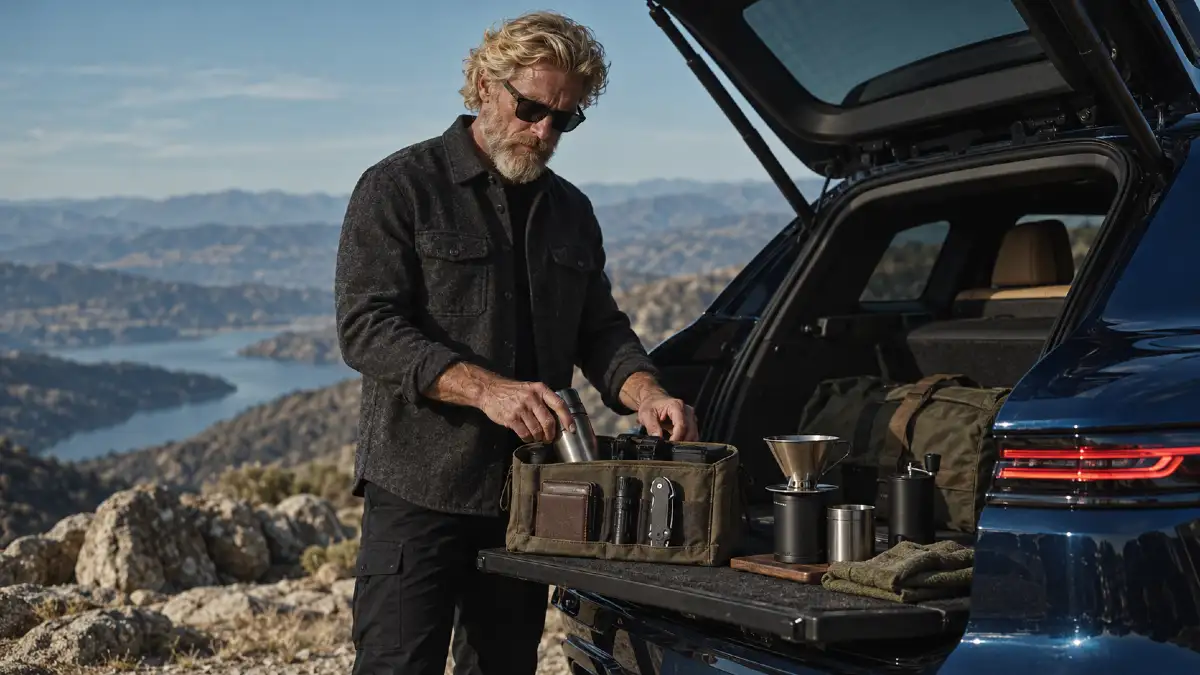
Most men don’t think about their gear until it fails them — the knife that won’t hold an edge halfway through dinner, the phone that dies the moment you actually need it, the wallet that’s falling apart in your back pocket. Good gear isn’t about buying more. It’s about buying fewer things that actually work, and understanding why the details — materials, repairability, ergonomics — matter more than the marketing around them. Here’s what belongs in a man’s kit in 2026, and why.
The Best Knives for Men Aren’t Just Kitchen Knives
A blade is one of the oldest tools a man owns, and it still separates people who take their craft seriously from people who don’t. In the kitchen, the difference between a dull, mismatched knife block and a purpose-built set shows up in every meal you cook — cleaner cuts, less wasted food, less frustration standing at the cutting board after a long day. If you’re building or upgrading a set, it’s worth working from a complete, budget-to-premium breakdown of this year’s sharpest kitchen blades rather than guessing at brand names.
The same standard applies outside the kitchen. A folding or fixed blade meant for hunting, bushcraft, or long stretches on the trail has to survive rope, wood, weather, and repeated abuse without rolling its edge — which is a very different set of demands than slicing a tomato. If that’s the gear you’re shopping for, this buyer’s guide to the toughest hunting, hiking, and survival knives on the market walks through what actually holds up in the field versus what just looks good in photos.
Rethinking the Phone in Your Pocket
Most men replace their smartphone every two years not because it’s broken, but because a battery degraded or a screen cracked and repair felt more expensive than replacement. That’s by design — and increasingly, men are opting out of it. A modular, repairable phone that you can actually open up and fix yourself is quietly becoming a statement about how you want to spend your money and attention. If planned obsolescence is starting to grate on you, the case for switching to a phone built to be repaired instead of replaced is worth a serious look before your next upgrade cycle.
Tracking Stress Without Becoming Obsessed With It
Wearables have flooded the market, but most of them just generate more numbers to anxiously refresh. The better ones actually change your behavior. A stress-tracking band that flags rising cortisol or poor recovery before you feel it — and nudges you toward a breath or a walk instead of another coffee — earns its place on your wrist in a way a step counter never will. Before buying into the hype, it’s worth reading an honest review of whether this year’s most talked-about stress-tracking wearable actually delivers on its promises.
The EDC Organizer That Actually Earns Its Pocket Space
Everyday carry gets a lot of attention for knives, flashlights, and multitools, but the thing that quietly organizes all of it — a wallet, a pen, a notebook, a sketch pad — rarely gets the same respect. For men who create for a living or as a serious hobby, a well-made waxed canvas roll that keeps your tools accessible without turning your bag into a mess is a small upgrade with an outsized daily payoff. This breakdown of a waxed canvas organizer built specifically for creatives covers exactly why it’s earned a permanent spot in a lot of men’s bags.
What’s Actually In Your Pocket: The Case for a Better Wallet
If you’re upgrading a phone and rethinking your EDC organizer, the wallet sitting in your back pocket deserves the same scrutiny — it’s arguably the piece of gear you touch most often and think about least. A worn-out bifold packed with receipts and cards you never use isn’t just bulky; it’s a small daily source of friction that a better-designed alternative removes entirely. Minimalist metal wallets have built a genuine following among EDC reviewers for exactly this reason: fewer cards forced by design, less bulk, better posture from not sitting on a brick of leather all day. This 2026 breakdown of whether the minimalist metal wallet trend actually holds up covers the design, durability, and honest trade-offs before you spend on one.
Gear for Documenting Your Life, Not Just Living It
A growing number of men are carrying a dedicated pocket camera again — not to replace their phone, but to capture the moments a phone camera still handles poorly: fast motion, low light, anything you want to edit rather than just post. Pocket gimbal cameras have become the default answer here, small enough to live in the same bag as your EDC roll but capable of noticeably better stabilized footage than a phone held in your hand. If you’re deciding whether last year’s model is still enough or whether the newest version is worth the upgrade, this side-by-side comparison of two generations of the most popular pocket gimbal camera breaks down exactly what changed and who should actually pay for it.
Building a Gift List Around Things Men Actually Use
If you’re shopping for the man in your life — or dropping hints about what you’d actually want — the goal is the same: things that get used every day, not things that sit in a drawer by February. From the gear above to a handful of other categories men consistently rate highly, this year’s rundown of gifts men actually reach for instead of regifting is a much better starting point than another generic “gift guide for him.”
Four Questions Worth Asking Before You Buy Any of This
Before adding anything to your kit — this list or otherwise — it helps to run it through a short filter:
- Will I actually use this weekly, not just admire it? Gear that only comes out for special occasions isn’t earning its cost or its space.
- What happens when it breaks? Repairability and warranty support separate gear that lasts a decade from gear you’ll quietly replace next year.
- Am I buying the marketing or the material? Brand story and packaging photograph well; they don’t cut vegetables, hold a charge, or survive a drop.
- Does it replace something, or just add to the pile? The best upgrades retire an old, worse version of the same tool rather than sitting alongside it.
The Common Thread
None of this gear is flashy for the sake of being flashy. A sharp knife, a phone you can fix, a wearable that changes a habit instead of just tracking it, a bag that keeps your tools where you need them, a wallet that doesn’t fight your pocket, a camera that actually captures what your phone can’t — these are small, boring upgrades that compound. That’s the whole philosophy: buy less, buy better, and let your gear disappear into the background of a life that actually works.
Frequently Asked Questions
What’s the single best upgrade for a man just starting to build a real EDC kit? Start with whatever you use most and complain about least — usually the wallet or the knife, since both get daily use and a bad version of either creates constant small friction. Upgrade that first before adding new categories.
Is it worth spending more on a repairable phone if my current one still works? Not immediately — but when your next upgrade cycle comes around, factoring in repairability changes the real cost comparison over 4–5 years, not just the sticker price on day one.
Do stress-tracking wearables actually work, or is it mostly marketing? It depends heavily on the specific device and how consistently you act on what it tells you. The honest answer is in the dedicated review linked above rather than a blanket yes or no here.
Related posts:
 Ridge Wallet Review (2026): Is the Minimalist Metal Wallet Actually Worth It?
 The 10 Best Chef Knives of 2026: A Complete Buyer’s Guide for Every Kitchen
 The 10 Best Wildlife Outdoor Knives of 2026: A Complete Buyer’s Guide for Hunting, Hiking, Survival, Camping and Bushcraft
 DJI Osmo Pocket 3 vs Pocket 4: The Complete Comparison (Is the Upgrade Worth It?)
 10 Most Popular Gifts for Men in 2026 (That He’ll Actually Use)