Discover who Hindz is, how he built a global audience through mindfulness content, and why his message resonates with modern men seeking clarity and purpose. Learn how his approach to self-development, discipline, and emotional awareness stands out in today’s social media landscape. Understand the impact of his philosophy and why his content continues to inspire growth, focus, and inner peace.
There’s a particular kind of quiet that feels almost suspicious online. Not silence exactly—but the absence of urgency. No flashing thumbnails, no capital-letter promises, no algorithmic panic dressed up as enthusiasm. Just a voice, steady and unhurried, speaking as if time were not constantly slipping through your fingers. That’s the atmosphere HINDZ has built, piece by piece, across years of deliberate creation—and in doing so, he’s carved out something rare: a space on the internet that doesn’t demand, doesn’t rush, and doesn’t overwhelm.
He calls it the “#1 chill spot on the internet.” It sounds casual, almost throwaway, but it carries the weight of intention. Because nothing about HINDZ’s work is accidental.
The Anti-Algorithm Creator
To understand why HINDZ matters, you have to start with the environment he exists within—and, more importantly, the one he quietly resists. Platforms like YouTube are engineered for acceleration. The faster you capture attention, the longer you hold it, the more you convert it into clicks, subscriptions, engagement—the better you perform. It’s a system that rewards immediacy, intensity, and repetition.
Creators learn quickly what works: cut faster, speak louder, simplify harder. Even vulnerability becomes stylized—compressed into digestible arcs, optimized for relatability and retention. The result is a kind of emotional efficiency, where even authenticity begins to feel rehearsed.
HINDZ opted out of that equation.
His videos don’t lunge for your attention; they wait for it. There’s no sense of urgency in his delivery, no invisible clock ticking behind his words. Instead, there’s a willingness to let ideas unfold at their natural pace, even if that means risking the viewer’s impatience. It’s a gamble in an attention economy—but it’s also what makes his work feel different.
Because when something doesn’t try to hook you, it invites you.
A Visual Language of Calm
Watch a HINDZ video long enough and patterns begin to emerge—not repetitive, but consistent in tone. The lighting is soft, often golden, as if everything exists in the quiet hour before sunset. The settings feel grounded—rooms with texture, outdoor spaces that breathe, environments that look lived in rather than staged.
Nothing is overly polished, but nothing is careless either.
This balance is crucial. Too polished, and the work would lose its intimacy. Too raw, and it would lose its clarity. HINDZ exists in the space between, where aesthetics serve emotion rather than overshadow it. The visuals don’t compete with the message; they carry it.
Even the editing follows this philosophy. Cuts are unhurried. Silence is allowed to exist. Moments linger just long enough to be felt, not just seen. In a medium where dead air is often treated as a flaw, HINDZ treats it as part of the composition.
And that choice—subtle as it is—changes how you experience the content. You’re not being pulled forward; you’re being held in place.
Beyond Self-Improvement
It would be easy to place HINDZ in the category of self-improvement creators. After all, his videos deal with growth, awareness, creativity, and emotional clarity. But the comparison doesn’t quite stick.
Traditional self-improvement content is often goal-oriented. It’s about optimization—how to be more productive, more disciplined, more successful. The language is direct, the structure is clear, and the outcome is usually measurable.
HINDZ operates differently.
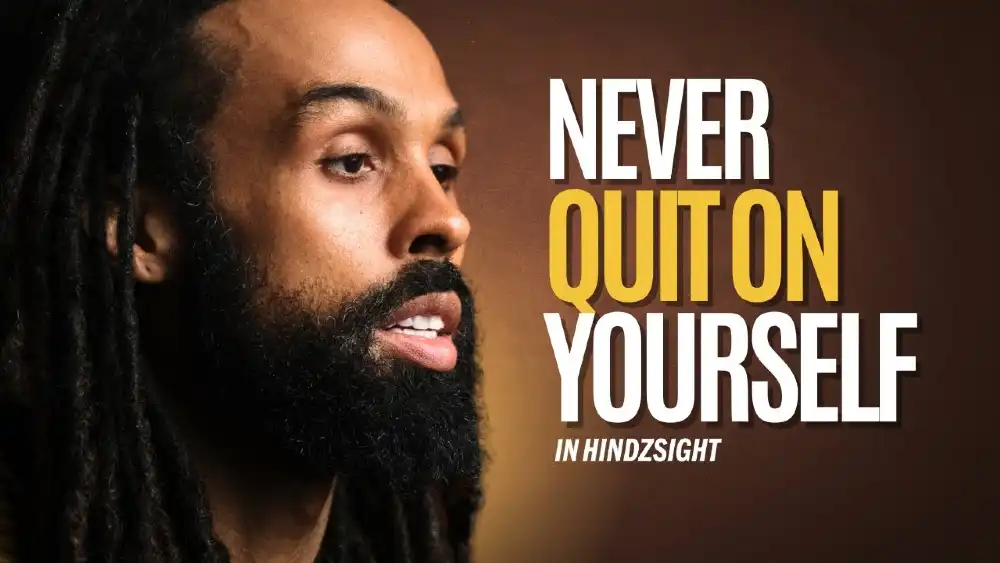
His content isn’t about fixing yourself. It’s about understanding yourself. And those are not the same thing.
There are no rigid frameworks, no promises of transformation within a set timeframe. Instead, there are reflections—on identity, on presence, on the quiet disconnect many people feel but struggle to articulate. His videos don’t position the viewer as a problem to be solved, but as a person to be listened to.
That shift—from correction to curiosity—is what gives his work its emotional depth.
The Power of Questions
One of the defining features of HINDZ’s style is his reliance on questions rather than answers. He doesn’t lecture; he explores. A single video might revolve around an idea so simple it almost feels obvious: What does it mean to be present? Why do we feel lost even when everything seems fine? What are we avoiding when we stay constantly distracted?
But instead of resolving these questions neatly, he lets them expand. He circles them, approaches them from different angles, and allows space for ambiguity. It’s a method that mirrors real thought—messy, nonlinear, unresolved.
And that’s precisely why it resonates.
In a digital landscape saturated with certainty—opinions delivered as facts, advice framed as universal truth—there’s something disarming about a creator who’s willing to sit in uncertainty. It invites the viewer to do the same.
Slow Content in a Fast World
“Slow content” isn’t a formal genre, but it’s a useful way to describe what HINDZ creates. It’s content that resists compression. Content that doesn’t prioritize efficiency over experience. Content that assumes the viewer is willing—at least for a moment—to step outside the rush.
This approach might seem counterintuitive, even risky. After all, attention spans are shrinking, competition is relentless, and the pressure to perform is constant. But HINDZ’s growth suggests something else: that there’s a significant audience not just willing, but actively searching for this kind of experience.
Because the faster the internet moves, the more valuable stillness becomes.
HINDZ doesn’t compete with high-energy creators; he complements them. He occupies a different emotional lane—one that people turn to not for stimulation, but for recalibration.
The Podcast: Thought in Motion
When HINDZ launched In Hindzsight, it felt less like an expansion of his brand and more like a natural extension of his thinking. If the videos are carefully composed reflections, the podcast is where those reflections loosen and stretch.
There’s a different rhythm to audio. Without visuals to anchor the experience, the focus shifts entirely to voice, tone, and pacing. For many creators, that can feel exposing. For HINDZ, it feels aligned.
The podcast allows him to explore ideas in greater depth, to follow tangents, to let thoughts evolve in real time. It’s less structured, more conversational—but it retains the same core quality that defines his work: intentionality.
Listeners often describe the experience as grounding, not because it offers solutions, but because it creates space. And in a world saturated with noise, space is its own kind of value.
A Community That Reflects the Creator
Spend a few minutes in the comment section of a HINDZ video and you’ll notice something unusual. The tone is different. Softer. More reflective. People aren’t competing for attention; they’re sharing experiences.
It feels less like a public forum and more like a collective journal.
This isn’t accidental. Communities tend to mirror the energy of the spaces they inhabit. When a creator shows up with urgency, the audience responds with urgency. When a creator shows up with care, the audience often does the same.
HINDZ has cultivated a space where reflection is the norm, not the exception. And over time, that has created a kind of feedback loop—one where the audience reinforces the very atmosphere that drew them in.
It’s not just content; it’s environment.
The Subtlety of Influence
HINDZ isn’t the kind of creator who dominates headlines or trends. His growth has been steady rather than explosive, his presence consistent rather than ubiquitous. But influence doesn’t always operate at the level of visibility.
Sometimes it works more quietly.
It shows up in the way other creators begin to adopt slower pacing, more intentional storytelling, softer visual aesthetics. It appears in the increasing demand for content that feels less transactional and more human. It emerges in the conversations audiences start having—not just about what they consume, but how it makes them feel.
HINDZ is part of a broader shift, but he’s also helping to shape it.
The Business of Staying Grounded
Behind the calm exterior of HINDZ’s content is the reality that he operates within the same economic structures as any other creator. There are partnerships, monetization strategies, and the ongoing challenge of sustaining a creative career.
What sets him apart is how little of that structure intrudes on the experience of his work.
Brand collaborations tend to align with his ethos—tools for learning, platforms for creativity, services connected to well-being. They’re integrated in a way that feels considered rather than imposed. There’s no sense of dissonance between the message and the medium.
This is harder than it looks. It requires selectivity, restraint, and a willingness to prioritize long-term trust over short-term gain.
But it’s also what preserves the integrity of the space he’s built.
Why Now?
HINDZ’s rise isn’t happening in a vacuum. It’s tied to a larger cultural moment—one defined by digital fatigue, emotional burnout, and a growing awareness of how constant connectivity affects mental well-being.
People are tired. Not just physically, but cognitively. The endless stream of information, the pressure to keep up, the subtle anxiety of always being “on”—it accumulates.
In that context, HINDZ doesn’t just offer content; he offers relief.
Not in the sense of escape, but in the sense of recalibration. His videos don’t pull you away from reality; they bring you back to it. They remind you that not everything needs to be urgent, that not every moment needs to be optimized, that there’s value in simply being present.
And that message, increasingly, feels necessary.
The Future of Calm
It’s tempting to see HINDZ as an outlier—a niche creator with a specific audience and a distinct style. But that framing misses the bigger picture.
What he represents is a shift in what audiences value.
As the novelty of constant stimulation wears off, the appeal of something slower, more intentional, more human begins to grow. Creators who can offer that—without sacrificing authenticity—are likely to find themselves not just relevant, but essential.
HINDZ is already there.
The question isn’t whether his approach will scale in the traditional sense. It’s whether the definition of success itself is beginning to change.
The Quiet Revolution
There’s nothing overtly revolutionary about a calm video, a thoughtful podcast, a soft-spoken reflection. But in the context of the modern internet, those things take on a different weight.
They become acts of resistance.
Not loud, not confrontational, but deliberate. A refusal to participate in the constant acceleration. A choice to prioritize depth over speed, presence over performance, meaning over metrics.
HINDZ isn’t trying to change the internet. He’s simply showing that it can be different.
And for the people who find their way into his corner of it, that difference is enough.
Staying a While
Maybe that’s the real measure of his work—not how many people click, but how many people stay. Not how quickly his videos spread, but how long they linger.
Because long after the screen goes dark, there’s often a trace left behind. A thought that sticks. A question that returns. A small shift in how you move through your own day.
Nothing dramatic. Nothing overwhelming.
Just enough to notice.
And in a world that rarely slows down, that might be the most meaningful impact of all.
Related posts:
 Roberto Blake on AI, Shorts, and the New Rules of YouTube Growth in 2026
 Is Your Content Helping or Harming? A Creator’s Guide to Honest Self-Evaluation
 The YouTube Algorithm Update: What Creators Need to Know About the 2026 Gemini Update
 Social Media Trends 2026: Expert Predictions from Kallaway and GaryVee That Will Transform Your Strategy
 Who Is Hoemath? The Anonymous YouTuber Redefining Red Pill Content for Men