
The Problem with Traditional Success Metrics
Imagine going to a doctor who only measures one vital sign. Your blood pressure is perfect, the doctor declares you healthy, and sends you home—ignoring your irregular heartbeat, depleted oxygen levels, and symptoms of serious illness. This would be medical malpractice, yet it’s exactly how most people measure success in their lives.
In “The 5 Types of Wealth,” Sahil Bloom introduces a revolutionary assessment tool called the Wealth Score—a framework for evaluating your life across all five dimensions of wealth rather than just the financial dimension that dominates conventional success metrics. The Wealth Score reveals a sobering truth: many people who appear successful by traditional measures (income, title, possessions) are actually living in profound poverty across the dimensions that most determine life satisfaction.
Bloom’s own story illustrates this disconnect. By age 30, he had achieved every conventional marker of success: the high-paying job, the impressive title, the material trappings of wealth. His bank account was healthy; his life was not. He was time-poor (working endless hours), socially impoverished (living far from family and neglecting relationships), mentally depleted (anxious and stressed), and physically declining (overweight and sedentary). He scored high in one dimension while failing catastrophically in four others.
This is the epidemic of modern success, Bloom argues: we optimize for one type of wealth while allowing the others to atrophy, then wonder why achievement feels empty and success feels like failure.
Understanding the Wealth Score Framework
The Wealth Score is deceptively simple but profoundly revealing. For each of the five types of wealth (Time, Social, Mental, Physical, Financial), you rate yourself on a scale of 1-10, with specific criteria for each rating. The maximum possible score is 50 (10 in each dimension), representing what Bloom calls “integrated wealth”—excellence across all five domains.
What makes the Wealth Score powerful is not the absolute number but the pattern it reveals. A person scoring 9 in Financial Wealth but 3 in Time Wealth, 4 in Social Wealth, 3 in Mental Wealth, and 4 in Physical Wealth (total: 23/50) is suffering from what Bloom calls “imbalanced success syndrome.” They’ve optimized one dimension while allowing the others to collapse—and because Financial Wealth alone doesn’t create happiness, they’re miserable despite material abundance.
Conversely, a person scoring 7s across all five dimensions (total: 35/50) is experiencing what Bloom calls “integrated wealth”—not perfect in any single dimension, but strong across all of them. Research consistently shows that this balanced person will report higher life satisfaction than the imbalanced person with a higher Financial Wealth score.
The Wealth Score accomplishes what conventional success metrics cannot: it makes visible the trade-offs and sacrifices hidden beneath surface achievements. It reveals that the person working 80-hour weeks to maximize earnings is not just sacrificing time—they’re sacrificing their health, their relationships, and their mental well-being. They’re trading four types of wealth for one, and the math doesn’t work.
The Five Dimensions Defined
In “The 5 Types of Wealth,” Bloom provides specific criteria for evaluating each dimension of the Wealth Score:
Time Wealth (1-10): This dimension measures your autonomy over your time and the quality of how you spend it. A low score indicates time poverty—no control over your schedule, constantly busy, unable to say no, feeling perpetually behind. A high score indicates time abundance—autonomy over how you spend each day, ability to prioritize what matters, presence in the moment, and elimination of time vampires that drain without adding value.
Key questions for Time Wealth: Do you control your schedule or does your schedule control you? Can you create uninterrupted time for what matters most? Are you present in the moments you’re in? Do you spend time according to your stated priorities?
Social Wealth (1-10): This dimension evaluates the depth and quality of your relationships. A low score means isolation, superficial connections, lack of genuine support, or maintaining relationships out of obligation rather than genuine connection. A high score means deep, supportive relationships with people who genuinely care about you, consistent meaningful interactions, and a sense of belonging and community.
Key questions for Social Wealth: Who would be devastated if something happened to you? Do you have people you can call in a crisis? Do your relationships energize or drain you? Are you building the relationships you claim to value?
Mental Wealth (1-10): This dimension assesses the quality of your mental state—your clarity, peace, growth mindset, and ability to be present. A low score indicates chronic anxiety, rumination, fixed mindset, inability to focus, or feeling overwhelmed by mental chatter. A high score indicates mental clarity, capacity for presence, commitment to growth, ability to manage stress, and generally peaceful state of mind.
Key questions for Mental Wealth: Is your mind generally at peace or in turmoil? Can you focus on what’s in front of you? Are you learning and growing? Do you have practices that support mental health?
Physical Wealth (1-10): This dimension measures your physical health, energy, and capability. A low score means low energy, frequent illness, poor sleep, sedentary lifestyle, or declining physical capacity. A high score means high energy throughout the day, strength and mobility, quality sleep, consistent movement, and feeling capable in your body.
Key questions for Physical Wealth: Do you have energy to do what you want? Can you move without pain or restriction? Are you stronger than last year or weaker? Would you be able to dance at your 80th birthday party if you continue your current trajectory?
Financial Wealth (1-10): This dimension evaluates your financial situation relative to your needs and goals. Importantly, Bloom defines this not by absolute amount but by the gap between income and expenses, progress toward your “enough” number, and financial stress levels. A low score means living paycheck to paycheck, accumulating debt, or chronic financial anxiety. A high score means spending less than you earn, making progress toward financial goals, and freedom from financial stress.
Key questions for Financial Wealth: Do you spend less than you earn consistently? Are you making progress toward financial independence? Does money cause chronic stress or enable freedom? Have you defined “enough”?
The Revealing Patterns
What makes the Wealth Score particularly insightful is the patterns it reveals in “The 5 Types of Wealth.” Bloom identifies several common imbalance patterns:
The High Achiever Pattern: Scores of 9-10 in Financial Wealth, 3-5 in everything else. This is the successful professional who has sacrificed time, health, relationships, and mental peace for career achievement. They look successful externally while experiencing internal poverty. Many of Bloom’s readers recognize themselves in this pattern.
The Burning Out Pattern: Low scores across all dimensions, often the result of extended period of imbalance. The person has been running on empty for so long that every system is failing. They’re time-poor, socially isolated, mentally exhausted, physically declining, and often financially stressed despite good income because their depleted state leads to poor decisions.
The Drifting Pattern: Middling scores (4-6) across all dimensions—not terrible anywhere but not excellent anywhere either. This is the person who hasn’t actively designed their life, just accepting whatever circumstances delivered. They’re not in crisis, but they’re not thriving either. They’re existing rather than living.
The Integrated Wealth Pattern: Scores of 7-9 across all dimensions. This is the pattern Bloom advocates for—strong but not perfect in all areas, with intentional design creating balance. These individuals have made conscious trade-offs to avoid over-indexing on any single dimension at the expense of others.
The goal isn’t perfection (50/50)—it’s integration. Bloom argues that chasing 10s in every dimension is both impossible and unnecessary. Instead, the aim is maintaining 7+ in each dimension, ensuring you’re thriving across all aspects that contribute to life satisfaction.
The Life Razor: Keeping Earth in the Window
One of the most powerful concepts in “The 5 Types of Wealth” is what Bloom calls the Life Razor, inspired by a conversation between astronaut Jack Swigert and mission control during the Apollo 13 crisis. When systems were failing and the spacecraft was in jeopardy, mission control instructed: “Keep the Earth in the window.”
This simple instruction provided clarity amid chaos. With Earth visible, they knew their orientation. Without it, they were lost in space. Bloom uses this as a metaphor for life design: What is your “Earth”—the reference point that keeps you oriented toward what matters? When you’re overwhelmed by demands, opportunities, and obligations, what keeps you aligned with your true priorities?
For most people, the answer is their Wealth Score across all five dimensions. When Time Wealth is declining, it’s a warning signal. When Social Wealth is suffering, it’s a course correction alert. When any dimension drops significantly, you’re losing sight of Earth—you’re drifting away from integrated wealth toward imbalanced success.
The Life Razor provides a simple decision-making tool: Before accepting any opportunity, ask: “Will this improve my overall Wealth Score, or will it boost one dimension while significantly harming others?” A promotion that increases Financial Wealth but requires 80-hour weeks and constant travel might actually decrease your overall wealth by devastating Time, Social, Physical, and Mental Wealth.
Your True North: Climbing the Right Mountain
Another essential framework from “The 5 Types of Wealth” is what Bloom calls “finding your True North”—ensuring you’re climbing the right mountain rather than efficiently climbing the wrong one. This concept addresses a tragedy Bloom observes: highly capable people spending decades climbing toward a summit, only to realize upon arrival that they’ve climbed the wrong mountain entirely.
The person who sacrifices their health, relationships, and peace to reach the top of the career mountain, only to discover that career success feels empty without the other dimensions of wealth. The person who defers all enjoyment until retirement, only to arrive at retirement too broken, isolated, or depleted to enjoy it. The person who optimizes their life for what others expect or respect, only to realize they’ve built someone else’s dream life rather than their own.
Finding True North requires deep honesty about what you actually value versus what you’ve been conditioned to value. It requires distinguishing between authentic desires and borrowed desires—goals you’ve absorbed from culture, family, or peers without questioning whether they align with your genuine values and vision.
Bloom provides a powerful exercise in “The 5 Types of Wealth”: Imagine you’re 80 years old, looking back on your life. What would you regret? Not the things you tried and failed at, but the things you never attempted because you were too busy climbing someone else’s mountain. Not the money you didn’t make, but the time you didn’t spend with people you loved. Not the status you didn’t achieve, but the person you didn’t become.
This 80-year-old perspective cuts through the noise of daily pressures and reveals True North—the direction that leads to a life you’ll be proud to have lived, measured not by conventional success metrics but by your Wealth Score across all five dimensions.
The Thousand Years of Wisdom
“The 5 Types of Wealth” opens with a profound thought experiment: What advice would one thousand years of collected human wisdom offer to your younger self? Bloom synthesizes insights from philosophers, researchers, successful individuals, and elderly people reflecting on their lives. The pattern is striking: almost no one wishes they’d worked more, earned more, or achieved more conventional success. Instead, they wish they’d:
- Spent more time with loved ones (Social Wealth)
- Been more present in moments rather than perpetually distracted (Time Wealth and Mental Wealth)
- Taken better care of their health (Physical Wealth)
- Worried less about money and status (Financial Wealth in proper perspective)
- Pursued what genuinely interested them rather than what impressed others (True North)
This wisdom reveals that the Wealth Score framework isn’t arbitrary—it reflects what actually determines life satisfaction according to people who’ve lived full lives and can see clearly what mattered. The tragic irony is that this wisdom typically arrives too late, after the trade-offs have been made and opportunities have passed.
The Wealth Score and the frameworks in “The 5 Types of Wealth” are attempts to deliver this wisdom early enough to act on it—to help people in their 20s, 30s, 40s design lives they won’t regret in their 80s.
Practical Application of the Wealth Score
Bloom provides a systematic approach to using the Wealth Score in “The 5 Types of Wealth”:
Quarterly Assessment: Every three months, honestly evaluate yourself across all five dimensions. Rate yourself 1-10 in each, noting the total and the pattern. Be brutally honest—the score is for you, not for others.
Identify Deficits: Which dimensions are suffering? Which have declined since the last assessment? These are your priority areas for intervention.
Root Cause Analysis: Why is this dimension low? What specific behaviors, commitments, or circumstances are creating poverty in this area? Often, boosting one dimension requires sacrifice in another—be honest about these trade-offs.
One Dimension Focus: Rather than trying to improve all dimensions simultaneously, Bloom recommends focusing on the lowest-scoring dimension for the next quarter. Apply the specific systems and practices for that type of wealth, making it your priority.
Trade-Off Awareness: As you work on one dimension, monitor others. The goal is to raise the low score without destroying the higher ones. This requires conscious design rather than reactive behavior.
Annual Review: Once yearly, review your four quarterly scores. What’s the trend line? Are you achieving integration or sliding toward imbalance? Use this data to make bigger life decisions—career changes, relocations, relationship changes.
The Integration Challenge
The most difficult aspect of the Wealth Score framework, as Bloom acknowledges in “The 5 Types of Wealth,” is that building all five types of wealth simultaneously seems impossible in the modern world. The demands on our time, energy, and attention feel overwhelming. The pressure to optimize Financial Wealth through career demands seems to require sacrificing other dimensions.
But Bloom argues this is largely a false constraint created by conventional models of success. The integration challenge is difficult but not impossible, and the solution lies in several key insights:
Synergies Exist: Building one type of wealth can support others. Physical Wealth boosts Mental Wealth through the mind-body connection. Social Wealth provides support that enables Time Wealth and Mental Wealth. These aren’t entirely separate accounts—they’re interconnected systems.
Less Can Be More: Often, the path to higher scores across all dimensions involves doing less, not more. Saying no to opportunities that boost one dimension while harming three others. Simplifying life to create space for what matters. Eliminating the “busy work” that feels productive but doesn’t build any form of wealth.
Efficiency vs. Effectiveness: We’ve been conditioned to value efficiency—doing things quickly. But integrated wealth requires effectiveness—doing the right things. An hour of focused presence with family builds more Social Wealth than five hours of distracted time. Twenty minutes of strength training builds more Physical Wealth than two hours of half-hearted activity.
The Compounding Effect: Small, consistent investments in each dimension compound dramatically over time. Fifteen minutes of daily meditation builds significant Mental Wealth over months. A weekly family dinner builds substantial Social Wealth over years. The person making small deposits across all five accounts will, over time, achieve integrated wealth that seems impossible in the short term.
Designing Your Dream Life
The ultimate purpose of the Wealth Score, as Bloom explains in “The 5 Types of Wealth,” is not measurement for its own sake but as a tool for design. Once you know your current state across all five dimensions, you can intentionally design your life to achieve integration rather than accepting whatever imbalance circumstances create.
Life design requires:
Clarity on Values: What actually matters to you? Not what should matter, not what others value, but what you genuinely prioritize when you’re honest with yourself.
Vision Creation: What does integrated wealth look like for you specifically? What would 7s or 8s across all five dimensions mean in your life? Paint the specific picture.
Gap Analysis: What’s the difference between your vision and current reality? What specific changes would move you toward integration?
System Design: What daily, weekly, and monthly practices would support each dimension? How do you structure life to make integrated wealth the default rather than requiring constant willpower?
Boundary Setting: What must you say no to in order to say yes to integrated wealth? What opportunities, commitments, or expectations must you release?

Conclusion: The Wealth That Actually Matters
The Wealth Score framework in “The 5 Types of Wealth” fundamentally challenges conventional definitions of success. It reveals that the person earning $300,000 while working 80 hours per week, neglecting relationships, anxious and stressed, and declining physically is not successful—they’re experiencing high-income poverty. Meanwhile, the person earning $75,000 with autonomy over their time, deep relationships, mental clarity, physical vitality, and financial stability is genuinely wealthy.
As Sahil Bloom demonstrates throughout the book, true wealth isn’t one-dimensional—it’s integrated. It’s not about maximizing any single type of wealth but about achieving sufficiency across all five. It’s not about comparison to others but about alignment with your own values and vision. It’s not about what looks successful but about what feels successful—the deep, sustainable satisfaction that comes from a well-designed life.
The Wealth Score provides something rare: a tool for making the invisible visible, for measuring what actually matters, and for designing a life of genuine richness rather than accepting conventional poverty disguised as success. It transforms wealth from an abstract concept or a single number in a bank account into a comprehensive assessment of life well-lived across all dimensions that determine human flourishing.
The question isn’t whether you’re wealthy by conventional standards—it’s whether you’re wealthy across the five dimensions that actually determine life satisfaction. The Wealth Score gives you the framework to answer honestly, the insight to see where you’re thriving and where you’re suffering, and the foundation for designing the integrated wealth that represents a truly rich life.
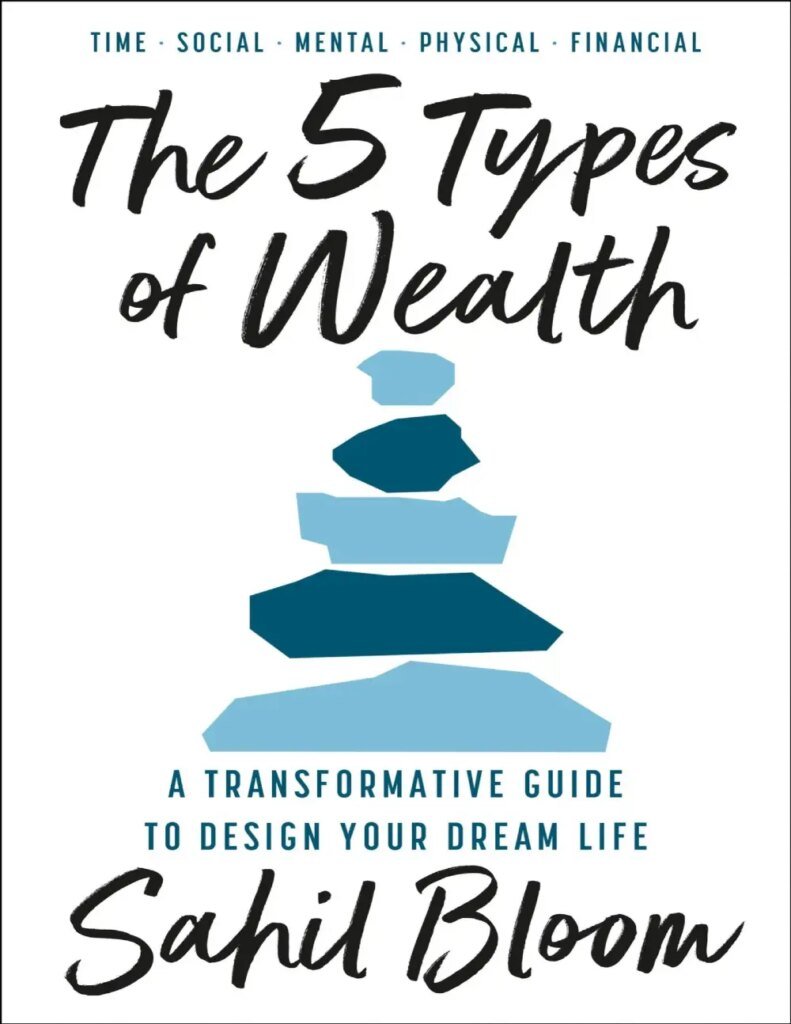
About “The 5 Types of Wealth”: Sahil Bloom’s transformative book, published by Ballantine Books in 2025, presents a revolutionary framework for success beyond financial metrics. “The 5 Types of Wealth: A Transformative Guide to Design Your Dream Life” explores Time, Social, Mental, Physical, and Financial Wealth through both philosophical insights and practical systems, including the Wealth Score assessment tool that enables readers to design lives of integrated richness across all dimensions that determine human flourishing.
Related posts:
 How to Actually Transform Your Life Using the 5 Types of Wealth Framework (The 5 Types of Wealth by Sahil Bloom)
 The Entrepreneurial Path to Integrated Wealth: Building a Business That Serves All Five Dimensions
 From Money Obsession to Financial Freedom (The 5 Types of Wealth by Sahil Bloom)
 The Body Budget: Why Your Physical Wealth Determines Every Other Form of Success
 Mental Wealth: How to Build Clarity in an Age of Infinite Distraction