
The Badge of Honor That’s Actually a Warning Sign
“How much did you sleep last night?” has become a competition in modern culture. Five hours? Four? Three? The person who brags about functioning on the least sleep somehow wins, as if sleep deprivation demonstrates dedication, toughness, or importance. “I’ll sleep when I’m dead” has become a mantra of the ambitious, the driven, the successful.
But as Sahil Bloom reveals in “The 5 Types of Wealth,” this cultural celebration of sleep deprivation is one of the most destructive beliefs of modern life. Sleep isn’t a luxury to be sacrificed for productivity—it’s the foundation upon which all five types of wealth are built. Chronic sleep deprivation doesn’t make you more productive; it makes you progressively worse at everything while destroying your health, relationships, mental clarity, and even financial decision-making.
The research is unambiguous and sobering. According to studies cited in “The 5 Types of Wealth,” 62% of adults worldwide don’t sleep well on a regular basis. Among high school students, insufficient sleep is even more prevalent. And the cost of this epidemic is staggering: impaired cognitive function, weakened immune system, increased disease risk, emotional dysregulation, reduced productivity, damaged relationships, and decreased life expectancy.
The cruel irony is that people sacrifice sleep to be more productive, but sleep deprivation makes them less effective at everything they’re trying to accomplish. They’re trading the foundation of performance for a few more hours of diminished capability. They’re burning down their house to get a bit more light.
Matthew Walker’s Wake-Up Call
The modern understanding of sleep’s critical importance was revolutionized by Dr. Matthew Walker, a neuroscientist at the University of California, Berkeley, whose 2017 book “Why We Sleep” became a bestseller and changed how millions of people think about rest. Bloom references Walker’s research extensively in “The 5 Types of Wealth,” and the findings are impossible to ignore.
According to Walker’s research, sleep deprivation affects virtually every system and function in the human body:
Cognitive Function: Sleep deprivation impairs attention, alertness, concentration, reasoning, and problem-solving. Even a single night of poor sleep reduces cognitive performance measurably. Chronic sleep deprivation creates cumulative deficits that can’t be recovered with occasional “catch-up” sleep.
Memory Formation: Much of memory consolidation happens during sleep. Without adequate sleep, your brain can’t properly encode new information or consolidate memories from short-term to long-term storage. You’re learning less from your experiences and retaining less of what you learn.
Emotional Regulation: Sleep deprivation significantly impairs the brain’s ability to regulate emotions. You become more reactive, more irritable, less resilient to stress, and less capable of maintaining perspective. The things that would normally be manageable annoyances become major frustrations when you’re sleep-deprived.
Immune Function: During sleep, your immune system releases proteins called cytokines that help fight infection and inflammation. Chronic sleep deprivation weakens immune response, making you more susceptible to illness and slower to recover when you do get sick.
Metabolic Health: Sleep deprivation disrupts the hormones that regulate hunger (ghrelin and leptin), making you hungrier and more likely to overeat. It also impairs glucose metabolism and insulin sensitivity, increasing diabetes risk. The sleep-deprived person craves unhealthy food and has less willpower to resist.
Cardiovascular Health: Chronic sleep deprivation increases blood pressure, inflammation, and cardiovascular disease risk. Even a single hour less sleep per night over years translates to significantly increased heart attack and stroke risk.
Mental Health: Sleep deprivation is both a symptom and a cause of depression and anxiety. The relationship is bidirectional: poor sleep worsens mental health, and poor mental health disrupts sleep, creating a vicious cycle.
As Walker summarizes in an interview cited by Bloom: “In the absence of quality sleep over two or three days, you’re just going to fall to pieces. In the presence of quality-sufficient sleep over two or three days, you’re going to function at an entirely different level.”
The research doesn’t just show that poor sleep is bad—it shows that quality sleep is transformative. It’s not just about avoiding decline; it’s about enabling optimization across every dimension of human performance.
Sleep’s Impact on the Five Types of Wealth
In “The 5 Types of Wealth,” Bloom demonstrates how sleep affects every dimension of wealth:
Time Wealth
The sleep-deprived person is chronically inefficient. Tasks that would take a well-rested person one hour take them two or three. They make more mistakes requiring correction. They get distracted more easily. They experience decision fatigue earlier in the day. The hours “saved” by sleeping less are more than lost to reduced effectiveness while awake.
Moreover, chronic sleep deprivation makes you feel like you never have enough time because your perception of time becomes distorted. Everything feels harder, takes longer, and requires more effort. The sense of time scarcity intensifies even though sleeping more would create more effective waking hours.
Social Wealth
Sleep deprivation devastates relationships. The irritable, emotionally dysregulated, exhausted person is not pleasant to be around. They’re more likely to snap at loved ones, misinterpret others’ intentions, and lack the emotional bandwidth for genuine connection.
Parents who sacrifice sleep to “spend more time” with their children discover they’re physically present but emotionally absent—too depleted to actually engage. Partners who sacrifice sleep for work find their relationships suffering because they lack energy for genuine intimacy and connection. The quantity of time together means little when sleep debt makes quality connection impossible.
Mental Wealth
Mental Wealth requires cognitive capacity, emotional regulation, and the ability to be present—all of which collapse under sleep deprivation. The sleep-deprived person exists in a fog of diminished mental capability. They can’t think clearly, learn effectively, or regulate their emotional state. Anxiety and rumination intensify. The mental space required for stillness, growth, and presence evaporates.
As Bloom notes, every strategy for building Mental Wealth becomes dramatically harder without adequate sleep. Meditation is more difficult when you’re fighting to stay awake. Learning is impaired when your brain can’t consolidate memories. Creative thinking suffers when your cognitive function is compromised.
Physical Wealth
Sleep is when the body repairs and rebuilds. Muscle recovery happens primarily during sleep. Hormones that support physical health are released during sleep. The sleep-deprived person heals slower from injuries, builds muscle less effectively from exercise, and experiences greater inflammation throughout the body.
Moreover, sleep deprivation sabotages healthy eating (increased cravings for unhealthy food, less willpower to resist), consistent exercise (too tired to work out effectively), and every other aspect of Physical Wealth. You can have the perfect nutrition and exercise plan, but without adequate sleep, you’re undermining everything.
Financial Wealth
Sleep deprivation impairs decision-making, risk assessment, and emotional regulation—all critical for financial health. Tired people make impulsive purchases, poor investment decisions, and suboptimal career choices. They’re less productive at work, reducing earning potential. They’re less creative and strategic, missing opportunities. They’re more prone to expensive mistakes.
Studies show that CEOs and executives who sleep poorly make worse business decisions. Traders who are sleep-deprived take bigger risks with worse outcomes. The financial cost of chronic sleep deprivation across a career likely dwarfs any financial gains from the extra working hours sleep was sacrificed for.
The Sleep Debt Myth
One of the most dangerous misconceptions about sleep, which Bloom addresses in “The 5 Types of Wealth,” is the belief that sleep debt can be repaid. Many people sacrifice sleep during the week, planning to “catch up” on weekends. But research shows this doesn’t work—at least not the way people think.
While you can recover from acute sleep deprivation with subsequent good sleep, chronic sleep deprivation creates cumulative deficits that can’t be fully repaid. Some of the damage is permanent. Moreover, the practice of sleeping poorly five days and trying to recover two days creates a pattern of chronic jet lag that disrupts your circadian rhythm, making all sleep less effective.
The “sleep when I’m dead” crowd is literally shortening their lives while reducing their quality. They’re not making a productive trade-off; they’re destroying their foundation while believing they’re building their future.
The Sleep Sanctuary: Creating Optimal Conditions
In “The 5 Types of Wealth,” Bloom provides a comprehensive framework for creating what he calls the “Sleep Sanctuary”—an environment and routine optimized for quality rest. The research on sleep hygiene is clear, and while individual variations exist, certain principles apply to everyone:
Environment Optimization
Temperature: The optimal sleep temperature is 65-68°F (18-20°C). Your body temperature needs to drop for sleep initiation, and a cool room facilitates this. Many people sleep in rooms that are too warm, creating difficulty falling and staying asleep.
Darkness: Complete darkness is essential. Light exposure suppresses melatonin production and disrupts circadian rhythm. This means blackout curtains or a quality eye mask, and eliminating all sources of light including small LEDs from devices.
Quiet: Minimize noise disruption. If you can’t control ambient noise (traffic, neighbors), consider white noise machines or earplugs. Sudden noises fragment sleep even when you don’t consciously wake.
Comfort: Invest in quality sleep surfaces. You spend roughly a third of your life in bed—this is not the place to be cheap. The right mattress, pillows, and bedding for your body and preferences significantly impact sleep quality.
Bedroom Purpose: Reserve the bedroom for sleep and intimacy only. Not work, not TV watching, not scrolling social media. This strengthens the psychological association between the space and rest.
Timing and Routine
Consistent Schedule: Go to bed and wake up at the same time every day—including weekends. This regulates your circadian rhythm, making both falling asleep and waking naturally easier over time.
Buffer Time: Build in buffer time before your target sleep time. Don’t work until 10:45pm if you want to sleep at 11pm. Create wind-down routines that signal to your body that sleep is approaching.
Digital Sunset: Establish a firm time when all screens turn off and stay off. Bloom recommends at least one hour before bed, preferably more. The blue light from screens suppresses melatonin, and the content often activates rather than relaxes.
Pre-Sleep Ritual: Develop a consistent routine that signals bedtime: reading physical books, light stretching, meditation, journaling, etc. The consistency trains your body to prepare for sleep when the routine begins.
Substances and Sleep
Caffeine: Caffeine has a half-life of 5-6 hours, meaning half is still in your system six hours after consumption. Afternoon coffee is still affecting your sleep quality even if you fall asleep fine. Bloom recommends no caffeine after 2pm.
Alcohol: While alcohol may help you fall asleep faster, it significantly impairs sleep quality, particularly REM sleep which is critical for cognitive function and emotional regulation. The sleep-inducing effect isn’t worth the quality degradation.
Food Timing: Large meals close to bedtime disrupt sleep. Your body should be focused on rest and repair, not digesting a heavy meal. Aim for 2-3 hours between your last meal and sleep.
Hydration Balance: Adequate hydration is important, but excessive fluid intake right before bed means waking for bathroom trips. Front-load your water consumption earlier in the day.
The Three Levels of Sleep Performance
Bloom presents a progressive framework in “The 5 Types of Wealth” for building what he calls “sleep performance”:
Level 1: Adequate Quantity Simply achieving 7-8 hours of sleep per night, consistently. This is the foundation—nothing else matters if you’re chronically sleep-deprived. Many people need to start here: making sleep non-negotiable and protecting those hours.
Level 2: Optimized Environment Achieving 7-8 hours in an environment optimized for quality: cool, dark, quiet, comfortable. This level adds the sleep sanctuary principles to ensure the hours you’re sleeping are high-quality hours.
Level 3: Advanced Optimization This includes everything from Level 2 plus: fixed sleep/wake windows that align with your circadian rhythm, consistent pre-sleep routines, strategic substance management, recovery tools (potentially including supplements like magnesium, breath work, meditation), and tracking to understand your individual patterns.
Most people should focus on achieving Level 1 before worrying about advanced optimization. Getting adequate sleep consistently is far more important than optimizing mediocre sleep.
The Productivity Paradox of Sleep
Perhaps the most compelling argument in “The 5 Types of Wealth” for prioritizing sleep is what Bloom calls the “productivity paradox”: the hours you “save” by sleeping less make you so much less effective in your waking hours that you’d accomplish more by sleeping more and working less.
Research shows that cognitive function declines measurably with each hour of sleep debt. After several nights of inadequate sleep, your cognitive performance is equivalent to being legally drunk. You wouldn’t brag about working drunk, yet you brag about working exhausted—and the impairment is similar.
Bloom shares examples of high-performers who swear by sleep: elite athletes who sleep 9-10 hours per night because they recognize that recovery and performance are inseparable. CEOs who protect eight hours because they realize that a well-rested strategic decision is worth more than exhausted extra hours. Creatives who prioritize sleep because they know their best ideas come from rested minds.
The math is simple: Would you rather work 14 exhausted hours at 60% capacity (8.4 effective hours) or 10 well-rested hours at 100% capacity (10 effective hours)? The well-rested person accomplishes more in less time while building rather than destroying their health.
Sleep as Revolutionary Act
In a culture that celebrates hustle and denigrates rest, prioritizing sleep becomes a revolutionary act. It’s choosing long-term wealth over short-term appearances of productivity. It’s valuing actual results over visible effort. It’s recognizing that foundation matters more than facade.
As Bloom writes in “The 5 Types of Wealth”: “Sleep is the ultimate meta-investment. Every other type of wealth depends on your capacity to perform, think clearly, regulate emotions, maintain health, and show up fully. All of that collapses without adequate sleep. The person who sleeps well isn’t ‘lazy’—they’re strategically building the foundation that makes everything else possible.”
Practical Implementation: The 30-Day Sleep Reset
Bloom provides a practical 30-day protocol for rebuilding sleep:
Week 1: Baseline and Commitment
- Track current sleep (duration and quality)
- Identify biggest sleep disruptors
- Set non-negotiable sleep and wake times
- Begin immediately—no “starting Monday”
Week 2: Environment
- Implement temperature optimization
- Achieve complete darkness
- Eliminate noise disruptions
- Upgrade sleep surface if needed
Week 3: Routine
- Establish digital sunset (one hour pre-sleep)
- Create pre-sleep ritual
- Cut caffeine after 2pm
- Front-load hydration
Week 4: Consistency and Refinement
- Maintain schedule even on weekends
- Assess what’s working, adjust what isn’t
- Notice improvements in all five types of wealth
- Commit to making these changes permanent
After 30 days of consistent good sleep, most people report dramatic improvements in energy, mood, cognitive function, and overall life satisfaction. The investment pays immediate and compound dividends.
Conclusion: The Foundation That Changes Everything
As Sahil Bloom powerfully demonstrates in “The 5 Types of Wealth,” sleep is not one element among many in building a rich life—it’s the foundation upon which everything else rests. Without adequate, quality sleep, every strategy for building Time, Social, Mental, Physical, and Financial Wealth becomes dramatically harder or impossible.
The cultural celebration of sleep deprivation is one of the most destructive lies of modern life. “I’ll sleep when I’m dead” isn’t a badge of honor—it’s a prescription for hastening that death while degrading the quality of life before it. The person who sacrifices sleep isn’t demonstrating dedication; they’re displaying either ignorance of the research or reckless disregard for their foundation.
The transformation available through prioritizing sleep is profound and rapid. Seven to eight hours of quality sleep, consistently, will improve your cognitive function, emotional regulation, physical health, relationship quality, and decision-making within days. Within weeks, you’ll wonder how you ever functioned in your previous state. Within months, the compound returns across all five dimensions of wealth become undeniable.
As Bloom concludes: “The highest-ROI investment you can make isn’t in the stock market, education, or even relationships. It’s in sleep. Every night, you have the opportunity to build or destroy your foundation. Every morning, you wake with the results of that choice. Choose the foundation. Protect your sleep like the precious resource it is. And watch every other dimension of wealth improve as the inevitable result.”
Sleep when you’re alive. Build your wealth on the foundation that actually supports it. And discover that the “extra” hours sacrificed to rest return multiplied in the effectiveness of your waking hours.
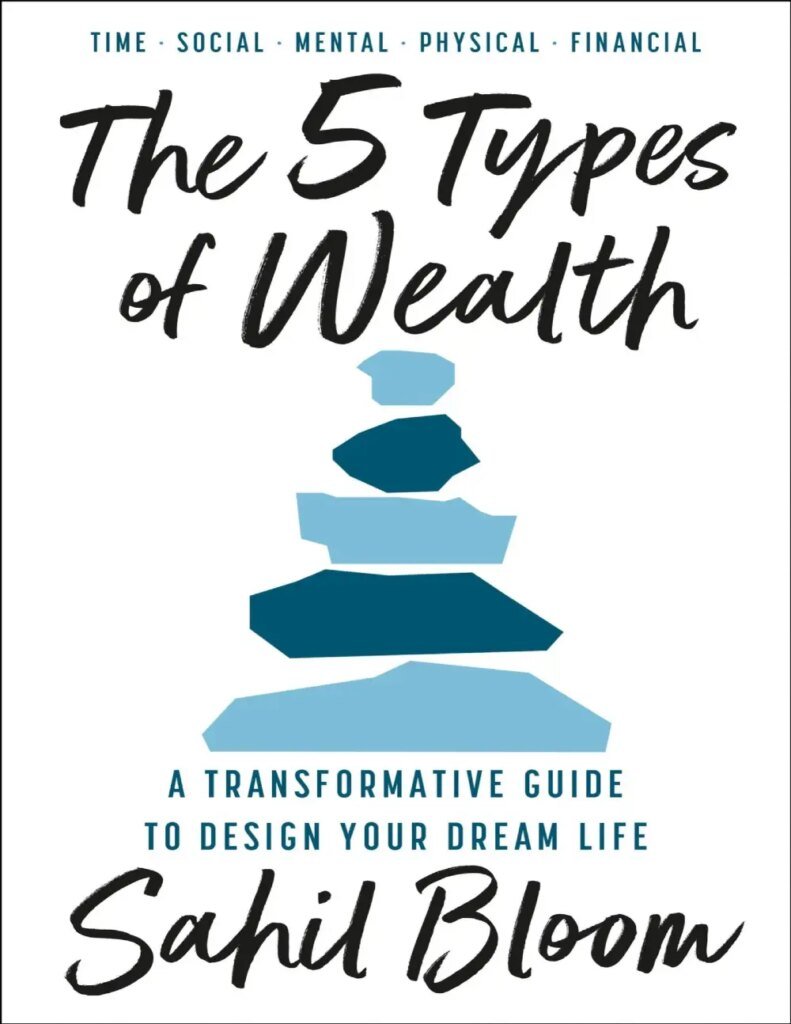
About “The 5 Types of Wealth”: Published by Ballantine Books in 2025, Sahil Bloom’s “The 5 Types of Wealth: A Transformative Guide to Design Your Dream Life” presents a comprehensive framework for building genuine wealth across Time, Social, Mental, Physical, and Financial dimensions. The book extensively explores sleep as the foundation of Physical Wealth and a critical enabler of all other wealth types, synthesizing research from neuroscientist Dr. Matthew Walker and others to demonstrate that adequate, quality sleep is perhaps the single highest-leverage investment in overall wellbeing and performance.
Related posts:
 The Wealth Score: Why Measuring Success in Just One Dimension Is Destroying Your Life (The 5 Types of Wealth by Sahil Bloom)
 The Body Budget: Why Your Physical Wealth Determines Every Other Form of Success
 Mental Wealth: How to Build Clarity in an Age of Infinite Distraction
 How to Actually Transform Your Life Using the 5 Types of Wealth Framework (The 5 Types of Wealth by Sahil Bloom)
 Can You Function on Bad Sleep? Why Your Belief Matters More Than Your Hours