
The Entrepreneurial Trap
The entrepreneurial narrative has never been more seductive. Quit your job, build your dream business, achieve financial freedom, and design your ideal life on your own terms. The promise is intoxicating: unlimited upside, complete autonomy, and the ability to create value doing what you love. No wonder millions are drawn to entrepreneurship as the path to wealth and freedom.
But as Sahil Bloom reveals in “The 5 Types of Wealth,” the reality for many entrepreneurs is far different from the dream. They trade the tyranny of a boss for the tyranny of customers. They escape the 9-to-5 only to work 24/7. They pursue financial wealth with such single-minded intensity that they sacrifice time with family, destroy their health, neglect relationships, and arrive at “success” depleted and miserable.
As Bloom—himself a successful entrepreneur, owner of SRB Holdings, and managing partner of SRB Ventures—writes: “I resolved a long time ago to not be one of those entrepreneurs on their deathbed wishing they had spent more time at work. The typical entrepreneur’s greatest risk isn’t business failure—it’s achieving business success at the cost of life failure.”
The alternative he explores throughout “The 5 Types of Wealth” is entrepreneurship designed for integrated wealth: building a business that creates Financial Wealth while enhancing rather than destroying Time, Social, Mental, and Physical Wealth. This isn’t just possible—it’s the only form of entrepreneurial success worth pursuing.
The Traditional Entrepreneurial Model Is Broken
The conventional entrepreneurial playbook, as Bloom describes it, goes something like this:
Phase 1 (Your 20s-30s): Sacrifice Everything Work 80-100 hour weeks. Neglect health, relationships, and personal needs. Live on ramen and coffee. “Hustle” becomes your identity. You tell yourself this is temporary—just until the business succeeds.
Phase 2 (Your 30s-40s): The Growth Grind The business is succeeding, which means even more demands. You hire people, which creates more complexity. You’re traveling constantly, firefighting problems, and working harder than ever. You tell yourself it will ease up once you hit the next milestone.
Phase 3 (Your 40s-50s): The Exit Dream You dream of selling the business or going public. The big exit will finally give you the financial freedom to enjoy life. You keep grinding, waiting for that event that will change everything.
Phase 4 (Your 50s+): The Reckoning If you achieve the exit, you discover that you’ve spent decades building financial wealth while destroying everything else. Your health is compromised. Your children are grown and distant. Your marriage is strained or dissolved. You’re wealthy but lonely, successful but depleted. And the question haunts you: Was it worth it?
This model is so common it’s treated as inevitable. But as Bloom demonstrates, it’s not the only path—and it’s certainly not the optimal one.
The Integrated Wealth Entrepreneurial Model
In “The 5 Types of Wealth,” Bloom presents an alternative framework: entrepreneurship designed for integrated wealth from day one. This means building a business that enhances all five types of wealth simultaneously, or at minimum, building Financial Wealth without destroying the other four.
Time Wealth-Positive Business Design
The promise of entrepreneurship is autonomy over your time. But most entrepreneurs trade their boss’s control over their time for their customers’ and employees’ control. They have more responsibility but less freedom.
A Time Wealth-positive business is designed from the beginning for autonomy:
Leveraged Business Models: Choose models that don’t require trading hours for dollars. Software, content, information products, and other scalable models create leverage. Your income can grow without your hours increasing proportionally.
Systems Over Hustle: Build processes, automation, and systems from day one rather than being the irreplaceable executor of every task. The goal is a business that runs increasingly independently of your constant involvement.
Delegation Culture: Hire people and empower them to own responsibilities rather than creating a business where you’re the bottleneck. This isn’t just about growth—it’s about designing for your own freedom.
Boundaries From Day One: Set working hours and stick to them. Take weekends off. Take vacations. These aren’t rewards for future success—they’re non-negotiables that ensure business success doesn’t mean life failure.
As Bloom notes, “The entrepreneur who boasts about 100-hour weeks isn’t demonstrating dedication—they’re demonstrating poor business design. If your business requires you to work 100 hours weekly, you haven’t built a business; you’ve built a demanding job you can’t quit.”
Social Wealth-Positive Business Design
Traditional entrepreneurship is lonely. You’re too busy for relationships. You can’t make plans because business demands are unpredictable. You surround yourself with business associates but lack genuine friends. You tell yourself you’ll reconnect “after” the business is stable.
A Social Wealth-positive business actively supports relationships:
Partner/Team Selection: Choose co-founders and early team members you genuinely enjoy and respect. You’ll spend more time with these people than your family—make sure they’re people you want in your life, not just people who fill roles.
Family-Friendly Policies: Even before you have employees, establish that family comes first. Model this yourself: don’t miss your kids’ events, protect family dinners, take parental leave. This sets culture that respects relationships rather than demanding their sacrifice.
Remote/Flexible Design: When possible, build for location independence. This allows living near family and friends rather than requiring relocation to startup hubs far from your support network.
Community Integration: Build a business that integrates with rather than replaces your community. Local hiring, community involvement, and business practices that strengthen rather than extract from community create Social Wealth while building the business.
Bloom emphasizes: “The richest entrepreneurs I know aren’t those with the biggest exits—they’re those who built businesses that allowed them to be present for their children’s childhoods, maintain deep friendships, and show up for people who mattered.”
Mental Wealth-Positive Business Design
Entrepreneurship can be incredibly stressful: financial uncertainty, constant problem-solving, responsibility for employees, fear of failure. But it doesn’t have to destroy mental health.
A Mental Wealth-positive business is designed to support rather than devastate your mental state:
Sustainable Pace: Choose growth rates you can sustain. Explosive growth often requires unsustainable pace that burns out founders. Steady, consistent growth allows maintaining mental clarity and peace.
Clear Separation: Create boundaries between work and personal life. When work never stops, your mind never rests. Designated work hours and true time off protect mental space.
Purpose and Meaning: Build a business around work you find genuinely meaningful rather than just lucrative. The mental tax of work you don’t believe in compounds over years into existential dread.
Learning Orientation: Frame challenges as learning opportunities rather than existential threats. This growth mindset reduces stress and increases resilience.
Community and Support: Connect with other entrepreneurs who share values around integrated wealth. The traditional entrepreneur community often reinforces hustle culture—find or create communities that support sustainable approaches.
As Bloom notes from his own journey: “The years I spent building businesses while neglecting my mental health were my least effective years. The belief that I’d have time for peace ‘later’ was destructive. Mental Wealth isn’t the reward for business success—it’s the foundation that enables it.”
Physical Wealth-Positive Business Design
The entrepreneur stereotype involves neglecting health: poor sleep, bad diet, no exercise, chronic stress. The rationalization is that you’re building something important—health can be recovered later.
But as Bloom demonstrates, neglecting Physical Wealth doesn’t accelerate business success; it undermines it:
Energy Management: Your business needs your best energy, not your exhausted dregs. Protecting sleep, exercise, and nutrition isn’t selfish—it’s strategic. The well-rested, healthy entrepreneur dramatically outperforms the depleted one.
Movement Integration: Design your work to include movement. Standing desks, walking meetings, active breaks. Don’t separate “work time” from “health time”—integrate them.
Stress Management: Chronic entrepreneurial stress destroys health. Build practices for managing stress: exercise, meditation, time in nature. These aren’t optional luxuries—they’re essential business tools.
Long-Term Thinking: Remember that you’re not building a business for a quick exit—you’re building a life. The entrepreneur who sacrifices their health for ten years of intense building might achieve financial wealth, but at what cost? The one who protects their health throughout might build more slowly but sustainably.
Bloom shares: “I know several entrepreneurs who achieved major exits in their 40s only to spend their 50s dealing with health problems from the decade of neglect. They have money but not the health to enjoy it. That’s not success—it’s tragedy.”
Financial Wealth-Positive Business Design
Of course, the business needs to actually build Financial Wealth—that’s the point. But Financial Wealth built at the expense of everything else isn’t true wealth.
Smart financial design for integrated wealth:
Define Your Enough: What level of financial success would be genuinely sufficient? Not “as much as possible”—a specific number that allows the life you want. This prevents the endless treadmill of scaling when you’ve already achieved sufficiency.
Diversification Beyond the Business: Don’t put all your wealth in the business. Take money off the table as the business succeeds. This reduces stress (you have safety) and allows clearer decision-making about the business (you’re not desperate for the exit).
Sustainable Margins: Build a business with healthy margins from the beginning. Razor-thin margins create constant financial stress. Comfortable margins create breathing room.
Bootstrap or Smart Capital: If you take investment, choose partners aligned with integrated wealth. VC money often comes with growth expectations that require sacrifice. Bootstrap or take capital from sources that support sustainable building.
The goal isn’t maximizing Financial Wealth—it’s building sufficient Financial Wealth while enhancing rather than destroying the other four types.
Case Study: Bloom’s Own Journey
Throughout “The 5 Types of Wealth,” Bloom shares his own entrepreneurial journey as both cautionary tale and eventual success story:
The Early Years: After Stanford, he joined an investment firm in California, earning into the six figures in his first year. By conventional metrics, he was successful. But he was miserable: working exhausting hours, living far from family, sacrificing health and relationships. He had optimized for Financial Wealth while destroying everything else.
The Awakening: The conversation about seeing his parents fifteen more times before they died was the catalyst. He realized that his “success” was actually profound poverty across four dimensions of wealth. He was playing and winning the wrong game.
The Transformation: Bloom and his wife made dramatic changes: moving from California to the East Coast to be near family, restructuring his work to prioritize autonomy, establishing non-negotiable boundaries around time, and building businesses designed for integrated wealth from the beginning.
The Result: As of writing “The 5 Types of Wealth,” Bloom has built a thriving business ecosystem—SRB Holdings and SRB Ventures—that creates financial abundance while allowing him to be present for his young son, maintain deep relationships, protect his health, and experience peace rather than chronic stress. He’s designed entrepreneurial success that enhances all five types of wealth.
His key insight: “I’m more financially successful now than when I was grinding 80-hour weeks and sacrificing everything. Not despite prioritizing integrated wealth, but because of it. The clear mind, the strong relationships, the physical energy, the protected time—these aren’t obstacles to business success. They’re the foundation of sustainable excellence.”
The Seasons of Entrepreneurial Life
Bloom introduces the concept of “entrepreneurial seasons” in “The 5 Types of Wealth”—recognizing that building a business doesn’t mean constant intensity forever:
Season 1: Foundation (Early Stages) Yes, early startup life requires intense focus and long hours. But even here, boundaries matter. Set non-negotiables: family dinners, exercise, sleep minimums. Build the systems and culture from day one that will allow sustainability.
Season 2: Growth (Scaling) As the business grows, resist the temptation to scale your involvement proportionally. Hire, delegate, systematize. The goal is growing the business while maintaining or reducing your hours, not growing both together.
Season 3: Optimization (Maturity) Once the business is established, consciously reduce your involvement. You built this for freedom—take it. Step into more strategic role, let your team run operations, and reclaim your time.
Season 4: Evolution (Exit or Adaptation) Whether you exit to new ventures or stay with your business, make it serve your integrated wealth goals. Don’t be enslaved to what you created. Adapt the business to serve your life, not the reverse.
These seasons don’t have fixed timelines and may repeat with new ventures. But the framework prevents the common trap of perpetual intensity with no evolution toward actual freedom.
Choosing Business Models for Integrated Wealth
Not all business models are equal when it comes to supporting integrated wealth. Bloom provides guidance in “The 5 Types of Wealth”:
High Integrated Wealth Potential:
- Software/SaaS (scalable, location-independent, can systematize)
- Content/Education (leverage, recurring revenue, meaningful work)
- E-commerce with strong operations (can delegate, passive income potential)
- Consulting with group programs (leveraged time, recurring revenue)
- Investment/holding companies (capital deployment, not time-intensive)
Lower Integrated Wealth Potential (Without Careful Design):
- Service businesses requiring constant personal delivery
- Restaurants/retail requiring constant presence
- Custom/bespoke work that doesn’t scale
- Businesses requiring extensive travel
- Models with razor-thin margins creating constant financial stress
This isn’t to say lower-potential models can’t work—just that they require more intentional design to avoid destroying non-financial wealth.
The Partner Question
Bloom addresses a critical but often-ignored question: “If you’re going to spend more time with your business partner than your spouse, shouldn’t you be as selective about the partnership?”
Many entrepreneurs choose co-founders based solely on skills and resources. But a partner whose values around work-life balance differ from yours will create constant tension. The partner who wants to hustle 100-hour weeks will resent your boundaries. The partner who views family time as laziness will undermine your integrated wealth goals.
Choose partners who share your values around all five types of wealth. You’re not just building a business together—you’re designing lives together. Make sure you want the same kind of life.
Conclusion: Entrepreneurship as a Path to Integrated Wealth
As Sahil Bloom powerfully demonstrates in “The 5 Types of Wealth,” entrepreneurship done right is one of the best paths to integrated wealth. It offers financial upside, autonomy over time, the ability to build meaningful relationships with team and customers, challenging work that supports mental growth, and the flexibility to protect physical health.
But entrepreneurship done wrong—the traditional model of sacrificing everything for the business—is a path to integrated poverty disguised as success. The entrepreneur who destroys their health, relationships, and peace while building Financial Wealth hasn’t succeeded. They’ve just failed expensively.
The alternative is designing from day one for integrated wealth: choosing business models and growth rates that support all five dimensions, setting boundaries that protect what matters, and remembering that the business is meant to serve your life, not consume it.
As Bloom concludes: “The best business I ever built wasn’t the most profitable one—it was the one that allowed me to be present for my son’s childhood, maintain my health, invest in deep relationships, and experience peace rather than chronic stress. It created Financial Wealth while enhancing rather than destroying the other four types. That’s entrepreneurial success worth celebrating. That’s a business worth building. And it’s available to anyone willing to reject the traditional model and design for integrated wealth from day one.”
Build your business. But make sure it builds a life worth living while you do.
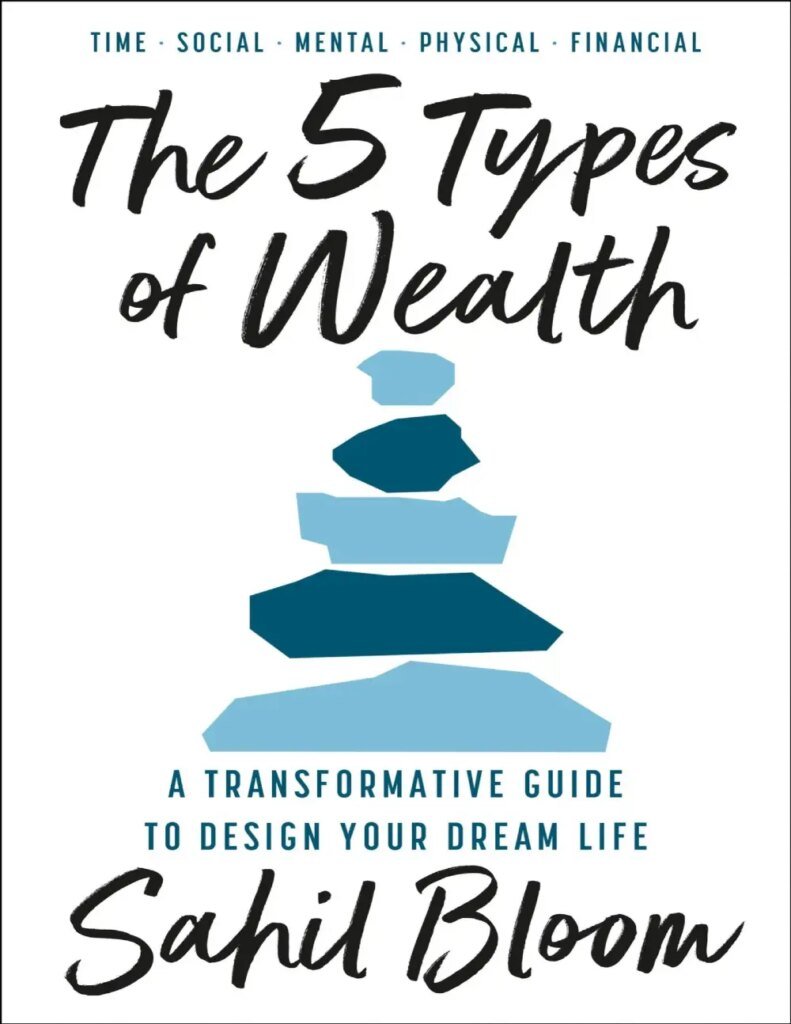
About “The 5 Types of Wealth”: Sahil Bloom’s “The 5 Types of Wealth: A Transformative Guide to Design Your Dream Life” (Ballantine Books, 2025) presents a comprehensive framework for building genuine wealth across five dimensions: Time, Social, Mental, Physical, and Financial. As a successful entrepreneur himself, Bloom provides both philosophical insights and practical systems for building businesses that create integrated wealth rather than financial success at the cost of everything else. The book challenges the traditional entrepreneurial narrative of sacrificing life for business, offering an alternative path to building sustainable wealth across all dimensions that matter.
Related posts:
 The Wealth Score: Why Measuring Success in Just One Dimension Is Destroying Your Life (The 5 Types of Wealth by Sahil Bloom)
 How to Actually Transform Your Life Using the 5 Types of Wealth Framework (The 5 Types of Wealth by Sahil Bloom)
 From Money Obsession to Financial Freedom (The 5 Types of Wealth by Sahil Bloom)
 Mental Wealth: How to Build Clarity in an Age of Infinite Distraction
 The Body Budget: Why Your Physical Wealth Determines Every Other Form of Success