
Self discipline and time management are inseparable.
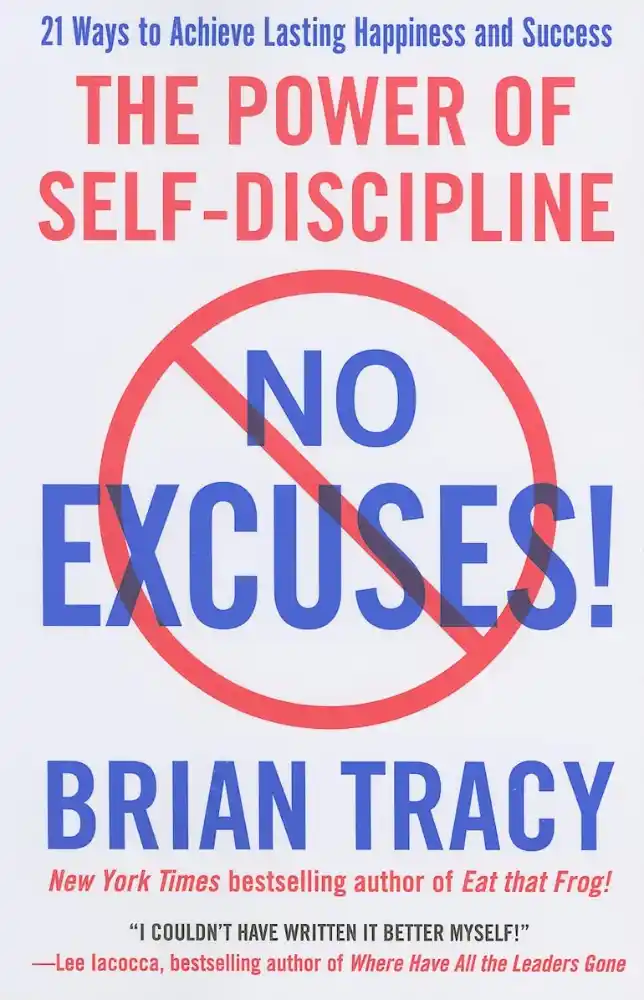
In No Excuses!: The Power of Self-Discipline, Brian Tracy makes it clear that time is your most valuable resource. You cannot save it. You cannot store it. You can only use it — wisely or carelessly.
The disciplined use of time determines:
- Income
- Productivity
- Stress levels
- Career growth
- Personal fulfillment
Time management is not a scheduling trick.
It is self discipline applied to hours.
And how you use your hours determines your future.
Time Is Life Measured in Minutes
Tracy emphasizes that time is finite.
Every minute spent cannot be recovered.
This awareness alone changes perspective.
Self discipline and time management begin with recognizing the cost of distraction.
Scrolling, reacting, postponing — these feel harmless in the moment.
But repeated daily, they accumulate into lost years.
The disciplined individual treats time with intention.
Plan Every Day in Advance
One of Tracy’s simplest and most powerful habits:
Plan your day before it begins.
A written plan increases productivity significantly.
Why?
Because clarity reduces hesitation.
When you know exactly what must be done:
- You begin faster.
- You avoid indecision.
- You reduce wasted energy.
Self discipline and time management intersect in preparation.
Planning is an act of control.
The Discipline of Priorities
Not all tasks are equal.
Tracy emphasizes distinguishing between:
- High-value activities
- Low-value activities
Self discipline means starting with the most important task — even when it is the hardest.
It is natural to choose easier tasks first.
But disciplined individuals reverse that impulse.
They ask:
“What is the most important thing I can do right now?”
And they begin there.
Single-Handling: Finish What You Start
One of Tracy’s strongest time principles is single-handling.
Start a task.
Complete it fully.
Move on.
Multitasking fragments attention.
Fragmented attention reduces quality.
Self discipline and time management require focus.
Completion builds momentum.
Incomplete tasks accumulate stress.
Single-handling simplifies productivity.
Avoiding Posteriorities
Tracy uses the term “posteriorities” to describe low-value tasks disguised as productivity.
These tasks feel busy but produce little meaningful progress.
Examples:
- Excessive email checking
- Unnecessary meetings
- Reorganizing without purpose
- Repeated revisions without improvement
Self discipline protects time by filtering tasks.
If a task does not contribute meaningfully to results, reduce it.
Time invested must produce return.
The 1,000% Rule
Tracy encourages thinking in terms of leverage.
Some activities generate dramatically higher returns than others.
Ask yourself:
“Is this task worth 1,000% of my time compared to alternatives?”
Self discipline and time management improve when you evaluate impact rather than urgency.
Urgent tasks are not always important.
Important tasks often require deliberate scheduling.
Discipline and Procrastination
Procrastination is rarely about laziness.
It is often about emotional avoidance.
Fear of failure.
Fear of complexity.
Fear of discomfort.
Self discipline addresses procrastination directly.
Begin with a small step.
Momentum reduces resistance.
Often, starting is the hardest part.
Once engaged, focus becomes easier.
Time Management and Long-Term Thinking
Short-term thinking leads to reactive days.
Long-term thinking creates intentional schedules.
If your five-year goal is clear, daily priorities become obvious.
Self discipline and time management align when daily effort reflects long-term vision.
Without vision, time drifts.
With vision, time compounds.
Energy Management Matters
Time alone is not enough.
Energy determines effectiveness.
Self discipline includes:
- Getting adequate rest.
- Maintaining physical health.
- Scheduling demanding tasks during peak energy.
Fatigue reduces focus.
Disciplined individuals protect both time and energy.
Efficiency grows when energy aligns with priority.
Saying No Is a Discipline
One of the hardest time-management skills is refusal.
Every “yes” to a low-priority task is a “no” to something important.
Self discipline and time management require boundaries.
You cannot maximize results while accepting every request.
Disciplined refusal protects focus.
Focus produces impact.
Tracking Time for Awareness
Many people misjudge how they spend their time.
Tracy recommends periodically tracking activities.
When you measure:
- Distractions become visible.
- Inefficiencies surface.
- Patterns emerge.
Self discipline grows when awareness increases.
You cannot improve what you do not measure.
The Psychological Benefit of Structured Time
When time is managed well:
- Stress decreases.
- Clarity increases.
- Confidence strengthens.
- Results improve.
Disorganized time creates anxiety.
Structured time creates calm.
Self discipline and time management bring order to daily life.
Order strengthens stability.
A 30-Day Time Discipline Plan
To strengthen self discipline and time management:
- Plan every day in advance.
- Identify top three priorities daily.
- Complete the hardest task first.
- Practice single-handling.
- Eliminate one low-value task per week.
After 30 days, productivity increases noticeably.
Focus improves.
Discipline strengthens naturally.
Frequently Asked Questions
1. How are self discipline and time management connected?
Time management is self discipline applied to scheduling, prioritizing, and completing tasks effectively.
2. Why do people struggle with time management?
Because of distraction, emotional avoidance, and lack of planning.
3. What is single-handling?
Completing one task fully before moving to the next to maximize focus and efficiency.
4. How can I stop procrastinating?
Start with a small step. Momentum builds once action begins.
5. Does better time management reduce stress?
Yes. Clarity and structure reduce uncertainty and overwhelm.
Final Reflection
Self discipline and time management determine how your life unfolds.
Time passes regardless.
The question is whether it compounds into progress or dissipates into distraction.
In No Excuses!, Brian Tracy makes the principle clear:
Plan.
Prioritize.
Focus.
Finish.
Hours become days.
Days become years.
Discipline turns time into achievement.
And achievement, over time, becomes a life well directed.
Take the FULL FREE MINI COURSE on DISCIPLINE here
Related posts:
 How to Boost Energy (Without Caffeine, Hacks, or Burnout)
 Why Energy Management Beats Time Management (The Productivity Secret of High Achievers)
 Self Discipline at Work: Double Your Productivity, Income and Career Success
 Self Discipline and Success: Why Winners Refuse Excuses
 Work All the Time You Work: Why Earning Ability Matters More Than Hours