
Every person who has achieved extraordinary wisdom had one thing in common: they didn’t do it alone. In Wisdom Takes Work, Ryan Holiday dismantles the myth of the self-made sage, revealing instead a fundamental truth about human learning—wisdom is transmitted, not discovered in isolation.
The ancient Greeks understood this. The Romans knew it. Every significant philosophical and intellectual tradition in history has recognized that genuine wisdom flows from teacher to student, from master to apprentice, across generations and through relationships.
Yet modern culture has largely abandoned this model. We’ve replaced mentorship with YouTube tutorials, deep learning with quick tips, and committed relationships with algorithmic recommendations. The result? Lots of information, very little wisdom.
Why You Need a Teacher
Holiday begins this section of Wisdom Takes Work with a challenging question: Can you really become wise on your own? His answer, drawn from thousands of years of human experience, is a resounding no.
The path to wisdom is riddled with traps, blind spots, and seductive detours. Without a guide who has traveled the road before you, you’ll waste years wandering in circles, making avoidable mistakes, and mistaking progress for mere motion.
A teacher provides what you cannot give yourself: perspective. When you’re inside your own head, trapped in your own assumptions and limitations, you cannot see yourself clearly. A teacher offers the external vantage point necessary for growth.
A teacher accelerates your learning. Why spend years figuring out what someone else already knows? As Holiday notes, refusing mentorship out of pride or stubbornness isn’t independence—it’s foolishness. Standing on the shoulders of giants isn’t cheating; it’s the only way to see farther.
A teacher holds you accountable. Self-directed learning sounds noble, but it lacks the crucial element of external pressure. A teacher pushes you beyond your comfort zone, challenges your excuses, and demands more than you’d demand of yourself.
What Makes Someone a True Teacher
Not everyone who claims to teach actually has wisdom to offer. Holiday is explicit about this in Wisdom Takes Work—choosing the wrong teacher can be worse than having no teacher at all. The wrong mentor can instill bad habits, reinforce biases, and lead you confidently in the wrong direction.
So what distinguishes a true teacher from a mere instructor or influencer?
They practice what they teach. Holiday emphasizes that wisdom cannot be merely theoretical. Your teacher should embody the principles they espouse. Do they live with integrity? Do they demonstrate the virtues they recommend? Actions speak louder than words, and in the teacher-student relationship, you’re learning as much from example as from instruction.
They have skin in the game. A real teacher cares about your progress because your success or failure reflects on them. This isn’t about ego—it’s about investment. Holiday shares stories from his own mentorship under Robert Greene, describing how Greene’s personal stake in Holiday’s development created a bond that transcended mere professional advice.
They challenge you, not just comfort you. A teacher worth having will tell you what you need to hear, not what you want to hear. They’ll point out your weaknesses, question your assumptions, and refuse to let you settle for mediocrity. As Holiday notes, if your “mentor” only offers encouragement without criticism, they’re a cheerleader, not a teacher.
They focus on principles, not just tactics. Anyone can teach you the “what” and the “how.” A true teacher helps you understand the “why.” They transmit not just techniques but wisdom—the underlying principles that apply across contexts and endure across time.
The Ancient Model: Apprenticeship and Proximity
Holiday devotes significant attention in Wisdom Takes Work to the classical model of apprenticeship, where students lived alongside their teachers, observing not just their formal instruction but their daily habits, decision-making processes, and responses to challenges.
Socrates had Plato. Plato had Aristotle. Aristotle had Alexander the Great. This chain of wisdom transmission shaped Western civilization, and it didn’t happen through online courses or weekend seminars—it happened through sustained, proximate relationships.
Proximity matters because wisdom is caught, not just taught. When you spend time with someone wiser, you absorb their patterns of thought, their emotional regulation, their approach to problems. You learn from their reactions to setbacks, their handling of success, their treatment of others.
Holiday shares his own experience working directly under Robert Greene, author of The 48 Laws of Power. He describes arriving at Greene’s house, sleeping in a sleeping bag, and working side-by-side for months. This wasn’t glamorous, but it was transformative. Holiday learned not just about writing and research, but about discipline, persistence, and the craft of thinking.
This kind of apprenticeship seems impractical in modern life, but Holiday argues we need to find contemporary equivalents. Whether through internships, assistantships, or simply making yourself useful to someone you admire, proximity to wisdom remains irreplaceable.
Finding Your Teacher in the Modern World
One of the most common questions Holiday addresses is practical: How do you actually find a teacher when traditional apprenticeship systems have largely disappeared?
Start by identifying who you admire. Make a list of people whose wisdom, character, or achievements you respect. Don’t limit yourself to the famous or successful—sometimes the best teachers are people in your own community whose values align with what you hope to become.
Offer value before asking for access. Holiday learned this lesson early. You can’t simply approach someone and demand their time and wisdom. Instead, make yourself useful. Robert Greene hired Holiday because Holiday could help with research. What skills or services can you offer in exchange for proximity?
Look for teachers in unexpected places. Your teacher doesn’t have to be someone formally designated as a mentor. Holiday discusses learning from coaches, colleagues, even rivals. Anyone who has mastered something you want to learn can serve as a teacher if you’re humble enough to learn.
Don’t wait for permission. As Holiday notes in Wisdom Takes Work, you can begin the teacher-student relationship long before meeting someone in person. Read everything they’ve written. Study their interviews. Analyze their decisions. This kind of distant apprenticeship builds understanding that can eventually lead to direct contact.
Learning from the Dead: Historical Mentorship
One of Holiday’s most powerful insights involves what he calls “talking to the dead”—learning from teachers who lived centuries or millennia ago through their written works.
Marcus Aurelius never knew he’d have millions of students two thousand years after his death, yet his Meditations continues to teach wisdom to anyone who opens its pages. Seneca’s letters offer counsel as relevant today as when he wrote them. Epictetus, a former slave, teaches princes and paupers alike.
Books are a form of mentorship that transcends time and geography. For the cost of a coffee, you can access the accumulated wisdom of humanity’s greatest teachers. Holiday emphasizes that reading isn’t passive consumption—it’s an active relationship with the author.
When you read deeply, annotate thoughtfully, and apply what you learn, you’re engaged in a form of mentorship. The teacher speaks through the page, and you respond through reflection and action. Holiday’s own reading practice, detailed in Wisdom Takes Work, involves treating books as conversations with wise friends who happen to be separated by time.
The Responsibilities of Being a Student
Holiday is clear that the teacher-student relationship isn’t one-sided. Being a good student requires specific qualities and commitments:
Humility to accept criticism. If you become defensive when your teacher points out flaws, you’re wasting everyone’s time. The whole point of having a teacher is to identify and correct your weaknesses. Pride is the enemy of learning.
Patience with the process. Wisdom cannot be rushed. Holiday emphasizes that real learning happens slowly, through repetition, failure, and gradual improvement. Students who expect instant results or revolutionary insights will be disappointed.
Willingness to do the unglamorous work. When Holiday apprenticed under Greene, he spent months doing research, organizing files, and handling logistics. This wasn’t wasted time—it was essential training. The mundane work teaches discipline and reveals the reality behind the polished final product.
Gratitude and reciprocity. Your teacher is giving you something invaluable. Holiday stresses the importance of expressing genuine gratitude and, when possible, finding ways to give back. This might mean helping with their work, sharing what you’ve learned with others, or simply acknowledging their influence on your growth.
When to Move On: Outgrowing Your Teacher
An often-overlooked aspect of the teacher-student relationship is knowing when it’s time to move forward. Holiday addresses this delicate topic in Wisdom Takes Work, noting that outgrowing a teacher isn’t betrayal—it’s the natural progression of learning.
Your teacher should want you to eventually surpass them. If they seem threatened by your growth or try to keep you dependent, that’s a red flag. A true teacher’s goal is to make themselves eventually unnecessary.
This doesn’t mean abandoning gratitude or cutting off the relationship. Holiday maintains connections with his mentors and teachers even as he’s moved beyond needing their constant guidance. The relationship evolves from student-teacher to colleague-colleague, or mentor-friend.
Becoming the Teacher: Passing Wisdom Forward
Holiday closes this section with a crucial transition—the moment when you shift from being primarily a student to also being a teacher. This isn’t about reaching some predetermined level of mastery. Rather, it’s recognizing that you have wisdom worth sharing, even as you continue learning.
Teaching deepens your own understanding. When you have to explain something to someone else, you discover gaps in your knowledge you didn’t know existed. You’re forced to articulate principles that were previously intuitive. Teaching makes you a better student.
You have a responsibility to pass wisdom forward. If mentors invested in you, you owe it to the next generation to do the same. This isn’t optional for those pursuing wisdom—it’s an essential part of the process.
Holiday shares how becoming a teacher has transformed his own practice. Writing books, creating courses, running his bookstore as a community space—these aren’t just professional activities. They’re his way of fulfilling the obligation every student has to eventually become a teacher.
The Continuous Chain of Wisdom
The teacher-student relationship isn’t a transaction—it’s a link in an unbroken chain stretching back through history. Your teacher learned from their teacher, who learned from someone before them, creating a lineage of wisdom transmission.
When you find your teacher and commit to learning, you’re not just improving yourself. You’re preserving and extending a tradition of wisdom that makes civilization possible. As Holiday beautifully articulates in Wisdom Takes Work, this is how knowledge becomes wisdom, how individuals become wise, and how wisdom survives across generations.
The question isn’t whether you need a teacher. The question is whether you’re humble enough to seek one, wise enough to recognize them, and committed enough to learn when you find them.
Ryan Holiday’s Wisdom Takes Work: The Ultimate Guide to Ancient Wisdom for Modern Life

Related posts:
 Lifelong Learning: Why the Wisest People Never Stop Being Students (Wisdom Takes Work by Ryan Holiday)
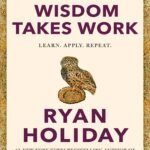 Ryan Holiday’s “Wisdom Takes Work”: Why Philosophy Only Matters When It’s Practiced
 Why the Smartest People Never Stop Being Students Through Life Long Learning
 Stoic Wisdom: How Hardship Builds Character (Wisdom Takes Work by Ryan Holiday)
 Improve Your Curiosity: Why Asking Questions Is the Beginning of Wisdom (Wisdom Takes Work By Ryan Holiday)