Published December 9, 2025 · Updated October 15, 2026 · 14 min read
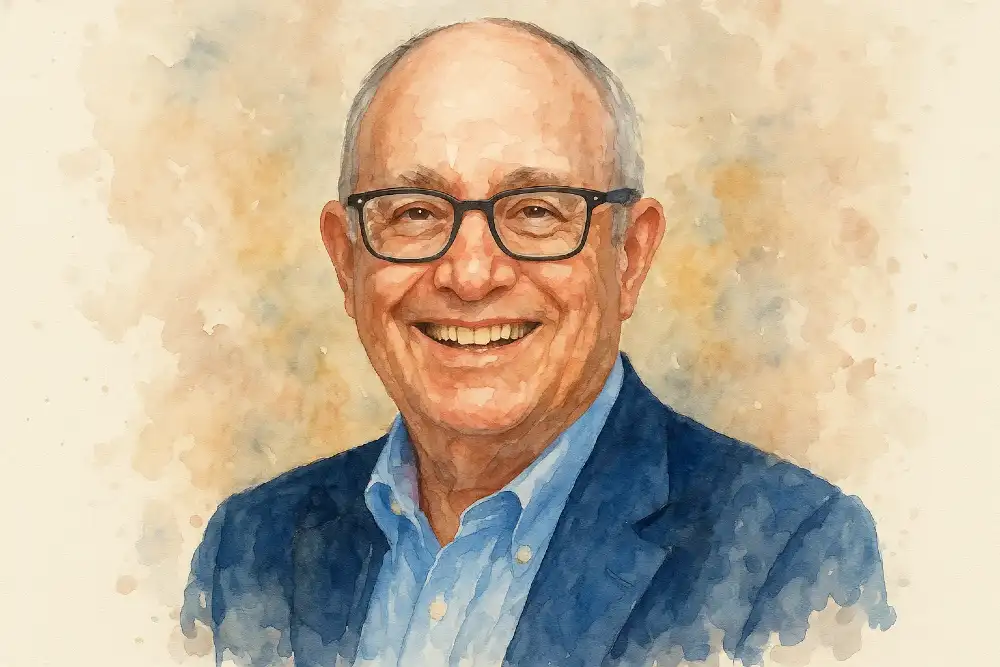
Short answer: Jeffrey Pfeffer (born July 23, 1946) is an American organizational behavior scholar and the Thomas D. Dee II Professor of Organizational Behavior at Stanford Graduate School of Business, where he has taught since 1979. He is best known for his research on power in organizations, his elective The Paths to Power, and books including Power, Leadership BS, Dying for a Paycheck and 7 Rules of Power. He is 80 and is still listed as teaching at Stanford for 2026–27.
Most career advice describes the workplace we would like to live in: one where good work gets noticed, honesty is rewarded and the best person gets the job. Jeffrey Pfeffer has spent almost five decades studying the one that exists. His central claim is uncomfortable and simple: performance matters, but it is rarely enough, and the people who advance are usually the ones who understand how power actually moves through organizations.
Whether you find that liberating or bleak says something about what you believe about fairness. We think it is worth reading him closely, and then deciding with open eyes what you will and won’t do with it. This guide covers who he is, what he found, his seven rules, the criticism, and how to take what is useful without losing yourself.
Jeffrey Pfeffer at a Glance
| Born | July 23, 1946, St. Louis, Missouri |
| Age | 80 (as of October 2026) |
| Education | B.S. and M.S., Carnegie Mellon University; Ph.D., Stanford University |
| Position | Thomas D. Dee II Professor of Organizational Behavior, Stanford GSB; Professor of Health Policy (by courtesy), Stanford School of Medicine |
| At Stanford since | 1979 |
| Earlier posts | University of Illinois; University of California, Berkeley (1973–1979) |
| Known for | Power and politics in organizations, resource dependence theory, evidence-based management, workplace health |
| Signature course | The Paths to Power (OB 377) |
| Books | 16, including 7 Rules of Power (2022) |
| Also | Twice-monthly Fortune.com column; Pfeffer on Power podcast; MasterClass The Power Playbook (2025) |
| Official sites | jeffreypfeffer.com · Stanford GSB profile |
Early Life and Education
Pfeffer was born in St. Louis and went to the Webb School of California before studying at Carnegie Mellon, where he earned his bachelor’s and master’s degrees. He then took his Ph.D. at Stanford, the school he would later define his career at. His first teaching job was at the business school of the University of Illinois, followed by six years at UC Berkeley from 1973 to 1979.
In 1979, at 32 by his own account, he was appointed a full professor at Stanford Graduate School of Business. He has been there ever since, and has been a visiting professor at Harvard Business School, London Business School, Singapore Management University and Copenhagen Business School, plus a 14-year visitor at IESE in Barcelona. His publisher counts seminars in 39 countries.
The Stanford Years and The Paths to Power
When Pfeffer joined Stanford he wanted to teach something he saw as important, under-researched and under-taught. Power was the obvious gap: it shaped people’s careers, and almost nobody taught it. The elective he built, first called Power and Politics in Organizations and later renamed The Paths to Power, has since reached thousands of students. Stanford describes it as one of the school’s most in-demand electives and as increasingly countercultural. It is case-based and often brings in guests who embody his rules. His recurring message is that gaining and using power is a choice, and that the hard part is getting past your own inhibitions.
His Core Research
Resource dependence theory (1978). With Gerald Salancik, Pfeffer wrote The External Control of Organizations, a foundational text arguing that organizations depend on outside resources and so cannot be understood in isolation. Whoever controls the critical resources holds the power. It underpins much of what he later said about individuals.
Power and politics. From Power in Organizations (1981) and Managing with Power (1992) to Power (2010), he has argued that organizational life is political and that political skill is a learnable one.
Evidence-based management. With Robert Sutton, he argued in the Harvard Business Review and in Hard Facts, Dangerous Half-Truths, and Total Nonsense (2006) that managers should demand evidence for what works instead of relying on intuition and fashion. We cover the same instinct in Due Diligence Explained.
The knowing-doing gap. Also with Sutton (2000), he asked why smart organizations know what to do and still don’t do it, pointing to causes such as fear, internal competition and measurement systems that track the wrong things.
People-first management. Competitive Advantage Through People (1994), The Human Equation (1998) and Hidden Value (2000, with Charles O’Reilly) argued that treating employees well is a business strategy, not charity.
Workplace health and time. His later research looks at how work environments damage health, and how thinking of time like money changes what people choose to spend it on.
The 7 Rules of Power
7 Rules of Power (2022) distills what he teaches in the classroom. These are the rules as the publisher states them, with our short reading of each.
- Get out of your own way. Drop the self-descriptions and inhibitions that hold you back, including the belief that you must be liked. As he puts it, executives are hired to get things done, not to win popularity contests. See How to Get Comfortable With Being Disliked and Imposter Syndrome in Men.
- Break the rules. Rules tend to favor people who already hold power, and breaking them can itself signal power. Read 15 Unspoken Rules That Quietly Separate Men Who Get Ahead.
- Show up in powerful fashion. Voice, posture and presence shape how others treat you. See The Science of Charisma and How to Make a Powerful First Impression.
- Create a powerful brand. Make your work visible and tell a clear story about it. See How to Build a Personal Brand and Building Your Professional Reputation.
- Network relentlessly. Power flows through relationships, and being central in a network matters. See How You Can Develop Your Networking Skills and The Relationship Edge.
- Use your power. Power you never use is wasted, and using it means accepting some disapproval along the way.
- Understand that once you have acquired power, what you did to get it will be forgiven, forgotten, or both. The short form is “success excuses (almost) everything.” He calls it the most important rule. We return to it below, and to its flip side in How Leaders Lose Power.
Two things set his framing apart. He treats power as a morally neutral tool that can be used for good or ill, and he is blunt that authenticity and humility are overrated as leadership strategies. For a longer breakdown of his thinking, see 25 Essential Lessons from Jeffrey Pfeffer’s Power and The Truth About Power.
Dying for a Paycheck: The Health Argument
The other half of Pfeffer’s work is easy to miss. In Dying for a Paycheck (2018), he argues that many ordinary management practices, including layoffs, long hours, job insecurity and lack of control, damage employee health without improving performance.
The headline number comes from a 2015 Stanford study by Joel Goh, Stefanos Zenios and Pfeffer. It was a meta-analysis of 228 studies covering ten workplace stressors, and it estimated that these may account for around 120,000 deaths a year in the U.S. and up to $190 billion in health care costs. Treat that as a modeled estimate, not a count of individual cases, and the authors themselves noted other factors may be involved. But the direction is hard to dismiss. If this is your reality, see Early Signs of Burnout, Mind Over Grind and Bulletproof Ways to Set Boundaries at Work.
Pfeffer Today: MasterClass, Podcast and 2026
- MasterClass. In August 2025 he launched The Power Playbook: How to Win at Work: eight lessons, about an hour and eight minutes in total, covering mapping your path to power, managing up, executive presence, building your brand, useful networks, breaking the rules and holding on to power.
- Podcast. Pfeffer on Power is a biweekly show where guests describe how they used his rules.
- Writing. He writes a Fortune.com column about twice a month.
- Research. His 2026 work includes a June paper on employee preferences in health plan design (Health Affairs Scholar, with Robert Kaplan and others).
- Teaching. Stanford lists him as instructor for The Paths to Power in 2026–27.
Jeffrey Pfeffer’s Books in Order
| Year | Book | What it’s about |
|---|---|---|
| 1975 | Organizational Design | Early work on how organizations are structured |
| 1978 | The External Control of Organizations (with Gerald Salancik) | Foundation of resource dependence theory |
| 1981 | Power in Organizations | Power as a core organizational process |
| 1982 | Organizations and Organization Theory | A survey of the field |
| 1992 | Managing with Power | Politics and influence in organizations |
| 1994 | Competitive Advantage Through People | Workforce strategy as an edge |
| 1997 | New Directions for Organization Theory | Problems and prospects in the field |
| 1998 | The Human Equation | Building profits by putting people first |
| 2000 | The Knowing-Doing Gap (with Robert Sutton) | Why organizations fail to act on what they know |
| 2000 | Hidden Value (with Charles O’Reilly) | Extraordinary results from ordinary people |
| 2006 | Hard Facts, Dangerous Half-Truths, and Total Nonsense (with Robert Sutton) | Evidence-based management |
| 2007 | What Were They Thinking? | Unconventional wisdom about management |
| 2010 | Power: Why Some People Have It—And Others Don’t | The research case for power. Our summary |
| 2015 | Leadership BS | A critique of the leadership industry |
| 2018 | Dying for a Paycheck | How modern management harms employee health |
| 2022 | 7 Rules of Power | The practical rulebook |
Awards and Recognition
Pfeffer won the Academy of Management’s Terry Book Award (1984) and its Richard D. Irwin Scholarly Contributions to Management Award (1989). He is an Academy of Management fellow, a former fellow at the Center for Advanced Study in the Behavioral Sciences, and a member of the Thinkers50 Hall of Fame. Tilburg University gave him an honorary doctorate in 2011, and he ranked among the top 40 case authors published by The Case Centre in 2016.
Criticism: Is His Advice Too Cynical?
His work is divisive, and the objections are worth stating fairly.
- “It’s cynical.” Reviewers often describe his picture of organizations as bleak, and some feel it describes only certain environments.
- “It undercuts authenticity.” Pfeffer says the popular idea that leaders should be authentic and humble does not match what the evidence shows works. That runs straight against the mainstream leadership advice most people have been given.
- “It can be misused.” Teaching people how to acquire power can help the wrong people as easily as the right ones.
His reply is consistent: he is describing the world as it is, power is a tool, and good people need it to change organizations. He argues that if you want power used well, more good people have to hold it.
Where we agree. He is right that merit alone rarely wins, that visibility and relationships shape careers, and that pretending otherwise leaves capable people stuck. This matches what we say in Why Job Performance Alone Won’t Get You Promoted and How to Get Noticed at Work.
Where we would add care. Three points:
- Description is not permission. Rule 7 tells you how people judge success after the fact. It does not make the method right, and power won through bluff is often fragile.
- Honesty is not the same as saying everything you feel. Pfeffer’s target is performative “authenticity,” not integrity. You can be strategic and still refuse to lie. See Authenticity at Work and Real Confidence vs. False Confidence.
- A useful test. Would you be comfortable if the people affected saw exactly how you got there? Power that survives that question tends to last. See Entitlement, Control, and Paranoia and Power Dynamics in Relationships: What Machiavelli Reveals.
How to Use Pfeffer’s Ideas Without Losing Yourself
- Map who actually decides. Find out who controls the resources and the promotions, not just who holds the title.
- Make your work visible. Tell people what you’ve done, plainly and accurately.
- Build relationships before you need them. Start with The Canvas Strategy, which is about earning influence by helping others.
- Act before you feel ready. Confidence follows behavior far more than it precedes it.
- Keep your standards. Use power to protect, build and open doors for others.
Where to Start Reading
- You want practical steps: 7 Rules of Power.
- You want the research behind it: Power (2010).
- You want the contrarian take: Leadership BS.
- You are overworked or worried about your health: Dying for a Paycheck.
- You manage people: The Human Equation and The Knowing-Doing Gap.
- You prefer video: MasterClass The Power Playbook.
If power as a subject interests you, also read how Ryan Holiday apprenticed under Robert Greene, author of The 48 Laws of Power, and then moved on to Stoicism.

Jeffrey Pfeffer Timeline
| Year | Milestone |
|---|---|
| 1946 | Born July 23 in St. Louis, Missouri |
| Early 1970s | Earns Ph.D. at Stanford; begins at University of Illinois |
| 1973–79 | Teaches at UC Berkeley |
| 1978 | Publishes The External Control of Organizations |
| 1979 | Joins Stanford GSB as a full professor |
| 1984 | Academy of Management Terry Book Award |
| 1989 | Academy of Management Richard D. Irwin Award |
| 1992 | Managing with Power |
| 1998 | The Human Equation |
| 2000 | The Knowing-Doing Gap and Hidden Value |
| 2006 | Evidence-based management in HBR; Hard Facts |
| 2010 | Power |
| 2011 | Honorary doctorate, Tilburg University |
| 2015 | Leadership BS; Stanford study on workplace stress and mortality |
| 2018 | Dying for a Paycheck |
| 2022 | 7 Rules of Power |
| August 2025 | MasterClass The Power Playbook launches |
| 2026 | Turns 80; listed to teach The Paths to Power in 2026–27 |
Frequently Asked Questions About Jeffrey Pfeffer
Who is Jeffrey Pfeffer?
Jeffrey Pfeffer (born July 23, 1946) is an American organizational behavior scholar and the Thomas D. Dee II Professor of Organizational Behavior at Stanford Graduate School of Business, where he has taught since 1979. He is known for his research on power in organizations, his elective The Paths to Power, and books including Power, Leadership BS, Dying for a Paycheck and 7 Rules of Power.
How old is Jeffrey Pfeffer?
Jeffrey Pfeffer was born on July 23, 1946, in St. Louis, Missouri, which makes him 80 years old as of October 2026.
Does Jeffrey Pfeffer still teach at Stanford?
Yes. Stanford’s course listings show him as the instructor of The Paths to Power (OB 377) for 2026–27. He has taught at Stanford since 1979.
What are Jeffrey Pfeffer’s 7 Rules of Power?
The rules are: 1) Get out of your own way; 2) Break the rules; 3) Show up in powerful fashion; 4) Create a powerful brand; 5) Network relentlessly; 6) Use your power; 7) Understand that once you have acquired power, what you did to get it will be forgiven, forgotten, or both.
Which Jeffrey Pfeffer book should I read first?
Most readers start with 7 Rules of Power (2022), his most practical book. His 2010 book Power: Why Some People Have It—And Others Don’t gives the deeper research case, and Leadership BS (2015) is his most provocative.
What is The Paths to Power course?
It is Pfeffer’s case-based MBA elective at Stanford Graduate School of Business, originally called Power and Politics in Organizations. It teaches how people acquire and use power to get things done and advance their careers, and Stanford describes it as one of the school’s most in-demand electives.
What is the knowing-doing gap?
The knowing-doing gap is the problem of organizations that know what they should do but fail to do it. Pfeffer and Robert Sutton explored it in their 2000 book The Knowing-Doing Gap, pointing to causes such as fear, internal competition and measurement systems that track the wrong things.
Is Jeffrey Pfeffer’s advice ethical?
Pfeffer argues power is a tool that can be used for good or ill and that he is describing how organizations work, not prescribing what people should do. Critics find his advice cynical, especially his skepticism about authenticity and humility. The ethics depend on how you use the ideas.
What is Jeffrey Pfeffer’s net worth?
There is no verified figure, and Stanford does not publish his compensation. His income comes from his professorship, books, speaking, his MasterClass and board and advisory roles.
Is this the same Jeffrey Pfeffer as other people with that name?
Jeffrey Pfeffer is a common name. The Stanford professor is the organizational behavior scholar born July 23, 1946, in St. Louis, listed on the Stanford Graduate School of Business faculty page and at jeffreypfeffer.com.
Keep Reading
- 25 Essential Lessons from Jeffrey Pfeffer’s Power
- The Truth About Power: What Jeffrey Pfeffer’s Research Reveals About Career Success
- How Leaders Lose Power: Protecting Your Position in Organizations
- What Makes Some People Powerful? The Seven Attributes You Need to Develop
- The Hidden Costs of Career Success
- Your Job Is to Get a Better Job
Sources
Facts were checked against these and updated in October 2026.
- Jeffrey Pfeffer, Stanford GSB faculty profile
- Jeffrey Pfeffer’s official bio
- Academy of Management: Jeffrey Pfeffer
- Academy of Management: Seven Rules for Gaining Power at Work
- Stanford GSB: Why Your Workplace Might Be Killing You
- MasterClass: The Power Playbook
- Pfeffer on Power podcast
- Jeffrey Pfeffer on Wikipedia
This article is an independent profile and is not affiliated with Jeffrey Pfeffer or Stanford University.
Related posts:
 25 Essential Lessons from Jeffrey Pfeffer’s Power: Key Takeaways That Will Transform Your Career
 The Truth About Power: What Jeffrey Pfeffer’s Research Reveals About Career Success
 How Leaders Lose Power: Protecting Your Position in Organizations
 The Hidden Costs of Career Success: What You Sacrifice for Power
 Why Am I Not Getting Promoted? Why Performance Alone Won’t Get You There