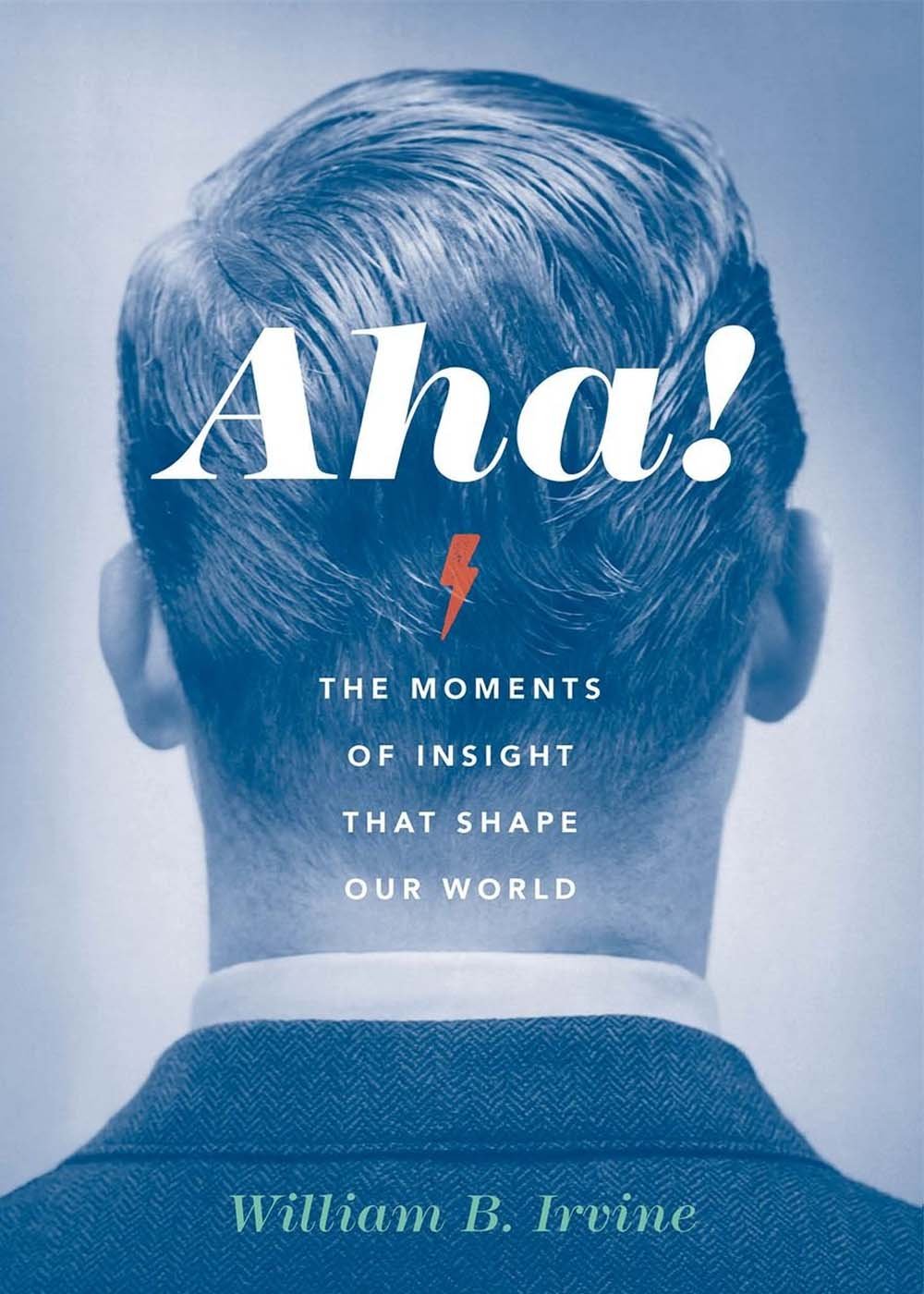
Unlock the Secrets Behind History’s Greatest Breakthroughs
Have you ever wondered what separates groundbreaking thinkers from everyone else? What sparked Einstein’s theory of relativity, or inspired Archimedes to leap from his bathtub shouting “Eureka”? William B. Irvine’s brilliant exploration of “aha moments” reveals the hidden patterns behind humanity’s most important discoveries.
This comprehensive guide distills the wisdom from Irvine’s masterwork into 25 actionable insights that will transform how you think about creativity, discovery, and personal breakthroughs. Whether you’re a scientist, artist, entrepreneur, or simply someone seeking deeper understanding, these insights will illuminate the path to your own moments of genius.
PART ONE: The Nature of Aha Moments
1. Aha Moments Can’t Be Summoned on Command
One of the most frustrating truths about insight is its independence from our conscious will.
Key Insight: Ideas have lives of their own and cannot be controlled like waiters at a restaurant. As Irvine explains, aha moments emerge from our unconscious minds without permission, creating a reality where “many novelists spend their days staring at a blank computer screen, and many mathematicians spend their days filling wastebaskets with the crumpled remains of stillborn proofs.”
The Takeaway: Accept that you cannot force breakthrough insights. Instead, create conditions that invite them to emerge naturally.
2. The Unconscious Mind Is Often Smarter Than the Conscious Mind
Your brain’s hidden depths contain profound problem-solving capabilities.
Key Insight: Breakthrough ideas often arrive during rest periods rather than during active problem-solving. Irvine notes that “a mathematician’s unconscious mind works on math problems when his conscious mind is otherwise occupied, and that his unconscious mind is a better mathematician than his conscious mind is!”
The Takeaway: Trust your unconscious. After intense work on a problem, take breaks and let your mind wander—solutions often arrive when you’re not actively searching for them.
3. Aha Moments Can Transform Entire Lives
These insights aren’t just intellectual—they’re life-changing forces.
Key Insight: Thomas Clarkson’s moral awakening about slavery demonstrates this power. After researching slavery for an essay, Clarkson experienced a revelation that “if the contents of the Essay were true, it was time some person should see these calamities to their end.” This single moment launched him into becoming a leading figure in the British abolitionist movement.
The Takeaway: Be prepared for insights that demand action. True aha moments may require you to radically alter your life’s direction.
4. Ideas Come From Unknown Sources
The origin of sudden insights remains mysterious even to those who experience them.
Key Insight: Irvine observes that “when an idea ‘comes to us,’ where does it come from?” Einstein described his breakthrough on relativity as “a storm broke loose in my mind,” suggesting ideas arrive like weather systems rather than conscious creations.
The Takeaway: Cultivate humility about the creative process. Great ideas often feel like gifts rather than achievements.
PART TWO: Insights from Religion
5. Religious Revelations Often Involve Multiple Senses
Transformative spiritual experiences engage the whole person.
Key Insight: Religious aha moments typically involve sight and hearing, but also internal feelings. As one evangelical convert described receiving the Holy Spirit: “All this intensity started hitting me from above, like intense warmth, like a blanket of love… I would have been knocked down by the power if I had not been lying down already.”
The Takeaway: Profound insights—whether spiritual or otherwise—often involve full-body experiences, not just intellectual understanding.
6. Distinguishing Between Epiphanies and Revelations
Not all sudden insights involve external sources.
Key Insight: Irvine distinguishes between epiphanies (internal realizations) and revelations (external communications). C.S. Lewis experienced an epiphany during a sidecar ride—his mind “simply changed itself” without supernatural intervention. In contrast, Moses’s burning bush involved a divine being revealing itself.
The Takeaway: Recognize the difference between insights generated internally versus those that feel like external communications. Both are valuable but serve different purposes.
7. Mental Revelations Require Skill to Interpret
Learning to recognize divine (or creative) communications takes practice.
Key Insight: In evangelical communities, believers must “develop the ability to recognize thoughts in their own mind that are not in fact their thoughts, but God’s.” Anthropologist Tanya Luhrmann found that “at the beginning, they usually find both the skill and the very idea of the skill perplexing.”
The Takeaway: Whether you seek spiritual guidance or creative inspiration, distinguishing between ordinary thoughts and significant insights is a learnable skill requiring practice and patience.
PART THREE: Moral Insights
8. Moral Epiphanies Often Create Personal Crisis
Discovering moral truth can be deeply unsettling.
Key Insight: When Clarkson discovered the horrors of slavery, he found himself “very seriously affected” and repeatedly tried to “persuade myself… that the contents of my Essay could not be true.” The truth was so disturbing it created a crisis: he had to either act on his newfound knowledge or live in denial.
The Takeaway: Be prepared for moral insights to disrupt your comfort. True moral awakening demands action, not just acknowledgment.
9. Contrarians Play a Vital Social Role
Those who challenge consensus thinking serve society, even when unwelcome.
Key Insight: Christopher Hitchens observed that “most people, most of the time, prefer to seek approval or security,” making contrarians necessary but unpopular. Socrates compared himself to a “stinging fly” needed to rouse a “large thoroughbred horse” (Athens) from laziness.
The Takeaway: Value—and become—the person willing to ask uncomfortable questions. Progress requires someone to challenge accepted beliefs.
10. Being a Contrarian Is an Identity, Not Just an Action
Challenging popular beliefs becomes a way of life for certain individuals.
Key Insight: As Hitchens explained, contrarianism “is something you are, not something you do.” He described it as realizing, “Dammit, I have only one life to live and I won’t spend a moment of it on some dismal compromise.”
The Takeaway: If you find yourself consistently questioning consensus, embrace it as your nature rather than forcing conformity. Your dissenting voice may be exactly what society needs.
11. Free Speech Is Essential for Progress
The ability to challenge beliefs drives human advancement.
Key Insight: Hitchens argued that “in life we make progress by conflict and in mental life by argument and disputation… There must be confrontation and opposition, in order that sparks may be kindled.” John Stuart Mill went further, suggesting that even if humanity possessed absolute truth, someone should challenge it to keep beliefs alive rather than letting them become “dead dogma.”
The Takeaway: Protect and exercise free speech rigorously. Without the ability to challenge ideas, human progress stagnates.
12. Changing Minds Happens Through Small Nudges
Don’t expect immediate conversions from your arguments.
Key Insight: Hitchens noted that “it is very seldom… that in debate any one of two evenly matched antagonists will succeed in actually convincing or ‘converting’ the other.” However, “concessions, refinements and adjustments will occur.” Change happens through “a cumulative series of such ‘nudges.'”
The Takeaway: Be patient with persuasion. Your goal isn’t instant conversion but planting seeds of doubt that accumulate over time.
PART FOUR: Scientific Discovery
13. Scientific Breakthroughs Bring Profound Joy
The pleasure of discovery can rival any human experience.
Key Insight: When Einstein solved the problem of time relativity, he went immediately to his friend Michele Besso and, “without even saying hello… blurted out, ‘Thank you. I’ve completely solved the problem.'” The joy of scientific discovery is so intense that one mathematician, on learning he had only months to live, chose to “spend those months not in hedonistic revelry but sitting in a quiet room, doggedly proving theorems.”
The Takeaway: Pursue work that can deliver moments of profound joy. Scientific and intellectual breakthroughs offer pleasures that transcend physical gratification.
14. Priority Matters Intensely to Scientists
Being first to discover something carries enormous weight.
Key Insight: Scientists value priority so highly that many simultaneous discoveries lead to bitter disputes. Newton and Leibniz both claimed to have discovered calculus first, “an outcome neither of them was willing to admit.” The race for priority drives researchers to publish quickly and sometimes recklessly.
The Takeaway: If you’re working on something innovative, document your progress and share your findings. In competitive fields, timing matters as much as insight.
15. Keep an Open Mind About Rejected Ideas
Today’s heresy may be tomorrow’s orthodoxy.
Key Insight: Many revolutionary scientific ideas faced fierce resistance. Continental drift was mocked when first proposed, and Lynn Margulis’s theory of endosymbiosis was rejected fifteen times before acceptance. Margulis reflected: “I was ridiculed and persecuted… but I was convinced I was right.”
The Takeaway: Don’t automatically dismiss unconventional ideas, including your own. Some of science’s greatest breakthroughs initially seemed absurd to experts.
16. Incubation Periods Are Essential for Problem-Solving
Stepping away from problems often leads to solutions.
Key Insight: Henri Poincaré made his breakthrough on Fuchsian functions while boarding a bus during a geological excursion: “At the moment that I put my foot on the step, the idea came to me, without anything of my previous thoughts appearing to have prepared me.” Similarly, Gustav Mahler’s creative block ended when, rowing across a lake, “At the first stroke of the oars the theme… came into my head.”
The Takeaway: After intensive work, deliberately change your environment and activities. Breakthroughs often arrive during transitions and leisure.
PART FIVE: Mathematical Insights
17. The Four Phases of Mathematical Discovery
Understanding the creative process helps harness it.
Key Insight: John Littlewood identified four phases: preparation (conscious work on the problem), incubation (unconscious processing), illumination (the aha moment), and verification (confirming the insight). As Littlewood described preparation: “hopeless muddle and floundering, sustained on the ‘smell’ that something is there.”
The Takeaway: Respect each phase of creative work. The frustrating preparation phase is necessary to engage your unconscious mind, which does the real problem-solving.
18. False Aha Moments Can Lead to Real Insights
Even incorrect hunches can prove valuable.
Key Insight: Littlewood described trying an approach that didn’t work, forgetting it failed, then trying it again during vacation. This second attempt “didn’t enable him to prove his theorem directly but, to his delight, let him prove something else that could be used to prove that theorem.”
The Takeaway: Don’t dismiss failed approaches too quickly. Revisiting them with fresh perspective may reveal unexpected applications.
19. Choose Your Problems Wisely
Not all problems are worth solving.
Key Insight: Irvine notes that mathematicians face a “pre-problem problem”—choosing what to work on. “The problem he works on should be chosen with care. It should be a significant problem, one that can potentially lead to advances in mathematics or in other sciences. At the same time, though, it should be a problem that he has a reasonable chance of solving.”
The Takeaway: Be strategic about where you invest effort. Work on problems that matter and that you have some hope of solving.
20. High Idea-Generation Ratio Is Normal
Most ideas will be bad—and that’s okay.
Key Insight: Mathematician Gian-Carlo Rota observed: “there is a ratio by which you can measure how good a mathematician is, and that is how many crackpot ideas he must have in order to have one good one. If this ratio equals ten to one then he is a genius. For the average mathematician, it may be one hundred to one.”
The Takeaway: Generate ideas prolifically without self-censorship. Quality emerges from quantity—even geniuses produce mostly bad ideas.
PART SIX: Artistic Creation
21. Artists Experience “Lots of Little Ahas”
Artistic creation differs from single-moment breakthroughs.
Key Insight: Unlike scientists who may spend years building to one major insight, artists typically experience continuous streams of small aha moments. Each line of poetry, each musical phrase, each brushstroke represents a micro-decision—a tiny creative breakthrough.
The Takeaway: Don’t wait for one massive inspiration. In creative work, accumulate small insights consistently rather than expecting lightning strikes.
22. Managing Your Muse Requires Routine
Inspiration favors the disciplined.
Key Insight: Many successful artists maintain strict routines. Georges Simenon wrote daily from 6 AM, while William Styron worked only a few hours each morning. Ray Bradbury advised: “Don’t think. Thinking is the enemy of creativity. You can’t try to do things. You simply must do things.”
The Takeaway: Create regular creative practices. Waiting for inspiration is less effective than showing up consistently and letting inspiration find you at work.
23. Artistic Taste Is Culturally Constructed
What counts as “art” changes dramatically over time.
Key Insight: Édouard Manet was viciously attacked by critics who called his work worthy of “laughter, mockery, and catcalls.” One review stated his painting “could have been done with a floor mop.” Yet within decades of his death, “Manet was on his way to becoming an Impressionist superstar” while his critics were forgotten.
The Takeaway: Don’t let current criticism deter you from innovative work. Artistic judgment is often revised radically by history.
24. Resilience Separates Successful Artists from Others
Perseverance through rejection is essential.
Key Insight: Despite relentless criticism and financial struggle, Manet “not only kept painting but moved deeper into the style he was developing.” Even when critics published reviews titled “Manet’s Horrors,” he continued working. By age forty, he “had sold only a couple of paintings, and both times to friends.”
The Takeaway: If you believe in your work, persist through rejection. Many of history’s greatest artists faced years or decades of harsh criticism before recognition.
25. Mental Illness Can Unleash Creativity
Psychological conditions sometimes enhance artistic output.
Key Insight: Irvine explores how “mental illness can unleash creative impulses in artists.” Psychologist Kay Jamison documented that many great artists experienced mood disorders that, while causing suffering, also generated periods of intense creative productivity. The manic phase of bipolar disorder, in particular, can drive prolific artistic output.
The Takeaway: Understand the complex relationship between psychological states and creativity. While mental illness shouldn’t be romanticized, acknowledging this connection helps us understand the creative process more fully.
Conclusion: Cultivating Your Own Aha Moments
William B. Irvine’s exploration of insight reveals a fundamental truth: aha moments are not random accidents but the result of specific conditions and practices.
While you cannot force these moments to occur, you can create an environment where they flourish:
- Work intensely on meaningful problems, giving your unconscious mind something to process
- Take strategic breaks to allow incubation to work its magic
- Embrace failure as necessary preparation for eventual breakthrough
- Challenge consensus when your conscience demands it
- Maintain regular creative practices rather than waiting for inspiration
- Persist through rejection when you believe in your work
- Stay open to insights from unexpected sources and at unexpected times
As Irvine demonstrates through examples spanning religion, morality, science, mathematics, and art, humanity’s greatest achievements began as sudden insights in individual minds. The ability to recognize, nurture, and act upon these moments of clarity is what separates those who change the world from those who merely inhabit it.
The next time inspiration strikes—whether in the shower, during a walk, or while boarding a bus—recognize it for what it is: your unconscious mind offering you a gift. What you do with that gift will determine whether your aha moment merely changes your own life or ripples outward to shape the world.
About “Aha! The Moments of Insight that Shape Our World”
Author: William B. Irvine
Publisher: Oxford University Press (2015)
Genre: Psychology, Creativity, Philosophy, Science
This groundbreaking book examines how breakthrough insights occur across five domains: religion, morality, science, mathematics, and the arts. Through vivid examples ranging from Archimedes to Einstein, from Saint Augustine to Christopher Hitchens, Irvine reveals the patterns underlying humanity’s most important discoveries and offers insights into how we can cultivate our own moments of genius.
Whether you’re seeking your next business innovation, artistic breakthrough, or simply trying to understand the human experience more deeply, “Aha!” provides both theoretical understanding and practical wisdom for navigating the mysterious process of insight and discovery.
Related posts:
 The Unconscious Mind and Creativity: Where Your Best Ideas Actually Come From
 Aha Moments Explained: The Science Behind Sudden Insights That Changed History
 Whay Is The Eureka Effect: How Aha Moments Drive Scientific Breakthroughs and Paradigm Shifts
 Mathematical Eureka Moments: Understanding the Aha Insights That Unlock Eternal Truths
 The Creative Process Explained: From Ideas to Finished Work