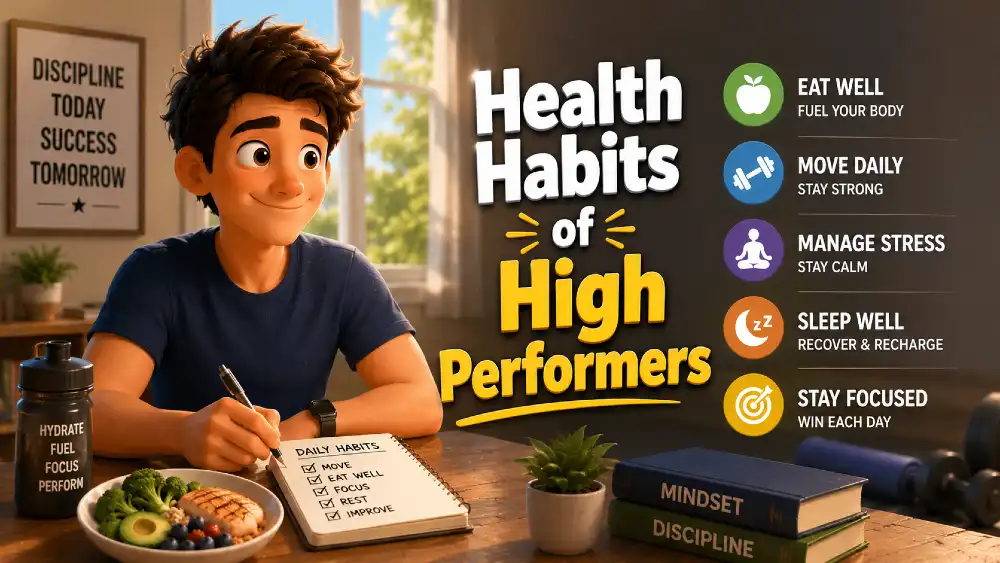
Most people treat their body like a problem they’ll deal with later — after the business is built, the deadline passes, the kids are older. But the healthy habits of successful people tell a different story: energy, focus, and resilience are the actual fuel behind every big goal, and the people who protect their health early are the ones who can still perform when it counts.
There’s a common mistake successful people make on the way up: they treat physical health as something to attend to later, after the business is built, the kids are launched, the project is shipped. I’ll start exercising when things calm down. I’ll eat better when this season is over. I’ll sleep more when the deadline passes. The trouble is, the seasons keep arriving and the deadlines never end, and one day the body that was supposed to wait quietly while you achieved your dreams sends a message that can’t be ignored — through fatigue, illness, or a slow erosion of the energy you used to take for granted.
In short: the healthy habits of successful people center on treating the body as the engine behind every goal — consistent movement, hydration, real food, sleep, and a mindset that doesn’t sabotage the rest. Skip any one of them long enough, and performance in every other area of life quietly declines.
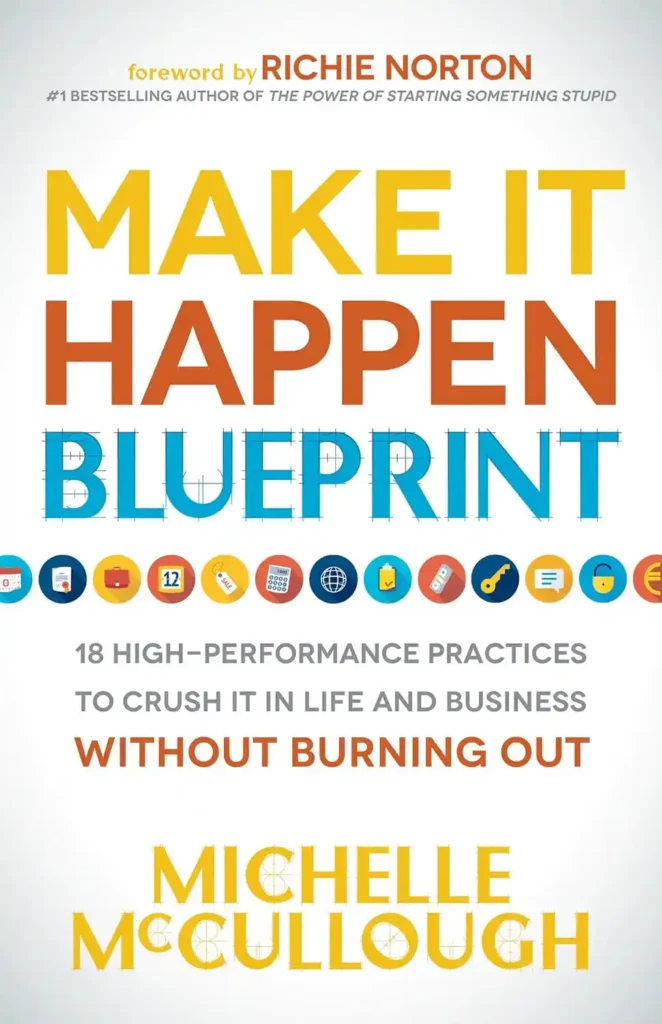
In Make It Happen Blueprint, business coach Michelle McCullough offers a reframe that changes how the whole conversation lands: your body is the vehicle for your dreams. Whatever you’re trying to build — a business, a family, a body of work, a meaningful life — requires energy, focus, and resilience to construct, and if you let the vehicle deteriorate, you can’t drive anywhere. The most ambitious goals require the most reliable fuel.
This article walks through the eight health habits McCullough has found make the difference, why they matter more for ambitious people rather than less, and how you can start building them without overhauling your entire life overnight.
The Realization That Changed Her Approach
McCullough is candid that she didn’t think her health had anything to do with her success until she was thirty-one. She’d never been particularly athletic, and she spent most of her life telling herself she was “fat and happy” — which was true in a limited sense, but only ever amounted to okay.
After the birth of her second child, watching friends lose weight and feel better, she finally decided to try. She consulted her doctor — one of only a handful of patients who actually followed that standard advice, the doctor noted — and got the basics: an appropriate calorie target and 30 minutes of exercise 3–5 days a week. She started going to the gym four to six days a week, and the weight came off, and the compliments came in.
But the surprising part wasn’t the praise. It was the realization, after dropping forty pounds, that her diet and exercise journey had taught her a deeper principle: her body was the vehicle for everything else she wanted to do. She had big dreams and big goals, and they required energy, mental fortitude, and the vitality to be a present mom and a serious entrepreneur in the same day. The point wasn’t the number on the scale — it was that her ability to perform at the level she wanted in every other domain depended on a body that could keep up.
The 8 Healthy Habits of Successful People, According to Michelle McCullough
Here are the eight habits McCullough identifies, drawn directly from her chapter. None of them is new, and that’s precisely the point — high performers actually do these, not perfectly, but consistently, while the rest of the world tends to skip them and then wonder why they’re tired. If you’ve ever asked what successful people do differently on an average Tuesday, this list is closer to the honest answer than any productivity hack.
1. Find an Exercise You Actually Enjoy
McCullough went through phases — Zumba, walking, weight training, an eventual half-marathon — and she acknowledges that despite trying repeatedly, she’s still not a runner who loves running. That’s fine, and it’s the point: the goal is to try different forms of movement until you find a few you genuinely enjoy, because exercise you enjoy is exercise you’ll keep returning to, while exercise you hate is exercise you’ll abandon the moment life gets hard.
Don’t force the program your friend swears by if your body and brain reject it. Most adults need to try several kinds of movement before something actually sticks — and that experimentation phase isn’t wasted time, it’s the process working as intended.
2. Schedule Exercise Into Your Day
If exercise lives on your to-do list as something you’ll “fit in when there’s time,” it will rarely happen, because the schedule fills with other things while the body waits. McCullough’s recommendation is to put exercise on your calendar like an appointment — not “exercise this week,” but “Tuesday 6:30 AM, gym, 45 minutes” — and to treat it with the same non-negotiable status you’d give a meeting with an important client.
Most people who exercise consistently do so because it’s protected on the calendar, not because they’re more motivated than everyone else. This is one of the more overlooked morning habits of successful people: they don’t leave the decision of whether to move their body up to how they happen to feel that morning. The decision was already made when they wrote it on the calendar the night before.
3. Drink Enough Water
The advice is unglamorous and consistently true. McCullough notes that through Deepak Chopra’s Boundless Energy, she learned the value of warm water throughout the day — Chopra’s case is that it supports digestion and energy — and she’s been doing this for more than a decade, crediting it as a real difference-maker. Whether you go warm or cold, the underlying principle holds: most people are mildly dehydrated most of the time and attribute the resulting fatigue and brain fog to other things entirely.
Even modest, consistent underhydration is linked to reduced alertness and mood, according to guidance from the CDC on water and healthier drinks, which is a useful reminder that this “boring” habit is doing more work than it gets credit for. Try a few weeks of being intentional about water intake and notice what changes.
4. Eat Your Fruits and Vegetables
When McCullough goes to the grocery store, she picks at least ten different fruits and vegetables to keep on hand, then washes, cuts, and packages them into grab-and-go servings the same day. The result is that when hunger hits, healthy options are already at her fingertips — without that prep, the easier choice would always be the less healthy one.
Her friend Elizabeth Anderson, a health and wellness coach, often reminds her that proper nutrition is about 80% of the health and weight battle. Exercise matters, but you can’t out-exercise a bad diet — the eating is doing most of the work, which is exactly why this habit sits near the top of any real list of healthy habits of successful people, even though it’s rarely the glamorous one.
5. Don’t Skip Breakfast
The advice isn’t an old wives’ tale. Skipping breakfast tells the body it doesn’t know when food is coming, which prompts it to hold onto fat and slow metabolism. Beyond the metabolic effect, breakfast gives you the energy and clarity to think and function properly through the morning — and that doesn’t mean elaborate meals. A real breakfast, even a simple one with protein and some complex carbs, beats a coffee-and-pastry approach, or no breakfast at all, which is how many people actually start their day.
6. Keep a Healthy Mindset
This is the most underrated habit on the list. Exercise and eating well are as much mental games as physical ones, and McCullough acknowledges she has decades of scripts and emotional associations connected to food and her body that are hard to reprogram. What she means by “healthy mindset” is the ongoing work of how you talk to yourself about your body — the internal commentary while you exercise, the story you tell yourself when you eat something you wish you hadn’t, the shame, the punishment, the all-or-nothing thinking that derails so many people the moment they slip up.
If you find yourself struggling with the mental side of this — if every diet ends in a binge, if exercise becomes a punishment for eating, if your body is something you mostly hate — get help. A personal trainer with a healthy approach, a transformational coach, or a therapist can all move the needle here, because the body changes more readily when the mind is on its side.
7. Take a Daily Multivitamin
McCullough is upfront that not every multivitamin produces a noticeable difference. She tried many before finding one — Lifelong Vitality by doTERRA — that genuinely changed her energy. After a month, she’d stopped needing daily naps, and a test where she stopped taking it for a month confirmed the difference: the naps came back, and within a week of resuming, she was back to feeling herself.
The brand isn’t the point — McCullough is clear there are many options and they aren’t all created equal. The point is two-fold: a good multivitamin can genuinely move the needle on energy and recovery, and finding the right one for your body may take some experimentation. Consult your doctor for guidance on what makes sense for you before starting anything new.
8. Get Enough Sleep
McCullough mentions one friend who functions optimally on five or six hours of sleep, night after night — but that friend is an outlier. For most people, including McCullough herself, the real number is seven to eight hours, which lines up with the general adult sleep guidance from the CDC recommending at least seven hours per night for health and cognitive performance.
She didn’t realize how much sleep she actually needed until a health challenge with friends penalized them for sleeping less than seven hours. She’d been getting by on six, and the shift to seven — with eight as the aim — measurably increased her energy, productivity, and mental clarity. The honest reality is that when you sacrifice sleep, you sacrifice the quality of your work. Many people compensate with caffeine and other artificial stimulants, which masks the deficit without addressing it, and the work you do while underslept is reliably worse than the work you do when properly rested, even if you can’t feel the difference in the moment. If you spend most of your day tired, the answer isn’t usually more coffee — it’s usually one or two more hours of sleep.
The Bigger Picture
McCullough makes a point that’s easy to skim past: this isn’t really about weight loss. You may already be at a weight that’s right for you. The principle is broader — it’s about optimum health, about vitality, about having the energy and clarity to do the things you say matter to you.
Ask yourself, regularly: Am I at my optimum health? If the answer is no, what needs to change? Do you need more sleep? Different food? More movement? More water? Less of something? The body usually knows. The question is whether you’re willing to listen to it.
On Sustainability
One more useful piece from McCullough’s chapter: there’s a difference between an approach that works for a few months and one you can sustain for life. She tells the story of her friend KrisTina, who lost baby weight by cutting out sugar, sweets, dessert, and treats entirely, and it worked for her. McCullough tried the same approach and turned into, in her own words, a crazy person — eventually breaking and eating a dozen cookies in a sitting.
What worked for McCullough was moderation: allowing herself one cookie, tracking it in her food journal, and keeping the rest of the day sensible. Different bodies and personalities respond differently to denial — some people thrive with cold-turkey restriction, others spiral — so know which one you are, and build accordingly. This is really the same principle behind building systems instead of chasing one-off goals: the fitness or nutrition approach that produces real long-term change is almost always the one you can keep doing for years, not the dramatic one that ends in a binge two months in.
The Business Case for Healthy Habits of Successful Entrepreneurs
For people skeptical that this matters professionally, corporations have noticed. McCullough points out that more and more companies are putting gyms in offices, offering reduced-cost memberships, and incorporating wellness challenges — and the reason isn’t generosity, it’s economics. Healthy employees take fewer sick days, lower insurance costs, and produce better work, and healthy executives make better decisions. The case for health as a business strategy is well-established, and it dovetails with a related idea worth understanding: why energy management beats time management as the real productivity lever for high performers.
If you work for yourself, you carry both sides of this equation. Your health is your business health, and there’s no HR department to insulate you from the consequences of running yourself into the ground.
Start With One
If you’re not currently doing most of these habits, don’t try to overhaul everything at once. The same compounding problem applies here as with any habit change — too much, too fast, leads to burnout and abandonment. Pick the habit that feels most needed and most accessible. For most people, that’s either water or sleep. Start there, maintain it for two weeks, then add the next one.
Within a few months of consistent small changes, you’ll likely feel like a different person — not because anything dramatic happened, but because you stopped quietly running your body into the ground. The dreams you’re chasing need the vehicle to keep working. Take care of the vehicle. The rest of the journey depends on it.
Frequently Asked Questions
What are the healthy habits of successful people? The core habits are consistent movement (ideally exercise you actually enjoy), scheduled workouts, adequate hydration, a diet built around fruits and vegetables, a real breakfast, a healthy mindset around food and body image, targeted supplementation where needed, and seven to eight hours of sleep. None of these is exotic — the difference is consistency, not novelty.
Why do successful people prioritize health over other priorities? Because energy, focus, and resilience are finite resources that fuel every other goal. A depleted body can’t sustain the mental output that ambitious work requires, so high performers treat physical health as infrastructure rather than an afterthought.
How many hours of sleep do most high performers actually get? Most function best on seven to eight hours, even though sleep needs vary slightly by individual. Chronic sleep deprivation reliably lowers the quality of decision-making and output, even when the person doesn’t consciously feel the deficit.
Do successful people follow strict diets? Not usually. The evidence in McCullough’s own experience — and in most sustainable approaches — favors moderation over extreme restriction. Total denial tends to produce a rebound; sustainable, trackable moderation tends to last.
What’s the easiest healthy habit to start with? Water or sleep, according to McCullough’s own recommendation. Both are low-effort to start, produce noticeable effects within a couple of weeks, and create momentum for adding the next habit.
Key Takeaway
The healthy habits of successful people aren’t complicated or exotic — they’re ordinary practices like sleep, hydration, real food, enjoyable movement, and a mindset that doesn’t sabotage the rest, done consistently instead of occasionally. Start with one habit, protect it for two weeks, and build from there; the vehicle carrying your dreams runs on nothing more mysterious than that.
This article is inspired by the chapter on Physical Health in Make It Happen Blueprint: 18 High-Performance Practices to Crush It in Life and Business Without Burning Out by Michelle McCullough (Morgan James Publishing, 2017).
Related posts:
 Make It Happen Blueprint: 18 High-Performance Practices to Crush It in Life and Business Without Burning Out (Full Summary & Course)
 The Power Team Pyramid: Who You Need Around You to Reach Big Goals
 How to Raise High-Performing Kids: 6 Anchor Points That Work
 How to Create a Vision Board That Actually Works (And Why Most People Fail)
 The Life Balance Myth: Why High Performers Choose Priorities Over Balance