If you typed “Uber driver plays AI songs about passengers” into a search bar, you probably expected to find one man. A single driver with a laptop, a grin, and a playlist built around whoever climbed into the back seat.
What you actually find is stranger and more interesting: a whole genre. There is no single driver. There is a small crowd of them, and the thing they have in common says a lot about where AI, gig work, and attention have taken us.
Here is what we found, what’s confirmed and what isn’t, and the part most coverage skips: the question of what a man owes a stranger who has nowhere to go for the next twenty minutes.
The Short Answer
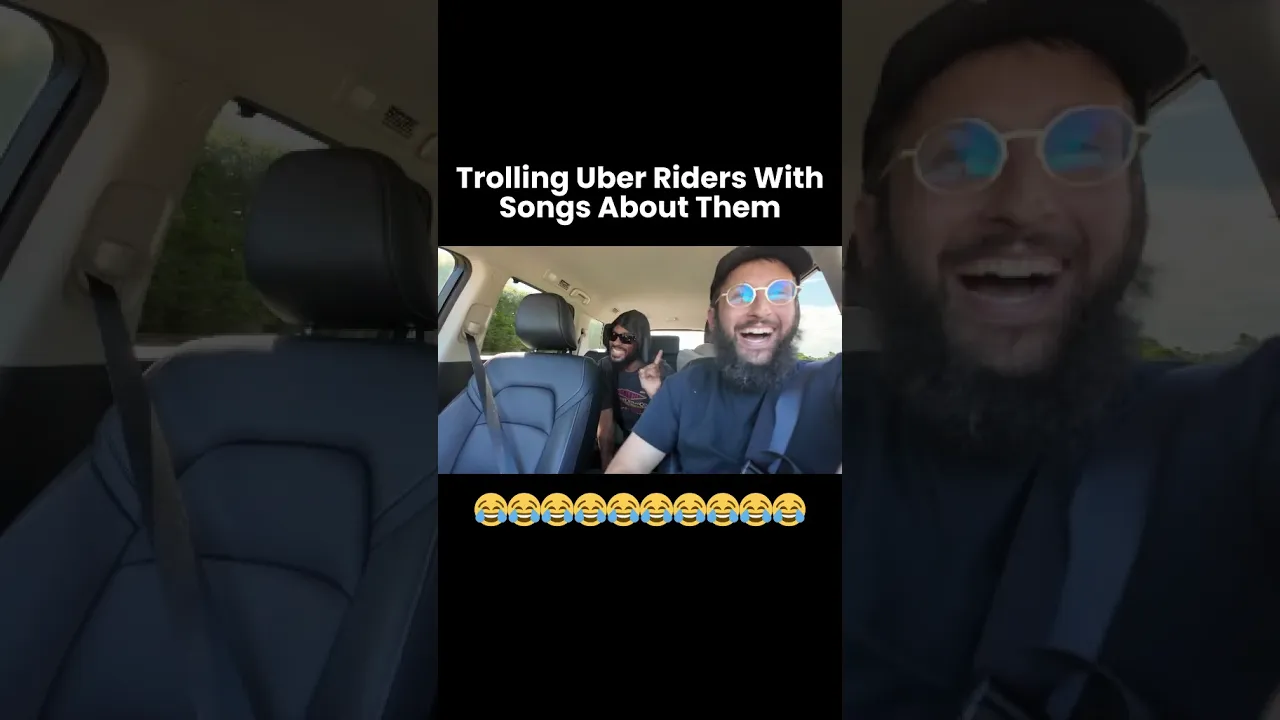
The “trolling Uber driver” is really a trend. Drivers write or generate a custom song using the passenger’s name (or a detail from the ride), play it through the car speakers, and film the reaction. The most visible account is The Prank Cab Show on TikTok. Other creators, including Gremlin (@gremlinraps) and Regiwock, run similar series, and rapper Hi-Rez, a Bronx-born artist who drives Uber, has a hit series titled “Trolling Uber Riders With Songs About Them” (we could not confirm he uses AI). The trend traces back to a June 2025 TikTok in which a New York passenger named Elise Carlin caught her driver playing AI songs with her name in them on the way to the airport.
Some reactions are delighted. Some are horrified. And a lot of this content is probably more staged than it looks.
Where It Started: Elise Carlin and the 7 AM Serenade
The moment that put this idea on the map was small and a little eerie. According to the Daily Dot, New York creator Elise Carlin got into an Uber at 7 a.m. headed to the airport, and the driver started playing AI-generated songs with her name worked into the lyrics. Her TikTok caption called it an Uber first. The clip pulled in nearly 560,000 views.
The comments split almost perfectly in half. One camp was unnerved, and Distractify captured the mood with a top comment saying it “would send me into psychosis.” Others said they would have asked to get out. A few thought it looked like a bit from a prank show.
The other camp was charmed. One commenter gave the driver “5 stars for intention.” Another wrote “5 stars for being a creep.” Both of them watched the same twenty seconds.
That split is the whole story. Keep it in mind, because we’ll come back to it.
Nobody knows for sure whether that driver did this to every passenger or generated the songs on the spot. Several commenters wondered the same thing, and as far as we can tell the driver never stepped forward.
The Genre: The Prank Cab Show and Everyone Else
Within a year, the one-off became a format. A few of the creators worth knowing:
- The Prank Cab Show (@theprankcabshow). The biggest name in the niche. The creator says he writes the lyrics himself and lets AI turn them into music, then plays the result for passengers whose names he took from the app. Titles follow a pattern, with the song opening on “Uber for [name].” One clip about a passenger named Brian turns his love of the smell of gasoline into a full chorus. Another, built around a passenger’s best friend named Antonio, was played with the passengers in on the joke. According to TikTok’s own search pages, one of his clips, captioned as earning him a one-star rating, passed 690,000 likes and 5,800 comments. Treat those numbers as a snapshot, since they move daily
- Gremlin (@gremlinraps). Posts “trolling my Uber passengers with an AI song about them” clips and has credited the AI tool Jam AI for the music.
- Regiwock (@regiwock_). Runs a numbered series called “Music About My Uber Passenger.”
- Smaller accounts such as Tread & Torque, CrashDuhMe (“The Adventures of Uber”), Dom Spamz and SafewithSeif have all posted their own version.
There’s also a commercial layer. At least one account promoting an AI custom-song app posts skits it labels as fictional, which tells you the trend has already been noticed by people who want to sell the tool behind it.
One more detail worth knowing: a podcast clip discussing the genre describes a passenger who simply demanded to be let out on the roadside. Not everyone is a good sport, and the camera doesn’t always catch that.
Hi-Rez: The Rapping Driver Who Was Doing This Before AI
If you search for the driver who trolls riders with songs about them, one name keeps surfacing: Hi-Rez, a rapper who drives Uber and films himself performing for passengers. He is the clearest human predecessor to the AI version, and he is worth separating from it.
Who he is. Hi-Rez is a working hip-hop artist. His booking profile on Bandsintown describes him as Bronx-born and Florida-raised, known for conscious lyrics, with national tour dates supporting or alongside acts such as King Los, Cory Gunz, Riff Raff and G-Eazy, plus a clothing brand called Only For The Fans. AllMusic lists him as a socially conscious rapper who debuted in his teens and first reached Billboard’s R&B/hip-hop chart with “Impatiently Waiting” in 2013. A caution: several auto-generated bio pages online give a different hometown and an invented backstory, so we leaned only on those two sources.
The Uber content. His X account shows him posting an “Uber driver rapping prank” as early as August 2018, and clips such as “Body Builder SHOCKED By Rapping Uber Driver” and “Uber driver rapping over Eminem beat” appeared in July 2025. His YouTube catalog includes “Uber Driver Surprises Riders with Insane Rap” and an “Uber Driver Rapper” song, and his fan page has posted clips like “Uber Driver Raps For Riders.”
The series that overlaps with the AI trend. Hi-Rez has a run called “Trolling Uber Riders With Songs About Them,” now into multi-part compilations on YouTube. On X he called it the fastest-growing series of all his content, with millions of views across platforms. That title is word for word the same as clips from other accounts, which is one reason searches for this phenomenon blur together.
What we could not confirm. We found no source saying Hi-Rez uses AI to generate those songs. His background and his catalog point to a rapper writing and performing, though we can’t verify how any individual episode was made. Treat him as the human precedent, not as part of the AI wave, unless he says otherwise.
Why the distinction matters. A rapper performing for a back seat is a skill the passenger watches being built in real time. An AI song arrives finished, produced by a prompt and a name from an app. Both can be funny, and both still need the passenger’s say-so, but one of them has a man’s craft behind it. We explore that kind of earned, visible skill in Nas and the Case for a Wider Masculinity in Rap.
He isn’t the first. Rapping drivers go back before this wave. A Denver Uber driver, Dylan Montayne, went viral in 2016 after filming himself rapping for passengers and later told Westword he used driving as a networking tool. Oakland’s Ashel Eldridge, “the Lyft Rapper,” freestyles on request about everything from deli sandwiches to gentrification, as KQED reported. These men use a captive audience to show what they can do. That’s a very old hustle, and the AI version borrows the format without the craft.
Why It Works So Well as Content
It’s worth being honest about why this format spreads, because understanding the machine is the first step to not being used by it.
A built-in character and a built-in victim. Every ride has two people and a clear power imbalance in the visual frame: the driver controls the speakers, the passenger is a captive audience. Comedy and discomfort come from the same source.
Personalization hits a nerve. Hearing your own name in a song is a tiny jolt of being noticed. In a world where most of what reaches us is generic, that jolt is potent, whether it lands as flattery or as intrusion. We wrote about the strange emotional pull of being addressed by software in AI Situationships, and the same mechanism is at work here.
The reaction is the product. The song is only the setup. The payoff is a human face deciding, in real time, how to feel. That is why so many of these clips end on a reveal, a laugh, or a flinch.
Ratings create a plot twist. When a driver says a prank cost him a one-star rating, he turns an invisible gig-economy mechanism into a punchline, and viewers love a consequence.
Troll or Creep? The Question of Consent
Here is where we want to slow down, because this is the question that actually matters and the comment sections mostly flatten it.
A prank is a shared joke. A boundary violation is a joke that only one person agreed to. From the outside they can look identical for the first fifteen seconds.
The difference is consent, and in a car it’s complicated. A passenger can’t walk away. On a highway at 7 a.m., with a flight to catch, they don’t have a quick exit. Many women, in particular, have learned to read ride-share situations carefully, and a driver who knows your name from the app and then plays a song about you is sending a signal that can read as either warmth or surveillance depending on the history of whoever is hearing it. Commenters on the original video said exactly this. That reaction isn’t oversensitivity. It’s pattern recognition, and a decent man takes it seriously rather than arguing with it.
Intent matters, but impact matters just as much. “I meant it as a joke” is a real thing to say. It is not a thing that resets how the other person feels. We explore the psychology of this in Why Some Jokes Feel Like Attacks, and the short version is that teasing only works when the person on the receiving end has the power to opt out.
A simple test any driver can run: would I be comfortable if the passenger could see exactly what I plan to do before they get in? If the answer is no, the joke depends on the lack of consent, and that is worth looking at honestly.
Is It Legal? What About Uber’s Rules?
Playing a song is not illegal. Filming and publishing the passenger’s reaction is where it gets tricky, and we can’t give legal advice, but we can point to what’s on record.
In 2018, a St. Louis driver named Jason Gargac livestreamed around 700 rides on Twitch without telling passengers. Uber and Lyft both removed him from their platforms. Missouri allows recording with one party’s consent, but he also drove into Illinois, where all parties must agree. Later that year, Uber added language to its driver guidelines prohibiting the broadcasting of recordings of riders, while still allowing recording for safety.
The takeaways, with the caveat that policies change and you should read the current version yourself:
- Recording laws vary by state and country, and some require everyone’s consent.
- Ride-share platforms have separate rules about posting passengers online, and drivers have been deactivated over it.
- A viral clip is a business decision with real risk attached, not just a funny moment.
If a prank video features a passenger’s face, voice, or name, the passenger’s actual agreement matters, not just the app’s terms of service.
Is It Even Real?
Part of being honest with ourselves in the age of AI content is admitting that we often can’t tell. Some of these videos appear to be genuine reactions. Some are clearly collaborations with willing passengers. Some, like the skits from the song-app account, are openly labeled fiction.
We can’t verify which clips are spontaneous, and we’d be suspicious of anyone who says they can from a thumbnail. The skill worth building is simple: when you watch a “stranger’s genuine reaction” clip, hold it loosely. Ask who benefits from you believing it’s real. We go deeper into this habit in AI Is More Persuasive Than You.
The Gig Economy Layer Nobody Mentions
Step back from the jokes and look at the driver.
A ride-share driver is, for most of the working day, an anonymous face evaluated by an algorithm. Ratings can affect whether he keeps working. Toronto Life’s etiquette columnist notes that stars are serious business, citing widely repeated but unofficial claims that a rating below roughly 4.6 can lead to suspension. Uber doesn’t publish the exact threshold, so treat that figure as folklore.
In that environment, it’s not hard to see why a driver reaches for content. A viral video can be worth more than a month of fares. A custom song is a way to stop being furniture and become a character, to be seen by people rather than scored by a system. We explored that dynamic in Gig Economy Exploitation: How Uber’s Algorithms Control Drivers and in Platform Capitalism.
That doesn’t excuse making a passenger uncomfortable. But it adds depth to the picture. Behind some of these stunts is a man looking for a way to matter in a system that treats him as a rating. A man’s worth was never meant to depend on a star average or a view count, and a driver who knows that doesn’t need his passengers to be his audience.
What This Says About Us
Set aside the car for a moment. Why does this land so strongly with millions of viewers?
We think it’s because it sits right on the fault line of the moment we’re living in. AI can now generate a convincing song about anyone in under a minute. That is genuinely delightful and genuinely unsettling, and the technology has no opinion on which.
It also shows how thin our moments of real human contact have become. A passenger and a driver share a small space for twenty minutes and usually say almost nothing. Into that silence walks a machine-made song. Some people feel connection. Some feel invasion. Both are responses to the same hunger and the same fear: that we are surrounded by contact that isn’t quite human.
If that resonates, read Digital Loneliness, The Paradox of AI, and The Lost Art of Listening. A real conversation with a stranger in the back of a car costs nothing, needs no model, and might be the better trick.
If It Happens to You (Passenger Playbook)
- You’re allowed to say something. A calm, friendly “Could you turn that off, please?” is a complete sentence. If the driver respects it, you’re fine. If he doesn’t, that tells you what you need to know. Our piece on setting boundaries without guilt is a good rehearsal.
- Use the safety tools if you feel uneasy. Share your trip with someone you trust and keep an eye on the route. If something feels wrong, end the ride in a safe, public place.
- Decide whether you consent to being filmed. If a camera is visible and you didn’t agree, say so clearly.
- Rate and report honestly, not angrily. A one-star rating can cost a driver real income, so save it for real problems. If the behavior crossed a line, report it through the app.
- Don’t over-read it, and don’t under-read it. Most drivers doing this are chasing views, not hunting you. But your discomfort is data, and you don’t need to argue yourself out of it. If you tend to take things personally, Stop Taking Things Personally can help you sort the signal from the noise.
If You’re the Driver (Creator Playbook)
If you’re considering this format, here is what we’d say to a friend:
- Ask first. Make it opt-in. “Want a custom song about you for the ride?” turns a trap into a gift and costs you nothing except the shock.
- Never film without a clear yes. Get the agreement on camera, and read your platform’s current rules and your local recording laws.
- Don’t hold the rating hostage. Fishing for five stars after a prank puts the passenger in an impossible spot.
- Know what you’re selling. If your content depends on someone’s discomfort, you’re borrowing from your own integrity. If it depends on shared laughter, you’re building something.
- Don’t make a stranger the villain. Songs that mock a person’s body, habits, or name for laughs can follow them online for years.
The drivers who will last in this niche are the ones whose passengers say yes.
Frequently Asked Questions
Who is the Uber driver who plays AI songs about his passengers? There isn’t one. It’s a trend with many creators. The most visible is The Prank Cab Show on TikTok, while Gremlin, Regiwock, rapper Hi-Rez and others run similar series. The first widely covered incident was a June 2025 video by New York TikToker Elise Carlin.
Do Uber drivers generate the songs live during the ride? Some creators say they write lyrics beforehand using the passenger’s name from the app and have AI produce the music. Others may prepare in advance. It’s usually not clear from the video, and some clips are staged or fictional.
Which AI tools are used? Creators rarely say, but at least one has credited Jam AI. Many general AI music generators can produce a custom song from a text prompt in minutes.
Is it legal for an Uber driver to play an AI song about me? Playing music isn’t illegal. Recording or posting your reaction is governed by local recording laws and Uber’s guidelines, which have prohibited broadcasting recordings of riders since 2018. Check the current rules.
Can I report a driver for this? Yes. If you felt unsafe, uncomfortable, or recorded without consent, you can report it through the Uber app.
Are these videos real or staged? A mix. Some look spontaneous, some involve passengers in on the joke, and some account owners label their skits as fiction. Treat any “genuine reaction” with healthy skepticism.
The Takeaway
The viral Uber driver with the AI songs is less a person than a mirror. Held up to him, we see a technology that can flatter and unsettle in the same breath, a labor system that rewards visibility over dignity, and an old question about what we owe strangers.
The answer is not complicated, even if the comment sections make it look that way. Be generous with people, and let them say no. Make something funny, and make sure everyone in the car is in on it. And if you ever find yourself being serenaded at 7 a.m. by a voice that was never born, remember that you’re allowed to ask for silence.
Sources and further reading: Daily Dot and Distractify coverage of Elise Carlin’s viral TikTok (June 2025); St. Louis Post-Dispatch reporting on the 2018 Uber/Lyft livestreaming case and Uber’s policy change; Toronto Life’s Urban Diplomat column on driver ratings; public TikTok pages for The Prank Cab Show, Gremlin, and Regiwock. Engagement figures are snapshots from search results and change frequently.
Related posts:
 Gig Economy Exploitation: How Uber’s Algorithms Control Drivers
 The Marathon Continues: What Nipsey Hussle Taught Us About Ownership, Brotherhood, Legacy and Being a Man
 What Is Self-Doubt? The 4 Hidden Drivers Sabotaging Your Confidence
 Nas and the Case for a Wider Masculinity in Rap: What Nasir Jones Teaches Men About Vulnerability and Depth in Hip-Hop
 How to Take 100% Responsibility for Your Life (Without Beating Yourself Up)