
At just 28 years old, Alexander Wang has already lived multiple careers that most entrepreneurs could only dream of. From dropping out of MIT as a college freshman to becoming the world’s youngest self-made billionaire by age 24, from building Scale AI into a $29 billion company to joining Meta as Chief AI Officer in a groundbreaking $14.3 billion deal—Wang’s trajectory represents one of the most remarkable success stories in tech history.
In a revealing conversation on the Shawn Ryan Show, Wang shared insights into his journey, philosophy, and vision for artificial intelligence‘s future. His story offers lessons about ambition, timing, strategic thinking, and the courage to make unconventional choices. More importantly, it illuminates how a young entrepreneur with no previous business experience built a company that became essential to America’s AI development and national security—then made the difficult decision to move on to his next challenge.
The Los Alamos Beginning: Growing Up in Nuclear Research Country
Wang’s story begins in Los Alamos, New Mexico—the birthplace of the atomic bomb and home to one of America’s premier national laboratories. Born in January 1997 to Chinese immigrant parents who worked as physicists at Los Alamos National Laboratory, Wang grew up surrounded by scientific excellence and high-stakes research.
This environment shaped Wang’s worldview profoundly. Los Alamos represents a unique American institution where theoretical science meets practical application, where academic research serves national security needs, and where the consequences of scientific advancement are taken with utmost seriousness. These themes—the connection between technology and national security, the importance of translating research into practice, and the gravity of powerful technologies—would all resurface in Wang’s later work with Scale AI.
From childhood, Wang demonstrated exceptional mathematical and computational abilities. He qualified for the Math Olympiad Program in 2013, made the U.S. Physics Team in 2014, and twice reached the finals of the USA Computing Olympiad in 2012 and 2013. These achievements revealed not just intellectual capability but also the competitive drive and technical depth that would later prove crucial in building a company at the cutting edge of AI development.
After graduating from Los Alamos High School, Wang made his first major career move: relocating to Silicon Valley to work as a software engineer at Addepar, a wealth management technology company. This decision—choosing practical tech experience over traditional college admission—foreshadowed his later unconventional choices. While most of his high-achieving peers were attending elite universities, Wang was gaining hands-on experience in the startup ecosystem.
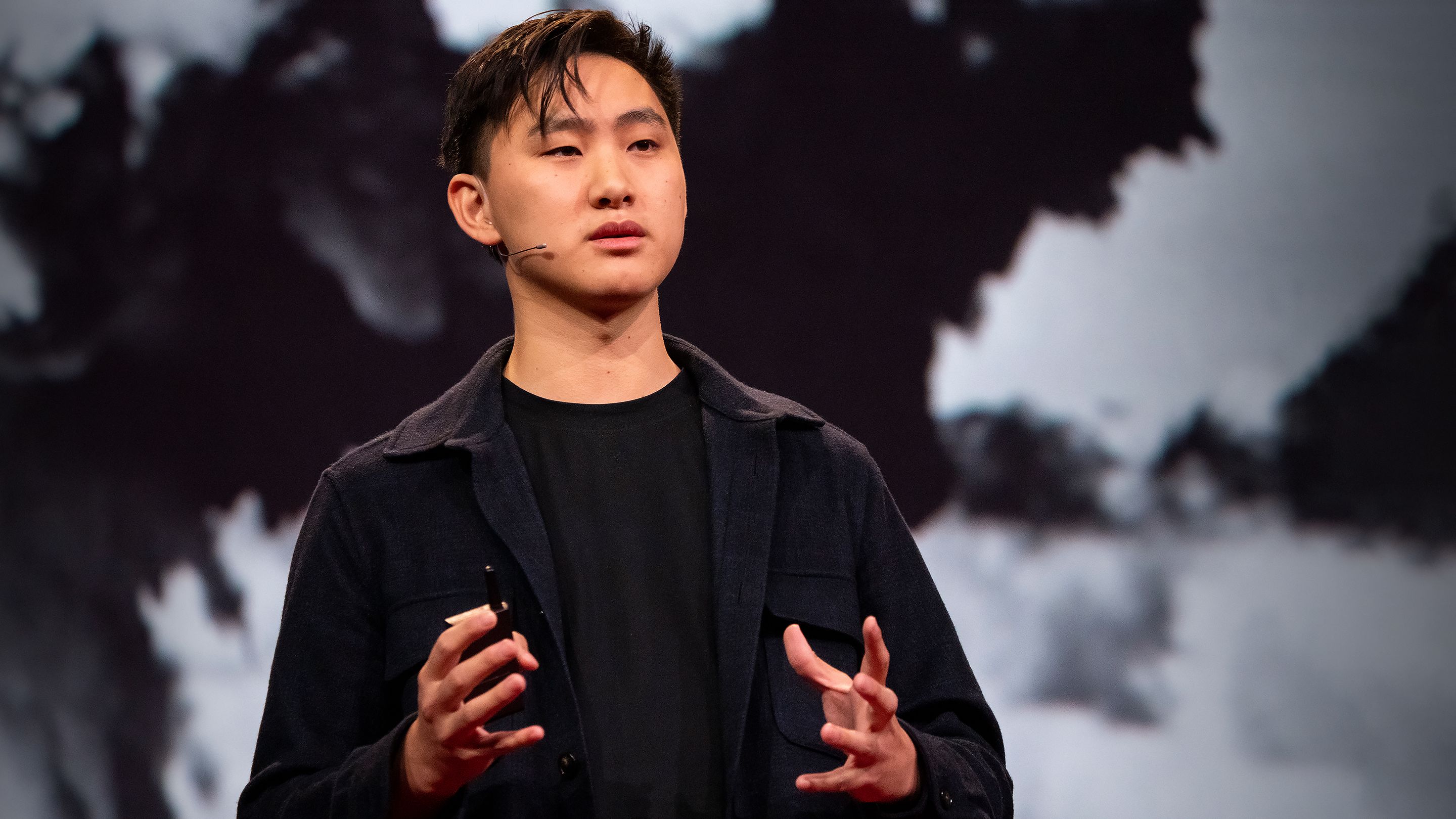
The MIT Decision: Dropping Out After Freshman Year
Wang eventually enrolled at MIT, joining what many consider the world’s premier technical university. The Massachusetts Institute of Technology has produced countless tech leaders, and its computer science program represents the gold standard in technical education. Wang could have followed a traditional path—complete his degree, perhaps pursue graduate studies, then enter the tech industry with prestigious credentials.
Instead, after just his freshman year, Wang made a decision that would define his trajectory: he dropped out to start Scale AI. This choice echoes similar decisions by tech luminaries like Bill Gates, Mark Zuckerberg, and Steve Jobs—but with a critical difference. While those entrepreneurs left school after building successful products, Wang left to pursue an idea that hadn’t yet proven itself.
In his conversation with Ryan, Wang reflected on this decision with characteristic pragmatism. “I started this company right out of freshman year of MIT and never looked back,” he said. “I wouldn’t change a minute of it.” The confidence wasn’t bravado but reflected his conviction about the opportunity he’d identified and his ability to execute on it.
What gave a 19-year-old the confidence to leave MIT and start an AI infrastructure company? Wang had identified a critical bottleneck in AI development: the need for high-quality training data. While most attention focused on algorithms and computing power, Wang recognized that data—properly labeled, curated, and structured—would prove decisive in determining which AI systems succeeded.
This insight stemmed from his work on self-driving vehicle projects, where he’d seen firsthand how the quality of training data directly impacted model performance. Autonomous vehicle companies were spending enormous resources on data labeling, yet no company specialized in providing this service at scale with the quality and reliability necessary for safety-critical applications.
Building Scale AI: The Data Infrastructure Revolution
Scale AI launched in 2016 with a focused mission: provide the data infrastructure that AI development companies needed. The timing proved prescient. The AI boom was accelerating, deep learning was demonstrating breakthrough capabilities, and companies from autonomous vehicles to large language models were desperate for training data.
Wang’s approach combined technical sophistication with operational excellence. Rather than simply connecting companies with data labelers, Scale AI built technology platforms that ensured quality, consistency, and scalability. The company developed proprietary tools for managing complex labeling tasks, implemented quality control systems that caught errors, and created workflows that could handle massive data volumes while maintaining high standards.
The early focus on autonomous vehicles proved strategic. Self-driving car companies needed vast amounts of labeled image and video data—identifying pedestrians, vehicles, traffic signs, road boundaries, and countless other elements that human drivers process instinctively. This work required precision; errors in training data could lead to accidents and deaths. Scale AI’s ability to deliver quality at scale quickly made the company indispensable to major autonomous vehicle programs.
As AI capabilities expanded beyond computer vision, Scale AI expanded accordingly. When large language models emerged as the next frontier of AI development, Scale pivoted to provide the human feedback and evaluation data these models required. When the Department of Defense recognized AI’s strategic importance, Scale developed specialized capabilities for defense and intelligence applications.
By 2021, just five years after founding, Wang became the world’s youngest self-made billionaire at age 24. Forbes estimated Scale AI’s valuation at $7.3 billion, with Wang’s significant ownership stake making him a billionaire well before most people finish graduate school. The recognition represented vindication of his MIT decision and confirmation that he’d identified a crucial opportunity in AI infrastructure.
The National Security Mission: Scale AI and Defense
Perhaps the most significant dimension of Scale AI’s evolution involves its deep integration with U.S. national security infrastructure. Under Wang’s leadership, Scale AI became not just a commercial success but a critical national security asset. This trajectory reflects Wang’s belief—evident throughout his Ryan interview—that AI’s strategic importance for American competitiveness and security cannot be overstated.
The relationship with the Department of Defense evolved through multiple phases. Initially, Scale AI provided the same data services to defense customers that it offered commercial clients—helping label imagery for intelligence analysis, autonomous systems, and other applications. However, the relationship deepened as both sides recognized the strategic implications of AI for military capabilities.
Major defense contracts followed. A $99 million agreement to advance Army research and development demonstrated the military’s commitment to leveraging Scale AI’s expertise. More significantly, Scale AI won the prime contract for Thunderforge, the Pentagon’s flagship program for integrating AI agents into military operations. This program, spearheaded by the Defense Innovation Unit and partnering with companies like Anduril and Microsoft, aims to transform how the U.S. military plans and executes operations through AI-powered decision support.
Wang’s vision for these defense partnerships extends beyond mere commercial relationships. He views Scale AI’s work with the Pentagon as essential to maintaining American strategic advantage as AI becomes central to military power. The company developed Defense Llama, a specialized AI model tailored for national security applications, incorporating military doctrine, international humanitarian law, and DoD ethical guidelines.
In September 2025, Scale AI secured an additional $100 million ceiling contract with the Department of Defense, demonstrating the expanding scope of this partnership. Unlike other AI companies offering specific models, Scale AI provides end-to-end services—data preparation, model testing and evaluation, and deployment capabilities across classified networks including top-secret systems.
This defense focus occasionally generated controversy. Critics questioned whether AI companies should enable military applications, particularly autonomous weapons systems. Wang’s response reflected his pragmatic worldview: failing to develop such capabilities would leave America vulnerable to adversaries with fewer ethical constraints. The question wasn’t whether AI would be used for defense purposes—adversaries would certainly pursue such applications—but whether democratic nations with strong ethical frameworks would lead development.
The Merit, Excellence, and Intelligence Philosophy
In June 2024, Wang made headlines by announcing that Scale AI had formalized a “Merit, Excellence, and Intelligence” (MEI) hiring policy. The announcement stated: “We believe that people should be judged by the content of their character—and, as colleagues, be additionally judged by their talent, skills, and work ethic.”
This policy represented a departure from the Diversity, Equity, and Inclusion (DEI) initiatives that had become standard in tech companies. Wang’s MEI framework emphasized hiring based purely on capability and merit rather than considering demographic factors. The announcement sparked significant debate in tech circles, with supporters praising a return to meritocratic principles and critics warning about potential effects on workplace diversity.
The policy reflected Wang’s broader philosophy about excellence and competition. Throughout his conversation with Ryan, Wang emphasized the importance of attracting and developing top talent, of creating cultures focused on capability and performance, and of maintaining high standards in execution. These priorities aligned with his view that America’s AI competition with China requires assembling the best possible teams working at the highest levels.
Wang’s defenders noted that Scale AI operates in domains—both commercial AI development and national security—where capability truly matters existentially. Errors in training data for autonomous vehicles or military systems could cost lives. Subpar performance in AI development could hand strategic advantages to geopolitical adversaries. In such contexts, they argued, prioritizing merit made both practical and ethical sense.
Critics countered that talent and excellence aren’t opposed to diversity, that diverse teams often perform better at solving complex problems, and that abandoning DEI initiatives could narrow the talent pool by making companies less welcoming to underrepresented groups. The debate reflected broader tensions in tech about how to balance meritocratic ideals with equity concerns.
The Meta Move: A $14.3 Billion Decision
In June 2025, Wang shocked the tech world by announcing his departure from Scale AI to join Meta as Chief AI Officer, heading the company’s new “superintelligence” division. The move came as part of a complex deal where Meta invested $14.3 billion for a 49% stake in Scale AI, valuing the company at over $29 billion—more than doubling its previous valuation.
The decision represented an extraordinary moment in tech history. Wang wasn’t merely accepting a job offer—he was leaving the company he’d founded and led for nine years, a company that had made him a billionaire and positioned him as one of AI’s most influential figures. What could motivate such a move?
In his memo to Scale AI employees, Wang offered insight into his thinking: “But as I spent time truly considering it, I realized this was a deeply unique moment, not just for me, but for Scale as well.” The opportunity to work on “superintelligence”—AI systems that surpass human capabilities—at one of the world’s largest technology companies represented the kind of moonshot challenge that appealed to Wang’s ambition.
Meta’s perspective was equally strategic. CEO Mark Zuckerberg had made AI his company’s top priority for 2025, but was reportedly frustrated with progress on Meta’s Llama models, which had been overtaken by competitors including Chinese rivals like DeepSeek. Bringing in Wang—who provided training data to all major AI companies and understood competitive dynamics better than almost anyone—represented a bold bet on outside talent to catalyze Meta’s AI efforts.
The deal structure reflected both sides’ interests. Meta gained Wang’s expertise and deepened its commercial relationship with Scale AI, while Scale AI secured massive investment and validation of its approach. Wang would continue serving on Scale’s board of directors, maintaining connection to the company he built while pursuing new challenges. Jason Droege, Scale’s Chief Strategy Officer, stepped in as Interim CEO, bringing extensive experience from companies like Uber and Axon.
Some observers questioned whether Meta overpaid—$14.3 billion for a minority stake in a data company plus one executive’s services seemed expensive even by tech standards. Others noted that Scale AI’s unique position supporting all major AI developers, combined with Wang’s strategic insights, might actually make the deal a bargain if it helped Meta reclaim AI leadership.
The move also sparked concerns about conflicts of interest. Scale AI serves multiple AI companies, including competitors of Meta. Could Scale continue operating independently with Meta as its largest investor and its founder as Meta’s Chief AI Officer? The companies emphasized that Scale would remain independent, that Meta wouldn’t access customer data, and that appropriate firewalls would protect competitive information.
Lessons from Wang’s Journey
Wang’s trajectory from MIT dropout to Meta’s Chief AI Officer offers multiple lessons for entrepreneurs, technologists, and anyone navigating career decisions in fast-moving fields.
Timing matters immensely. Wang started Scale AI at the perfect moment—just as AI was demonstrating breakthrough capabilities but before the infrastructure to support development at scale existed. Earlier would have been too soon; later would have faced entrenched competitors. His ability to identify this window and move decisively represents a crucial skill.
Solve critical problems. Scale AI succeeded not through technological wizardry but by addressing a genuine, painful bottleneck that AI developers faced. Sometimes the most valuable companies solve unglamorous but essential problems rather than pursuing flashy innovations.
Operational excellence compounds. Wang built Scale AI’s competitive advantage not through patentable inventions but through superior execution—better quality control, faster turnaround times, more reliable service. In markets where multiple companies can attempt similar solutions, execution often determines winners.
Strategic positioning matters. Wang positioned Scale AI at the intersection of commercial AI development and national security, creating relationships that went beyond typical vendor-customer dynamics. This positioning made Scale AI not just valuable but arguably indispensable to American AI strategy.
Know when to move on. Despite building a highly successful company, Wang recognized when a new opportunity aligned better with his ambitions and where he could have greater impact. The courage to leave something successful for something uncertain represents a crucial entrepreneurial trait.
Maintain conviction despite criticism. Wang’s decisions—dropping out of MIT, focusing on data infrastructure when others emphasized algorithms, implementing MEI policies, leaving Scale AI for Meta—all sparked criticism. His willingness to maintain course despite pushback reflects strong conviction and confidence in his judgment.
The Road Ahead: Meta’s Superintelligence Vision
Wang’s new role at Meta involves pursuing perhaps the most ambitious goal in technology: building “superintelligence”—AI systems that exceed human cognitive capabilities across virtually all domains. This represents a massive escalation in ambition even compared to leading Scale AI.
Current AI systems, impressive as they are, remain narrow—excelling at specific tasks but lacking the general intelligence and adaptability that characterizes human cognition. Superintelligence would transcend these limitations, potentially solving problems currently beyond human capability, accelerating scientific discovery, and transforming virtually every aspect of society.
The technical challenges are formidable. Creating superintelligent AI requires not just scaling up current approaches but potentially developing entirely new architectures, training methods, and safety frameworks. It requires solving the alignment problem—ensuring superintelligent systems pursue goals aligned with human values rather than optimizing for objectives in ways humans find harmful or unacceptable.
Meta’s investment in this pursuit reflects Zuckerberg’s belief that superintelligence represents the next frontier of competitive advantage. The company that achieves superintelligence first would likely dominate digital markets, reshape social media, revolutionize advertising, and potentially influence countless other sectors. The stakes justify the massive investment in both Wang’s services and Scale AI more broadly.
Wang’s unique qualifications for this challenge combine technical depth, strategic thinking, operational experience, and understanding of both commercial and national security AI applications. His experience providing data to all major AI companies gives him insight into their approaches, strengths, and weaknesses. His work with the Pentagon provides perspective on safety, reliability, and ethical frameworks for consequential AI applications.
However, the transition also presents challenges. Some reports suggest that Google and OpenAI severed relationships with Scale AI following the Meta deal, concerned about competitive conflicts. If true, this could complicate Scale AI’s position as a Switzerland-like neutral provider to all major AI companies—a role central to its business model and valuation.
The Bigger Picture: Wang’s Philosophy on AI and Humanity
Throughout his conversation with Ryan, Wang articulated a coherent philosophy about AI, human nature, and the future. Several themes emerged consistently:
Human-AI integration is inevitable. Wang believes biological humans cannot remain relevant as AI capabilities accelerate unless we augment ourselves with AI, likely through brain-computer interfaces. This isn’t techno-utopianism but pragmatic assessment of diverging capability curves.
Human sovereignty must be preserved. Despite advocating for human-AI integration, Wang insists humans must retain ultimate decision-making authority over critical systems. Technology should enhance rather than supplant human agency.
America must win the AI race. Wang views the US-China AI competition in existential terms. China achieving AI supremacy would reshape global power structures in ways fundamentally threatening to democratic values and American interests.
Excellence and ambition shape reality. One of Scale AI’s core values reads “ambition shapes reality”—reflecting Wang’s belief that audacious goals, pursued with excellence, can achieve outcomes that seem impossible to more cautious observers.
Naivety can be an advantage. Wang credits some of his success to being a relative newcomer without preconceptions about what was possible. This “beginner’s mind” allowed him to see opportunities others missed.
These philosophical commitments inform Wang’s career choices and explain both his successes and his willingness to make unconventional decisions. They also provide insight into how he’ll likely approach his new role at Meta—with ambition, urgency, and conviction that human-aligned superintelligence represents both possibility and necessity.
Conclusion: The Next Chapter
At 28, Alexander Wang has already accomplished more than most people achieve in full careers. From MIT dropout to billionaire founder to Meta’s Chief AI Officer, his trajectory represents exceptional ambition, timing, and execution. Yet Wang clearly views his achievements so far as prelude rather than culmination.
The superintelligence challenge he’s now pursuing at Meta represents the ultimate moonshot—attempting to create AI systems that exceed human cognitive capabilities while maintaining alignment with human values and interests. Success would reshape civilization. Failure could prove catastrophic.
Wang’s conversation with Shawn Ryan revealed someone acutely aware of both possibilities—the extraordinary potential and the existential risks that advanced AI presents. His approach combines optimism about what’s possible with realism about what could go wrong, technical depth with strategic thinking, and commercial instincts with genuine concern for national security and human welfare.
Whether Wang succeeds in his superintelligence pursuit remains to be seen. The technical challenges are formidable, the timeline uncertain, and the risks substantial. But if his track record suggests anything, it’s that underestimating Alexander Wang is unwise. The MIT dropout who built a multi-billion dollar company, became the world’s youngest billionaire, positioned his company as essential to American AI strategy, and convinced Meta to invest $14.3 billion for his services has demonstrated remarkable ability to achieve audacious goals.
As the AI revolution accelerates, Wang stands at its center—now leading one of the world’s largest technology companies in pursuit of perhaps the most ambitious technological goal ever attempted. His journey from Los Alamos to MIT to Scale AI to Meta represents not just personal success but a case study in how vision, timing, and execution can create extraordinary impact in transformative moments.
The next chapter of Wang’s story—and by extension, the story of AI’s role in human civilization—is just beginning. If his past provides any guide, it will be ambitious, consequential, and surprising. The 28-year-old who’s already lived multiple remarkable careers is writing his next one at Meta, pursuing superintelligence while the world watches to see whether humans and AI can successfully merge capabilities in ways that benefit humanity rather than threaten it.
Related posts:
 Why Alexandr Wang Is Waiting for Neuralink Before Having Children
 The Way of the Junzi: 7 Ming Dynasty Concepts for the Modern Man
 10 Most Popular Gifts for Men in 2026 (That He’ll Actually Use)
 AI and the Future of Men: A Complete Guide to Jobs, Relationships, and Identity in the Age of AI
 The Silicon Valley Death Cult: How Transhumanist Ideology Puts Humanity at Risk