Introduction: Why Most Men Are Emotionally Illiterate
There’s a quiet crisis happening among men, and it isn’t about testosterone levels, dating apps, or career stagnation. It’s about emotional intelligence — or rather, the devastating lack of it. Most men have been trained from childhood to view emotions as obstacles to overcome, weaknesses to suppress, or problems to solve. We’ve been handed a cultural script that says real men don’t feel deeply, don’t cry openly, and certainly don’t sit with their discomfort long enough to understand what it’s trying to tell them.
But here’s what the research — and the lived experience of thousands of men — reveals: suppressing your emotions doesn’t make you stronger. It makes you fragile. Fragile in your relationships. Fragile in your decision-making. Fragile in your ability to lead, love, and live with genuine purpose.
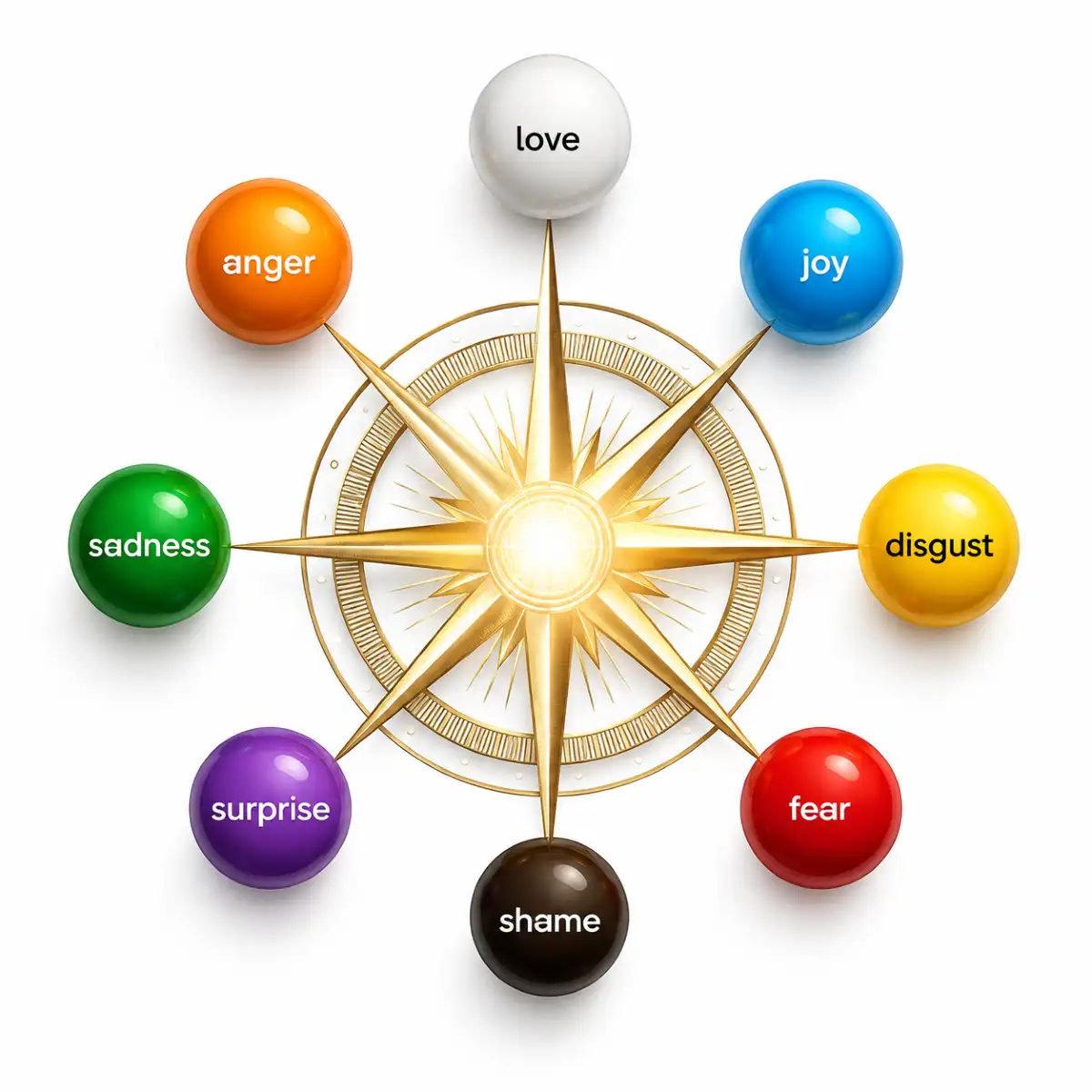
Enter the Emotion Codex, a revolutionary framework developed by Vera Helleman that maps the eight core emotional forces shaping your inner world. This isn’t therapy-lite or woo-woo self-help. It’s a structured, energetic understanding of what your emotions are actually communicating — and how to use that wisdom for healing, clarity, and authentic living.
For the modern man navigating a world that demands both strength and sensitivity, the Emotion Codex offers something rare: a practical map for turning emotional chaos into lasting clarity.
What Is the Emotion Codex?
The Emotion Codex is a structured map of the eight core emotional forces that shape your inner world. Developed by Vera Helleman — described by some as “an Eckhart Tolle with a most fantastic toolbox” — this framework has already touched over 60,000 readers and 4,000 students across Europe. But its relevance for modern men is only now becoming clear.
At its core, the Emotion Codex operates on a radical premise: emotions aren’t random disturbances to be managed. They are intelligent signals — a language of energy — designed to guide you back into alignment with your true nature.
Think of it this way: your emotions are like the dashboard lights in a car. Most men have been taught to ignore the warning lights, cover them with tape, or simply drive faster hoping they’ll go away. The Emotion Codex teaches you to read the dashboard, understand what each light means, and make the necessary adjustments before your engine seizes.
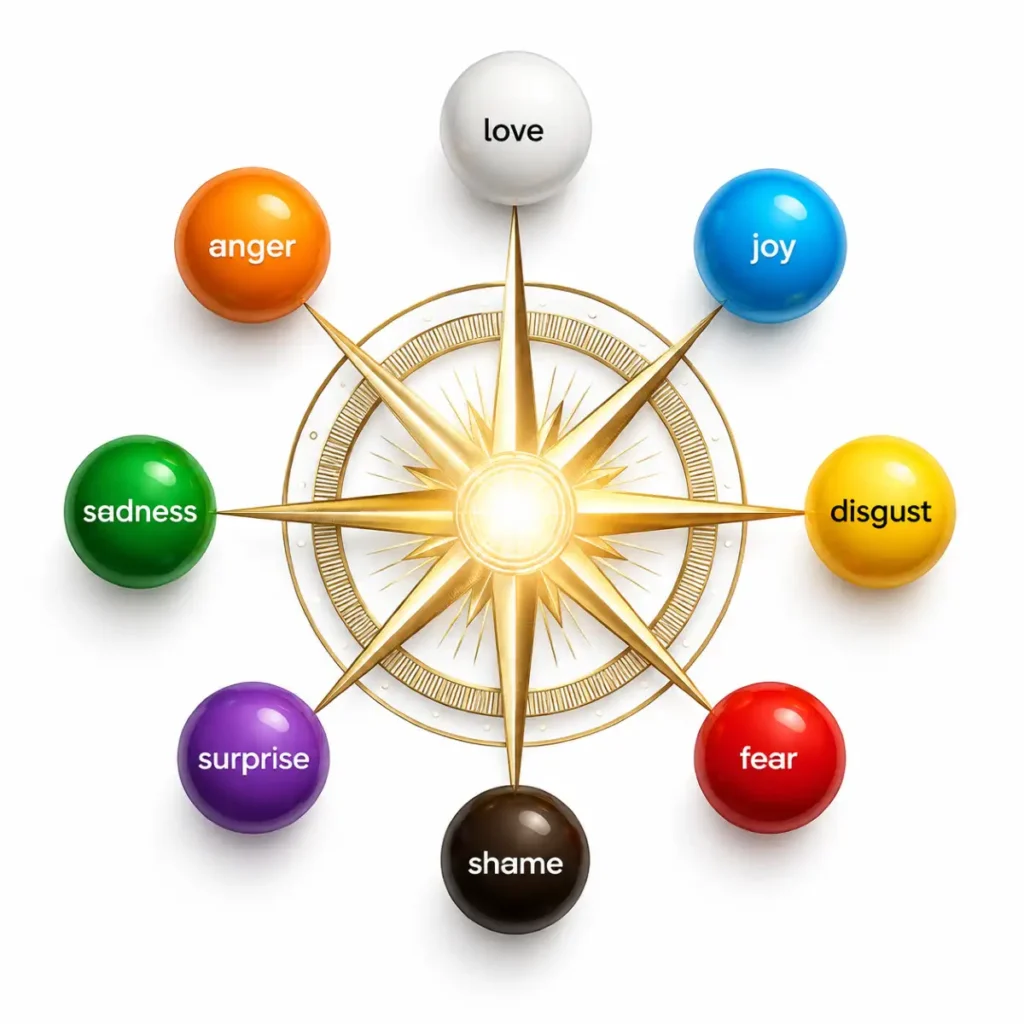
The framework identifies eight fundamental emotional forces, each originating from a specific energetic purpose:
- Shame → From “not enough” to radical self-acceptance
- Fear → From frozen to courageous adventure
- Anger → From explosion to inner strength
- Disgust → From overwhelmed to healthy boundaries
- Sadness → From stuck grief to gentle release & renewal
- Joy → From fleeting highs to stable inner celebration
- Surprise → From shock to creative mind power
- Love → From attachment to pure, boundless connection
Each of these forces has a healthy expression and a distorted expression. The work isn’t about eliminating “negative” emotions — it’s about understanding what each emotion is trying to tell you and learning to express it in a way that serves your growth rather than sabotages it.
This framework aligns powerfully with what we know about male emotional intelligence — the capacity to recognize, understand, and manage your own emotions while navigating the emotional landscape of others. But the Emotion Codex goes deeper. It doesn’t just teach you to manage emotions; it teaches you to read them as a precise language of energy.
The Eight Emotional Forces: A Man’s Guide
1. Shame: The Gatekeeper of Authenticity
Shame is perhaps the most misunderstood emotion in the masculine experience. We’ve been taught to associate shame with weakness — something to be buried deep, never acknowledged, certainly never shared. But in the Emotion Codex framework, shame serves a crucial function: it helps you be a unique individual with your own values and standards.
The Distorted Expression: When shame becomes toxic, it locks you in rigidity. You become trapped by overly high expectations, harsh self-judgment, and the crushing belief that you’re “not enough.” This is the shame that keeps you from asking for help, from being vulnerable in relationships, from pursuing the life you actually want because you’re terrified of failing publicly.
The Healthy Expression: Healthy shame is the guardian of your integrity. It alerts you when you’ve acted out of alignment with your values. It nudges you toward radical self-acceptance — not by lowering your standards, but by recognizing that your worth isn’t contingent on perfection.
For men, this is revolutionary. We’re taught that confidence comes from never being wrong, never showing doubt, never admitting limitation. But the Emotion Codex reveals that true confidence comes from integrating your shame — from owning your imperfections without letting them define you.
This connects directly to the concept of self-acceptance for men — the practice of owning your worth without requiring external validation. When you stop fighting your shame and start listening to it, you discover that it’s not trying to destroy you. It’s trying to guide you back to who you really are.
2. Fear: The Compass of Growth
Fear is the force that drives you to step into the world, balancing on the edge of tension and adventure. In its healthy expression, fear is your growth compass — it points you toward the edges of your comfort zone, the places where expansion happens.
The Distorted Expression: When fear becomes overwhelming, the outside world feels threatening beyond measure. You freeze. You avoid. You construct elaborate rationalizations for why you can’t take that risk, have that conversation, or make that change. This is the fear that keeps you in a job you hate, a relationship that’s dying, or a life that feels increasingly small.
The Healthy Expression: Healthy fear is excitement without breath. It’s the signal that something matters — that you’re on the edge of something meaningful. The Emotion Codex teaches you to recognize when fear is protecting you from genuine danger versus when it’s protecting you from genuine growth.
This distinction is critical for modern men. We’re bombarded with messages about “facing your fears” and “being fearless,” but the Emotion Codex offers something more nuanced: the understanding that fear isn’t the enemy. The enemy is your relationship with fear.
When you learn to work with fear instead of against it, you develop what high performers call emotional adaptability — the capacity to remain functional and clear-headed under pressure. Fear doesn’t disappear. It becomes fuel.
3. Anger: The Guardian of Boundaries
Anger is the emotion most men are comfortable with — and the one they most often express poorly. We’ve been taught that anger is masculine, that it’s power, that it’s how real men handle conflict. But the Emotion Codex reveals a deeper truth: anger is the guardian of your boundaries, and most men are using it to mask deeper wounds.
The Distorted Expression: Explosive anger, passive-aggressive resentment, or the cold fury of emotional withdrawal. This is anger used as a weapon — to control, to punish, to dominate. It’s the anger that destroys relationships, careers, and self-respect.
The Healthy Expression: Inner strength. Anger, when properly understood, is the signal that a boundary has been crossed, a value has been violated, or an injustice has occurred. Healthy anger gives you the energy to take action — not to attack, but to protect. To stand firm. To say “no” with conviction.
The Emotion Codex teaches men to distinguish between anger as a reaction and anger as a response. Reactive anger is automatic, triggered, and often disproportionate. Responsive anger is conscious, measured, and aligned with your values.
This connects to the broader conversation about working with anger instead of against it — understanding that your anger isn’t the problem. Your relationship with your anger is the problem. When you learn to feel anger without being controlled by it, you access a source of clarity and conviction that most men never tap.
4. Disgust: The Architect of Boundaries
Disgust is the most socially unacceptable emotion for men to acknowledge. We can admit to anger. We can sometimes admit to fear. But disgust? Disgust feels petty, judgmental, unevolved. Yet in the Emotion Codex, disgust plays a vital role: it helps you adapt to your environment by feeling empathy for others — while maintaining your own energetic integrity.
The Distorted Expression: When disgust becomes distorted, you lose yourself in others’ feelings, desires, and actions. You become energetically depleted, overwhelmed by the emotional states of people around you. You can’t say no. You can’t set limits. You absorb everyone else’s energy until there’s nothing left for you.
The Healthy Expression: Healthy disgust creates healthy boundaries. It tells you when something or someone is energetically incompatible with your wellbeing. It helps you distinguish between empathy (feeling with someone) and enmeshment (losing yourself in someone).
For men, this is particularly relevant in relationships. Many men struggle with emotional hunger — the desperate need for emotional connection that leads to neediness, control, or emotional withdrawal. The Emotion Codex reveals that healthy disgust is what prevents emotional hunger from consuming you. It’s the internal alarm that says, “This dynamic isn’t healthy for me.”
5. Sadness: The Alchemy of Release
Sadness helps you keep your energetic body compact as a healthy foundation for your physical body. But when distorted, you become too tense, holding on too tightly, forgetting how to let go. You feel sad and unhappy not because there’s something wrong with you, but because you’re resisting the natural cycle of release and renewal.
The Distorted Expression: Stuck grief. The inability to cry. The refusal to feel loss. The man who says “I’m fine” while his body screams otherwise. This is the sadness that manifests as chronic tension, unexplained fatigue, or the numbness that passes for “being strong.”
The Healthy Expression: Gentle release and renewal. Healthy sadness is the emotion that allows you to let go — of relationships that have ended, of dreams that have died, of versions of yourself that no longer serve you. It’s not depression. It’s the natural process of emotional digestion.
The Emotion Codex teaches men something that contradicts everything we’ve been taught: sadness is not weakness. Sadness is strength. The capacity to feel loss, to grieve fully, to let tears come without shame — this is the mark of a man who is whole, not broken.
This connects to the productive power of sadness, fear, and regret — the understanding that negative emotions aren’t obstacles to your wellbeing. They’re essential components of it. A man who can’t feel his sadness is a man who can’t fully feel his joy.
6. Joy: The Stabilizer of Purpose
Joy inspires you to explore the world around you and dive into new ideas. But when distorted, you get caught up in endless fun, euphoria, and eureka moments — losing track of what to focus on or rushing past yourself entirely.
The Distorted Expression: Addiction to novelty. The man who is always chasing the next high, the next achievement, the next dopamine hit. This is joy without depth — the party that never ends, the success that never satisfies, the relationship that feels exciting until it doesn’t.
The Healthy Expression: Stable inner celebration. Healthy joy isn’t dependent on external circumstances. It’s the capacity to celebrate your existence, your progress, your connections — even when life is difficult. It’s the joy that persists beneath the surface of daily challenges.
For modern men, this is perhaps the most counterintuitive teaching of the Emotion Codex. We’ve been trained to believe that joy is the reward for hard work — something you earn, something you achieve, something that comes after the struggle. But the Emotion Codex reveals that joy is a practice, not a prize. It’s a way of relating to your life, not a destination you reach.
This aligns with the concept of Stoic joy — the understanding that ancient philosophy wasn’t about grim endurance. It was about finding genuine fulfillment in the midst of life’s challenges. Joy isn’t the absence of difficulty. It’s the presence of appreciation.
7. Surprise: The Spark of Creative Power
Surprise moves you from shock to creative mind power. In its healthy expression, surprise is the emotion that breaks you out of rigid patterns and opens you to new possibilities.
The Distorted Expression: Chronic shock. The man who is constantly destabilized by unexpected events. The inability to adapt. The paralysis that comes when life doesn’t go according to plan.
The Healthy Expression: Creative responsiveness. Healthy surprise is the gateway to innovation, problem-solving, and mental flexibility. It’s the capacity to be disrupted without being destroyed — to use the unexpected as fuel for growth rather than evidence of catastrophe.
In a world that is changing faster than ever, the ability to work with surprise is not optional. It’s essential. The Emotion Codex teaches men to develop what might be called “surprise resilience” — the capacity to be thrown off balance and recover quickly, to be disrupted and adapt creatively.
This connects to the concept of aha moments explained — the science behind sudden insights that change everything. Surprise is the emotional gateway to insight. When you stop resisting the unexpected and start welcoming it, you unlock a level of creative problem-solving that rigid minds never access.
8. Love: From Attachment to Boundless Connection
Love helps you connect with the people, animals, and plants around you, giving you a sense of “home.” But you can also lose yourself when you try to grasp at these connections to make yourself happy. Emotions in this group signal you clearly when there’s something processing within your own self-connection.
The Distorted Expression: Attachment. Neediness. The desperate clinging to people, places, or identities that you believe will make you whole. This is the love that becomes possession, the connection that becomes control, the relationship that becomes your entire identity.
The Healthy Expression: Pure, boundless connection. Healthy love is the capacity to connect deeply without losing yourself. To love without grasping. To be intimate without being enmeshed. To find your sense of home within yourself, and then share that home with others.
This is perhaps the most transformative teaching of the Emotion Codex for modern men. We’ve been taught that love is something you find, something you earn, something that completes you. But the Emotion Codex reveals that love is something you are — and your relationships are simply mirrors of your relationship with yourself.
This connects to the concept of logical love vs. felt love — understanding why your gestures of love might not be landing. When you’re operating from attachment rather than genuine connection, your expressions of love feel hollow — to you and to the person receiving them. The Emotion Codex teaches you to love from fullness rather than emptiness.
Why The Emotion Codex Matters for Modern Men
Let’s be honest about the landscape most men are navigating. We’re living through what many are calling a crisis of masculinity — a period where traditional masculine norms are being questioned, where the scripts we’ve inherited no longer fit, and where many men feel lost between who they were taught to be and who they actually are.
The statistics are sobering. 63% of young men are single, and the reasons aren’t what most people think. The male loneliness epidemic is real, and it’s not just about romantic relationships. The hidden crisis of male emotional health is claiming lives through suicide, addiction, and the slow death of quiet desperation.
The Emotion Codex doesn’t offer a quick fix. It offers something better: a map. A way of understanding your inner world that doesn’t require you to become someone you’re not. You don’t have to become “more sensitive” or “less masculine.” You have to become literate — emotionally literate.
Think about it: you wouldn’t try to navigate a foreign country without learning the language. You wouldn’t try to fix an engine without understanding how it works. Yet most men are trying to navigate their inner lives — the most complex terrain they’ll ever encounter — without the most basic map.
The Emotion Codex is that map.
The Practice: How to Actually Use the Emotion Codex
Understanding the framework is only the beginning. The real work is in the practice — learning to apply these insights in the moments when you most need them.
Step 1: Recognition
The first skill is simply recognizing what you’re feeling. Most men have a vocabulary of about three emotions: good, bad, and angry. The Emotion Codex expands this vocabulary exponentially. Instead of “I feel bad,” you learn to distinguish: Is this shame? Is this sadness? Is this fear? Is this disgust?
This recognition alone is transformative. As the research on cognitive distortions that cause overthinking shows, much of our mental suffering comes from misidentifying what we’re actually experiencing. When you can name your emotion accurately, you can address it accurately.
Step 2: Inquiry
Once you recognize what you’re feeling, the next step is inquiry. What is this emotion trying to tell me? What boundary has been crossed? What value has been violated? What truth am I avoiding?
This is where the Emotion Codex becomes more than theory. It’s where you learn to ask the questions that most men never ask — not because they don’t want to, but because they don’t know how.
Step 3: Expression
The final step is expression — not suppression, not explosion, but conscious expression. This is where you learn to communicate your emotional truth in a way that serves your relationships rather than destroys them.
This connects to the concept of between feeling and acting — the critical space where mastery happens. The Emotion Codex doesn’t teach you to suppress your emotions. It teaches you to feel them fully without being controlled by them.
The Masculine Integration
Some men worry that emotional work will make them soft. That understanding their feelings will somehow diminish their strength. But the opposite is true.
The strongest men aren’t the ones who feel nothing. They’re the ones who feel everything and choose their response. They’re the ones who can sit with discomfort without being destroyed by it. They’re the ones who can be vulnerable without being weak, who can be sensitive without being fragile.
This is what the Emotion Codex offers: not the elimination of masculine strength, but its integration with emotional intelligence. Not the rejection of traditional masculine virtues, but their evolution.
Consider the concept of living at your edge — David Deida’s teaching about embracing your full masculine capacity. The edge isn’t just about external achievement. It’s about internal depth. It’s about the willingness to feel what most men refuse to feel, to know what most men refuse to know, to be what most men refuse to be.
The Emotion Codex is a tool for living at that edge. It’s a framework for becoming the kind of man who is both strong and sensitive, both decisive and reflective, both action-oriented and emotionally intelligent.
The Cost of Ignoring Your Emotional Life
Let’s be clear about what happens when you ignore this work. When you suppress your emotions, they don’t disappear. They go underground. They manifest as:
- Chronic stress and anxiety — the body keeping score of emotions you refuse to feel
- Relationship dysfunction — the inability to connect deeply because you can’t connect with yourself
- Addiction and escapism — the desperate attempt to numb what you won’t acknowledge
- Physical illness — the body speaking what the mind refuses to hear
- Midlife crisis — the accumulated weight of a life lived out of alignment
The research on how your body keeps the score is clear: unprocessed emotional experiences don’t just affect your mind. They affect your biology. Your nervous system. Your immune system. Your cardiovascular health.
The cost of emotional illiteracy isn’t just psychological. It’s physical. It’s relational. It’s existential.
The Invitation
The Emotion Codex isn’t asking you to become someone else. It’s asking you to become who you actually are — beneath the conditioning, beneath the armor, beneath the stories you’ve been told about what it means to be a man.
It’s asking you to develop what might be called “emotional sovereignty” — the capacity to be the master of your inner world rather than its prisoner. To feel deeply without being destroyed by your feelings. To be sensitive without being fragile. To be strong without being hard.
This is the work that the men’s group renaissance is built on — the quiet movement of men coming together to do the work that our culture has refused to teach us. It’s the work that self-discipline makes possible — not the discipline of suppression, but the discipline of conscious awareness.
The Emotion Codex offers a path from emotional chaos to lasting clarity. From being mastered by your emotions to mastering them. From surviving your inner world to thriving in it.
The New Masculine Paradigm
We’re at a crossroads in the evolution of masculinity. The old models are crumbling, and the new models are still emerging. In this liminal space, the Emotion Codex offers something invaluable: a bridge.
A bridge between the traditional masculine virtues of strength, courage, and resilience — and the emerging masculine capacities of emotional intelligence, vulnerability, and conscious awareness.
A bridge between who you’ve been taught to be and who you actually are.
A bridge between the man you present to the world and the man you know yourself to be in your quietest moments.
The Emotion Codex isn’t the destination. It’s the map. The journey is yours. And the time to begin is now.
Because the truth is, your emotions have always been speaking. They’ve been trying to guide you, to heal you, to bring you back into alignment with your true nature. The only question is whether you’re ready to learn their language.
The modern man doesn’t need to be tougher. He needs to be wiser. He doesn’t need thicker skin. He needs deeper understanding. He doesn’t need to feel less. He needs to feel more — and to know what to do with what he feels.
That is the promise of the Emotion Codex. That is the invitation. And that is the work.
Final Thoughts: From Theory to Practice
The Emotion Codex isn’t a philosophy to debate — it’s a practice to embody. You don’t master it by reading about it. You master it by living it. By noticing what you feel in the moments when you most want to check out. By naming your emotions when you’d rather numb them. By expressing your truth when silence feels safer.
This is the work that separates men who talk about growth from men who actually grow. It’s not glamorous. It’s not Instagram-worthy. It’s the quiet, persistent practice of showing up for yourself — even when it’s uncomfortable, especially when it’s uncomfortable.
And here’s what you’ll discover: the more you practice, the more natural it becomes. The more you feel, the less you’re controlled by your feelings. The more you understand your inner world, the more effectively you navigate the outer world.
This is the paradox at the heart of the Emotion Codex: by going deeper into your emotions, you become less reactive to them. By feeling more, you suffer less. By understanding your inner chaos, you create outer clarity.
The modern man who masters his emotions doesn’t become soft. He becomes unshakeable. Not because nothing affects him, but because everything informs him. Not because he feels less, but because he feels with precision, with purpose, and with power.
That is the man the world needs. That is the man you can become. And the Emotion Codex is the map that will get you there.
The Emotion Codex was developed by Vera Helleman, discoverer of this pioneering emotional intelligence system that has helped thousands understand their emotions and transform their lives. For more resources on emotional mastery, personal development, and modern masculinity, explore the programs and free resources at emotioncodex.com.
Related posts:
 Working With Anger Instead of Against It
 Male Emotional Intelligence: Practical Tips for Strength and Self-Control
 The Shame Ceiling: The One Emotion That Keeps Most Men From Being Fully Known
 The Productive Power of Sadness, Fear, and Regret: Why You Need Negative Emotions
 The Root of All Negative Emotions (And Why Fighting Them Never Works)