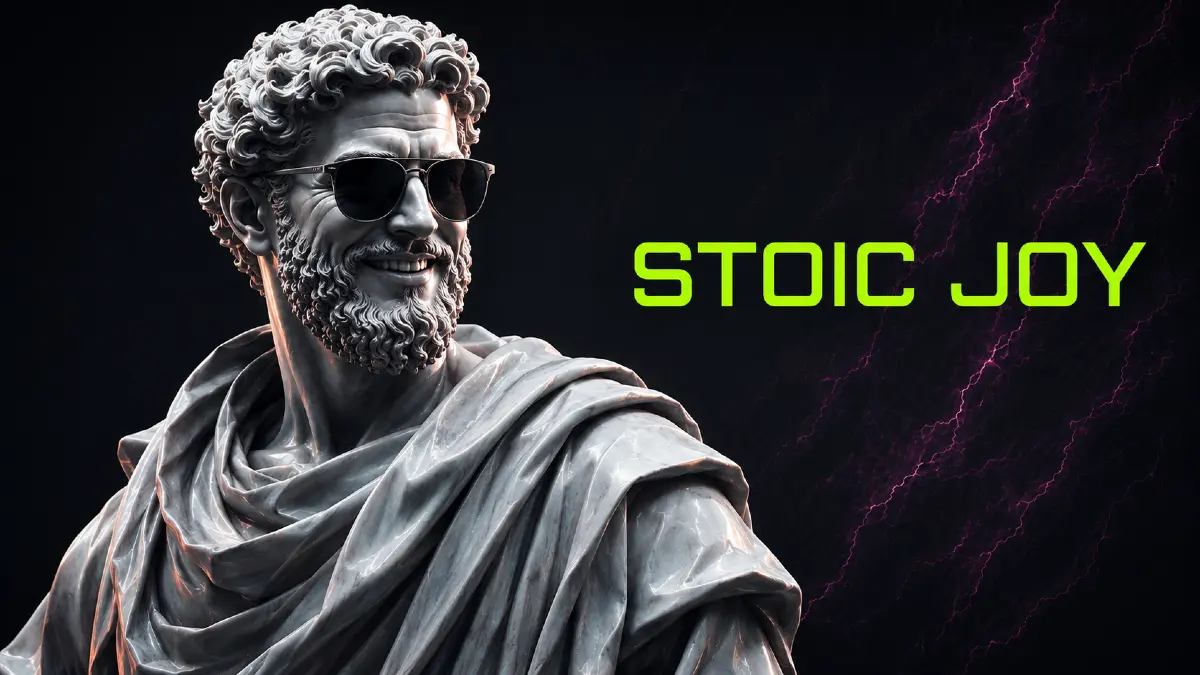
The version of Stoicism that has swept through men’s culture over the past decade is overwhelmingly focused on hardship. Endure the obstacle. Master your reactions. Accept what you cannot control. Memento mori — remember you will die. The dominant image of the Stoic in the popular imagination is a grim figure, jaw set, enduring suffering with rigid composure, suppressing emotion through sheer force of will. This image has made Stoicism enormously appealing to men looking for a philosophy of resilience and discipline. It has also badly distorted what the philosophy actually taught.
The Stoics were not, in fact, grim. They were not advocates of emotional suppression. They were not primarily interested in white-knuckle endurance. The actual texts — Marcus Aurelius, Seneca, Epictetus — are shot through with an affirmative dimension that the modern marketing layer has almost entirely erased: a profound emphasis on gratitude, on the appreciation of what one has, on tranquility and contentment, on the genuine joy available to a person who has gotten their relationship to life right. The Stoics were after something the popular version misses entirely. They were after a good life — not just an endured one, but a genuinely flourishing one, characterized by a deep and stable form of joy.
Recovering this affirmative dimension is not a soft revision of Stoicism. It is a return to what the philosophy actually was. And it matters, because the grim, suppression-focused version that dominates men’s culture is not only a distortion — it is a less useful and less true version of one of the most powerful frameworks for living well that humans have ever developed.
What the popular version gets wrong
The popular version of Stoicism, optimized for memes and motivation, has reduced a rich philosophy to a few dramatic themes: endurance, control, mortality, discipline. These themes are genuinely present in Stoicism. But the reduction distorts in three specific ways.
First, it frames Stoicism as primarily about suffering. The popular Stoic is always enduring something — the obstacle, the hardship, the difficulty. But the Stoics did not believe life was primarily suffering to be endured. They believed life, lived rightly, could be genuinely good, and much of their writing is about how to access that goodness. The relentless focus on hardship makes Stoicism sound like a philosophy for getting through a miserable existence, when it was actually a philosophy for living a flourishing one.
Second, it frames Stoicism as emotional suppression. The popular image is of the Stoic crushing his emotions through willpower, feeling nothing, maintaining rigid composure. But the Stoics did not advocate suppressing emotion. They advocated cultivating the right emotions and not being enslaved by the destructive ones. The goal was not to feel nothing — it was to feel appropriately, to experience genuine joy, gratitude, and tranquility while not being destabilized by fear, anger, and craving. This is a profoundly different project from emotional suppression, and conflating the two misses the entire point.
Third, it frames Stoicism as joyless. The grim-endurance version implies that the Stoic life is a life without pleasure, without delight, without genuine happiness — just disciplined suffering. But the Stoics wrote constantly about joy, contentment, and the appreciation of life’s genuine goods. Stoic wisdom for the modern man includes, centrally, the cultivation of a deep and stable joy — not the absence of feeling, but the presence of the right feelings, securely held.
The affirmative core of actual Stoicism
When you read the actual Stoic texts rather than the memes derived from them, the affirmative dimension is impossible to miss. It runs through all three of the major Roman Stoics.
Marcus Aurelius, in the Meditations, returns again and again to gratitude. The entire first book is a catalog of the people and circumstances he is grateful for — his teachers, his family, the qualities he learned from each person in his life. This is not a side note. It is the foundation. Marcus begins his philosophical journal by counting his blessings, and the practice of gratitude recurs throughout. He writes about the beauty of ordinary things, the value of the present moment, the genuine goods available in a life lived with the right perspective. The emperor who is the icon of Stoic endurance was, in his own writing, deeply preoccupied with appreciation and gratitude.
Seneca wrote extensively about joy — specifically about the deep, stable joy (gaudium) that he distinguished from the shallow, unstable pleasure (voluptas) of external circumstances. The Stoic project, for Seneca, was precisely to cultivate this deep joy — a contentment that did not depend on external circumstances and therefore could not be taken away. “True joy is a serious matter,” he wrote. The goal was not to feel nothing. The goal was to access a form of joy more reliable and more profound than the fragile happiness that depends on getting what you want.
Epictetus, the former slave who became one of the most influential Stoic teachers, taught that the path to tranquility and flourishing — eudaimonia — runs through getting your relationship to control right. By focusing on what is genuinely up to you (your judgments, your choices, your responses) and releasing your grip on what is not (external events, other people, outcomes), you access a deep tranquility and freedom. This is not grim endurance. It is liberation — the genuine peace and contentment available to a person who has stopped fighting reality and started flourishing within it. Letting go of outcomes and trusting the process is, at its root, an Epictetan practice — and its purpose is not endurance but freedom.
The actual Stoics, in short, were after joy, gratitude, tranquility, and genuine flourishing. The hardship-focused themes the popular version emphasizes were always in service of this affirmative goal — you master your reactions and accept what you cannot control precisely so that you can access the deep contentment that anxiety and craving otherwise destroy. The endurance was never the point. The flourishing was the point. The endurance was just one of the things required to get there.
Gratitude as a Stoic practice
The most concrete expression of Stoicism’s affirmative dimension is its emphasis on gratitude, and here the ancient philosophy and modern science converge in a striking way.
The Stoics practiced gratitude deliberately. Marcus Aurelius cataloged his blessings. Seneca counseled regular reflection on what one has rather than what one lacks. The Stoics also practiced negative visualization — deliberately imagining the loss of what they valued, not to be morbid, but to renew their appreciation of it. The man who imagines losing his health, his loved ones, his circumstances, returns to them with fresh gratitude. This practice, which the Stoics called premeditatio malorum, was a technology for generating gratitude — for breaking through the hedonic adaptation that causes us to stop appreciating what we have.
Modern neuroscience has now documented what the Stoics intuited. The neuroscience of gratitude shows that deliberate gratitude practice produces measurable changes in the brain — increased activity in the prefrontal cortex, reduced amygdala reactivity, lower cortisol, improved heart rate variability — within weeks of consistent practice. The ancient practice the Stoics developed for philosophical reasons turns out to have a neurological basis. Gratitude is not just a nice attitude. It is a trainable mental skill that physically reshapes the brain toward greater well-being.
This means the affirmative core of Stoicism is not just philosophically sound but empirically validated. The Stoic practice of deliberate gratitude — counting blessings, appreciating the present, periodically imagining loss to renew appreciation — is one of the most evidence-based interventions for well-being that exists. A regular gratitude practice is, in a real sense, a Stoic practice, and the modern man who adopts it is reaching back to one of the oldest and most powerful technologies the philosophy developed.
Why men need the affirmative version of Stoicism specifically
The recovery of Stoicism’s affirmative dimension matters particularly for men, because the grim version that dominates men’s culture is actively unhelpful in a specific way.
Many men are drawn to Stoicism precisely because they are already too grim, too white-knuckled, too focused on endurance and suppression. They take the hardship-focused version of Stoicism as permission to double down on the emotional suppression and joyless endurance that was already harming them. The philosophy that should have liberated them into genuine flourishing instead reinforces the rigid, suppressed, joyless posture they were already stuck in. They use Stoicism to become harder, more closed, more disconnected from their own capacity for joy — which is the opposite of what the philosophy intended.
The affirmative version corrects this. It reveals that the goal was never to feel nothing, never to suppress, never to merely endure. The goal was to flourish — to access a deep and stable joy, to cultivate genuine gratitude, to live with tranquility and contentment. The man who understands this uses Stoicism not to become harder but to become freer — free from the anxiety and craving that destabilize him, and therefore able to access the genuine goods of life more fully. The real stoic success stories are not stories of grim endurance. They are stories of men who achieved a depth of contentment and freedom that their circumstances alone could not have provided.
This matters for men’s mental health specifically. The man who uses Stoicism to suppress his emotions and endure joylessly is using it in a way that worsens his isolation and emotional rigidity. The man who uses it to cultivate gratitude, tranquility, and genuine joy is using it in a way that improves his well-being. Same philosophy. Opposite outcomes. The difference is whether the man absorbed the grim popular version or the affirmative actual version.
How to practice affirmative Stoicism
For the man who wants to recover the affirmative dimension, the practices are concrete and the ancient ones map onto the evidence-based modern ones.
Practice deliberate gratitude daily. Adopt the Marcus Aurelius practice of cataloging blessings. Each day, deliberately identify and reflect on what you are grateful for — the people, the circumstances, the genuine goods in your life. This is not positive-thinking fluff. It is an evidence-based practice that reshapes the brain toward well-being, and it is one of the oldest Stoic practices. The discipline is in doing it consistently, especially on the days you don’t feel like it.
Use negative visualization to renew appreciation. Periodically imagine losing what you value — your health, your loved ones, your circumstances. Not to be morbid, but to break through the hedonic adaptation that causes you to stop appreciating what you have. The Stoic premeditatio malorum is a technology for generating gratitude, and it works. The man who imagines losing his ordinary life returns to it with the appreciation he had stopped feeling.
Locate joy in what is genuinely up to you. The Epictetan insight is that genuine, stable contentment comes from getting your relationship to control right — investing your emotional well-being in your own judgments and choices rather than in external outcomes you cannot control. The man who has done this is free, because his contentment no longer depends on circumstances cooperating. This freedom is itself a form of joy — the deep tranquility the Stoics called ataraxia.
Cultivate the right emotions rather than suppressing all of them. The goal is not to feel nothing. It is to cultivate gratitude, joy, tranquility, and love while not being enslaved by fear, anger, and craving. This is a project of emotional cultivation, not emotional suppression. The man who understands the difference uses Stoicism to feel better and more appropriately, not to feel less.
Appreciate the present. Marcus Aurelius returned constantly to the value of the present moment — the only moment we actually have. The practice of attending to the present, appreciating the genuine goods available right now rather than living in anxious anticipation of the future or regret about the past, is central to the affirmative Stoic life. Roman virtue for the modern man includes this capacity for present appreciation as much as it includes courage and discipline.
The fuller philosophy
The recovery of Stoicism’s affirmative dimension does not require abandoning the parts the popular version emphasizes. Courage, discipline, the mastery of reactions, the acceptance of mortality, the focus on what one controls — all of these are genuinely Stoic and genuinely valuable. Stoic wisdom on hardship is real and important. The recovery simply restores the other half of the philosophy — the half that was always there, that the modern marketing erased, and that completes the framework into what it actually was.
The full Stoic life is not grim endurance. It is the cultivation of a deep, stable flourishing — accessed through discipline and the mastery of one’s reactions, yes, but in service of genuine joy, gratitude, tranquility, and contentment. The Stoic is not the man who feels nothing. He is the man who has gotten his relationship to life so right that he can access the genuine goods of existence fully, without being destabilized by the fears and cravings that torment those who haven’t done the work.
This is a more attractive philosophy than the grim version, and a truer one. The man who recovers it discovers that Stoicism was never asking him to suppress his joy and merely endure. It was offering him a path to a joy more profound and more stable than anything his circumstances alone could provide. The endurance, the discipline, the acceptance — these were always the means. The flourishing was always the end.
Recover the joy. It was there in the texts all along. The Stoics were not grim men teaching grim endurance. They were men who had figured out how to flourish, and who wanted to show others the way. The popular version forgot the flourishing and kept only the endurance. Read the actual texts, and the joy is everywhere — in Marcus’s gratitude, in Seneca’s deep joy, in Epictetus’s liberation. The affirmative dimension is not a soft addition to Stoicism. It is the point the whole philosophy was always driving toward.
Related posts:
 How Stoic Philosophy Makes You Immune to Insults—Without Emotional Detachment
 12 Daily Stoic Exercises to Build Resilience and Mental Strength
 The Obstacle Is the Way Summary: Ryan Holiday’s Complete Framework
 Who is Ryan Holiday and His Impact on Philosophy Presented By Masculine Synergy
 Stoicism in Modern Life: How Ancient Wisdom Solves Modern Problems