Self discipline is not one isolated trait.
It is a system.
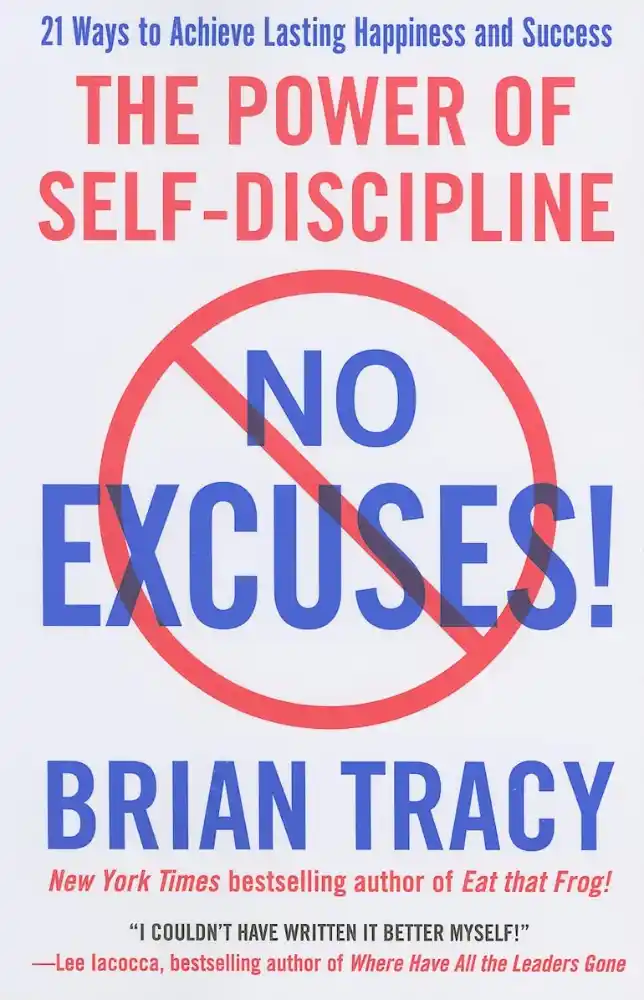
In No Excuses!: The Power of Self-Discipline, Brian Tracy shows that self discipline expresses itself across every major area of life — from money to leadership to emotional stability.
To truly master self discipline, you must understand how it operates in different dimensions of your life.
Below are the 12 core expressions of self discipline — each one expanding the foundation of personal mastery.
Lesson 1. Self Discipline and Success
Success is not random. It follows patterns.
Self discipline and success are connected through the Law of Cause and Effect: specific actions produce specific results. When you consistently do what must be done — especially when it is inconvenient — outcomes improve predictably.
This dimension explores how disciplined thinking eliminates excuses, sharpens focus, and strengthens long-term execution. Success becomes less about talent and more about consistency.
Lesson 2. Self Discipline and Responsibility
All self discipline begins with ownership.
The decision to say “I am responsible” shifts you from reactive to proactive. Instead of blaming circumstances, you look for leverage. Instead of rehearsing frustration, you seek correction.
Self discipline and responsibility reinforce each other. The more responsibility you take, the more control you feel. The more control you feel, the more disciplined your actions become.
This is the psychological turning point of growth.
Lesson 3. Self Discipline and Goals
Discipline without direction wastes energy.
Self discipline and goals work together to turn ambition into structure. When you clearly define what you want, write it down, set deadlines, and take daily action, discipline becomes focused rather than scattered.
Goals provide clarity. Discipline provides motion.
This dimension shows how daily goal review, long-term planning, and deliberate execution compound into measurable achievement.
Lesson 4. Self Discipline and Character
Character is discipline practiced privately.
Integrity grows when you repeatedly choose principle over convenience. Keeping promises to yourself strengthens self-trust. Following through strengthens reputation.
Self discipline and character build internal credibility. When your actions consistently match your values, confidence stabilizes.
Character becomes your quiet competitive advantage — in business, relationships, and leadership.
Lesson 5. Self Discipline and Personal Excellence
The top performers in any field are rarely the most talented. They are the most disciplined in skill development.
Self discipline and personal excellence connect through daily improvement. Investing time and money in learning, refining key skills, and raising standards increases your value.
Excellence is not intensity. It is repetition.
Over years, disciplined growth separates the top 20% from the average 80%.
Lesson 6. Self Discipline at Work
Your income is largely determined by your disciplined effort.
Self discipline at work means identifying your highest-value activities and focusing on them consistently. It means working with intensity during work hours, finishing tasks completely, and preparing more thoroughly than required.
Career advancement is rarely accidental.
It is the result of focused productivity sustained over time.
Lesson 7. Self Discipline and Leadership
Leadership begins with self-control.
Before you manage others, you must manage yourself. Emotional stability, consistency, accountability, and preparation all flow from discipline.
Self discipline and leadership build authority naturally. When you live your standards rather than merely speak them, trust increases.
Authority rooted in discipline is steady — not performative.
Lesson 8. Self Discipline and Courage
Fear is inevitable. Avoidance is optional.
Self discipline and courage intersect when you act despite discomfort. Moving toward fear weakens it. Repeated exposure builds confidence.
Courage becomes a habit when discipline overrides hesitation.
Growth requires discomfort. Discipline ensures you move through it rather than around it.
Lesson 9. Self Discipline and Persistence
Many people start strong. Few continue steadily.
Self discipline and persistence transform temporary effort into lasting achievement. Obstacles are not signs to quit — they are tests of commitment.
When quitting is removed as an option, energy shifts toward adaptation.
Persistence is discipline extended over time.
Lesson 10. Self Discipline and Money
Financial stability reflects behavior more than income.
Self discipline and money connect through delayed gratification, consistent saving, and long-term investing. The habit of paying yourself first compounds quietly into wealth.
Financial stress often reflects impulsive decision-making.
Financial freedom reflects disciplined planning.
Over decades, disciplined money habits reshape your options and independence.
Lesson 11. Self Discipline and Time Management
Time is your most limited resource.
Self discipline and time management ensure that your hours align with your goals. Planning daily, prioritizing high-impact tasks, and finishing what you start convert time into measurable progress.
Discipline applied to time creates momentum.
Momentum creates results.
And results strengthen confidence.
Lesson 12. Self Discipline and Happiness
Happiness is not built on comfort alone.
Self discipline and happiness connect through control, progress, and self-respect. When you manage your time, finances, emotions, and commitments effectively, you reduce chaos.
Progress produces satisfaction.
Integrity produces peace.
Discipline creates the structure within which stable happiness grows.
The Unified System of Self Discipline
Each of these 12 areas strengthens the others.
- Discipline in time improves discipline at work.
- Discipline in money reduces stress and improves emotional stability.
- Discipline in goals strengthens persistence.
- Discipline in character strengthens leadership.
Self discipline is not isolated.
It is interconnected.
Mastery comes when you practice discipline across all dimensions — steadily, patiently, and intentionally.
This is how ordinary effort becomes extraordinary life direction.

Related posts:
 Self Discipline and Leadership: The Foundation of Real Authority
 Self-Discipline and Character: How to Build Integrity That Wins
 Self Discipline and Persistence: Why Winners Never Quit
 Self Discipline and Happiness: The Discipline Behind Inner Peace
 Self Discipline and Success: Why Winners Refuse Excuses