Self discipline begins the journey.
Persistence finishes it.
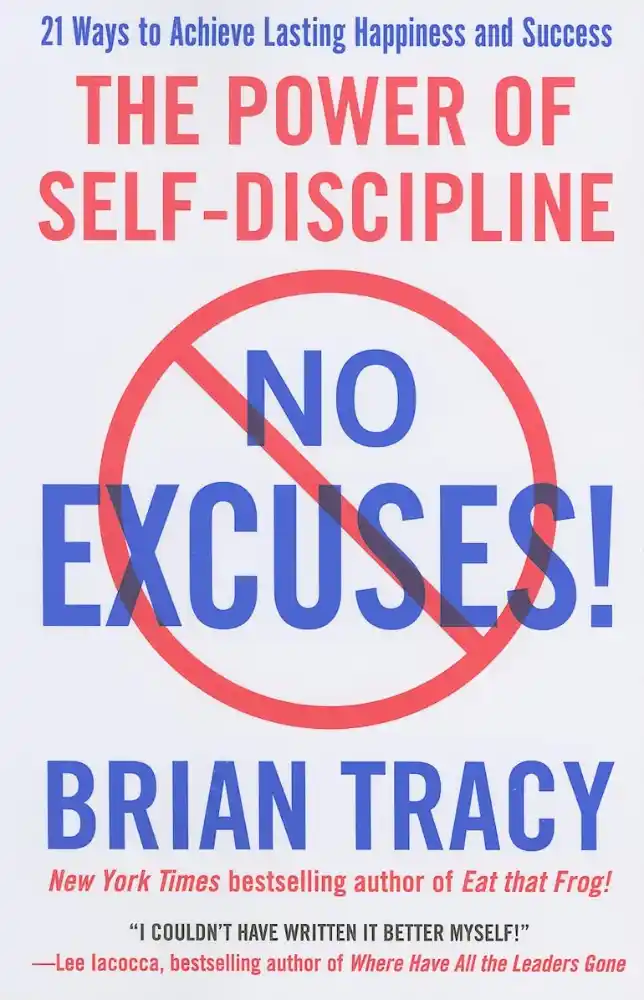
In No Excuses!: The Power of Self-Discipline, Brian Tracy makes a clear point: almost every great success requires sustained effort beyond the point where most people quit.
Talent may help you start.
Motivation may spark momentum.
But self discipline and persistence determine whether you reach the goal.
Success is rarely blocked by lack of opportunity.
It is often blocked by premature surrender.
Persistence Is Discipline Extended Over Time
Self discipline is the ability to do what needs to be done when you do not feel like doing it.
Persistence is the ability to continue doing it — repeatedly — despite obstacles.
Tracy emphasizes that setbacks are normal.
Every worthwhile goal triggers:
- Unexpected problems.
- Delays.
- Criticism.
- Doubt.
The difference between average and extraordinary performers is not the absence of difficulty.
It is the refusal to quit.
Self discipline and persistence work together to sustain forward motion.
The Persistence Test
Tracy describes life as a series of persistence tests.
When you commit to a goal, challenges appear almost immediately.
These are not signs to stop.
They are tests of commitment.
Many people interpret difficulty as failure.
Disciplined individuals interpret difficulty as part of the process.
Self discipline and persistence mean staying steady when enthusiasm fades.
Why Most People Quit Too Soon
Quitting often feels logical in the moment.
Fatigue.
Discouragement.
Slow progress.
Without discipline, emotions dominate decisions.
Persistence requires emotional restraint.
It requires remembering:
- Why you started.
- What long-term success looks like.
- How far you have already come.
Self discipline stabilizes commitment when motivation fluctuates.
Optimism Strengthens Persistence
Tracy connects persistence with optimism.
Optimism is not blind positivity.
It is the disciplined interpretation of events.
When something goes wrong, persistent individuals ask:
- What can I learn?
- How can I adjust?
- What is the next step?
Self discipline and persistence replace self-pity with problem-solving.
Optimism becomes a choice reinforced by action.
Resilience Through Responsibility
As in other areas, Tracy emphasizes responsibility.
Blame weakens persistence.
Ownership strengthens it.
If setbacks are someone else’s fault, progress feels out of your control.
If you accept responsibility, you regain leverage.
Self discipline and persistence grow stronger when you focus on your response rather than external obstacles.
Long-Term Thinking Sustains Effort
Short-term thinking magnifies setbacks.
Long-term thinking minimizes them.

If your goal spans five or ten years, a difficult week becomes insignificant.
Persistence requires perspective.
Self discipline reinforces long-term thinking by prioritizing future outcomes over immediate discomfort.
When your vision extends far enough, quitting loses its appeal.
Daily Habits That Build Persistence
Persistence is not built during dramatic crises.
It is built in daily discipline:
- Finishing tasks completely.
- Keeping small commitments.
- Showing up consistently.
- Improving incrementally.
- Reviewing goals regularly.
Each completed commitment strengthens identity.
You begin to see yourself as someone who follows through.
That identity fuels persistence.
The Role of Self-Talk
Tracy emphasizes positive self-direction.
Persistent individuals use language that reinforces resilience.
Instead of:
“I can’t handle this.”
They say:
“I will find a way.”
Self discipline and persistence are supported by disciplined thinking.
Your internal dialogue influences your external endurance.
Constructive language strengthens determination.
Overcoming the Fear of Failure
Fear often undermines persistence.
If failure feels catastrophic, quitting seems safer.
Tracy reframes failure as feedback.
Every unsuccessful attempt contains information.
Self discipline ensures that lessons are extracted rather than ignored.
Persistence turns mistakes into mastery.
Without persistence, learning remains incomplete.
Financial and Career Persistence
Many careers plateau because individuals stop improving.
They settle.
Persistence means continuing development even after early success.
- Continuing to study.
- Continuing to refine skills.
- Continuing to seek feedback.
- Continuing to innovate.
Self discipline and persistence prevent stagnation.
Long-term financial growth often depends more on sustained improvement than sudden opportunity.
Emotional Stability Through Persistence
When you commit to persistence:
- Anxiety decreases.
- Decision-making simplifies.
- Confidence stabilizes.
Why?
Because quitting is no longer an option.
When quitting is removed, effort becomes focused.
Self discipline and persistence reduce internal conflict.
You know you will continue — so energy shifts toward progress.
The Identity of an Unstoppable Person
Tracy often encourages affirmations that reinforce identity.
Statements such as:
“I am persistent.”
“I never give up.”
“I finish what I start.”
These may seem simple.
But repeated consistently, they reshape self-perception.
Identity drives behavior.
When you see yourself as persistent, quitting feels inconsistent with who you are.
Self discipline supports this identity shift.
Practical 60-Day Persistence Plan
To strengthen self discipline and persistence:
- Choose one meaningful goal.
- Commit to daily action for 60 days.
- Track progress visibly.
- Adjust strategy — not commitment.
- Reflect weekly on obstacles overcome.
After 60 days, consistency becomes habit.
Obstacles feel less threatening.
Persistence becomes automatic.

Frequently Asked Questions
1. How do self discipline and persistence differ?
Self discipline governs daily action. Persistence sustains that action over extended periods despite setbacks.
2. Why do most people quit?
Because emotional discomfort outweighs long-term vision. Without discipline, feelings dictate decisions.
3. Can persistence be developed?
Yes. Through repeated commitment to small goals and consistent follow-through.
4. What role does optimism play in persistence?
Optimism helps interpret setbacks constructively, making continued effort more sustainable.
5. Is persistence always wise?
Persistence should align with clear goals and values. Adjust strategy when needed — but maintain commitment to meaningful objectives.
Final Reflection
Self discipline and persistence are not dramatic qualities.
They are steady ones.
In No Excuses!, Brian Tracy emphasizes that success often belongs to the person who simply refuses to quit.
Obstacles will appear.
Energy will fluctuate.
Doubt will surface.
Persistence means continuing anyway.
Stay focused.
Adjust strategy.
Learn from setbacks.
Keep moving.
Over time, discipline turns effort into achievement.
And persistence turns potential into reality.
Take the FULL FREE MINI COURSE on DISCIPLINE here
Related posts:
 Get Smart by Brian Tracy: The Complete Summary Guide to Thinking Like Successful People
 Self Discipline and Success: Why Winners Refuse Excuses
 Why Slow Thinking Beats Fast Reactions in High-Stakes Decisions
 Self Discipline and Goal Setting: The 7-Step Success Formula
 Why Only 3% of People Write Down Goals—and How This Quietly Creates the Wealth Gap