
Self-discipline is one of the most reliable predictors of success: decades of research show that people with more self-control tend to end up healthier, wealthier and more satisfied with their lives, regardless of IQ or background. What surprises most people is that disciplined people aren’t white-knuckling their way through life; they tend to be happier, and they face fewer temptations, not more. Drawing on Brian Tracy’s No Excuses!, this article covers the law of cause and effect, the excuse habit, full responsibility, why talent isn’t enough, the emotional payoff of discipline and the practical steps to build it.
You’re scrolling on a Sunday evening and see a post from someone you went to school with. A promotion, a finished marathon, a photo with his kids on a beach. You remember him: not the brightest in the class, not the most gifted athlete, not the one anyone expected to go far. Your first thought is that he got lucky.
Your second thought, the one you’d rather not have, is that luck doesn’t usually look like that. It doesn’t show up in three areas of a man’s life at once.
What Is the Link Between Self-Discipline and Success?
Self-discipline is the ability to do what you should do, when you should do it, whether you feel like it or not, and it’s the habit that turns goals, talent and opportunity into actual results. Success, on this view, isn’t a matter of luck or gifts. It’s the predictable effect of disciplined behaviour repeated over years.
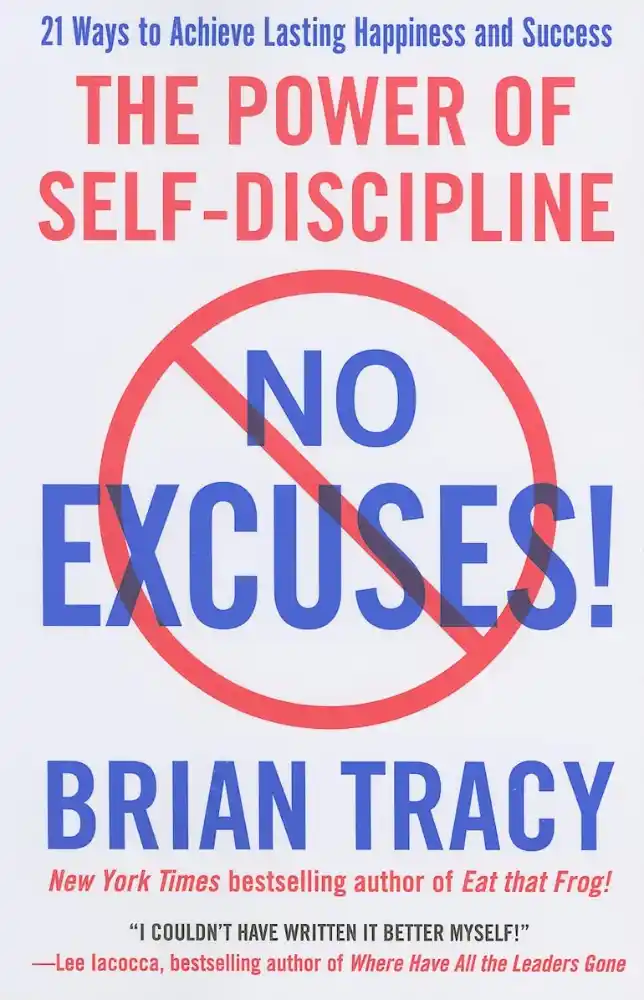
That’s the central claim of No Excuses! The Power of Self-Discipline by Brian Tracy, the business author whose work on achievement has been read by millions. Tracy is blunt: if you want different results, you need different behaviour, and no amount of talent, education or good intentions substitutes for doing the work. The site’s complete mini course on self-discipline covers the whole book; this article focuses on why discipline is the master key to success.
Success Is Not Accidental
Tracy builds his case on what he calls the law of cause and effect: for every effect in your life, there’s a cause. Success has causes, and so does failure. If you study what successful people do and do the same things, you’ll tend to get similar results. If you don’t, you won’t.
It sounds like motivational-speaker logic, but there’s striking evidence for one version of it. In Dunedin, New Zealand, psychologist Terrie Moffitt and her colleagues followed about 1,000 children from birth to age 32. Teachers, parents, observers and the children themselves rated each child’s self-control: their frustration tolerance, persistence and ability to wait their turn. Three decades later, the children with lower self-control were more likely to have health problems, substance dependence, money troubles and criminal records. The pattern held after accounting for IQ and family background, and a parallel study of British twins found the same effect between siblings raised in the same home.
What that means for you is a sober kind of hope. Self-control isn’t fixed at birth; Moffitt herself argued that even small improvements could pay off across a lifetime. The causes of success are, at least in part, behaviours you can practise. That’s both the challenge and the good news of Tracy’s argument.
The Excuse Habit
If discipline is the cause of success, Tracy argues, excuses are the cause of failure. Unsuccessful people, in his view, aren’t short of ability. They’re long on explanations.
Excuses are seductive because they work, at least in the short term. They protect your ego, shift responsibility elsewhere and let you off the hook. “I don’t have time.” “The economy’s bad.” “I’ll start when things settle down.” “I’m not ready yet.” Each one feels reasonable. Together, they become a way of life, and each one quietly hands control of your future to someone or something else.
Tracy calls it excusitis, and he’s unsparing about its cost. The more you excuse, the less you do; the less you do, the more you need to excuse. Breaking the cycle starts with noticing the excuses as they come, which is harder than it sounds, because they rarely announce themselves as excuses. They sound like facts.
A few tells help. An excuse usually points outwards, at time, money, other people or the economy, rather than at a choice you made. It usually comes with relief, a small loosening the moment you say it. And it often recurs: the same reason, for the same undone thing, month after month. One of the most modern disguises is preparation itself: reading another book, watching another video, buying another course, all of which feel like progress and let you postpone the uncomfortable part. The self-help bookshelf trap calls this action faking, and it’s excusitis wearing a smarter suit.
The Power of Full Responsibility
The antidote to excuses is responsibility. Tracy urges accepting complete responsibility for your life, your results and your reactions, and he suggests a simple tool: whenever you catch yourself blaming or complaining, say “I am responsible.”
This isn’t self-blame. Taking responsibility doesn’t mean everything that happened to you was your fault. It means that what you do next is yours. You may not have caused the redundancy, the breakup or the setback, but you’re the only one who can decide how to respond.
The shift is psychological as much as practical. Men who take responsibility complain less and solve more, because they stop waiting for circumstances to change and start changing what they can. It’s the theme of self-discipline and personal responsibility, and the research on locus of control explains why believing your actions matter changes how you act.
What High Achievers Do Differently
Tracy has spent decades studying successful people, and he finds the same pattern again and again. High achievers do what needs to be done whether they feel like it or not. Motivation is welcome, but they don’t wait for it.
In practice, that looks unglamorous. They start earlier than they need to, often with a morning routine that gets the important work done before the day starts making demands. They prepare more thoroughly. They finish what they start. They spend their time on the few tasks that produce the most value. They keep going when progress is slow and nobody’s watching. None of these behaviours is remarkable on its own. Done consistently for years, they become a gap that looks like talent from the outside.
There’s an important corollary: discipline in one area tends to spread. The man who keeps his word at work tends to keep it at home; the man who trains when he doesn’t feel like it tends to save when he’d rather spend. That’s why how you do anything is how you do everything is more than a slogan.
Long-Term Thinking Beats Short-Term Comfort
Successful people, Tracy argues, think in years and decades, while most people think in days and weekends. That single difference shapes almost every choice they make.
Long-term thinkers trade present comfort for future strength. They save instead of spending, study instead of scrolling, train instead of resting, and persist instead of quitting. Delayed gratification is the silent partner of success: the ability to give up something you want now for something you want more later.
This doesn’t mean living like a monk. It means asking, before each meaningful choice, what the man you want to be in ten years would choose. Often the answer is the slightly harder option today. Over time, those slightly harder choices compound into a life most people can’t imagine having. Systems versus goals shows how to build the daily routines that make long-term thinking automatic, and self-discipline and goal setting covers Tracy’s seven-step method for choosing what to aim at.
Discipline Builds Skill, and Skill Builds Success
Skill is where discipline turns into money, status and satisfaction. And skill comes from practice, which comes from discipline.
Tracy is right about the direction, though the research adds nuance. Psychologists Brooke Macnamara, David Hambrick and Frederick Oswald pooled 88 studies of deliberate practice. Practice mattered most in structured domains with clear rules: it explained about 26 per cent of the differences in performance in games such as chess, 21 per cent in music and 18 per cent in sports. In education it explained about 4 per cent, and in professions less than 1 per cent. Practice matters, but it isn’t the whole story; starting age, natural ability, good teaching and the quality of the practice all play a part.
What that means for you is not that practice is pointless, but that the popular “10,000 hours” idea is too simple. Discipline isn’t just about putting in hours. It’s about putting in the right hours: practice with feedback, at the edge of your ability, on the skills that actually matter in your field. That’s the slower, wiser version of mastery described in the craftsman mindset.
Why Talent Without Discipline Fails
Most of us know someone gifted who never fulfilled his promise. Talent opens doors, generates ideas and brings early wins. But it doesn’t execute, prepare or persist. Discipline does.
The research backs Tracy here. Psychologists Angela Duckworth and Martin Seligman measured self-discipline and IQ in two groups of eighth-grade students, 140 in the first study and 164 in the second. Self-discipline, measured in the autumn, predicted final grades, attendance and selection into a competitive high school programme. For several outcomes, it accounted for more than twice as much of the variation as IQ did.
What that means for you is liberating. Talent is largely given, but discipline is largely chosen. The talented man who coasts will usually be overtaken by the less gifted man who keeps showing up, which is why persistence beats talent over any meaningful span of time.
Focus on What Matters Most
Discipline isn’t only about doing more; it’s about doing the right things. Tracy’s Law of Three holds that in most careers, three core activities account for most of the value you create. He puts the figure at about 90 per cent, though that’s his estimate rather than a measured result.
The lesson holds regardless of the exact number. A disciplined man identifies the few activities that drive his results and protects time for them, rather than spreading himself across everything that demands attention. How this plays out in a job is the subject of self-discipline at work, and how to protect the hours is covered in self-discipline and time management.
The Emotional Side of Success
There’s a common picture of disciplined people as joyless, tense and permanently denying themselves. The evidence suggests the opposite.
Psychologists Wilhelm Hofmann, Kathleen Vohs, Roy Baumeister and colleagues tested whether high self-control comes at an emotional cost. In a survey of more than 400 adults and a study that sampled people’s moods through the day, those with more self-control reported higher life satisfaction and more good moods than bad. The reason wasn’t that they constantly resisted temptation. They tended to arrange their lives so they met fewer temptations in the first place, and so they had fewer inner conflicts between what they wanted and what they’d committed to.
What that means for you is that discipline is less about willpower and more about design. The man who doesn’t keep junk food in the house, who leaves his phone in another room while he works, who books his training sessions in advance, isn’t stronger than everyone else. He has simply stopped fighting the same battle every day. That’s also why keeping your commitments builds self-esteem and calms anxiety: you start to trust yourself. Self-discipline and happiness and self-trust versus confidence explore that inner payoff.
Courage and Persistence
Ambitious goals bring fear with them: fear of failure, fear of criticism, fear of the unknown. Tracy’s remedy is disciplined action. Move towards what you fear, in small steps, and courage grows with each one. Courage isn’t the absence of fear; it’s the habit of acting anyway, which is the theme of self-discipline and courage.
Persistence is discipline stretched over time. It’s where most people fall away, not in the first week, when enthusiasm is high, but in the third month, when progress is slow and nobody’s applauding. Disciplined people expect obstacles, adjust their approach, learn from setbacks and keep moving. Self-discipline and persistence develops the idea.
Discipline and Money
Financial success is one of the clearest tests of self-discipline, because the rules are simple and the temptations are constant. Tracy’s principles are old-fashioned: save part of every pay cheque, live below your means, invest consistently and avoid spending to manage your mood.
None of these is complicated. All of them are hard, because they require choosing future security over present pleasure, over and over, for decades. The Dunedin findings on money troubles in adulthood suggest why this matters so much. The practical fix is the same as with every other habit on this page: decide once, then automate. A standing order that moves money into savings the day you’re paid does more for your future than a hundred good intentions at the end of the month. Financial discipline turns Tracy’s principles into a practical plan.
The Identity Shift
The deepest change discipline produces isn’t in your bank account or your body. It’s in how you see yourself.
Each time you keep a commitment to yourself, you cast a small vote for a new identity: a man who does what he says. Over time, those votes add up. Your self-respect rises, your standards rise with it, and your tolerance for excuses falls. Eventually, discipline stops feeling like effort and starts feeling like who you are. The disciplined choice becomes the natural one.
This is also why character and discipline are so closely linked. Self-discipline and character explores how small, repeated acts of integrity build the kind of man others trust.
How to Strengthen Self-Discipline: Practical Steps
Discipline grows through consistency, not intensity. Five steps are enough to start.
Choose one area of your life where you most want better results: health, work, money or relationships. Identify one specific improvement, small enough that you could start tomorrow. Commit to doing it daily, at the same time or after the same existing habit. Track it, so you can see your streak and notice when it breaks. And once it feels automatic, which for most habits takes weeks rather than days, raise the bar slightly or add a second habit.
If you slip, don’t make it a verdict on your character. Start again the next day. The research on self-control is clear that it can improve, and the men who improve most are usually those who are patient with themselves while staying demanding of themselves.
Not Luck, a Pattern
Go back to that Sunday-evening scroll: the classmate with the promotion, the marathon and the beach photo. It probably wasn’t luck. It was a pattern, the same unremarkable choices made over and over until they produced a remarkable result.
That pattern is available to you. Not overnight, not without effort, but predictably, because success follows causes and discipline is the most reliable cause there is. Stop explaining. Start doing. Keep going.
Which excuse would you have to give up to become the man your future self is counting on?
What Success Has Asked of You So Far: 7 Questions
Write each answer in a minute or less. Your first answer is usually the honest one; the second is usually the excuse.
- When did you last keep a promise to yourself that nobody else would have noticed you breaking, and how did you feel that evening?
- Which excuse do you reach for most often, whether no time, not ready or not the right moment, and what has it been protecting you from?
- Picture the goal you keep postponing: does your stomach tighten, drop or settle, and which of those tells you it still matters?
- If you took full responsibility for one area of your life you currently blame on circumstances, which would it be, and what would you do differently on Monday?
- If a younger man watched how you spend an ordinary Tuesday, what would he learn about what success requires?
- What tool, service or idea that would help men keep their commitments is still missing from the world, and what would its first rough version look like?
- Ten years from now, what will the disciplined version of you thank you for starting this year?
The Excuse Audit: 5 Steps
An audit isn’t a trial. The aim is to see your excuses clearly, not to punish yourself for having them.
- List: write down every excuse you’ve used this week, out loud or in your head, about work, health, money or relationships.
- Sort: mark each one either “real constraint” or “comfortable story”, and be fair to yourself in both directions.
- Rewrite: for one comfortable story, write the responsible version: “I didn’t ___ because I chose ___.”
- Build: take the excuse you hear most often from the men around you, ask three of them about it this month, and sketch one thing, a habit, a group or a tool, that would make it harder for all of you to hide behind.
- Re-audit: put a date in your calendar four weeks from now to repeat the audit, and note which excuse has quietly disappeared.
Every excuse is a closed door. Every kept promise is a step on a staircase you can’t see the top of yet.
Frequently Asked Questions About Self Discipline and Success
Is self-discipline more important than talent?
For many outcomes, yes. Angela Duckworth and Martin Seligman found that self-discipline in eighth graders predicted final grades and selection into competitive schools, accounting for more than twice as much of the variation as IQ for several outcomes. Talent still helps, but without discipline it rarely turns into lasting success.
Can self-discipline be learned?
Yes. Self-discipline is a set of habits rather than a fixed trait. Researchers who followed children into adulthood, including Terrie Moffitt’s team, argue that even small improvements in self-control could pay off. Start with one small daily commitment, track it, design your environment to reduce temptation and build gradually.
Does self-discipline make you happier?
Research suggests it does. Studies by Wilhelm Hofmann, Kathleen Vohs and Roy Baumeister found that people with higher self-control reported greater life satisfaction and more positive moods. They didn’t resist temptation more often; they arranged their lives to face fewer temptations, which meant fewer inner conflicts between desires and goals.
What did the Dunedin study find about self-control?
The Dunedin study followed about 1,000 New Zealand children from birth to age 32. Those with lower childhood self-control were more likely to have health problems, substance dependence, money difficulties and criminal records as adults, even after accounting for IQ and family background. A study of British twins found similar effects between siblings.
Does it take 10,000 hours to master a skill?
Not exactly. A meta-analysis of 88 studies by Brooke Macnamara and colleagues found that deliberate practice explained about 26 per cent of performance differences in games, 21 per cent in music and 18 per cent in sports, but far less in education and professions. Practice matters, especially focused practice with feedback, but other factors matter too.
What is the biggest enemy of success?
Brian Tracy names excuses as the biggest enemy of success. Excuses protect your ego in the short term but shift responsibility away from you, so nothing changes. His remedy is accepting full responsibility for your results, summed up in the phrase “I am responsible”, and then taking action on what you can control.
References
- Duckworth, A. L., & Seligman, M. E. P. (2005). Self-discipline outdoes IQ in predicting academic performance of adolescents. Psychological Science, 16(12), 939–944.
- Hofmann, W., Luhmann, M., Fisher, R. R., Vohs, K. D., & Baumeister, R. F. (2014). Yes, but are they happy? Effects of trait self-control on affective well-being and life satisfaction. Journal of Personality, 82(4), 265–277.
- Macnamara, B. N., Hambrick, D. Z., & Oswald, F. L. (2014). Deliberate practice and performance in music, games, sports, education, and professions: A meta-analysis. Psychological Science, 25(8), 1608–1618.
- Moffitt, T. E., Arseneault, L., Belsky, D., Dickson, N., Hancox, R. J., Harrington, H., … Caspi, A. (2011). A gradient of childhood self-control predicts health, wealth, and public safety. Proceedings of the National Academy of Sciences, 108(7), 2693–2698.
- Tracy, B. (2010). No excuses! The power of self-discipline. Vanguard Press.
Take the FULL FREE MINI COURSE on DISCIPLINE here
Related posts:
 Why Most People Don’t Become Wealthy: The 7 Reasons (and How to Beat Each One)
 Get Smart by Brian Tracy: The Complete Summary Guide to Thinking Like Successful People
 Self Discipline and Goal Setting: The 7-Step Success Formula
 Why Slow Thinking Beats Fast Reactions in High-Stakes Decisions
 What Is the Link Between Self-Discipline and Time Management?