
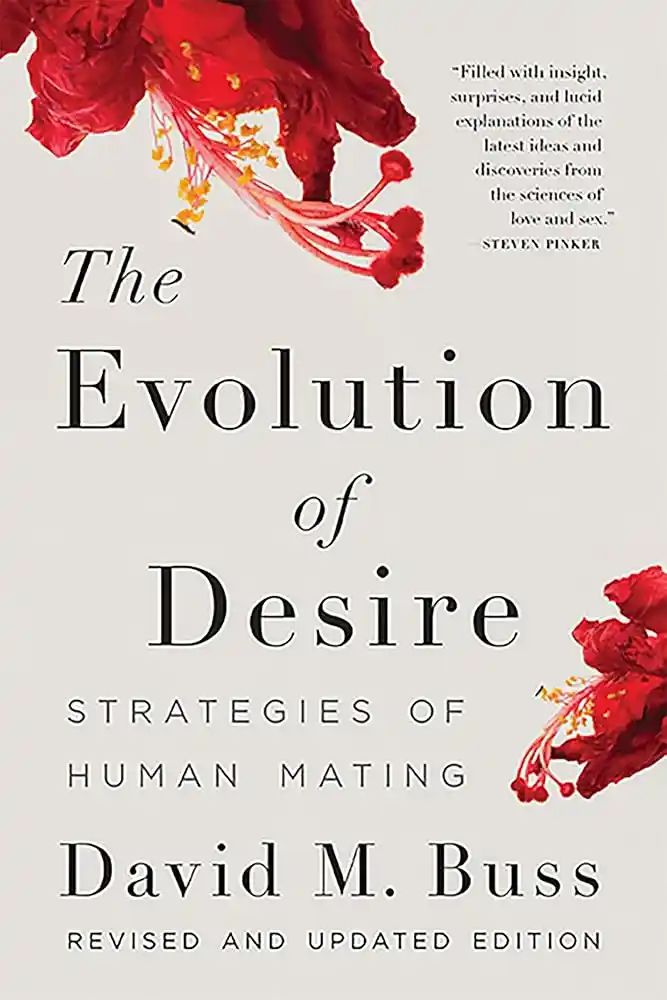
Men and women, on average, report different priorities in a partner: men weigh physical attractiveness and youth more heavily, women weigh financial prospects, ambition and older age more heavily, a pattern now replicated across 45 countries. But when researchers watch attraction unfold on real dates, much of that gap shrinks or disappears, which is why the honest answer to this debate is both-and rather than either-or. This updated guide, built on David Buss’s The Evolution of Desire and tested against research through 2025, sorts what is robust from what is overstated, and shows what it means for how you actually meet someone.
What Are Male vs Female Mate Preferences? The Short Answer
Mate preferences are the traits people say they want in a romantic partner, and the research on them is some of the largest in evolutionary psychology. In 1989 David Buss published a study of 37 samples from 33 countries (N = 10,047) and found that women valued good financial prospects and older partners more than men did, while men valued physical attractiveness and youth more than women did. In 2020 a team including Buss repeated the work with 14,399 people in 45 countries and found the same core pattern holding up. A 2015 analysis of more than 10,000 people in 37 cultures found that, of 19 preferences examined, five differed meaningfully by sex (financial prospects, physical attractiveness, chastity, ambition and age), while four others, including pleasing disposition and sociability, did not. The complication, covered below, is that what people say they want and whom they actually pick on a real date do not always match.
If you have ever read a headline claiming that women want money and men want looks, and felt either flattened or furious, as if someone had just attached a price tag to you, you are in good company. That reaction is common, and it is worth separating from the evidence, because averages describe populations and tell you very little about one person. What follows keeps the science and drops the verdict.
The Evolutionary Logic: Why Parental Investment Matters
The core argument comes from parental investment theory, developed by biologist Robert Trivers in the early 1970s and applied to human mating by Buss in The Evolution of Desire (first published in 1994). For women, reproduction has historically demanded pregnancy, childbirth, lactation and long periods of physical vulnerability. For men, the minimum biological contribution is far smaller, though human fathers have often invested heavily in their children. That asymmetry, the argument goes, produced different adaptive problems: women faced higher costs of choosing poorly and so had reason to be selective about a partner’s ability and willingness to invest, while men faced the problem of identifying fertile partners and the uncertainty of paternity.
Two clarifications keep this from being misread. First, “evolved” does not mean conscious or calculated. People do not scan for fertility or bank balances; the claim is that attraction systems were shaped by what historically paid off, and we experience the result as simple feeling. Second, the logic is probabilistic rather than deterministic, a point developed in more depth in the science of human mating strategies and in the broader account of sexual selection in humans.
What the Cross-Cultural Data Actually Shows
The 1989 study remains the anchor. Across its samples, women in nearly every one rated financial prospects as more important than men did, and men rated attractiveness and youth higher; both sexes, meanwhile, placed traits such as mutual love, dependable character and emotional stability near the top. That last point is routinely dropped from summaries, and it matters: the largest finding is similarity, with the differences concentrated in a handful of traits.
The 2020 replication, led by Kathryn Walter with Daniel Conroy-Beam and Buss, tested two rival explanations: the evolutionary account and biosocial role theory, which holds that differences arise from the roles men and women occupy in a society. The sex differences held. Men, more than women, preferred attractive, young partners, and women, more than men, preferred older partners with financial prospects. Beyond partner age, neither gender equality nor pathogen prevalence robustly predicted how big the differences were across countries, though both sexes ended up with partners closer to their own age as equality rose. A separate replication by Bech-Sørensen and Pollet found some narrowing of the differences over two decades, which suggests the preferences are real but not frozen.
One point of caution applies to all of this. These studies mostly measure stated preferences: what people report wanting in a questionnaire. That is a legitimate and valuable kind of evidence, and it is also only one kind, as the section on real dates shows.
What Women Tend to Prefer in a Long-Term Partner
On average, women in these studies place more weight on financial prospects, ambition, social status and a somewhat older partner, alongside commitment, stability and intelligence that both sexes rate highly. The evolutionary reading is that cues of resources are most useful when paired with willingness to share them, which is why signs of commitment and character sit alongside signs of capability. In modern terms those cues usually appear as education, a clear career direction and demonstrated competence, rather than a literal inventory of assets.
Two things are easy to lose here. These are group averages with plenty of overlap, so many women rate attractiveness or humor above income, and many men would be surprised by what a given woman values. And the traits in question are not purely instrumental. Ambition and direction can be attractive because they signal a person who engages with life, which is a quality you can develop for its own sake. For a closer look at the selection side of this, see how women choose men.
What Men Tend to Prefer in a Long-Term Partner
On average, men in these studies place more weight on physical attractiveness and youth. The evolutionary reading is that attractiveness and youth served as cues to health and fertility, a problem men faced more acutely than women. Men also rated chastity higher in many samples, with large variation by culture.
Two cautions apply here as well. Specific claims about ideal body proportions are often repeated more confidently than the cross-cultural evidence supports, so treat tidy numbers with skepticism. And, again, kindness, intelligence and a pleasing disposition rank high for men as for women; the popular image of a man who cares only about appearance does not match what men themselves report. How a person’s overall package is weighed is the subject of mate value, which is a more useful lens than any single trait.
Where the Gap Widens: Short-Term Mating
The differences tend to be larger in short-term contexts. Men on average report more interest in casual sex, lower standards for short-term partners and a stronger desire for variety, and the evolutionary account points to lower historical costs of casual encounters for men. Women are not without short-term strategies, and the review of mating research by Buss and David Schmitt (Annual Review of Psychology, 2019) documents how strongly strategies shift with context, including mate value, sex ratio, economic conditions and cultural norms. Human mating psychology is conditional, which is why “men always want X, women always want Y” fails even where the average difference is real. The contrast between the two modes is laid out in short-term and long-term mating strategies.
The Twist: What People Say Versus Who They Actually Pick
Here is where the picture gets more interesting than most summaries admit. In a well-known speed-dating study, Paul Eastwick and Eli Finkel (2008) found that participants showed the traditional sex differences when stating what they wanted in an ideal partner. Yet when they actually met people, men and women alike were drawn to attractive, high-earning partners to a similar degree, and the ideals people stated beforehand did not predict who they ended up wanting. A 2015 replication by Dylan Selterman and colleagues, with 307 participants, found the same.
A larger test arrived in 2025. In a study in the Proceedings of the National Academy of Sciences covering roughly 4,500 blind dates among people aged 22 to 85 seeking long-term partners, Eastwick and colleagues found that both men and women were slightly more attracted to younger partners, and that the difference between the sexes was extremely small. Women generally say they prefer older partners; their reactions on the dates said otherwise. As Eastwick put it, men and women find youth a little more appealing in initial attraction, “whether they know it or not.” Income barely influenced the women’s slight preference for youth.
How should this be read? Honestly, as an unresolved tension rather than a refutation. Defenders of the evolutionary account point out that speed dates and blind dates measure initial attraction, not the partner you choose to build a life with, and the authors themselves note that they did not follow the couples forward. Critics counter that stated preferences are the weakest link in the standard evidence, because people have limited insight into their own motives, a gap explored in how capable men fool themselves. Both can be partly right: stated preferences may reflect real evolved tendencies and cultural scripts, while live attraction responds to the whole person in front of you.
Jealousy: A Real Difference, Smaller Than the Headlines
The sex difference in jealousy is among the most famous claims in the field: men are said to be more distressed by sexual infidelity and women by emotional infidelity, a pattern first documented by Buss and colleagues in 1992. The evolutionary reasoning ties male distress to paternity uncertainty and female distress to loss of a partner’s commitment.
The later evidence is more mixed than the headline suggests. A 2012 meta-analysis by Brad Sagarin and colleagues, covering 209 effect sizes from 47 samples, found a reliable sex difference using continuous measures, and a similar effect in studies of real infidelity, though the effects were small to moderate. A second 2012 meta-analysis by Christopher Carpenter reached a different emphasis, finding that both sexes tended to be more upset by emotional infidelity when forced to choose, and both rated sexual infidelity as more distressing when scored separately. The fair summary is that there is a difference, that it is modest, and that it depends heavily on how you ask the question. Jealousy is best treated as a signal: notice it, check it against facts, and talk to the person involved, rather than treating it as a verdict on either of you.
Competition Within Each Sex
Mate preferences also shape competition among men and among women. The literature emphasizes status, achievement and resources in male competition and attractiveness cues in female competition, though both sexes compete in both domains and the emphasis shifts with context. Social media intensifies the pattern by quantifying status and filtering beauty, which gives ancient comparison instincts a stage they were never built for. If scrolling leaves you measuring yourself against strangers, the habits in how to stop comparing yourself to others are a practical starting point.
Biology or Culture? Where the Debate Actually Stands
The evidence supports a middle position that neither camp likes entirely. The evolutionary account is strengthened by the stability of the core differences across dozens of countries and by the replication in 2020. Biosocial role theory is strengthened by evidence that preferences shift with local conditions and, in some studies, narrow over time. The reasonable synthesis, which Buss and Schmitt’s 2019 review also leans toward, is that evolved tendencies are real but flexible: biology shapes probability, culture shapes expression, and individual character shapes choice.
It also helps to remember what the science does not do. Describing how preferences are distributed is not a claim about how anyone ought to behave, and averages do not predict individuals. Understanding why a pattern exists is one thing; treating it as destiny is another.
What This Means for You
It would be easy to finish this article feeling either vindicated or deflated, and neither is warranted. Averages are not a verdict on your worth, and the strongest finding in the whole literature is how much men and women want the same things from a partner: kindness, reliability, intelligence and emotional stability. Those are qualities you can build, and you have already shown some of them. Think of a time someone trusted you with something that mattered, or came to you when things went wrong. That is evidence, and it is yours.
Here is a small way to put the research to work. After your next in-person meeting with someone you find interesting, take ten minutes to write down what actually held your attention, and compare it with the checklist you would have given before you met. The gap, if there is one, tells you something no questionnaire can. Then let it be. You cannot control how another person feels; you can control how fully you show up and what you learn from it. The mindset behind stopping the chase fits here, as does letting go of outcomes once you have done your part, and the quieter work of self-trust rather than borrowed confidence.
One more step belongs in this. If dating has left you resentful, lonely or stuck in a loop, talk it through with someone you trust, and consider a counselor if it persists; asking for help without manipulating anyone is a strength, not a retreat. What drew you to the last person who genuinely held your attention, and did it appear on any list you had written?
Questions People Ask About Male vs Female Mate Preferences
What are the main differences between male and female mate preferences?
On average, men place more weight on physical attractiveness and youth, and women place more weight on financial prospects, ambition, status and older age. Many other traits, including kindness, intelligence and pleasing disposition, are rated highly by both sexes. A 2015 study found five of 19 preferences differed by sex.
Are male and female mate preferences biologically determined?
They are biologically influenced but not fixed. Evolutionary psychologists argue that parental investment shaped broad tendencies, while biosocial theorists emphasize social roles. A 45-country replication found the core differences robust, and other work shows preferences shift with context and over time.
Why do women value financial stability more than men, on average?
The evolutionary explanation is that women historically bore higher costs of pregnancy and child-rearing, so cues of resources and commitment were valuable. Social explanations point to unequal access to resources. Research suggests both play a role, and individual variation is large.
Why do men prioritize physical attractiveness?
Evolutionary psychologists propose that attractiveness and youth historically signaled health and fertility. Large surveys support the average difference in stated preferences, though a 2025 blind-date study found men and women were similarly drawn to younger partners in actual initial attraction.
Do these differences hold in more gender-equal countries?
Largely yes. A 2020 study of 45 countries found sex differences in preferences remained robust, and gender equality did not robustly predict their size beyond partner age. Some research finds slight narrowing over time, so the differences are persistent but not frozen.
Do stated preferences predict who people actually choose?
Not reliably. Speed-dating research found that ideal-partner preferences stated beforehand did not predict who participants wanted after meeting, and sex differences largely disappeared in real interactions. Long-term partner choice is less studied, so the question remains open.
Do men and women differ in jealousy?
There is a modest, reliable difference in how men and women respond to sexual versus emotional infidelity, but it depends on the measure used. A 2012 meta-analysis found small to moderate effects, while another found both sexes more alike than different.
Sources and updates: this article draws on David Buss’s The Evolution of Desire, Buss (1989), Walter and colleagues (2020), Eastwick and Finkel (2008), Selterman and colleagues (2015), Eastwick and colleagues (PNAS, 2025), Sagarin and colleagues (2012), Carpenter (2012), and Buss and Schmitt (2019). We review it as new research appears.
Related posts:
 Mate Value in Evolutionary Psychology: What It Really Means
 What Is Evolutionary Mating Psychology? The Science of Human Desire
 The Complete Guide to Evolutionary Mating Psychology in Modern Relationships
 Short-Term vs Long-Term Mating Strategies: An Evolutionary Psychology Guide
 How Women Choose Men According to Evolutionary Mating Psychology