Some of the world’s wealthiest and most powerful people are obsessed with escaping their humanity. They’re investing billions in life extension, consciousness uploading, genetic engineering, and other technologies aimed at transcending the biological limits that define human existence.
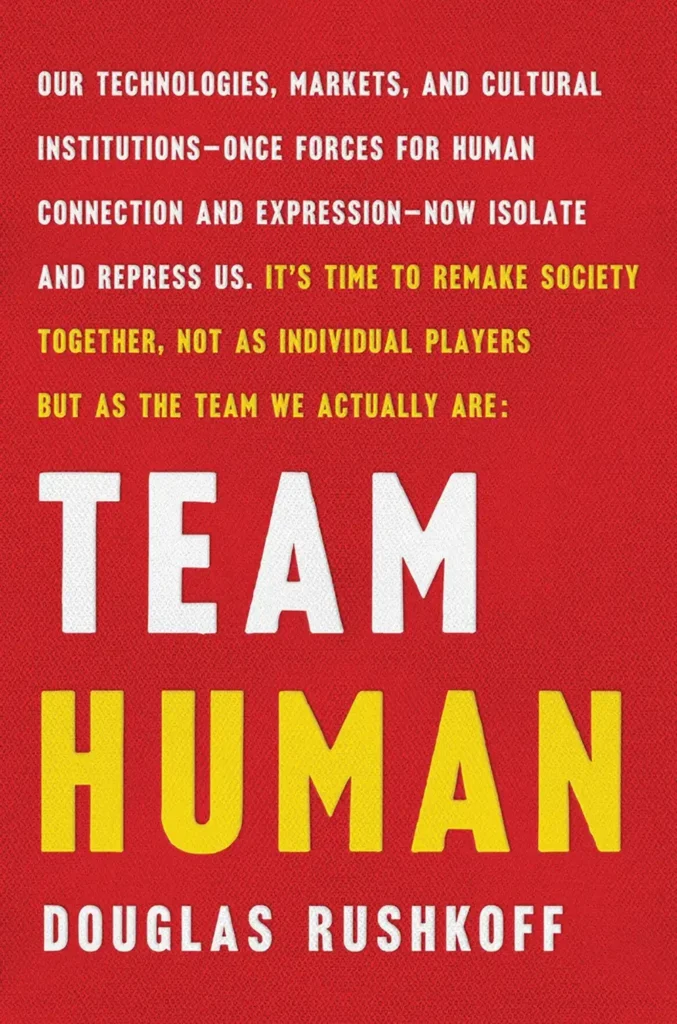
Douglas Rushkoff’s “Team Human” exposes the disturbing philosophy behind these efforts: “Transhumanists hope to transcend or at least improve upon biological existence… By blurring the line between what we think of as biological and technological, transhumanists hope to ease our eventual, inevitable transition to life on a silicon chip.”
This isn’t fringe science fiction. It’s the operating philosophy of many tech industry leaders, and understanding it helps explain why technology increasingly seems designed to undermine rather than enhance human flourishing.
The Origins of Silicon Valley Transhumanism
Rushkoff traces transhumanism’s rise to an unexpected source: Cold War-era meetings between American New Age spiritualists and Soviet cosmists in the 1980s. These “citizen diplomacy” programs aimed to reduce nuclear tensions but became something else entirely.
The Soviet cosmists believed in using technology to achieve immortality, resurrect the dead by rearranging their atoms, and transcend biological existence. These ideas captivated the American attendees, many of whom would go on to found or lead Silicon Valley’s biggest companies.
“Such were the origins of today’s transhumanist movement,” Rushkoff writes. “These conferences were formative experiences for Silicon Valley’s most influential executives, investors, professors, scientists, and technologists—some of whom founded the biggest digital companies in the world.”
The cosmists’ core belief—that human consciousness could and should be uploaded to computers, that biological existence was a temporary stage to be transcended—became embedded in Silicon Valley’s culture and long-term vision.
What Transhumanism Actually Means
At its core, transhumanism treats being human as a problem to be solved through technology. The human body is seen as flawed, limited, and obsolete—a meat prison from which consciousness must escape.
Transhumanists pursue several related goals:
Life extension. Defeating aging and death through medical intervention, genetic engineering, or other technological means. The goal isn’t just living healthier longer—it’s eliminating death entirely.
Enhancement. Using technology to augment human capabilities beyond normal limits. This ranges from relatively modest interventions like cognitive enhancing drugs to more extreme visions of brain-computer interfaces or genetic modification.
Mind uploading. The ultimate transhumanist dream: copying human consciousness onto computers or into the cloud, allowing it to persist indefinitely even after biological death.
Post-biological existence. Eventually moving beyond biological substrates entirely, existing as pure information in digital networks or as consciousness in robotic bodies.
Rushkoff notes the underlying assumption: “If humanity is a purely mechanistic affair, explicable entirely in the language of data processing, then what’s the difference whether human beings or computers are doing that processing?”
The Fundamental Problem
Transhumanism rests on several deeply flawed assumptions about what humans are and what makes life worth living.
Consciousness isn’t computable. Despite transhumanist faith, there’s no evidence that consciousness is simply information processing that could be replicated in computers. “Consciousness is based on totally noncomputable quantum states in the tiniest structures of the brain, called microtubules,” Rushkoff explains. The complexity involved makes uploading consciousness impossible with any foreseeable technology.
The body matters. Transhumanists treat the body as incidental to consciousness, but embodiment is fundamental to human experience. Your physical existence, your sensory engagement with the world, your mortality itself—these aren’t bugs to be fixed but essential features of what it means to be human.
Death creates meaning. Much of what makes life meaningful stems from its finitude. Relationships matter because people won’t be around forever. Choices have weight because time is limited. Removing death doesn’t liberate us from limitation—it removes the framework that makes life coherent.
Enhancement is selection. Deciding which aspects of humanity to enhance necessarily means deciding which to leave behind or diminish. But who gets to make those choices? Rushkoff asks: “What of racial diversity, gender fluidity, sexual orientation or body type? The human traits that are not favored by the market will surely be abandoned.”
The Extractive Logic
Transhumanism isn’t actually about helping humanity—it’s about escaping it. And that requires seeing humans as resources to be consumed in service of transcendence.
“Life extension becomes the last-ditch attempt of the market to increase our available timeline as consumers,” Rushkoff observes. The same people pursuing immortality for themselves are perfectly comfortable with extractive business practices that shorten others’ lives.
Blood transfusions from young people to wealthy older people. Massive resource extraction to produce electronics. Child labor in rare earth mineral mines. These aren’t unfortunate externalities—they’re the logical result of treating biological humans as obsolete or expendable compared to the coming digital posthumans.
The transhumanist worldview enables extraordinary callousness toward current human suffering. Why worry about economic inequality, climate change, or social injustice when we’re about to transcend biological existence entirely? The problems afflicting actual humans matter less than progress toward post-human goals.
The Bunker Mentality
Unable to achieve immortality or consciousness uploading yet, many wealthy transhumanists focus on a more immediate goal: surviving the collapse their own extractive practices are creating.
Rushkoff recounts being hired to speak to a group of hedge fund managers and tech executives who wanted to know: “How do I maintain authority over my security force after the event?” The “event” being societal collapse, and the question revealing their core concern—not preventing catastrophe but ensuring they personally survive it.
“These oligarchs deploy an ‘insulation equation’ to determine how much of their fortunes they need to spend in order to protect themselves from the economic, social, and environmental damage that their business activities have caused,” Rushkoff explains.
They’re buying property in predicted climate-safe zones. Building underground bunkers. Investing in private aerospace and terraforming. Planning escape to Mars or New Zealand or wherever might survive the disasters their companies are accelerating.
This isn’t contingency planning—it’s a death cult, treating civilization’s potential collapse as inevitable while doing nothing to prevent it and everything to ensure they personally escape.
Why Men Should Reject This
For men, transhumanism represents a particularly toxic package of ideas. It trades vitality, presence, and embodied existence for the promise of digital immortality. It replaces genuine strength with technological augmentation. It treats mortality as weakness rather than the condition that gives life meaning.
Real masculine development requires confronting mortality, accepting limitation, and finding meaning within constraints. It means developing character, integrity, and wisdom—none of which require or benefit from technological transcendence.
The transhumanist vision offers a counterfeit: escape from the hard work of being human. Rather than facing death with courage, avoid it through technology. Rather than developing your capacities through practice, enhance them with implants or drugs. Rather than accepting your place in the natural cycle, try to break free of it entirely.
This path leads not to strength but to fragility—a terror of human limits combined with desperate faith in technological salvation.

The Alternative
Rushkoff offers a different vision: “It’s time we reassert the human agenda. And we must do so together—not as the individual players we have been led to imagine ourselves to be, but as the team we actually are.”
This means:
Accepting mortality. Death isn’t a problem to be solved but a reality to be accepted. It creates the stakes that make life meaningful. Without it, nothing has weight, choice has no consequence, and time loses its value.
Valuing embodiment. You are not a mind trapped in a body—you are an embodied consciousness. Your physical existence, sensory engagement, and biological nature aren’t limitations but essential aspects of being human. Embrace them rather than seeking escape.
Prioritizing presence. Rather than obsessing about extending life indefinitely, focus on being fully alive in the time you have. Presence, connection, meaning, purpose—these matter more than length of days.
Collective flourishing over individual transcendence. Instead of each person trying to escape human limits alone, we could work together to improve conditions for everyone. The resources invested in life extension for billionaires could address suffering for millions.
Engaging with rather than escaping from limits. Human creativity, meaning, and growth emerge from working within constraints. Removing all limits doesn’t liberate—it removes the friction against which we develop.
The Practical Question
Most men aren’t billionaires investing in consciousness uploading. But transhumanist thinking influences us more subtly through:
Self-optimization culture. The drive to maximize every metric, enhance every capacity, and treat yourself as a machine to be upgraded reflects transhumanist thinking at a smaller scale.
Rejection of natural rhythms. Using stimulants to override fatigue, sleep tracking to optimize rest, biohacking to transcend normal human limits—all reflect the assumption that natural human functioning is inadequate.
Fear of aging. The desperate attempt to avoid appearing older, the shame around natural aging processes, and the market for anti-aging everything reveals a culture that treats mortality as shameful.
Tech dependency. Believing you need technological augmentation to be competitive—whether that’s productivity apps, nootropics, or increasingly invasive interventions—reveals acceptance of the transhumanist premise that unaugmented humans are insufficient.
Taking a Stand
This week, identify one way you’ve absorbed transhumanist thinking and consciously reject it:
- If you’re pursuing self-optimization compulsively, take a week off from tracking, measuring, and maximizing. Just be human.
- If you’re dependent on enhancement substances or techniques to function normally, consider whether you’re trying to transcend normal human limits in unhealthy ways.
- If you’re uncomfortable with aging or mortality, have an honest conversation with yourself about what you’re afraid of and whether that fear is serving you.
- If you’ve been prioritizing longevity over vitality, shift focus to being fully alive now rather than extending years indefinitely.
- If you treat your body as a machine to be optimized, spend time appreciating it as the living, organic system it actually is.
The point isn’t to reject all enhancement or health interventions. It’s to maintain perspective about what makes life worth living and refuse the underlying transhumanist assumption that being human is a problem requiring technological solution.
As Rushkoff reminds us: “Human beings are not a cancer on the planet… Now is not the time to abandon our can-do optimism, but to direct it toward priorities greater than world domination.”
Be human. Not because you can’t escape it, but because it’s actually worth being.
Related posts:
 Team Human Summary: 25 Essential Ideas From Douglas Rushkoff
 How to Stay Human in the Digital Age: A Practical Team Human Guide
 Digital Wellbeing: How Your Digital Life Is Impacting Real-World Human Connection
 The Silicon Valley Death Cult: How Transhumanist Ideology Puts Humanity at Risk
 Platform Capitalism: How Digital Monopolies Extract Value From Your Life