Updated October 15, 2026 · 15 min read
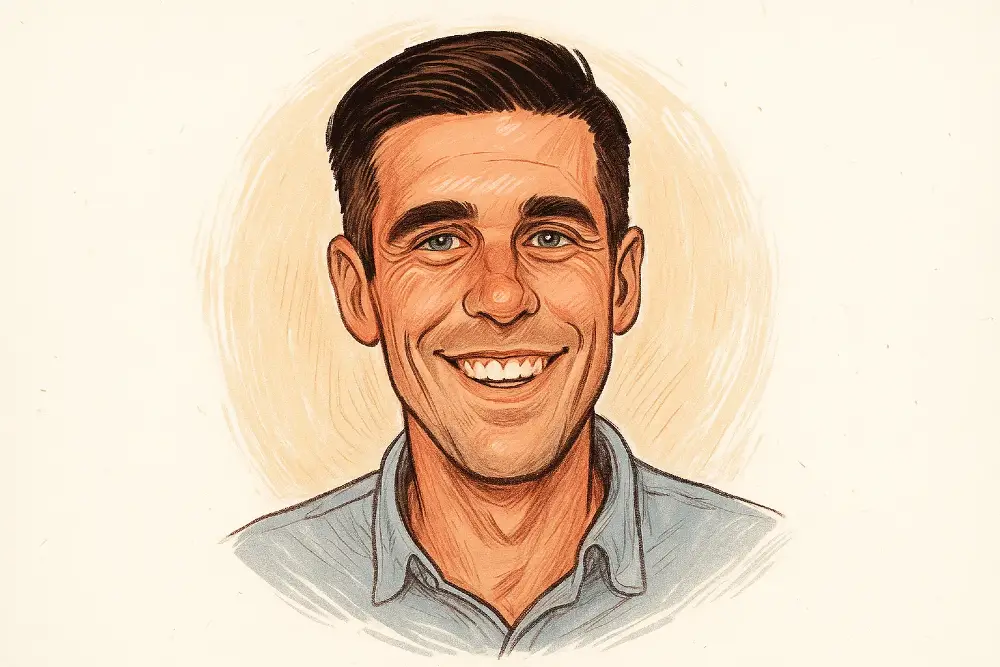
Short answer: Ryan Holiday (born June 16, 1987) is an American author and the best-known popularizer of Stoic philosophy today. A former director of marketing at American Apparel, he wrote The Obstacle Is the Way, Ego Is the Enemy and The Daily Stoic, finished a four-book series on the Stoic virtues in 2025, runs the Daily Stoic newsletter, podcast and YouTube channel, and owns The Painted Porch Bookshop in Bastrop, Texas. He is 39.
Most people meet Ryan Holiday through a book cover: a Roman emperor, a blunt title, a recommendation from a coach or a friend. The less familiar part is the order of events. Holiday did not begin as a philosopher who found an audience. He began as a media strategist who learned exactly how attention can be manufactured, wrote a book confessing it, and then spent the next decade building something he could stand behind.
That sequence, success first, honesty second, repair third, is why his story lands with men who have felt hollow at the top of a ladder they picked at nineteen. It is also why it deserves a clear-eyed look, criticism included. This guide covers who he is, what he built, what his critics say, and which of his books to read first.
Ryan Holiday at a Glance
| Full name | Ryan Clark Holiday |
| Born | June 16, 1987, Sacramento County, California |
| Age | 39 (as of October 2026) |
| Education | University of California, Riverside (left in his second year, at 19) |
| Known for | Modern Stoicism: The Obstacle Is the Way, Ego Is the Enemy, The Daily Stoic, the Stoic Virtues series |
| Earlier career | Apprentice to author Robert Greene; Director of Marketing at American Apparel; founder of the agency Brass Check |
| Platforms | Daily Stoic (newsletter, podcast, YouTube), Daily Dad, the monthly Reading List email |
| Business | The Painted Porch Bookshop, Bastrop, Texas |
| Family | Wife Samantha (married 2015); two sons |
| Lives | A 40-acre ranch in Bastrop County, outside Austin, Texas |
| Official sites | ryanholiday.net · dailystoic.com |
Early Life and the Book That Changed His Direction
Holiday grew up in Sacramento, the son of a police detective and a high school principal, in a household built around service and structure. He enrolled at UC Riverside but left in his second year, at 19, and moved to Los Angeles to work at a Hollywood talent agency. Most people would have called that a mistake. His parents, by his own telling, were not thrilled.
Around that time he asked television doctor Drew Pinsky for a book recommendation and was pointed toward the Stoics. The book that followed was Marcus Aurelius’s Meditations, the private journal of a Roman emperor. It is the kind of book Tyler Cowen calls a “quake book”: one that rearranges how you see things. Plenty of students read philosophy, enjoy it, and forget it after finals. Holiday kept asking a different question: what could I actually use this for?
The Apprenticeship Under Robert Greene
Holiday soon became a research assistant to Robert Greene, author of The 48 Laws of Power, and worked with him on The 50th Law, Greene’s 2009 bestseller written with the rapper 50 Cent. This was his real university. He learned how to research deeply, how to think in historical patterns, and how to turn what he read into writing people could use. It also gave him the notecard habit he still credits for his output; we break that method down in How Ryan Holiday Built a Second Brain Using Nothing But Index Cards.
The mentorship also left a mark on how Holiday writes about learning from older, more experienced people. If that dynamic interests you, see The Mentor Multiplier and Hustle Harder, Hustle Smarter, 50 Cent’s own blueprint.
American Apparel and Trust Me, I’m Lying
In his early twenties Holiday became Director of Marketing at American Apparel, then one of the most talked-about clothing brands in America. He was good at it: creative, strategic, and comfortable pushing boundaries. He also built a reputation for exposing how easily journalists could be fooled, including pranks in which he posed as a fake expert for news stories. For author Tucker Max he organized a mock protest against a film’s womanizing plot, a way to get young men curious enough to buy tickets.
He later founded the creative agency Brass Check, which advised clients including Google, TASER and Complex. But the work was wearing on him. In 2012 he published Trust Me, I’m Lying: Confessions of a Media Manipulator, a self-indicting look at how the modern media ecosystem rewards outrage and speed over truth, and at how he had exploited it. It debuted on the Wall Street Journal’s hardcover business bestseller list, and the Financial Times called it disturbing. A year later came Growth Hacker Marketing (2013). He resigned from American Apparel in October 2014.
This chapter matters because it is the honest hinge of his story. A man who understood attention as a machine looked at what he had built and told the truth about it. If you want the wider context, read The Attention Economy Is Stealing Your Life.
The Turn to Stoicism
The Obstacle Is the Way (2014). Published by Penguin in May 2014, this book argues that adversity is not an interruption of the path but the raw material of it. It was never designed to go viral, but it spread through locker rooms and boardrooms. The New England Patriots and Seattle Seahawks both invited Holiday to their headquarters in 2014, and NBA star Chris Bosh later listed the book among the things he could not live without. Our full breakdown is in The Obstacle Is the Way Summary: Ryan Holiday’s Complete Framework.
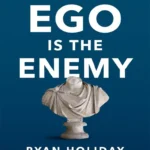
Ego Is the Enemy (2016). A study of how ego sabotages us while we are aspiring, while we are succeeding, and while we are failing, told through historical case studies. Start with our Ego Is the Enemy summary or How Ego Causes Self-Sabotage.
The Daily Stoic (2016, with Stephen Hanselman). A year of 366 short meditations built from Marcus Aurelius, Seneca, Epictetus and others, with new translations and Holiday’s commentary. It reached No. 2 on the Wall Street Journal’s hardcover business list and has sold millions of copies. A tenth anniversary edition with new material came out on October 6, 2026.
Stillness Is the Key (2019). The third book in what many readers call his Stoic trilogy, about quiet, clarity and the ability to hold still in a loud world. It reached No. 1 on the New York Times list. The New York Times has credited Holiday with contributing to the modern rise of Stoicism, a revival that took hold among athletes, founders and Silicon Valley.
The Stoic Virtues Series: Going Deeper
After the trilogy, Holiday took on a larger project: one book for each of the four cardinal Stoic virtues. The series is now complete.
- Courage Is Calling: Fortune Favors the Brave (2021) examines the foundational virtue through leaders historic and contemporary.
- Discipline Is Destiny: The Power of Self-Control (2022) is about temperance in a world of temptation. See our Discipline Is Destiny summary and How to Set Boundaries Without Guilt.
- Right Thing, Right Now: Good Values. Good Character. Good Deeds. (2024) takes on justice: doing what is right even when it costs you.
- Wisdom Takes Work: Learn. Apply. Repeat. (October 2025) is the fourth and final book, on the virtue the others depend on. Read our take in Wisdom Takes Work: Why Philosophy Only Matters When It’s Practiced and How Hardship Builds Character.
The series shows how Holiday has changed as a writer. He is no longer mainly translating ancient advice for modern ambition. He is assembling a framework for a whole life, and one that, as he moves into his forties, spends more time on goodness than on winning. We explore the same shift in Stoic Joy: Recovering the Affirmative Side of an Ancient Philosophy.
The Daily Stoic Ecosystem: Philosophy as a Daily Practice
What separates Holiday from most authors is the machine he built around the books. The Daily Stoic website launched in August 2016 and began as a free daily email. The podcast started as little more than Holiday reading those emails aloud. According to the Daily Stoic’s own figures, the podcast has passed 150 million downloads, the email list is around one million subscribers, and the YouTube channel has about two million. A separate Daily Dad newsletter and podcast applies the same approach to fatherhood, and his monthly Reading List email has been recommending books since 2008.
The common thread is cadence. A short, steady daily dose is easier to absorb than a book you mean to finish someday, and it fits how habits form. If you want to try the practice yourself, start with 12 Daily Stoic Exercises to Build Resilience and Mental Strength or 60 Stoic Lessons for Life From Ryan Holiday and the Daily Stoic.
The Painted Porch, the Ranch and Family Life
In January 2020, Holiday and his wife Samantha put their savings into a 140-year-old building on Main Street in Bastrop, Texas, where they have lived since 2015. Renovations began that spring, in the middle of a pandemic, and The Painted Porch Bookshop opened in 2021. It carries a small, curated shelf of books the team has read and loved. It also doubles as an office and recording space for his podcasts and videos. In mid-July 2026 he opened a small banned books lending library next door, stocked with titles that have faced removal from schools, libraries or other forms of censorship.
He lives with Samantha and their two sons on a 40-acre ranch in Bastrop County, with a small herd of cows, donkeys and goats. It is not philosophical theater. It is a deliberate life close to physical work and the rhythms of the land, which is what the Stoics recommended. Holiday talks openly about how much he loves being a dad, and Stoicism, as he presents it, is not about feeling nothing. It is about not letting your feelings run the show. For more on that distinction, see Male Emotional Intelligence and The Productive Power of Sadness, Fear, and Regret. His fatherhood work connects to our pieces on The Engaged Father and Being Known by Your Children.
Is Ryan Holiday a Real Philosopher? The Criticism
It is worth being straightforward about this, because anyone researching Holiday will run into it. Not everyone is convinced.
In a 2016 New York Times profile, Alexandra Alter described his approach as closer to entrepreneurial self-help than to philosophy, and noted that he turns Stoicism into catchy phrases and digestible stories for ambitious readers. At Stoicon 2016, a conference for academics and practitioners of Stoicism, some attendees reacted skeptically to his keynote. Organizer Massimo Pigliucci, a philosophy professor at City College of New York, recalled people wondering whether what Holiday taught was really Stoicism. Another academic pointed to the tension between his early media-manipulation career and Stoic ideals. In 2024, critics at The Guardian and The Sunday Times were sharper still, arguing that his books pull quotes loosely and attach them to modern examples without a real through-line.
Holiday’s own answer is modest. He has said his books feature Stoicism rather than being works of Stoicism, and that it is very hard for a modern writer to add anything new to the ancient canon. What he can do, he argues, is translate, extrapolate and illustrate. Others have been more generous. The classicist Gregory Hays, whose translation of Meditations is a modern bestseller, has said Holiday’s work is in the spirit of its ancient models and called him a gifted storyteller. Holiday has also been openly political at times, which some readers welcome and others find at odds with the calm they expect from the genre; his view is that Stoicism was never meant as political silence.
We believe both things can be true. Holiday is a popularizer, not an academic, and anyone who wants the ancient texts in depth should read them directly. But the real test of practical philosophy is whether it changes how someone lives, and by that measure millions of readers say it has. The risk is the one we describe in The Self-Help Bookshelf Trap: reading about discipline can quietly stand in for practicing it.
His Core Ideas, in Plain Language
Holiday organizes the Stoic approach around three disciplines. He leans on a short passage from Marcus Aurelius (Meditations 9.6) that asks for clear judgment, unselfish action and willing acceptance of what happens, all of it right now.
- Perception. How you see an event shapes what it becomes. The problem can be the opportunity. Go deeper in The Stoic Discipline of Perception and How Stoicism Turns Obstacles Into Opportunity.
- Action. Act despite uncertainty, difficulty and fear. Virtue is practiced, not theorized. See Why Action Is the Heart of Stoicism.
- Will. Accept what you cannot control and find steadiness inside that acceptance. See Inner Citadel Stoicism.
Two further ideas run through his later work. First, that ego is the quiet saboteur of ambition (Meditate on the Immensity, The Effort Is Enough, Why Talking About Your Goals Makes Success Less Likely). Second, that stillness is a skill you build deliberately, not a mood you wait for. For the wider picture of how this philosophy applies to everyday life, see Stoicism in Modern Life, The Real Stories Behind Stoic Philosophy, and the practical guides on how to respond to insults and how to stay calm when everything falls apart.
Why His Story Matters to Men
Strip away the bestseller lists and three things in Holiday’s story are worth a man’s attention.
You can change direction after building the wrong thing. Holiday was good at a career he came to see as corrosive to his own integrity. He did not pretend otherwise. He wrote the book that told the truth about it, and rebuilt on firmer ground. Telling yourself the truth, even when it costs you a version of your story, is where real change starts.
Hardship is material, not identity. The Stoic claim at the center of The Obstacle Is the Way is that pain is inevitable but what you build from it is up to you. That is a far healthier position than either denying pain or letting it define you.
A good life is built in the physical world. A bookstore with real shelves, a ranch, a family, a daily practice that takes ten minutes. None of it is glamorous, and that is the point. If you are exploring these themes more broadly, start with What Is Masculine Synergy? and the mini course on self-discipline.
Ryan Holiday’s Books in Order
| Year | Book | What it’s about |
|---|---|---|
| 2012 | Trust Me, I’m Lying | Confessions of a media manipulator; how the online media machine really works |
| 2013 | Growth Hacker Marketing | A short primer on data-driven, product-led marketing |
| 2014 | The Obstacle Is the Way | Turning adversity into advantage. Our summary |
| 2016 | Ego Is the Enemy | How ego sabotages us at every stage. Our summary |
| 2016 | The Daily Stoic (with Stephen Hanselman) | 366 daily Stoic meditations; 10th anniversary edition released October 2026 |
| 2017 | Perennial Seller | How to make, and market, work that lasts |
| 2018 | Conspiracy | Peter Thiel, Hulk Hogan and the takedown of Gawker |
| 2019 | Stillness Is the Key | Calm, clarity and focus in a chaotic world |
| 2020 | Lives of the Stoics (with Stephen Hanselman) | The stories of the great Stoics, from Zeno to Marcus Aurelius |
| 2021 | Courage Is Calling | Stoic Virtues #1: courage |
| 2022 | Discipline Is Destiny | Stoic Virtues #2: self-control. Our summary |
| 2023 | The Daily Dad | 366 meditations on parenting and raising great kids |
| 2024 | Right Thing, Right Now | Stoic Virtues #3: justice and good character |
| 2025 | What You’re Made For (with George Raveling) | Life lessons from a Hall of Fame basketball coach |
| 2025 | Wisdom Takes Work | Stoic Virtues #4: wisdom. Our take |
Publisher and retailer bios put his total sales anywhere from more than five million copies to more than ten million, across more than 40 languages, depending on the source and date. The series has also spent over 300 weeks on bestseller lists combined.
Where to Start Reading
- You are facing something hard right now: The Obstacle Is the Way.
- You want a small daily habit: The Daily Stoic, or the free Daily Stoic email.
- Pride, comparison or image management is your sticking point: Ego Is the Enemy.
- You are overstretched and wired: Stillness Is the Key.
- You want the unvarnished origin story: Trust Me, I’m Lying.
- You want a whole-life framework: the four Stoic Virtues books, in order.
If you want to get more from whatever you pick, read How to Read a Book That Actually Changes You first.
Ryan Holiday Timeline
| Year | Milestone |
|---|---|
| 1987 | Born June 16 in Sacramento County, California |
| 2006–07 | Leaves UC Riverside at 19; moves to Los Angeles; discovers Marcus Aurelius; begins working with Robert Greene |
| 2009 | Greene’s The 50th Law is published |
| 2012 | Publishes Trust Me, I’m Lying |
| 2014 | Publishes The Obstacle Is the Way; resigns from American Apparel in October |
| 2015 | Marries Samantha Hoover; settles in Bastrop, Texas |
| 2016 | Ego Is the Enemy and The Daily Stoic; the Daily Stoic website launches in August |
| 2019 | Stillness Is the Key reaches No. 1 on the New York Times list |
| 2020–21 | Buys the building and opens The Painted Porch Bookshop during the pandemic |
| 2021–2025 | Publishes the four Stoic Virtues books |
| 2026 | Stoic Virtues boxed set (May); banned books lending library opens (July); The Daily Stoic 10th anniversary edition (October 6) |
Frequently Asked Questions About Ryan Holiday
Who is Ryan Holiday?
Ryan Holiday is an American author, marketer and Stoicism popularizer born June 16, 1987. A former director of marketing at American Apparel, he wrote The Obstacle Is the Way, Ego Is the Enemy, The Daily Stoic and the four-book Stoic Virtues series, and runs the Daily Stoic newsletter, podcast and YouTube channel.
How old is Ryan Holiday?
Ryan Holiday was born on June 16, 1987, in Sacramento County, California, which makes him 39 years old as of October 2026.
What is Ryan Holiday known for?
He is best known for making Stoic philosophy accessible to a mass audience through books such as The Obstacle Is the Way (2014), Ego Is the Enemy (2016) and The Daily Stoic (2016, with Stephen Hanselman), and through the Daily Stoic newsletter, podcast and YouTube channel. Earlier, he was known for Trust Me, I’m Lying, his 2012 exposé of media manipulation.
Is Ryan Holiday a real philosopher?
Not in the academic sense, and he does not claim to be. Holiday describes his books as featuring Stoicism rather than adding to it, and some scholars question how loosely he uses ancient sources. His supporters point to the practical value of his work and its role in bringing millions of readers to Marcus Aurelius, Seneca and Epictetus.
What is Ryan Holiday’s net worth?
There is no verified figure. Online estimates range from a few million dollars to more than twenty million, and none cite reliable sources. His income comes from book sales, the Daily Stoic media business, speaking, and The Painted Porch Bookshop.
Where does Ryan Holiday live?
Holiday lives on a 40-acre ranch in Bastrop County, outside Austin, Texas, with his wife and two sons. His bookstore, The Painted Porch, is on Main Street in Bastrop.
Who is Ryan Holiday’s wife?
Holiday married Samantha Hoover in 2015. They have two sons and opened The Painted Porch Bookshop together.
Which Ryan Holiday book should I read first?
Most readers start with The Obstacle Is the Way, his clearest statement of the Stoic approach to adversity. If you prefer small daily doses, start with The Daily Stoic; if ego or pride is your sticking point, begin with Ego Is the Enemy.
Did Ryan Holiday really drop out of college?
Yes. He left the University of California, Riverside in his second year, at 19, and became an apprentice to author Robert Greene.
Keep Reading
- The Obstacle Is the Way Summary: Ryan Holiday’s Complete Framework
- Ego Is the Enemy Summary: 25 Essential Lessons From Ryan Holiday
- Discipline Is Destiny Summary: Ryan Holiday’s Guide to Self-Mastery
- Ryan Holiday’s “Wisdom Takes Work”: Why Philosophy Only Matters When It’s Practiced
- How Ryan Holiday Built a Second Brain Using Nothing But Index Cards
- 60 Stoic Lessons for Life From Ryan Holiday and the Daily Stoic
- 12 Daily Stoic Exercises to Build Resilience and Mental Strength
- Stoic Joy: Recovering the Affirmative Side of an Ancient Philosophy
Sources and Further Reading
Facts in this guide were checked against Holiday’s own sites and public reporting, and updated in October 2026.
- RyanHoliday.net, his blog, reading list and archive
- Daily Stoic podcast page, for current audience figures
- Opening a Small-Town Bookstore During the Pandemic, his Texas Monthly essay on The Painted Porch
- CultureMap Austin on the Painted Porch banned books library
- The New York Times: “Ryan Holiday Sells Stoicism as a Life Hack, Without Apology” (2016)
- Ryan Holiday on Wikipedia
This article is an independent profile and is not affiliated with Ryan Holiday or the Daily Stoic.
Related posts:
 The Obstacle Is the Way Summary: Ryan Holiday’s Complete Framework
 Ryan Holiday’s “Wisdom Takes Work”: Why Philosophy Only Matters When It’s Practiced
 How Ego Causes Self-Sabotage: A Practical Framework Inspired by Ryan Holiday
 Ego Is the Enemy Summary: 25 Essential Lessons From Ryan Holiday
 Inner Citadel Stoicism: How to Build the Will to Endure What You Cannot Change