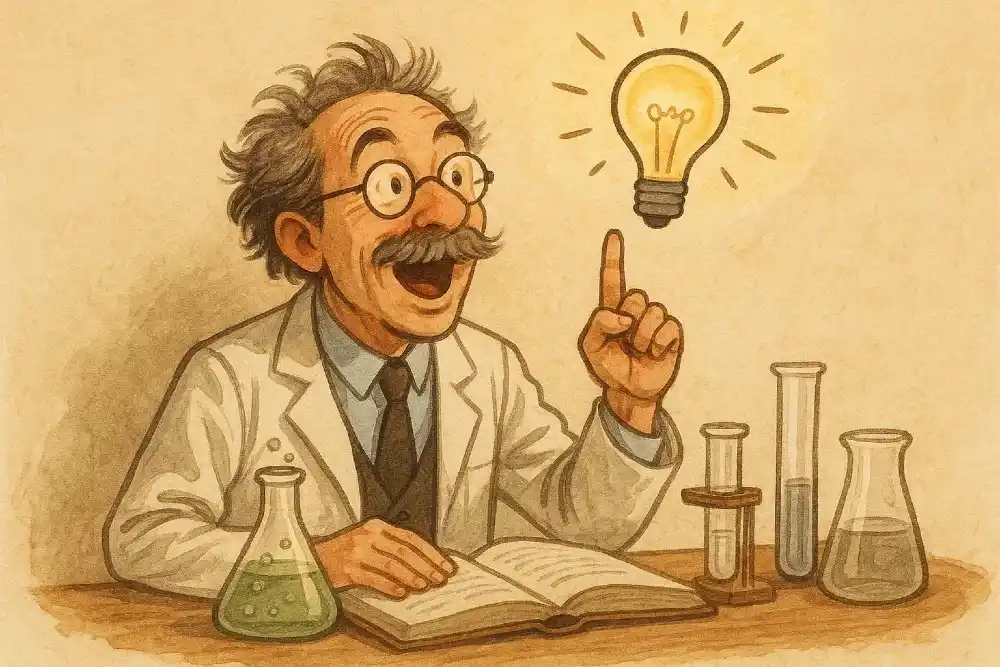
How Sudden Insights Revolutionize Our Understanding of the Natural World
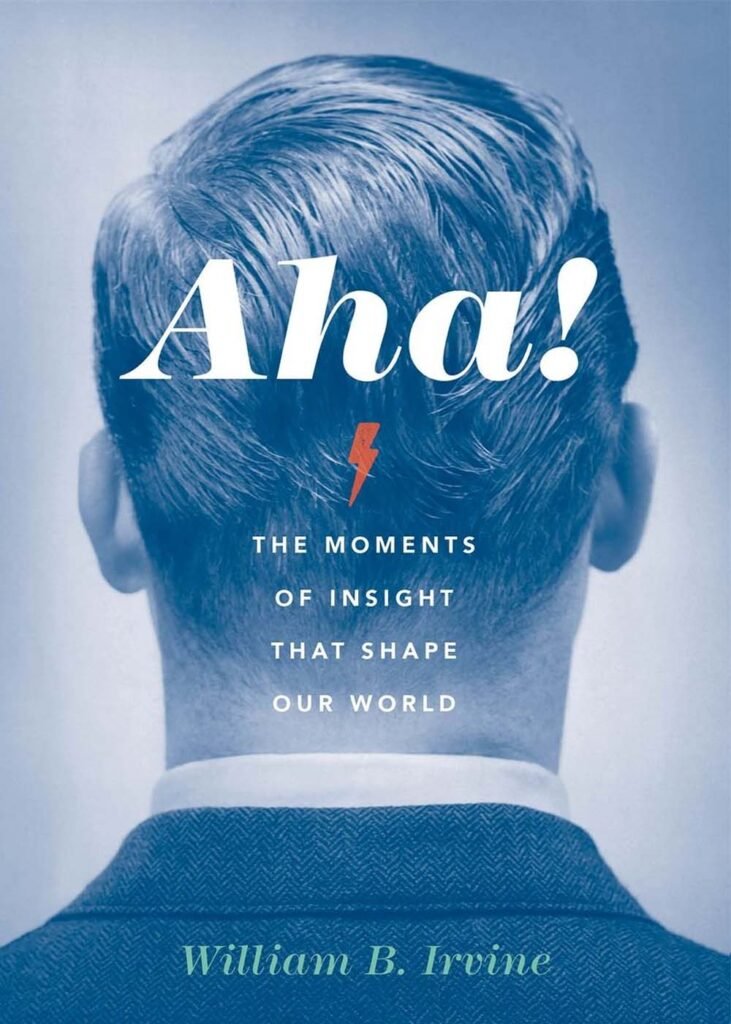
Scientific progress often appears gradual, accumulating through patient observation and methodical experimentation. Yet many of history’s most transformative discoveries emerged in sudden flashes of insight that revolutionized human understanding. In “Aha! The Moments of Insight that Shape Our World,” philosopher William B. Irvine examines how scientists experience these dramatic breakthroughs and why revolutionary ideas so often face fierce resistance from the established scientific community.
Scientific aha moments possess unique characteristics that distinguish them from religious revelations or moral epiphanies. They involve insights about the natural world that can be tested through observation and experiment. When correct, scientific discoveries unlock new understanding that accumulates across generations, expanding human knowledge and technological capability. Yet the path from initial insight to accepted theory often proves surprisingly difficult.
Understanding scientific breakthroughs illuminates both the creative dimensions of research and the human factors that shape scientific progress. Irvine’s Oxford University Press book explores famous examples from Einstein’s relativity to quantum mechanics, revealing patterns in how revolutionary insights emerge and eventually transform scientific understanding.
Einstein’s Revolutionary Insight About Time
At age sixteen, Albert Einstein posed a puzzling question: what would a light beam look like if you could travel alongside it at the speed of light? This thought experiment revealed a fundamental inconsistency in prevailing physics. Physicists assumed time passed at the same rate for everyone regardless of motion. Yet this assumption created paradoxes when combined with what scientists knew about light.
Over the next decade, while working as a patent clerk in Berne, Switzerland, Einstein threw himself into resolving this inconsistency. After a year of intense but fruitless effort, he reached the point of desperation. As a final attempt, he described the problem to his friend Michele Besso during a beautiful spring morning in 1905.
During their conversation, Einstein experienced one of history’s most consequential scientific insights. He later described feeling as though a storm broke loose in his mind. The solution suddenly appeared: he could resolve the inconsistency by abandoning the assumption that time is absolute. Time might pass at different rates for observers moving at different speeds relative to each other.
Einstein went home to develop this insight further. The next day he returned to Besso and, without even greeting his friend, blurted out his breakthrough. Five weeks later, Einstein submitted the paper containing his special theory of relativity, fundamentally transforming physics and our understanding of space and time.
This episode exemplifies several patterns Irvine identifies in “Aha! The Moments of Insight that Shape Our World” regarding scientific breakthroughs. The insight emerged after intense focused work followed by a break in concentration. It arrived suddenly with overwhelming clarity. It resolved puzzles that had frustrated previous efforts. It felt simultaneously surprising and inevitable, as though the solution had been there all along waiting to be recognized.
The Joy and Beauty of Scientific Discovery
Scientists who experience breakthrough insights describe feelings of profound joy and satisfaction. The discovery of natural truths creates aesthetic pleasure comparable to appreciating great art or music. Scientific theories possess elegance and beauty that researchers find deeply fulfilling.
This emotional dimension of scientific insight distinguishes it from mere problem-solving. Scientists don’t simply seek correct answers but experience their discoveries as revelations of nature’s fundamental order and harmony. Mathematical physicist Hermann Weyl captured this sentiment by noting that when forced to choose between truth and beauty, he would always choose beauty because it typically leads to truth.
The pleasure scientists derive from discovery motivates sustained effort despite obstacles and setbacks. Research involves long periods of confusion, dead ends, and frustration punctuated by occasional breakthroughs. The anticipation of experiencing another aha moment drives scientists to persist through difficulties that might otherwise prove discouraging.
Irvine’s analysis reveals how this aesthetic dimension influences theory selection and scientific judgment. When multiple theories explain available evidence equally well, scientists typically favor the more elegant, simple, or beautiful formulation. This preference reflects not mere subjective taste but recognition that nature’s laws tend toward economy and elegance.
Accidental Discoveries and Serendipity
Many significant scientific breakthroughs resulted from accidents, mistakes, or observations made while investigating entirely different questions. Wilhelm Roentgen discovered X-rays while studying cathode rays. Alexander Fleming noticed penicillin’s bacteria-killing properties when mold accidentally contaminated his bacterial cultures. Cosmic microwave background radiation, confirming Big Bang theory, was discovered by researchers investigating radio noise.
These serendipitous discoveries demonstrate that scientific progress involves more than executing predetermined research plans. Breakthrough insights often emerge when scientists notice unexpected results and recognize their significance rather than dismissing them as experimental errors or irrelevant anomalies.
The ability to recognize significant accidents requires both deep knowledge of one’s field and openness to unexpected findings. Scientists must understand existing theories well enough to notice when observations violate predictions. Yet they must also maintain flexibility to consider that anomalies might reveal new phenomena rather than merely experimental mistakes.
As Irvine explores in his book, this combination of expertise and openness proves difficult to maintain. Deep immersion in established frameworks makes it harder to imagine radical alternatives. Yet without thorough knowledge, researchers cannot recognize which observations genuinely challenge existing understanding versus reflecting normal variations or experimental errors.
The Problem of Scientific Paradigms
Thomas Kuhn’s influential analysis of scientific revolutions illuminates why new insights often face resistance from established researchers. Scientific fields operate within paradigms, shared frameworks of assumptions, methods, and theories that define legitimate questions and acceptable answers. These paradigms enable efficient normal science but also create blindness to revolutionary alternatives.
Scientists working within a paradigm invest years mastering its concepts, methods, and applications. Their professional status, research programs, and teaching all presume the paradigm’s validity. Revolutionary insights that challenge core paradigmatic assumptions therefore threaten scientists’ intellectual investments and professional identities.
This dynamic explains why breakthrough insights frequently encounter fierce opposition from established researchers. Scientists dismissing revolutionary theories often do so not from careful evaluation but from inability to escape their paradigmatic assumptions. They literally cannot see what the revolutionary insight reveals because their conceptual frameworks block recognition.
Irvine documents numerous examples of this pattern. Continental drift theory, proposed by Alfred Wegener, faced decades of ridicule from geologists despite supporting evidence. The idea that ulcers resulted from bacterial infection rather than stress met fierce resistance from medical researchers. Vera Rubin’s observations suggesting dark matter’s existence were initially dismissed by cosmologists.
When Science Advances Through Generational Change
One of Kuhn’s most disturbing observations involved recognizing that scientific progress often requires waiting for older researchers to retire or die. Revolutionary theories gain acceptance not because established scientists change their minds but because younger researchers adopt new paradigms while older generations maintain commitment to discredited frameworks.
This generational pattern appears repeatedly in scientific history. Quantum mechanics gained acceptance as physicists educated in classical physics retired. Plate tectonics theory became mainstream as geologists who ridiculed continental drift left the field. Evolutionary theory’s acceptance correlated with demographic changes in biological sciences.
The implications prove sobering for understanding scientific progress. Rather than representing pure rational inquiry that follows evidence wherever it leads, science involves human factors like status, identity, and cognitive inflexibility that impede recognition of revolutionary insights. Scientific communities advance not just through logical persuasion but through demographic turnover.
Irvine’s analysis encourages realistic understanding of how science actually progresses versus idealized accounts. While evidence and argument matter, social and psychological factors significantly influence how quickly new insights gain acceptance. Effective scientific revolutionaries must navigate these human dimensions rather than assuming pure reason will triumph.
The Role of Unconscious Processing
Scientific breakthroughs often occur during periods of rest or distraction following intense focused work. This pattern suggests unconscious mental processes play crucial roles in generating insights. After conscious analysis fails to solve problems, unconscious processing continues working and occasionally produces solutions that burst into awareness as aha moments.
Einstein’s breakthrough about relativity occurred not during focused calculation but while conversing with his friend. Henri Poincaré’s mathematical insights emerged while boarding a bus during a leisure trip. Otto Loewi dreamed the experiment that revealed how nerve impulses transmit through chemical synapses. These examples illustrate how stepping away from direct problem-solving can facilitate breakthrough insights.
The mechanisms underlying unconscious problem-solving remain mysterious. Unlike conscious thought, which proceeds through logical steps we can observe, unconscious processing operates beyond awareness. Solutions appear suddenly in consciousness without revealing how they were generated. This opacity frustrates attempts to optimize creative thinking but doesn’t prevent recognizing patterns in when breakthroughs tend to occur.
Effective researchers learn to alternate between focused work and strategic breaks. Intense effort establishes the problem thoroughly in both conscious and unconscious mind. Periods of rest or distraction then allow unconscious processing to explore possibilities without conscious interference. This rhythm maximizes opportunities for breakthrough insights while maintaining productive engagement with research problems.
Dealing With Rejection and Ridicule
Revolutionary scientific insights typically face skepticism, ridicule, and rejection from established researchers. Scientists proposing paradigm-challenging theories must persist despite professional consequences that can include damaged reputations, difficulty publishing results, and inability to secure research funding.
The history of science contains numerous examples of correct theories facing fierce opposition. Barbara McClintock’s discovery of genetic transposition was dismissed for years before eventually earning her a Nobel Prize. Ignaz Semmelweis’s evidence that handwashing prevented disease was ridiculed by medical colleagues. Lynn Margulis’s endosymbiotic theory of cellular evolution faced rejection from mainstream biologists.
These experiences prove emotionally devastating for scientists whose insights are dismissed. The combination of absolute conviction in one’s findings with professional rejection creates intense frustration and isolation. Some researchers become embittered by their treatment. Others abandon correct theories rather than continue facing opposition.
Irvine’s book explores strategies scientists employ to cope with rejection. Some engage in what he calls stealth publishing, placing revolutionary ideas in obscure journals or publications where they escape immediate criticism while establishing priority for the discovery. Others build alliances with younger researchers more open to new ideas. Many simply persist with patience and faith that evidence will eventually compel recognition.
The Importance of Keeping an Open Mind
While expertise proves essential for scientific discovery, excessive commitment to existing theories prevents recognition of revolutionary alternatives. The most productive scientific mindset combines thorough knowledge of established frameworks with willingness to question fundamental assumptions when evidence warrants.
Cultivating this openness requires conscious effort because human cognition naturally seeks confirmation of existing beliefs rather than evidence against them. Scientists must actively fight confirmation bias, motivated reasoning, and conceptual rigidity that prevent fair evaluation of challenging ideas. This proves especially difficult when personal and professional stakes attach to defending established theories.
Effective scientists develop practices that maintain openness despite these pressures. They seek out criticism and contrary evidence rather than avoiding it. They engage seriously with alternative theories even when initially skeptical. They recognize that their intuitions and assumptions might prove wrong. They remember that many revolutionary insights initially appeared absurd before evidence compelled their acceptance.
Institutional practices can support or undermine scientific openness. Anonymous peer review, replication studies, and diverse research communities all help prevent premature dismissal of valuable insights. Conversely, excessive deference to authority, harsh treatment of unconventional ideas, and lack of funding for exploratory research all impede revolutionary discoveries.
The Interplay of Theory and Experiment
Scientific breakthroughs involve both theoretical insights and experimental discoveries. Theory organizes observations into coherent frameworks that explain existing evidence and predict new phenomena. Experiments test theoretical predictions and reveal unexpected facts requiring theoretical explanation. Progress requires both dimensions working together.
Some breakthroughs emerge primarily from theoretical reasoning. Einstein’s relativity developed largely through thought experiments and mathematical analysis rather than new experimental data. His insights reorganized existing knowledge into revolutionary frameworks that later experiments confirmed.
Other breakthroughs result from experimental discoveries that challenge or extend theoretical understanding. The discovery of cosmic microwave background radiation provided unexpected evidence for Big Bang cosmology. Observations of galactic rotation curves revealed dark matter’s existence. These experimental findings forced theoretical revisions and stimulated new research directions.
The most significant advances often involve the interplay between theory and experiment. Theoretical insights suggest what to look for experimentally. Experimental results confirm, challenge, or refine theoretical predictions. This dynamic interaction drives scientific progress forward through accumulated understanding.
Why Scientific Insights Feel Inevitable
A curious feature of scientific breakthroughs involves their seeming inevitability after discovery. Solutions that appeared impossible to find before the aha moment feel obvious afterward. This retrospective clarity creates the impression that discoveries were simply waiting to be made rather than requiring genuine creative insight.
This feeling reflects multiple factors. Correct scientific theories possess elegance and simplicity that makes them appear natural and inevitable. They resolve previously puzzling inconsistencies so effectively that the resolution feels like it must be true. They generate new predictions and applications that couldn’t have been anticipated without the insight.
Additionally, once a breakthrough occurs, scientific understanding reorganizes around the new framework. Textbooks present the theory as though its development followed logical progression rather than creative leaps and false starts. Students learn the final polished version without experiencing the confusion and struggle that preceded its discovery.
Irvine notes that this retrospective bias obscures the genuinely creative dimensions of scientific insight. Revolutionary theories don’t emerge inevitably from available evidence but require imaginative leaps that transcend logical deduction from known facts. Appreciating this creative element helps maintain appropriate humility about current scientific understanding and openness to future revolutions.
Cultivating Scientific Creativity
While breakthrough insights cannot be forced or predicted, certain practices create favorable conditions for scientific discovery. Deep immersion in one’s field provides the knowledge base essential for recognizing significant patterns and anomalies. Scientists must master existing theories thoroughly before transcending them.
Sustained focus on specific problems allows both conscious and unconscious mental processes to engage fully. Superficial attention rarely generates breakthrough insights. Instead, researchers must wrestle intensely with puzzles until the problems become thoroughly internalized.
Strategic breaks from direct problem-solving create opportunities for unconscious processing to operate. After periods of intense focus, deliberately shifting attention allows fresh perspectives to emerge. Many scientists report experiencing insights during walks, conversations, or activities unrelated to their research.
Collaboration and discussion help externalize thinking and expose hidden assumptions. Explaining problems to others, defending ideas against criticism, and considering alternative perspectives all contribute to deeper understanding that can trigger insights. Einstein’s breakthrough occurred while describing his problem to Michele Besso, not during solitary calculation.
Conclusion: The Continuing Evolution of Scientific Understanding
William B. Irvine’s exploration of scientific aha moments in “Aha! The Moments of Insight that Shape Our World” reveals both the remarkable power of human insight and the surprisingly human obstacles facing revolutionary ideas. Scientific progress depends on individuals willing to question established frameworks, persist despite rejection, and maintain openness to radical possibilities.
Understanding scientific breakthroughs illuminates the creative dimensions of research that complement its methodical aspects. Scientists function not merely as careful observers but as imaginative theorists who experience flashes of insight reorganizing human understanding. These creative leaps drive the revolutionary advances that periodically transform science.
For anyone interested in scientific discovery, creativity, or how knowledge advances, examining scientific aha moments provides essential perspective. Irvine’s analysis offers both historical examples and conceptual frameworks for understanding how insights emerge, why they face resistance, and how they eventually transform scientific understanding and human civilization.
The study of scientific breakthroughs ultimately demonstrates that progress requires both rigorous methodology and creative imagination, both critical evaluation and openness to possibilities, both individual insight and community validation. These balanced tensions drive the ongoing evolution of scientific knowledge that continues revealing nature’s mysteries and expanding human capability.
Related posts:
 Aha Moments Explained: The Science Behind Sudden Insights That Changed History
 25 Transformative Insights from “Aha! The Moments of Insight that Shape Our World” by William B. Irvine
 Mathematical Eureka Moments: Understanding the Aha Insights That Unlock Eternal Truths
 The Unconscious Mind and Creativity: Where Your Best Ideas Actually Come From
 How Moral Awakenings Spark Social Change: The Psychology Behind Sudden Ethical Insight