
Understanding the Power of Sudden Insight and Discovery
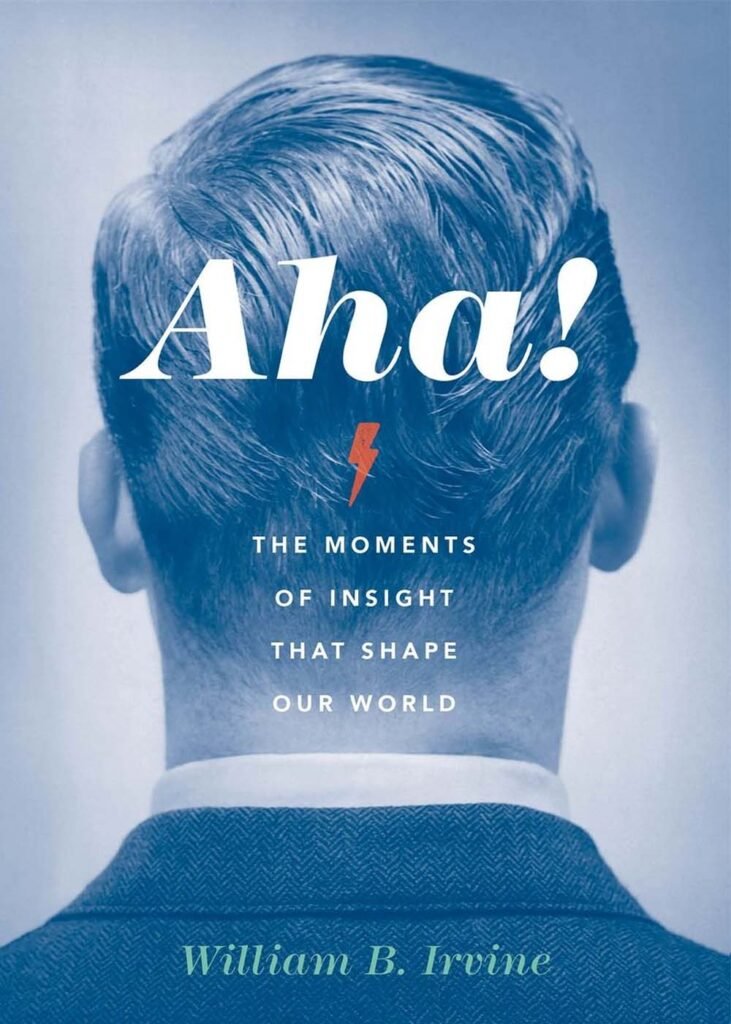
Have you ever experienced that electric moment when everything suddenly clicks? That instant clarity when a solution appears out of nowhere, transforming confusion into understanding? William B. Irvine’s groundbreaking book “Aha! The Moments of Insight that Shape Our World” explores these powerful experiences that have shaped human history, from religious revelations to scientific breakthroughs, moral awakenings to mathematical discoveries.
Published by Oxford University Press, Irvine’s work examines the aha moment across five crucial domains: religion, morality, science, mathematics, and the arts. Through compelling stories and rigorous analysis, he reveals how these sudden flashes of insight have revolutionized human thinking and altered the course of civilization.
What Makes an Aha Moment So Powerful
Aha moments represent more than simple problem-solving. They embody a fundamental shift in perspective that occurs suddenly and often unexpectedly. These insights arrive with remarkable clarity and conviction, feeling simultaneously surprising and inevitable. The experience transcends mere logical deduction, engaging both conscious reasoning and unconscious processing in ways that scientists and philosophers continue to explore.
In “Aha! The Moments of Insight that Shape Our World,” Irvine demonstrates how these experiences share common characteristics regardless of the field in which they occur. Whether Albert Einstein grasping the nature of time or Thomas Clarkson recognizing the moral catastrophe of slavery, aha moments possess an unmistakable quality that distinguishes them from ordinary understanding.
The book reveals how these insights often emerge during periods of relaxation or distraction, after intense focused work. French mathematician Henri Poincaré experienced his breakthrough insight about Fuchsian functions while stepping onto a bus during a geological excursion. Composer Gustav Mahler found the missing piece of his Seventh Symphony at the first stroke of oars while crossing a lake. These patterns suggest the unconscious mind continues working on problems even when conscious attention shifts elsewhere.
Religious Revelations and Spiritual Awakenings
The first section of Irvine’s exploration examines aha moments in religion, where sudden insights have founded faiths and transformed billions of lives. Religious revelations possess unique characteristics that distinguish them from other forms of insight. They often involve sensory experiences, visions, or direct communication with divine beings, creating profound personal transformations that reshape believers’ entire worldviews.
Irvine analyzes famous religious revelations throughout history, examining figures like Joseph Smith, whose visions led to the founding of the Mormon Church, and Saul of Tarsus, whose dramatic conversion on the road to Damascus transformed him into Paul the Apostle. The book explores how these individuals struggled to communicate their experiences to skeptical audiences and establish the legitimacy of their insights.
The challenge facing religious visionaries centers on verification. Unlike mathematical proofs or scientific experiments, religious revelations cannot be independently tested or replicated. Believers must rely on faith and personal conviction, while skeptics question whether these experiences represent genuine divine communication or merely hallucinations and psychological phenomena.
Moral Epiphanies That Changed Society
Moral aha moments possess special significance because they drive social transformation and justice movements. Irvine dedicates substantial attention to moral epiphanies, exploring how individuals suddenly recognize injustices they previously accepted or ignored. These insights combine intellectual understanding with emotional recognition, creating powerful motivations for action and reform.
The story of Thomas Clarkson exemplifies the transformative power of moral insight. While researching an essay on slavery at Cambridge University, Clarkson experienced a profound awakening to the horrors of the slave trade. This initial recognition intensified during a horseback ride between Cambridge and London, culminating in his realization that someone must dedicate themselves to ending this injustice. Clarkson threw himself into the abolitionist movement, becoming one of its most influential leaders and helping bring about the end of the British slave trade.
Moral reformers face unique challenges when sharing their insights. Established social norms and economic interests create resistance to moral progress. People who benefit from unjust systems naturally resist changes that threaten their advantages. Additionally, moral insights often require others to acknowledge complicity in wrongdoing, creating psychological barriers to acceptance.
Scientific Breakthroughs and Paradigm Shifts
Scientific aha moments illuminate mysteries of the natural world and advance human knowledge. Irvine examines how scientists experience these insights and the obstacles they encounter when presenting revolutionary ideas to the scientific community. The book reveals that scientific progress rarely follows smooth, linear paths. Instead, breakthroughs emerge through sudden insights that often challenge prevailing theories and assumptions.
Einstein’s development of relativity theory demonstrates the dramatic nature of scientific aha moments. After struggling for a year to resolve inconsistencies in physics regarding the nature of light and time, Einstein experienced a breakthrough during a conversation with his friend Michele Besso. The realization that time might not be absolute struck him with tremendous force. He described feeling as though a storm broke loose in his mind, and the next day announced he had completely solved the problem.
Scientific insights frequently face rejection from the established scientific community. Researchers who challenge dominant paradigms encounter skepticism, criticism, and sometimes outright hostility from colleagues invested in existing theories. Irvine explores how scientific progress often requires older generations of scientists to retire or die before revolutionary ideas gain acceptance, a sobering reality that highlights the human factors influencing scientific advancement.
Mathematical Moments of Pure Insight
Mathematics provides perhaps the clearest examples of aha moments because mathematical truths exist independently of physical reality. When mathematicians experience insights, they describe feelings of discovering eternal truths that were always there, waiting to be found. These moments combine intellectual rigor with aesthetic beauty, creating experiences that mathematicians describe as deeply satisfying and even transcendent.
Poincaré’s famous account of his mathematical breakthrough illustrates the mysterious nature of these insights. After working intensely on problems involving Fuchsian functions, he took a break to go on a geological excursion. While stepping onto a bus, the solution appeared suddenly and completely, seemingly without connection to his previous conscious thoughts. The insight arrived with such clarity and certainty that Poincaré knew immediately it was correct.
The role of incubation proves crucial in mathematical discovery. Irvine explores how mathematicians alternate between periods of intense focused work and deliberate rest, allowing their unconscious minds to process problems and generate solutions. This pattern suggests that optimal problem-solving involves strategic disengagement as much as sustained effort, a lesson applicable far beyond mathematics.
Artistic Inspiration and Creative Breakthroughs
Artists experience aha moments differently than scientists or mathematicians because artistic creation involves subjective judgment rather than objective truth. Composers, writers, and visual artists describe receiving inspiration in sudden flashes, but they also engage in extensive trial and error, refining their visions through deliberate craft and revision.
Mahler’s experience completing his Seventh Symphony exemplifies artistic inspiration. After struggling unsuccessfully for weeks, the breakthrough arrived unexpectedly during a boat ride. At the first stroke of the oars, the missing musical theme appeared fully formed in his mind, allowing him to complete multiple movements rapidly. This spontaneous creative gift demonstrates how artistic aha moments can dissolve creative blocks and enable productivity.
However, Irvine emphasizes that artistic creation involves more than waiting for inspiration. Professional artists develop disciplined work habits and techniques for managing their creative processes. They learn to work productively even without inspiration and to recognize valuable ideas when they emerge. The book explores how artists balance spontaneous creativity with deliberate craftsmanship, combining aha moments with sustained effort.
The Unconscious Mind’s Hidden Contributions
Throughout “Aha! The Moments of Insight that Shape Our World,” Irvine emphasizes the crucial role of unconscious mental processes in generating insights. The most dramatic aha moments typically occur when conscious attention shifts away from a problem, suggesting that the unconscious mind works most effectively without interference from conscious deliberation.
This pattern appears consistently across domains. Einstein’s breakthrough came after describing his problem to a friend rather than continuing to work on it directly. Poincaré’s insight emerged while boarding a bus during a leisure trip. Mahler’s musical theme arrived while being rowed across a lake. These examples suggest that optimal creative thinking requires alternating between focused effort and strategic disengagement.
The book explores theories about how unconscious processing generates insights. Unlike conscious thought, which follows logical steps sequentially, unconscious processing appears to work through vast associative networks, making unexpected connections between seemingly unrelated ideas. When unconscious processing discovers promising solutions, they burst into consciousness as aha moments, arriving with feelings of certainty and clarity.
Overcoming Resistance and Rejection
One of the book’s most valuable contributions involves examining how people respond when others experience insights. Irvine reveals that aha moments frequently encounter skepticism, resistance, and outright rejection from those who have not shared the experience. This resistance appears across all domains, from religious skeptics questioning divine revelations to scientists dismissing revolutionary theories.
The problem stems partly from the subjective nature of aha moments. The person experiencing the insight feels absolute certainty about its validity, but this conviction cannot be easily transferred to others. Religious visionaries cannot prove their visions were genuine rather than hallucinations. Moral reformers cannot force others to share their ethical awakenings. Scientists must convince skeptical colleagues through evidence and argument rather than transmitting their intuitive certainty.
Additionally, aha moments often threaten established interests and beliefs. Religious revelations challenge existing faiths. Moral insights condemn accepted practices. Scientific breakthroughs overturn established theories. Mathematical discoveries force revisions of foundations. Artistic innovations violate traditional standards. Those invested in existing systems naturally resist changes that diminish their authority, status, or understanding.
Cultivating Conditions for Insight
While aha moments cannot be forced or predicted, Irvine suggests ways to create favorable conditions for insights to emerge. The book emphasizes the importance of deep immersion in problems before expecting breakthroughs. Superficial engagement rarely generates significant insights. Instead, individuals must thoroughly understand their fields and invest substantial effort before unconscious processing can produce valuable solutions.
The strategic use of incubation periods proves equally important. After intense focused work, deliberately shifting attention allows unconscious processing to operate. Taking breaks, engaging in different activities, and allowing time for rest create opportunities for insights to surface. Many of history’s most important aha moments emerged during these transitional periods rather than during focused work sessions.
Maintaining openness to unexpected ideas represents another crucial factor. Insights often challenge existing assumptions and beliefs, requiring willingness to question established understanding. Scientists must consider theories that contradict prevailing paradigms. Moral thinkers must recognize injustices embedded in familiar social structures. Mathematicians must explore unconventional approaches. Artists must venture beyond traditional techniques. Rigid adherence to existing frameworks prevents recognition of revolutionary insights.
Why Understanding Aha Moments Matters
Irvine’s exploration of aha moments illuminates fundamental aspects of human cognition and creativity. Understanding how insights emerge helps individuals optimize their thinking processes and problem-solving approaches. The book demonstrates that effective thinking involves more than sustained rational analysis. It requires strategic engagement with unconscious mental processes and cultivation of conditions favorable to sudden breakthroughs.
The broader implications extend beyond individual productivity to encompass social progress and cultural evolution. Human civilization advances through accumulated insights that transform understanding and capability. Religious revelations shape spiritual traditions. Moral epiphanies drive social justice movements. Scientific breakthroughs expand knowledge of nature. Mathematical discoveries establish new foundations. Artistic innovations enrich cultural expression.
By examining these transformative moments across diverse domains, Irvine reveals universal patterns in how humans generate and recognize valuable insights. The book bridges scientific understanding of cognition with philosophical reflection on creativity, offering readers practical wisdom alongside intellectual stimulation.
Applying Insights From This Book
“Aha! The Moments of Insight that Shape Our World” provides valuable guidance for anyone seeking to enhance their creative and problem-solving capabilities. The book teaches that optimal thinking requires balancing focused effort with strategic rest, engaging both conscious analysis and unconscious processing. Readers learn to recognize conditions that facilitate insights and to structure their work accordingly.
The book also prepares readers for the challenges of introducing innovative ideas to others. Understanding that resistance and skepticism represent normal responses to aha moments helps innovators persist despite initial rejection. The historical examples demonstrate that many of humanity’s most valuable insights initially encountered fierce opposition before eventual acceptance.
Perhaps most importantly, Irvine’s work cultivates appreciation for the mysterious and powerful nature of human insight. Aha moments represent something profound about human consciousness and its capacity to transcend ordinary understanding. Whether through religious revelation, moral awakening, scientific discovery, mathematical proof, or artistic creation, these experiences illuminate the remarkable capabilities of the human mind.
Conclusion: The Enduring Value of Sudden Insight
William B. Irvine’s “Aha! The Moments of Insight that Shape Our World” stands as a comprehensive exploration of one of humanity’s most distinctive and valuable capabilities. By examining aha moments across religion, morality, science, mathematics, and the arts, the book reveals both the universal patterns underlying these experiences and the unique characteristics each domain exhibits.
The insights from this work extend far beyond academic interest. They offer practical guidance for optimizing creative thinking, understanding resistance to innovation, and appreciating the complex interplay between conscious and unconscious mental processes. For anyone interested in creativity, problem-solving, innovation, or human cognition, this book provides essential reading that illuminates how sudden insights have shaped and continue to shape human civilization.
Related posts:
 Mathematical Eureka Moments: Understanding the Aha Insights That Unlock Eternal Truths
 25 Transformative Insights from “Aha! The Moments of Insight that Shape Our World” by William B. Irvine
 The Unconscious Mind and Creativity: Where Your Best Ideas Actually Come From
 Whay Is The Eureka Effect: How Aha Moments Drive Scientific Breakthroughs and Paradigm Shifts
 How Moral Awakenings Spark Social Change: The Psychology Behind Sudden Ethical Insight