
Why do men, on average, report stronger desire for sexual variety?
Why do studies consistently show that men are more open to casual sex?
Why can a man deeply love his partner and still feel attraction to others?
These questions often trigger moral debate. But evolutionary psychology approaches them structurally.
The focus keyphrase here — why men want sexual variety evolutionary psychology — points to a specific explanatory framework.
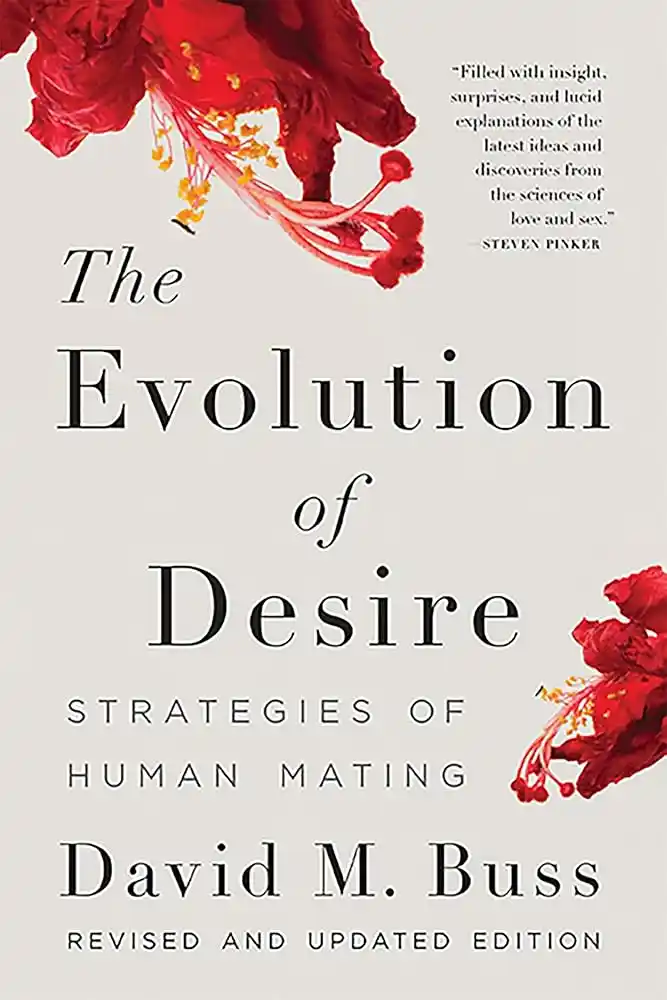
In The Evolution of Desire, David M. Buss presents decades of cross-cultural research showing that men consistently express greater interest in short-term mating opportunities than women.
He writes:
“Men, more than women, desire sexual variety.”
This is not accusation.
It is observation.
Understanding why men want sexual variety through evolutionary psychology helps separate instinct from character.
And that distinction matters.
The Evolutionary Foundation of Male Sexual Variety
To understand why men want sexual variety, we must revisit reproductive asymmetry.
Historically:
Women invested heavily in pregnancy and childcare.
Men could, in theory, reproduce with minimal biological cost at conception.
Because male reproductive success was limited primarily by access to fertile partners, men who pursued multiple mating opportunities potentially increased their genetic spread.
Over generations, psychological mechanisms supporting sexual variety were selected for.
Buss describes human mating psychology as a “repertoire of strategies.”
Male short-term mating strategy includes:
- Attraction to novelty
- Lower threshold for sexual access
- Interest in multiple partners
This does not mean every man pursues these impulses.
It means the architecture exists.
Cross-Cultural Evidence
Research across cultures reveals consistent patterns:
- Men report more lifetime desired sexual partners.
- Men are more willing to engage in sex after brief acquaintance.
- Men fantasize more frequently about multiple partners.
These patterns persist across industrialized and traditional societies.
The consistency suggests deep evolutionary roots.
Importantly, average differences do not eliminate overlap.
Many women desire variety.
Many men prioritize monogamy.
But statistically, the pattern remains robust.
Sexual Variety vs Emotional Attachment
Why men want sexual variety evolutionary psychology does not imply lack of emotional capacity.
Humans evolved pair-bonding systems alongside short-term mating systems.
Men can:
- Love deeply
- Invest heavily
- Commit long-term
While still experiencing attraction to novelty.
These systems coexist.
Evolution favored flexibility.
The presence of desire does not determine behavior.
Character determines behavior.
The Coolidge Effect
One biological explanation for male novelty desire is the Coolidge effect.
Observed in multiple mammalian species, the Coolidge effect describes renewed sexual interest when introduced to a new partner.
This phenomenon reflects neurochemical reward systems.
Novelty increases dopamine activation.
From an evolutionary standpoint, novelty historically increased reproductive opportunity.
Modern society magnifies this.
Digital platforms provide endless novelty exposure.
This constant stimulation can dysregulate natural systems.
Understanding the Coolidge effect contextualizes male desire without excusing impulsivity.
Why Women Show Less Desire for Variety
Women also evolved short-term mating strategies, but these are typically more selective.
Because pregnancy carried high cost, indiscriminate short-term mating was riskier for women.
Thus, female short-term mating often occurs conditionally — for example, when genetic quality cues are strong.
Male short-term desire, by contrast, required less threshold historically.
This difference explains why men report greater interest in sexual variety on average.
Again, these are trends.
Not rules.
Modern Amplification of Male Variety Desire
Modern technology amplifies novelty exposure dramatically.
Dating apps.
Social media.
Pornography.
Entertainment culture.
All stimulate novelty systems.
Evolutionary psychology did not anticipate infinite accessible novelty.
The male brain evolved in small tribal environments.
Today’s digital landscape overstimulates novelty circuits.
This increases:
- Restlessness
- Comparison
- Dissatisfaction
The instinct for variety becomes hyperactivated.
Without discipline, this undermines long-term bonding.
Commitment and the Male Internal Conflict
Many men experience tension between sexual novelty and long-term commitment.
This tension is not hypocrisy.
It reflects dual mating systems.
Short-term system seeks variety.
Long-term system seeks stability and legacy.
Maturity involves integrating these systems.
Suppressing desire entirely creates repression.
Indulging desire impulsively creates instability.
The middle path requires conscious choice.
Evolution explains temptation.
Integrity governs action.
Masculinity and Sexual Discipline
Understanding why men want sexual variety evolutionary psychology clarifies impulse.
But masculinity is not defined by impulse.
It is defined by regulation.
Sexual discipline strengthens long-term bonding.
Commitment transforms desire into loyalty.
A man who understands his biology without being ruled by it develops grounded strength.
Impulse unexamined leads to chaos.
Impulse understood leads to mastery.
Infidelity and Sexual Variety
Male desire for variety increases vulnerability to infidelity.
However, infidelity is not inevitable.
Evolutionary psychology describes risk factors, not destiny.
High-status men with greater opportunity face stronger temptation.
Opportunity interacts with impulse.
Character moderates both.
Buss’s research shows that mate guarding and jealousy evolved partly to counter short-term mating impulses.
Mating systems evolved with checks and balances.
Understanding this interplay deepens relational awareness.
Cultural Norms and Moral Systems
Societies historically developed moral systems emphasizing monogamy.
Why?
Because stable pair bonds increase social order and child stability.
Cultural rules often function as counterbalances to biological impulses.
Evolutionary psychology explains instinct.
Culture shapes restraint.
Healthy societies integrate both.
Pornography and Artificial Novelty
Pornography intensifies sexual variety stimulation.
It presents endless new partners visually.
This exaggerates novelty drive.
Repeated exposure can recalibrate reward thresholds.
Men may find real-world intimacy less stimulating.
Understanding the evolutionary novelty mechanism highlights why moderation matters.
Novelty is powerful.
Artificial novelty is hyper-powerful.
Conscious boundaries protect bonding systems.
Criticisms and Misinterpretations
Some critics argue evolutionary explanations excuse bad behavior.
That is misunderstanding.
Explaining why men want sexual variety evolutionary psychology does not justify betrayal.
It explains temptation.
Moral responsibility remains intact.
Others argue culture fully determines desire.
But cross-cultural consistency suggests underlying biological architecture.
The mature stance integrates both.
Frequently Asked Questions
Why do men want sexual variety according to evolutionary psychology?
Because historically, male reproductive success increased with access to multiple fertile partners, selecting for novelty-seeking tendencies.
Do all men want multiple partners?
No. These are statistical trends. Individual differences are significant.
Can men be monogamous?
Yes. Humans evolved pair-bonding systems alongside short-term mating systems.
Is sexual variety desire unnatural?
No. It is evolutionarily rooted. Acting on it destructively, however, remains a choice.
Does modern society increase male desire for variety?
Yes. Digital novelty exposure intensifies evolved novelty systems.
Conclusion: Instinct Does Not Equal Destiny
Why men want sexual variety evolutionary psychology provides clarity.
Men evolved novelty-seeking mechanisms.
But evolution does not eliminate agency.
A mature man acknowledges desire without being controlled by it.
He builds loyalty not because instinct disappears — but because character guides him.
Instinct explains tension.
Integrity resolves it.
Related posts:
 Short-Term vs Long-Term Mating Strategies: An Evolutionary Psychology Guide
 Evolutionary Mating Psychology: The Science of Human Desire
 The Complete Guide to Evolutionary Mating Psychology: How Our History Affects Attraction, Desire, and Human Relationships
 Understanding Why Men Are Walking Away From Modern Dating and Relationships and The Rise of MGTOW movement
 Male vs Female Mate Preferences: Evolutionary Psychology Explained