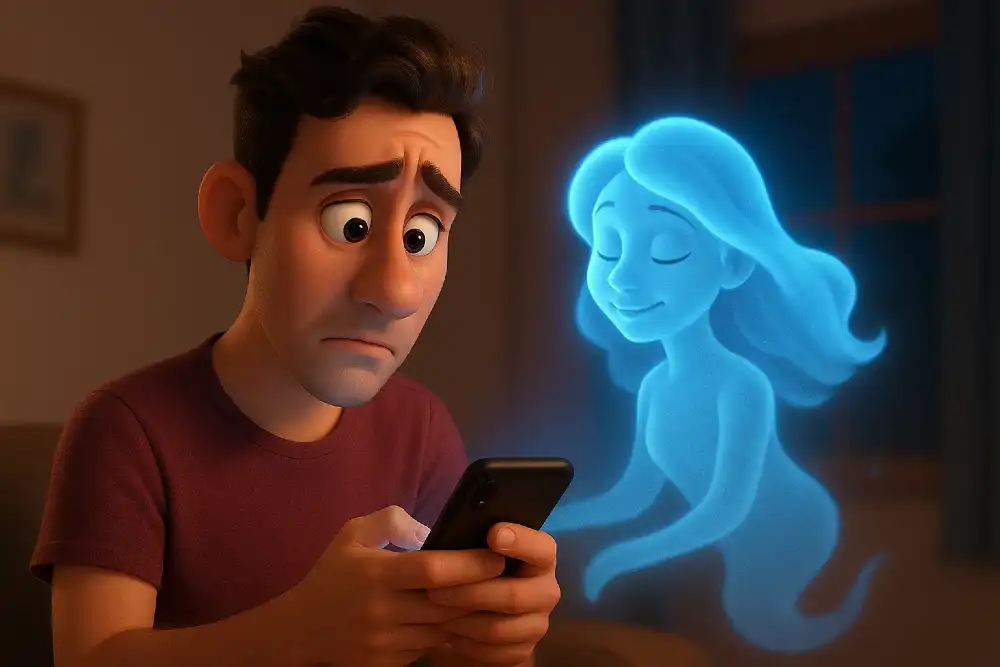
Discover soft ghosting in modern dating: When someone likes your messages instead of replying, creating ambiguity and passive disengagement. Uncover signs, psychology of avoidance, real examples, emotional impacts, red flags, and expert strategies to handle, respond, or walk away for clearer connections.
What Is Soft Ghosting?
You send her a thoughtful text about something meaningful—maybe asking how her day went, suggesting plans for the weekend, or sharing something you thought she’d find interesting. You see the three dots appear. You wait. Then instead of an actual response, you get a heart reaction. That’s it. Just a like on your message with no actual reply. Days go by. You try again. Another message, another like. No words, no engagement, just digital acknowledgment that leaves you wondering: Is this a response? Am I being ignored? What am I supposed to do with a heart emoji? Welcome to soft ghosting—the passive-aggressive middle ground between engagement and disappearance that somehow manages to be more frustrating than both.
Quick Definition
Soft ghosting is essentially when someone likes your last message but never actually says anything—technically, they did respond so they can maintain plausible deniability that they’ve ghosted you HuffPost. It’s when someone heart-reacted to your message instead of replying—you’re not being ignored exactly, but you’re definitely not getting actual engagement either PEDESTRIAN.TV.
Credible Source Quote
Soft ghosting is the slow fade, the art of disengaging without fully disappearing—it’s when someone stops replying in a meaningful way but still offers minimal interaction, like liking your message or reacting to a post with an emoji Daniel Dashnaw Couple Therapy. Dating expert Hayley explains that soft ghosting starts gradually and soon communication drops to occasionally commenting on your Instagram stories, until finally your messages are just met with a like or an emoji as a response Cosmopolitan.
Origins & Cultural Context
Soft ghosting emerged as a phenomenon when messaging apps introduced reaction features. Instagram added the ability to “like” direct messages in 2018, and iMessage has long had reaction options (heart, thumbs up, laugh, etc.). What started as a convenient way to acknowledge messages quickly morphed into a way to technically respond without actually engaging.
The term “soft ghosting” gained traction around 2019 on social media, particularly Twitter and TikTok, where users shared screenshots of conversations that ended in nothing but reaction emojis. When Instagram introduced the like-react, it seemed like a great way to end a conversation—it’s some mid-level energy in which we can symbolically say, “Okay, I’m bored now. This conversation has an expiry date, and that date is now” PEDESTRIAN.TV.
Overheard LA is seemingly the first source to call this behavior by its now-popular name HuffPost, and it quickly spread as people recognized this frustrating pattern in their own dating lives.
The behavior reflects our increasing discomfort with direct communication. Soft ghosting allows people to avoid both the guilt of full ghosting and the discomfort of honest rejection. It’s the digital equivalent of a noncommittal shrug.
Real-Life Signs of Soft Ghosting
Here’s how soft ghosting typically manifests:
- Likes instead of replies: You send a text message letting them know you had fun at the park last weekend and asking if they want to get together for drinks on Saturday—they respond by reacting to your message with a heart, followed by radio silence Soberish
- Emoji-only responses: Eventually, it’ll end with them replying to you by liking your text or sending emojis Hauterrfly
- Social media engagement without direct contact: Some people indulging in soft ghosting may even leave your texts on read but like your Instagram stories or react to them Hauterrfly
- The last one to “respond”: By simply like-reacting, they’re technically the last person to reply, which clears them of ghosting by definition, but also leaves you stumped because if you were to send another DM down the line, it’d technically be double-messaging PEDESTRIAN.TV
- No substantive communication: They maintain presence without participation
- Decreased engagement over time: Communication drops to occasionally commenting on your Instagram stories, finally your messages are just met with a like or an emoji as a response Cosmopolitan
- Inconsistent effort: They might send an actual message occasionally, just enough to prevent full ghosting accusation
Why People Do This (Psychology Behind It)
Avoiding Confrontation: People often choose soft ghosting because they’ve had a bad experience in the past when they ghosted someone—either way, soft ghosting is another toxic dating trend that is unacceptable Hauterrfly.
Maintaining Plausible Deniability: Technically, they did respond so they can maintain plausible deniability that they’ve ghosted you HuffPost. If confronted, they can claim they acknowledged your message.
Guilt Reduction: Essentially, soft ghosting is something that people do when they don’t want to completely ghost you or because they feel bad about cutting off all communication with you Hauterrfly.
Lack of Interest Without Courage: They’re not interested enough to engage but not decisive enough to end things explicitly.
Keeping Options Open: The minimal engagement keeps you in their orbit in case they change their mind or other prospects don’t work out.
Emotional Immaturity: Everything is fast-paced these days, including our versions of rejection—soft ghosting is an easy out HuffPost.
Conflict Avoidance: We’re uncomfortable with discomfort—instead of confronting difficult emotions head-on, we let relationships linger in ambiguity, but ambiguity can be cruel, especially in matters of the heart Daniel Dashnaw Couple Therapy.
Laziness: Tapping a heart takes less effort than typing a response.
The Emotional Impact on You
Soft-ghosting is keeping them on edge—they’re still kind of responding, so it’s still okay to kind of message them, right? Student Beans This creates a uniquely frustrating emotional state.
Confusion: You’re left wondering if the reaction constitutes a response, if you should follow up, or if you’re being annoying.
Anxiety: For those of us who try not to seem too keen, the double tap inevitably leaves us alone in a social anxiety K-hole—it’s a bold power move on their behalf, subsequently leaving you at the mercy of their next move PEDESTRIAN.TV.
Frustration: It feels dismissive and disrespectful of your effort to have a real conversation.
Self-Doubt: You question whether you said something wrong or if you’re expecting too much.
Anger: The passive-aggressive nature of soft ghosting can feel more insulting than straightforward ghosting.
Prolonged Uncertainty: Unlike ghosting which eventually provides clarity, soft ghosting can continue indefinitely with just enough engagement to prevent closure.
Feeling Mocked: The casualness of a heart emoji in response to your genuine message can feel like your feelings are being trivialized.
What To Do If It Happens To You
Assess the Situation
Pattern Recognition: In the world of hustle culture, it’s tough to tell when someone is ghosting you or soft ghosting you or simply busy, but soft ghosting usually starts slow—they may suddenly start taking longer to reply and then slowly start fading away Hauterrfly.
Test With a Question: The best way to find out if someone is soft ghosting you is to ask them a question that requires them to give you a direct answer Hauterrfly.
Don’t Jump to Conclusions: Don’t jump immediately to conclusions if you’re being soft ghosted—if they write back quickly, apologize, and it’s a one-off, then let it go Cosmopolitan.
Direct Action
Call It Out: Feel free to call them out—if they cannot be mature enough to say it out loud and cut off all contact, don’t shy away from calling them out for soft ghosting you Hauterrfly.
Try One More Time: If you hang out with a guy or gal you like and send a text letting them know, and they respond with a heart followed by radio silence, after a few hours have passed you can send a follow-up message: “Does XYZ location at 8 work for you?” If they respond with verbal confirmation, great! If they don’t respond or give you another reaction message, it’s time to let that person go Soberish.
Don’t Double Down: Certainly in the moment, don’t jump to conclusions; give the other person some time to reply—yes, we have the ability to communicate all the time, but that doesn’t mean we’re available all the time HuffPost.
Boundary Setting
Stop Engaging: If a message doesn’t require a response, don’t respond—remember, these lazy responses aren’t a sign of someone who cares. If someone wants to show you that they like you, they WILL Cosmopolitan.
Walk Away: Don’t get hung up on them—you deserve a lot more and you need to stop allowing them to string you along because they genuinely don’t care. It is time for you to move on and invest your time and emotions in someone who actually cares and treats you well Hauterrfly.
Block If Necessary: If they continue soft ghosting after you’ve addressed it, remove them from your contacts.
Self-Preservation
Don’t Make Excuses: Stop making excuses for them—no one is so busy that they read a text and forgot to reply. Sure, they might be busy to miss a few texts but no one is busy for days on end Hauterrfly.
Limit Chances: If they say they were busy or caught up with something, give them a chance but don’t waste your time by constantly giving them chances—a third or fourth strike should be enough for you to know where they stand Hauterrfly.
Remember Your Worth: Always remember that you matter the most Hauterrfly.
How To Avoid Doing This to Others
Use Your Words: If you don’t want to continue the conversation, either let it end naturally or say something clear like “I’ve got to run, talk later!”
Be Honest: If you’re not interested, say so directly rather than using reaction emojis as soft rejections.
Respect Their Effort: If someone sends you a thoughtful message, they deserve more than a thumbs up.
End Things Clearly: “I’ve enjoyed talking with you, but I don’t think we’re a match” is infinitely better than weeks of likes.
Don’t String People Along: If you’re done, be done. Don’t maintain minimal contact to keep options open.
Check Your Motivations: Are you reacting instead of responding because you’re genuinely busy, or because you’re too cowardly to be direct?
Healthier Alternatives / Green Flags
Contrast soft ghosting with respectful communication:
- Substantive responses: They reply with actual words and engagement
- Timely communication: They respond within a reasonable timeframe
- Honest endings: When the conversation needs to end, they say so clearly
- Consistent effort: Their engagement level remains relatively stable
- Clear interest: You never have to decode their level of interest from emoji choices
- Appropriate use of reactions: They use likes/reactions to supplement conversation, not replace it
- Verbal answers to questions: Questions get actual answers, not just likes
Red Flags To Watch For
- Multiple messages in a row answered only with reaction emojis
- Questions that require answers met with likes
- Pattern of reactions replacing actual conversation over several days
- They’re active on social media but only reacting to your messages
- Progressive shift from words to emojis over time
- No initiative to start conversations, only reactions to yours
- The ambiguity serves them by avoiding having to be direct
When To Walk Away
Soft ghosting becomes a dealbreaker when:
- Pattern Is Established: Several days of reaction-only responses despite your varied attempts to engage
- After Calling It Out: You’ve directly addressed it and the pattern continues
- Questions Go Unanswered: You’ve asked direct questions that only get reaction responses
- Your Energy Is Wasted: You’re spending mental energy trying to decode their interest level from emoji choices
- Disrespect Is Clear: The behavior feels dismissive of your effort to communicate
- No Change After Grace Period: You gave them benefit of the doubt for a reasonable time and nothing improved
Final Takeaway
While soft ghosting may not seem as harsh as regular ghosting, the problem with it is the way it establishes a lot of ambiguity PEDESTRIAN.TV. Don’t let someone reduce you to emoji reactions. After one or two attempts to get actual engagement, their continued soft ghosting is a clear answer—they’re just too immature or cowardly to say it with words. Delete, block, move on to someone who respects you enough to use complete sentences.
Related posts:
 What Is a Soft Launch In Modern Dating? Those Subtle Relationship Hints Online
 What Is Ghosting in Dating? When Someone You Start Liking Suddenly Disappears
 What Is Zombieing in Modern Dating? When Someone Reappears After Ghosting You
 What Is Dry Texting? Meaning, Signs, and What to Do in Dating
 What Is Orbiting? When They “Left You” But Still Watch Your Every Social Media Post