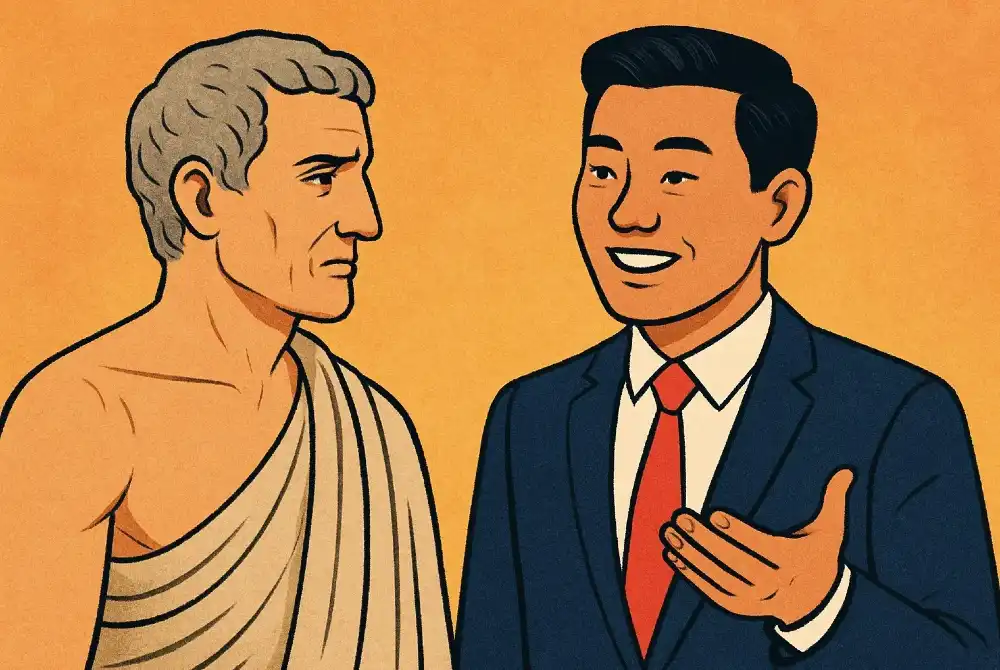
Life doesn’t discriminate when it comes to throwing obstacles in our path. Whether you’re dealing with career setbacks, personal losses, health challenges, or financial difficulties, adversity finds everyone. But what separates those who crumble under pressure from those who emerge stronger? The answer lies in an ancient philosophy that’s experiencing a modern renaissance.
In “The Obstacle is the Way,” author Ryan Holiday revives the timeless wisdom of Stoic philosophy to show us something revolutionary: the very things that stand in our way can become the path to our success. This isn’t positive thinking or denial—it’s a practical framework that’s guided emperors, presidents, and champions throughout history.
The Stoic Foundation of Turning Adversity Into Advantage
The Stoics, ancient philosophers like Marcus Aurelius, Epictetus, and Seneca, understood something profound about human nature and success. They recognized that we cannot always control what happens to us, but we maintain complete control over how we respond. This simple distinction has the power to transform everything.
Marcus Aurelius, who ruled the Roman Empire while battling plague, war, and betrayal, wrote in his personal journal what would become one of history’s most powerful books on philosophy. He didn’t write for an audience—he wrote to remind himself how to handle the constant obstacles he faced. His core insight? “The impediment to action advances action. What stands in the way becomes the way.”
Holiday explains that this Stoic approach isn’t about passive acceptance or toxic positivity. Instead, it’s about aggressive opportunism in the face of difficulty. When something blocks your path, you have three options: you can go around it, go through it, or use it as a stepping stone. The Stoics chose all three, depending on the situation.

The Three-Part Framework for Overcoming Any Obstacle
Holiday structures his approach around three essential disciplines that the Stoics practiced: Perception, Action, and Will. These three components work together to transform obstacles into opportunities.
Perception: See Clearly and Objectively
The first step in turning obstacles into advantages is controlling how you see the situation. Our perceptions—not the obstacles themselves—most often prove to be our biggest limitation. When something goes wrong, our mind immediately starts spinning stories, catastrophizing, and seeing only the negative.
The Stoic practice of objective perception means stripping away the emotional judgment from what’s actually happening. You’re not denying reality—you’re seeing it more clearly than ever before. A business failure isn’t a commentary on your worth as a person; it’s data about what didn’t work. A rejection isn’t personal persecution; it’s one person’s opinion at one moment in time.
Holiday shares the story of Rubin “Hurricane” Carter, a boxer wrongfully imprisoned for nineteen years. Instead of letting anger and bitterness consume him, Carter chose to see his situation differently. He turned his prison cell into an educational opportunity, reading philosophy and law, ultimately helping to free himself through the legal system. His perception of his obstacle changed everything about how he responded to it.
Action: Move Forward With Purpose and Persistence
Seeing obstacles clearly is only the beginning. The second discipline is taking deliberate, persistent action. The Stoics weren’t philosophers who simply thought deeply—they were people of action who put their philosophy into practice daily.
When faced with an obstacle, most people freeze or give up. They wait for the perfect moment or the perfect plan. The Stoic approach is different: start moving, adjust as you go, and persist relentlessly. Holiday calls this “the discipline of action,” and it’s where philosophy meets the real world.
Thomas Edison’s laboratory burned down when he was sixty-seven years old, destroying years of work and millions of dollars in equipment. His response? He told his son to bring his mother to see the fire because she’d never see anything like it again. The next morning, he started rebuilding. Within three weeks, his team had invented the modern phonograph. The obstacle became the catalyst for innovation.
This isn’t reckless action—it’s pragmatic, flexible, and creative movement. It means doing what you can with what you have, right where you are. It means iterating, learning, and adjusting course as needed. Most importantly, it means refusing to be paralyzed by obstacles.
Will: Endure What Cannot Be Changed
The third discipline addresses the hardest truth of all: some things cannot be changed, no matter how we perceive them or what actions we take. This is where the Stoic concept of the “inner citadel” becomes crucial.
Your inner citadel is the fortress of your mind and spirit—the one thing that remains yours regardless of external circumstances. No matter what happens to you, no one can take away your ability to choose your response, maintain your integrity, or find meaning in your experience.
Holiday recounts the story of James Stockdale, a Navy pilot who spent seven years as a prisoner of war in Vietnam. Stockdale credited his survival and sanity to his study of Stoic philosophy. As he parachuted from his damaged plane, he told himself, “I’m leaving the world of technology and entering the world of Epictetus.” His understanding of Stoic principles helped him endure unimaginable suffering while maintaining his dignity and even helping fellow prisoners.
Building your inner citadel means cultivating resilience, accepting what you cannot control, and finding strength in adversity. It means understanding that while you may not choose what happens to you, you always choose what it means and who you become because of it.
Practical Applications for Modern Life
The beauty of Stoic philosophy is that it’s eminently practical. You don’t need to be a philosopher or scholar to apply these principles—you just need to be willing to see obstacles differently.
Start with your current challenges. What obstacle are you facing right now? Before you label it as “bad” or “unfair,” practice objective perception. What are the facts, stripped of emotional interpretation? What opportunities might exist within this challenge that you haven’t considered?
Next, identify what action you can take today. It doesn’t need to be perfect or comprehensive—it just needs to move you forward. Break the obstacle down into smaller components and tackle what’s immediately in front of you. Remember Edison, who didn’t waste time mourning what was lost but immediately started building what was next.
Finally, examine what’s truly within your control and what isn’t. Pour your energy into what you can influence and practice acceptance of what you cannot. This doesn’t mean giving up—it means directing your resources wisely and building the inner strength to endure what must be endured.
Historical Examples of Obstacle Transformation
Throughout history, the greatest achievements have often emerged from the greatest obstacles. Holiday fills his book with examples that illustrate this principle in action.
Theodore Roosevelt was a sickly, asthmatic child who doctors said might not survive to adulthood. His response? He built his body through relentless physical training, eventually becoming one of the most vigorous and active presidents in American history. His childhood illness became the foundation for his legendary vitality.
Amelia Earhart faced the obstacle of being a woman in early aviation, a field completely dominated by men. Rather than fight against this directly, she used the novelty and attention it generated to promote aviation and inspire other women. The obstacle of discrimination became her platform for influence.
These aren’t stories of people who had it easy or who simply “thought positive.” They’re examples of individuals who looked at genuine obstacles and found ways to use them, transform them, or grow through them.
The Modern Relevance of Ancient Wisdom
You might wonder why philosophy from two thousand years ago remains relevant today. The answer is simple: human nature hasn’t changed. We still face obstacles. We still feel fear, anger, and frustration. We still need frameworks for navigating difficulty and finding meaning in struggle.
What has changed is our relationship with adversity. Modern culture often encourages us to avoid discomfort, to see any obstacle as unfair, and to expect smooth paths to success. The Stoic approach offers something more realistic and ultimately more empowering: the acknowledgment that obstacles are inevitable, paired with the tools to transform them.
Holiday’s work bridges ancient wisdom and modern application. Whether you’re an entrepreneur facing business challenges, an athlete dealing with injury, a parent navigating family difficulties, or simply someone trying to live a meaningful life, the principles remain the same. Perception, action, and will can transform any obstacle into opportunity.
Implementing the Obstacle-Is-the-Way Mindset
Changing your relationship with obstacles isn’t an overnight transformation. It requires practice, patience, and repetition. Start by catching yourself when you encounter difficulties. Notice your initial reaction—the story you tell yourself about what the obstacle means.
Then pause and reframe. Ask yourself: What is objectively true about this situation? What opportunity might exist here that I’m not seeing? What action can I take right now? What is actually within my control?
Keep a journal documenting your obstacles and how you’re applying Stoic principles to them. Review your entries regularly to see your progress and reinforce the practice. Over time, this way of thinking becomes more natural, more automatic.
Remember that even the Stoics weren’t perfect. Marcus Aurelius, one of history’s greatest Stoic practitioners, wrote his Meditations partly to remind himself of these principles. He struggled, doubted, and had to actively practice these disciplines daily. The goal isn’t perfection—it’s progress.
Conclusion: Your Obstacles Are Waiting
The obstacles in your life right now—whatever they may be—are waiting for you to transform them. They’re raw material, opportunities in disguise, chances to practice virtue and develop strength. The question isn’t whether obstacles will appear; it’s how you’ll respond when they do.
As Ryan Holiday demonstrates throughout “The Obstacle is the Way,” the power to transform adversity lies within you. It always has. The Stoics knew this two millennia ago, and their wisdom has guided some of history’s most successful and resilient individuals. Now it’s your turn to join their ranks.
The path forward isn’t around your obstacles or despite them. The path forward is through them, using them, becoming stronger because of them. That’s the Stoic way. That’s the way that turns impediments into fuel and obstacles into opportunities.
Your next obstacle isn’t something to fear or avoid—it’s your next opportunity to grow, to innovate, to demonstrate what you’re truly capable of accomplishing. The obstacle is the way.
Everything You Need to Know About Ryan Holiday’s “The Obstacle Is the Way” (Complete Book Guide)
Related posts:
 Everything You Need to Know About Ryan Holiday’s “The Obstacle Is the Way” (Complete Book Guide)
 Mastering Stoic Perception: How The Obstacle Is the Way Turns Challenges Into Opportunity
 12 Daily Stoic Exercises to Build Unshakeable Resilience and Mental Strength
 From Ancient Philosophy to Modern Success: How Stoicism Solves Today’s Problems
 Why Action Is the Heart of Stoicism: Lessons From The Obstacle Is the Way