
The most powerful proof that obstacles can become opportunities isn’t found in theory—it’s found in the lives of people who actually did it. In “The Obstacle is the Way,” Ryan Holiday fills his pages with historical examples of individuals who faced seemingly insurmountable challenges and not only survived but thrived because of them.
These aren’t stories of people who had it easy or got lucky breaks. They’re accounts of genuine adversity transformed through the Stoic principles of perception, action, and will. Their examples provide both inspiration and practical instruction: if they could turn their obstacles into advantages, so can you.
Marcus Aurelius: Ruling Through Plague, War, and Betrayal
Perhaps no historical figure better exemplifies Stoic principles under fire than Marcus Aurelius himself. As emperor of Rome from 161 to 180 CE, he faced obstacles that would break most people: constant warfare on multiple fronts, a devastating plague that killed millions, economic crisis, and the betrayal of his most trusted general.
Holiday explores how Marcus didn’t just survive these challenges—he used them as opportunities to practice and develop Stoic virtue. When plague ravaged the empire, Marcus stayed in Rome rather than fleeing to safety, leading relief efforts and maintaining order. When war demanded his presence on distant frontiers, he went, spending years away from the comfort of Rome living in military camps.
The most striking obstacle Marcus faced was the betrayal of Avidius Cassius, his governor in the East, who declared himself emperor based on false rumors of Marcus’s death. This wasn’t just a political challenge—it was personal betrayal from someone Marcus had trusted completely.
Marcus’s response demonstrates Stoic philosophy in action. Rather than immediately ordering Cassius’s execution or mounting a vengeful campaign, Marcus wrote to his troops saying that if they captured Cassius, he wanted to forgive him publicly. Marcus chose to see this crisis as an opportunity to demonstrate mercy and teach a lesson about how to handle civil conflict.
Fate intervened when Cassius was killed by his own men before Marcus could reach him, but Marcus’s initial response reveals the Stoic approach: control your perception, take wise action, and maintain your principles regardless of provocation. The obstacle of betrayal became an opportunity to demonstrate the values he believed should guide leadership.

Thomas Edison: Innovation Born From Disaster
Holiday dedicates significant attention to Thomas Edison, whose life was a series of obstacles overcome through relentless persistence and creative reframing. Edison’s story resonates because his obstacles weren’t abstract—they were concrete failures, public embarrassments, and devastating losses.
The most dramatic example came when Edison was 67 years old. His laboratory in West Orange, New Jersey, caught fire, destroying the building and years of work. Millions of dollars in equipment and countless prototypes went up in flames. Sitting in the ruins of his life’s work, most people would have seen only catastrophe.
Edison’s response has become legendary. He told his son to bring his mother to watch the fire, saying, “She’ll never see anything like this again.” The next morning, he was already planning the rebuild. Within three weeks, his team had produced the phonograph. The fire had forced them to start fresh, eliminating past mistakes and enabling innovation they might not have attempted otherwise.
But this wasn’t Edison’s only obstacle. Throughout his career, he faced thousands of failed experiments, ridicule from the scientific establishment, business setbacks, and intense competition. His famous quote about finding ten thousand ways that didn’t work to create the light bulb wasn’t just optimism—it was his actual approach to obstacles.
Holiday emphasizes that Edison’s success wasn’t despite his obstacles but because of how he responded to them. Each failure taught him something. Each setback forced innovation. Each crisis demanded creative solutions he wouldn’t have developed from comfort and success.
Ulysses S. Grant: From Failure to Leading a Nation
Perhaps no story in Holiday’s book illustrates the transformative power of obstacles more dramatically than Ulysses S. Grant’s journey from repeated failure to military greatness and the presidency.
Before the Civil War, Grant failed at nearly everything he attempted. He resigned from the army under suspicious circumstances involving alcohol. He failed as a farmer—his crops wouldn’t grow, and he couldn’t support his family. He failed in business, forced to pawn his belongings to survive. He worked as a clerk in his family’s leather goods store, a humiliating position for a former army officer.
By every external measure, Grant appeared to be a failure at age 38, with no prospects and no future. Then the Civil War created an opportunity—or more accurately, created an obstacle that Grant’s particular talents could address. His past failures had taught him resilience, humility, and an understanding of adversity that peacetime success never could have provided.
Grant’s military career during the war demonstrates the Stoic approach to obstacles. He faced setbacks, criticism, and even removal from command. But he persisted, learned from mistakes, and ultimately became the general who won the war by refusing to give up when others would have quit.
Holiday points out that Grant’s earlier failures weren’t wasted time—they were preparation. His struggles with poverty taught him to do more with less. His experience with failure gave him the resilience to persist through military setbacks that would have defeated someone who’d never tasted defeat. The obstacles that seemed to ruin his life actually equipped him for his greatest achievements.
James Stockdale: Stoicism Under Torture
One of the most powerful examples Holiday shares is Vice Admiral James Stockdale, a Navy pilot shot down over North Vietnam who spent seven years as a prisoner of war, four in solitary confinement, subjected to torture designed to break him.
As Stockdale’s plane was hit and he prepared to eject, he said to himself, “I’m leaving the world of technology and entering the world of Epictetus.” This wasn’t poetic reflection—it was his survival strategy. Stockdale had studied Stoic philosophy and intentionally applied its principles to endure circumstances that broke many other prisoners.
The obstacles Stockdale faced were extreme: physical torture, psychological manipulation, years of isolation, uncertainty about whether he’d ever be released, and the burden of being the senior ranking officer responsible for other prisoners’ welfare. He couldn’t control any of these circumstances, but he could control his response.
Stockdale practiced the Stoic dichotomy of control rigorously. He accepted his imprisonment as reality rather than raging against it. He focused entirely on what he could influence: his own conduct, his adherence to his code of honor, his communication with fellow prisoners, and maintaining his sanity through mental discipline.
Holiday emphasizes that Stockdale’s survival and eventual return home weren’t just about endurance—they were about transforming an obstacle into an opportunity to demonstrate courage, leadership, and the power of philosophy applied under the worst possible conditions. Stockdale later said that his years as a POW, horrible as they were, were also the most important and meaningful of his life.
Theodore Roosevelt: Building Strength From Weakness
Holiday shares Roosevelt’s story as an example of transforming a fundamental personal limitation into an advantage. Young Theodore was sickly, asthmatic, and physically weak—doctors warned he might not survive to adulthood. For a boy growing up in the late 1800s with ambitions for adventure and leadership, this seemed like an insurmountable obstacle.
Roosevelt’s father told him, “You have the mind, but you have not the body, and without the help of the body the mind cannot go as far as it should. You must make the body.” This became Theodore’s mission. He didn’t accept his physical weakness as permanent—he saw it as an obstacle to be overcome through persistent action.
Through years of boxing, hiking, horseback riding, and other physical training, Roosevelt transformed himself from a sickly child into one of the most physically vigorous presidents in American history. But the obstacle of his childhood illness didn’t just make him strong—it gave him empathy for the weak, understanding of struggle, and appreciation for health and vitality.
The physical challenges Roosevelt overcame as a child prepared him for the political and personal obstacles he’d face later: the death of his wife and mother on the same day, political betrayals, an assassination attempt, and the challenges of leading a nation. Each new obstacle found him prepared by earlier struggles.
Amelia Earhart: Gender as Lever Rather Than Limitation
In the early days of aviation, being a woman wasn’t just an obstacle—it was considered a disqualification. When Amelia Earhart wanted to fly, she faced not just the technical challenges all pilots encountered but also systematic discrimination and skepticism.
Holiday shows how Earhart reframed this obstacle. Rather than fighting against the novelty of being a female pilot, she used it. The attention generated by being a woman in a male-dominated field gave her publicity and opportunities male pilots didn’t get. What everyone else saw as her disqualification became her distinctive advantage.
This wasn’t about accepting discrimination or pretending it didn’t exist. It was about pragmatically using every available resource—including the public’s curiosity about a female pilot—to advance her goals. Earhart understood that sometimes the most direct path isn’t through an obstacle but around it, using the obstacle’s own energy to propel you forward.
Her approach demonstrates the Stoic principle of focusing on what you can control. She couldn’t control societal attitudes about women, but she could control how she leveraged the attention those attitudes generated. The obstacle became her platform.
Demosthenes: From Speech Impediment to Greatest Orator
Holiday shares the ancient story of Demosthenes to illustrate that the Stoic approach to obstacles isn’t modern invention—it’s timeless wisdom proven across millennia. Demosthenes wanted to be an orator in ancient Athens, where public speaking was essential for political success. But he had a severe speech impediment, a weak voice, and awkward gestures.
These obstacles would have ended most people’s oratorical ambitions. Demosthenes saw them as problems to be solved. He put pebbles in his mouth and practiced speaking clearly despite the impediment. He rehearsed speeches while running uphill to strengthen his voice. He practiced before a mirror to improve his gestures.
But Demosthenes did something more profound: he used his obstacles as advantages. Because clear speech was so difficult for him, he worked harder on his content and preparation than speakers who relied on natural talent. His weakness in delivery forced him to develop strength in substance. He eventually became known as one of history’s greatest orators precisely because he had to overcome obstacles that more naturally gifted speakers never faced.
This pattern appears throughout Holiday’s examples: often the obstacle forces you to develop capabilities that become your greatest strengths. The person who finds something easy may never develop the discipline, creativity, or depth that struggling demands.
Rubin “Hurricane” Carter: Prison as Education
Holiday tells the story of Rubin “Hurricane” Carter, a boxer wrongfully convicted of triple murder and sentenced to life in prison. For nineteen years, Carter sat in prison knowing he was innocent, facing an obstacle that seemed absolutely unjust and undefeatable.
Carter could have spent those years consumed by rage and bitterness—and he’d have been entirely justified. Instead, he chose to see his cell as a different kind of space: a monastery, a library, an opportunity for education and transformation he might never have pursued outside prison.
Carter read voraciously, studied law, and worked on his own case. He maintained his dignity, helped other prisoners, and refused to let injustice turn him bitter. The obstacle of wrongful imprisonment became an opportunity for intellectual and spiritual development. When he was finally freed (with help from Bob Dylan and others who championed his cause), he emerged stronger and wiser than he’d been before.
This example is particularly powerful because it demonstrates the Stoic principle that you can find advantage even in the most unjust and painful circumstances. Not because the circumstances are good, but because your response can create meaning and growth regardless of circumstances.
Steve Jobs: Fired From His Own Company
Holiday includes the more recent example of Steve Jobs being fired from Apple in 1985. Jobs had co-founded the company and built it into a success, but a power struggle with the board resulted in his ouster. For someone who identified so completely with his company, this seemed like a career-ending disaster.
Jobs later said that being fired from Apple was the best thing that could have happened to him. Freed from the constraints of running a large public company, he started NeXT and bought Pixar. These ventures allowed him to experiment, fail, learn, and develop approaches he later brought back to Apple.
When Apple bought NeXT in 1997 and Jobs returned as CEO, he brought with him lessons learned from his “failure.” The technology developed at NeXT became the foundation for Mac OS X. The management philosophy he developed at Pixar influenced Apple’s creative culture. Jobs’s years in the wilderness weren’t wasted—they were preparation for Apple’s greatest period of innovation under his second tenure.
This example shows that sometimes you can only see how an obstacle benefited you in retrospect. When you’re living through it, exile from your own company feels like pure failure. Only later does it become clear that the obstacle redirected you toward necessary experiences and growth.
Conclusion: The Pattern Behind the Stories
What unites all these examples in “The Obstacle is the Way” is a consistent pattern: perception that sees opportunity where others see only disaster, action that engages with obstacles creatively and persistently, and will that maintains purpose and dignity regardless of circumstances.
These weren’t people with superhuman abilities or special advantages. They were humans facing obstacles that seemed insurmountable. What made them different was their response—their choice to see obstacles as opportunities, their commitment to persistent action, and their refusal to let circumstances defeat their spirit.
Ryan Holiday shares these stories not just for inspiration but for instruction. These examples prove that the Stoic approach works in the real world, under real pressure, with real consequences. If Marcus Aurelius could rule an empire while maintaining Stoic principles, if Edison could rebuild after losing everything, if Stockdale could survive torture without breaking, then you can apply these same principles to your obstacles.
Your challenges may not be as dramatic as those faced by these historical figures, but the principles remain the same. How you see your obstacles, how you respond to them, and how you maintain your will through difficulty—these choices determine whether obstacles stop you or propel you forward.
The obstacle is the way. These stories prove it.
Everything You Need to Know About Ryan Holiday’s “The Obstacle Is the Way” (Complete Book Guide)
Related posts:
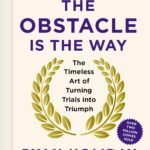 Everything You Need to Know About Ryan Holiday’s “The Obstacle Is the Way” (Complete Book Guide)
 12 Daily Stoic Exercises to Build Unshakeable Resilience and Mental Strength
 From Ancient Philosophy to Modern Success: How Stoicism Solves Today’s Problems
 How Stoicism Turns Obstacles Into Opportunity: Lessons From The Obstacle Is the Way
 Who is Ryan Holiday and His Impact on Philosophy