
Short-Term vs Long-Term Mating Strategies: Why We Want Both Passion and Commitment
Why do people crave deep commitment — and still feel tempted by novelty?
Why can someone genuinely desire marriage yet still feel drawn to sexual opportunity?
Why do dating patterns shift depending on age, status, and environment?
The answer lies in short-term vs long-term mating strategies.
Evolutionary psychology shows that humans did not evolve a single mating program. We evolved flexible strategies — conditional systems that activate depending on circumstances.
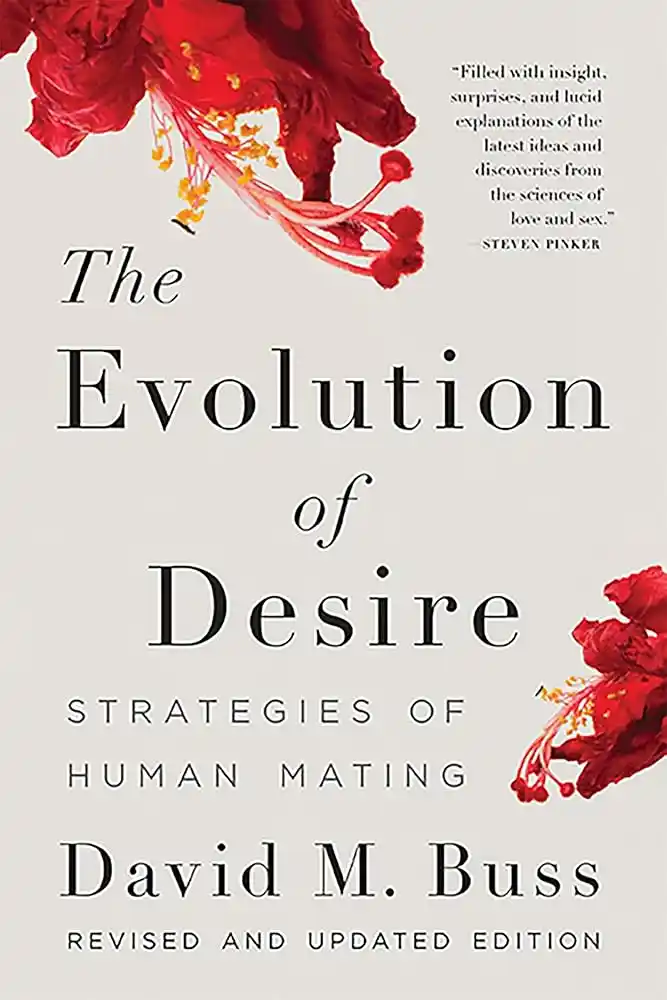
In The Evolution of Desire, David M. Buss explains:
“Humans have evolved a repertoire of mating strategies.”
That word — repertoire — matters.
We are not wired for only monogamy.
We are not wired for only promiscuity.
We are wired for flexibility.
Understanding short-term vs long-term mating strategies clarifies much of modern relationship confusion.
It also demands responsibility.
What Are Short-Term and Long-Term Mating Strategies?
Short-term mating strategies involve:
- Casual sexual relationships
- Minimal commitment
- Limited emotional investment
- Focus on immediate attraction
Long-term mating strategies involve:
- Commitment
- Emotional bonding
- Resource sharing
- Co-parenting potential
- Mutual investment
Evolutionary psychology suggests that both strategies offered adaptive advantages under different conditions.
Buss writes:
“Sexual strategies are adaptive solutions to mating problems.”
Different environments created different mating problems.
Scarcity required stability.
Opportunity allowed opportunism.
Humans evolved psychological systems capable of both.
Why Long-Term Mating Evolved
Long-term mating strategies offer clear evolutionary benefits:
- Cooperative parenting
- Shared resources
- Increased offspring survival
- Social stability
Human children are uniquely dependent for long periods. Long-term pair bonding increased the probability of survival.
Attachment mechanisms — love, bonding, emotional intimacy — evolved to support this cooperation.
Long-term mating activates:
- Trust systems
- Oxytocin bonding
- Commitment psychology
- Jealousy as protection
This is not cultural fantasy.
It is adaptive design.
Deep attachment did not evolve accidentally.
Why Short-Term Mating Evolved
Short-term mating strategies also offered advantages.
For men, short-term mating historically allowed:
- Increased reproductive output
- Genetic diversification
- Spread of lineage
For women, short-term mating could provide:
- Access to superior genes
- Immediate resources
- Mate switching opportunities
Buss’s research shows that men, on average, report greater desire for sexual variety.
This reflects lower minimum biological investment.
However, women also pursue short-term mating under specific conditions — particularly when genetic quality or status is high.
Short-term vs long-term mating strategies are not moral categories.
They are evolutionary options.
Sex Differences in Short-Term Mating
Research consistently shows men are more open to short-term sexual opportunities.
Studies demonstrate:
- Lower threshold for sexual access
- Greater willingness for casual encounters
- Stronger desire for multiple partners
Why?
Because historically, reproductive cost for men was lower at conception.
Women faced pregnancy risk, resource uncertainty, and reputation consequences.
Buss notes that mating strategies are sensitive to context.
When contraception, economic independence, and social norms shift, behavior shifts.
But underlying psychological architecture remains.
This explains why even in modern egalitarian societies, sex differences in short-term mating desire persist.
The Strategic Trade-Off
Short-term vs long-term mating strategies involve trade-offs.
Short-term benefits:
- Excitement
- Variety
- Immediate reward
Short-term costs:
- Lack of stability
- Reputation risk
- Emotional fragmentation
Long-term benefits:
- Security
- Emotional depth
- Shared growth
- Parenting cooperation
Long-term costs:
- Reduced novelty
- Commitment constraints
- Vulnerability
Evolution favored individuals who could navigate these trade-offs strategically.
Humans are not strictly one or the other.
They calibrate.
Environmental Influence on Mating Strategy
Life circumstances strongly influence strategy activation.
Factors that increase short-term orientation:
- High mate value
- Abundant opportunities
- Low perceived future stability
- Social environments that reward variety
Factors that increase long-term orientation:
- Desire for family
- Economic interdependence
- Attachment security
- High value placed on stability
Short-term vs long-term mating strategies are conditional.
They shift across lifespan.
Young adults often lean short-term.
As investment priorities shift, long-term strategy strengthens.
This is not hypocrisy.
It is flexibility.
Modern Dating and Strategy Conflict
Modern dating amplifies short-term opportunity.
Dating apps create perceived abundance.
Social media increases visibility of alternatives.
This activates short-term mating psychology even in individuals who desire long-term bonds.
The tension many people feel is not confusion.
It is dual strategy activation.
Commitment system vs novelty system.
Without awareness, novelty wins through dopamine reward.
With awareness, intention guides behavior.
Attachment Style and Mating Strategy
Attachment theory intersects with evolutionary mating strategy.
Secure attachment supports long-term bonding.
Avoidant attachment often aligns with short-term mating preference.
Anxious attachment may seek long-term security but fear abandonment intensely.
Evolutionary psychology explains why strategies exist.
Attachment theory explains how individuals experience them emotionally.
Understanding both deepens relational maturity.
Masculinity and Short-Term Desire
Men often struggle with the tension between desire for variety and desire for legacy.
Short-term mating activates ego and conquest drives.
Long-term mating activates responsibility and depth.
Healthy masculinity integrates sexual desire without being ruled by it.
Impulse does not equal identity.
Evolution explains temptation.
Character defines action.
Female Strategy Complexity
Women’s mating strategies are often misunderstood.
Evolutionary psychology shows women exhibit conditional flexibility:
- Long-term stability preference
- Occasional short-term opportunism when conditions favor
Context matters:
- Partner quality
- Relationship satisfaction
- Personal goals
Women are not uniformly monogamous by instinct.
They are strategically responsive.
Understanding this reduces caricature and polarization.
Mate Value and Strategic Choice
Mate value strongly influences strategy.
High mate value individuals have greater optionality.
Greater optionality increases short-term opportunity.
But high mate value also increases capacity to secure high-quality long-term bonds.
Short-term vs long-term mating strategies interact with self-perception.
Individuals calibrate based on perceived attractiveness and market value.
Modern culture intensifies this calibration constantly.
Without grounded identity, strategy becomes reactive.
Criticisms and Misuse
Short-term vs long-term mating strategy theory is sometimes misused to justify selfishness.
“That’s just evolution” becomes excuse.
That is misunderstanding.
Evolutionary psychology describes tendencies.
It does not grant moral license.
The mature application asks:
Which strategy aligns with my values?
Which aligns with the life I want to build?
Evolution gave us options.
Consciousness chooses direction.
Frequently Asked Questions
What are short-term vs long-term mating strategies?
Short-term strategies prioritize casual sex and minimal commitment, while long-term strategies prioritize bonding, stability, and shared investment.
Why are men more open to short-term mating?
Historically, men faced lower biological reproductive costs at conception, increasing potential reproductive gain from multiple partners.
Do women engage in short-term mating?
Yes, under specific conditions such as high-quality genetic opportunity or dissatisfaction in long-term partnerships.
Can someone want both strategies?
Yes. Humans evolved flexible systems capable of activating both depending on context.
Does modern dating increase short-term strategy activation?
Yes. Abundant options and digital visibility amplify short-term opportunity perception.
Conclusion: Strategy Requires Self-Awareness
Short-term vs long-term mating strategies are not moral hierarchies.
They are evolutionary tools.
But tools require intention.
Without awareness, we drift toward impulse.
With awareness, we choose alignment.
The question is not which strategy exists.
The question is which strategy reflects your character.
That is where biology ends and maturity begins.
Related posts:
 Evolutionary Mating Psychology: The Science of Human Desire
 The Complete Guide to Evolutionary Mating Psychology: How Our History Affects Attraction, Desire, and Human Relationships
 Why Men Crave Sexual Variety: The Evolutionary Psychology Behind Male Desire
 Sexual Selection in Humans: How Evolutionary Psychology Explains Human Attraction
 Mate Value in Evolutionary Psychology: What It Really Means