
Sexual Selection in Humans: The Hidden Force Behind Attraction
Why are we drawn to confidence?
Why does status increase desirability?
Why do beauty standards, despite cultural variation, follow certain predictable patterns?
The answer lies in sexual selection.
Sexual selection in humans is the evolutionary process by which traits become attractive because they increase mating success — not necessarily survival.
Charles Darwin first distinguished natural selection from sexual selection. Natural selection favors survival traits. Sexual selection favors reproductive advantage.
A peacock’s tail is not efficient for survival. It is efficient for attraction.
Humans are no different.
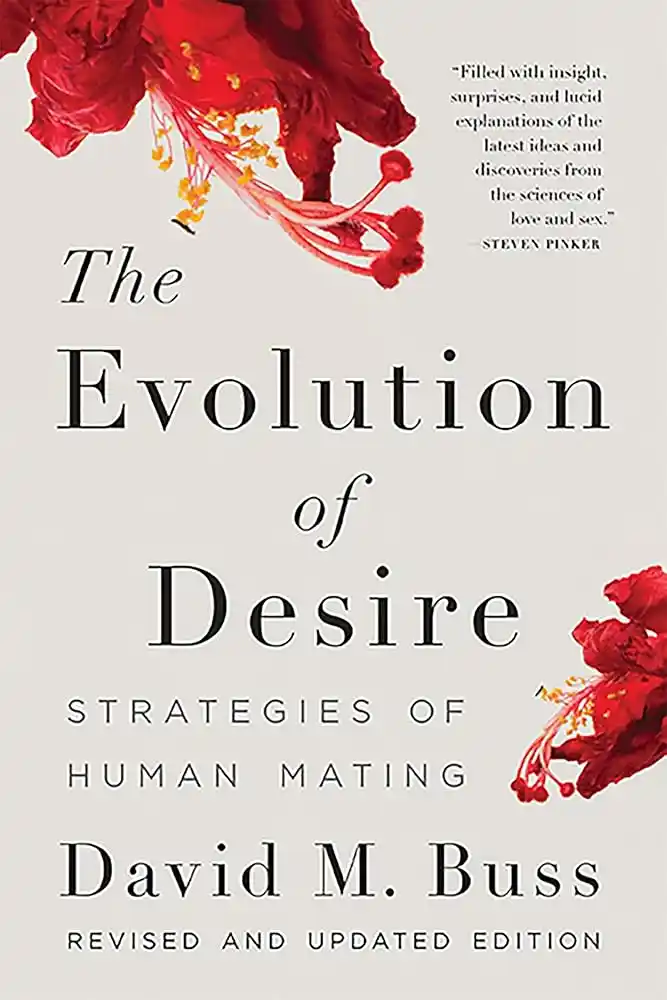
In The Evolution of Desire, David M. Buss explains that mate preferences create selective pressures. What one sex desires, the other evolves to display.
He writes:
“The qualities desired in a mate do not exist in a vacuum. They create pressures for the evolution of those qualities.”
Sexual selection in humans operates through two primary mechanisms:
- Intersexual selection (mate choice)
- Intrasexual competition (competition among the same sex)
Understanding these mechanisms clarifies much of modern dating behavior — from status displays to appearance enhancement.
This is not about manipulation. It is about structure.
And once we see the structure, we can act with awareness.
Intersexual Selection: The Power of Mate Choice
Intersexual selection occurs when one sex chooses mates based on preferred traits.
In humans, both sexes exercise choice — but research shows women historically have been more selective in long-term contexts.
Why?
Because their biological investment in reproduction was higher.
As Buss explains:
“Women’s greater obligatory parental investment makes them more discriminating in mate selection.”
When one sex is choosier, the other adapts.
If women prefer status and competence, men compete for status and competence.
If men prefer youth and physical cues of fertility, women enhance physical attractiveness.
Mate preferences create evolutionary pressure.
This is why traits such as ambition, humor, intelligence, and physical symmetry consistently show up as attractive across cultures.
They signal value.
Not moral value — reproductive value.
Understanding this distinction prevents confusion.
Attraction is not a referendum on character. It is a response to evolved signals.
Intrasexual Competition: Rivalry Within the Sex
Sexual selection does not only occur through mate choice. It also occurs through competition among members of the same sex.
Men compete with other men.
Women compete with other women.
This competition shapes behavior deeply.
Men often compete through:
- Status acquisition
- Resource accumulation
- Physical dominance
- Risk-taking
- Achievement
Women often compete through:
- Appearance enhancement
- Social alliances
- Reputation management
- Youth signaling
These patterns are not absolute. But they are statistically robust.
Sexual selection in humans explains why status hierarchies form naturally.
Higher-status individuals attract more attention.
More attention increases mating opportunities.
This reinforces status-seeking behavior.
Modern society amplifies this dynamic.
Social media quantifies status publicly.
Dating apps create visible competition.
Economic systems reward visibility.
We are navigating ancient selection pressures in a hyper-modern arena.
Without awareness, we become reactive.
With awareness, we choose how to compete — and when not to.
Why Physical Attractiveness Matters Across Cultures
One of the strongest findings in evolutionary psychology is the cross-cultural consistency of certain attractiveness cues.
Despite cultural differences in fashion or body ideals, certain markers appear universally attractive:
- Facial symmetry
- Clear skin
- Youthfulness
- Healthy body composition
Why?
Because these cues historically signaled health and fertility.
Sexual selection in humans favored individuals who could accurately detect reproductive viability.
This is not superficiality. It is evolved perception.
However, maturity transforms instinct.
Attraction may begin with visual cues, but long-term bonding requires emotional depth, reliability, and character.
Sexual selection explains initial magnetism.
Attachment psychology explains durability.
Both matter.
Status and Resource Signaling in Men
Across cultures, women show preference for men with status, ambition, and resource potential.
Sexual selection pressures men to compete for visible competence.
Historically, men who controlled resources provided better survival odds for offspring.
Buss notes that women value qualities signaling “ability and willingness to invest.”
This is why status signaling appears in nearly every society.
Modern equivalents include:
- Career success
- Leadership roles
- Influence
- Intellectual achievement
- Social dominance
Status is not purely financial.
It is a marker of competence within a group.
Sexual selection in humans rewards perceived capability.
But capability without character eventually collapses.
The mature path integrates ambition with integrity.
Female Beauty and Evolutionary Pressure
If male status evolved under female choice pressure, female beauty evolved under male choice pressure.
Men historically preferred cues of fertility and youth.
Over generations, traits associated with these cues became amplified.
This does not reduce women to appearance.
It explains why appearance became socially emphasized.
Sexual selection pressures shaped aesthetics.
Modern culture often exaggerates these pressures.
Cosmetic industries, fashion, and beauty standards are extensions of ancient mating psychology interacting with modern markets.
But awareness changes relationship to these forces.
Beauty can be expressed without self-objectification.
Strength can be expressed without dominance.
Evolution provides architecture.
Consciousness determines expression.
Risk-Taking and Male Competition
Why are men statistically more likely to engage in risk-taking behaviors?
From extreme sports to financial gambles to physical confrontation, male risk-taking appears globally.
Sexual selection offers one explanation.
Risk-taking can function as a costly signal.
Costly signals are behaviors that demonstrate confidence, strength, or resilience because they involve potential loss.
In ancestral environments, successful risk-takers may have signaled genetic quality.
However, modern contexts distort this.
What once signaled survival ability can now signal recklessness.
The challenge for modern masculinity is discernment.
Not all evolutionary impulses remain adaptive in modern systems.
Maturity means updating strategy without denying instinct.
The Dark Side of Sexual Selection
Sexual selection also explains less comfortable realities:
- Mate guarding
- Jealousy
- Infidelity
- Deception
- Status aggression
Buss writes:
“Conflict in mating is the norm and not the exception.”
When mating interests clash, conflict emerges.
Men may compete aggressively for access.
Women may compete socially or reputationally.
Understanding this does not justify harm.
It contextualizes it.
We cannot evolve beyond these mechanisms overnight.
But we can regulate them consciously.
That is the difference between instinct and integrity.
Modern Dating Through the Lens of Sexual Selection
Dating apps have intensified sexual selection dynamics.
High-status men receive disproportionate attention.
Highly attractive women receive disproportionate attention.
Choice overload increases selectivity.
Selectivity increases competition.
Ancient selection mechanisms now operate at scale.
This explains why modern dating often feels transactional.
Sexual selection in humans did not anticipate infinite digital options.
But awareness allows intentionality.
Instead of performing for approval, we can build substance.
Instead of competing reactively, we can compete ethically.
Instead of comparing endlessly, we can choose alignment.
Sexual Selection and Long-Term Bonding
If sexual selection drives competition and attraction, what sustains long-term relationships?
Humans evolved pair-bonding mechanisms alongside competitive ones.
Attachment systems — including love, bonding hormones, and emotional intimacy — support long-term cooperation.
Sexual selection gets us together.
Attachment keeps us together.
Understanding both prevents cynicism.
Romance is not an illusion.
It is layered biology.
But biology does not eliminate choice.
We decide whether to honor bonds or chase novelty.
We decide whether to build or destabilize.
Evolution explains desire.
Character shapes destiny.
Criticisms and Nuance
Sexual selection theory faces criticism when oversimplified.
Humans are not peacocks.
We possess culture, language, morality, and long-term planning.
Evolutionary patterns describe averages, not destinies.
Individual variation is immense.
Sexual orientation, personality traits, life history, and environment all influence expression.
The responsible use of evolutionary theory integrates complexity.
Biology influences.
It does not imprison.
Frequently Asked Questions
What is sexual selection in humans?
Sexual selection in humans refers to evolutionary processes that shape traits based on mating success rather than survival alone. It includes mate choice and intrasexual competition.
Why does status increase attraction?
Historically, status signaled resource access and competence. These cues increased offspring survival odds, making status attractive.
Why is physical attractiveness important?
Physical attractiveness often signals health and fertility. Evolution favored individuals who could detect these cues accurately.
Does sexual selection justify manipulation?
No. It explains attraction patterns but does not excuse unethical behavior.
Is sexual selection still relevant today?
Yes. Although society has changed, underlying psychological mechanisms remain active in modern dating environments.
Conclusion: Understanding the Engine Beneath Desire
Sexual selection in humans is not a cynical theory.
It is a clarifying one.
It explains why beauty matters.
Why status matters.
Why competition exists.
Why jealousy emerges.
But explanation does not equal endorsement.
We inherit instincts.
We cultivate character.
When sexual selection meets maturity, attraction becomes grounded rather than reactive.
And that is where evolution meets responsibility.
Related posts:
 Mate Value in Evolutionary Psychology: What It Really Means
 The Complete Guide to Evolutionary Mating Psychology: How Our History Affects Attraction, Desire, and Human Relationships
 Evolutionary Mating Psychology: The Science of Human Desire
 Sexual Competition in Humans Explained By Evolutionary Psychology
 How Women Choose Men According to Evolutionary Mating Psychology