Self discipline and responsibility are inseparable.
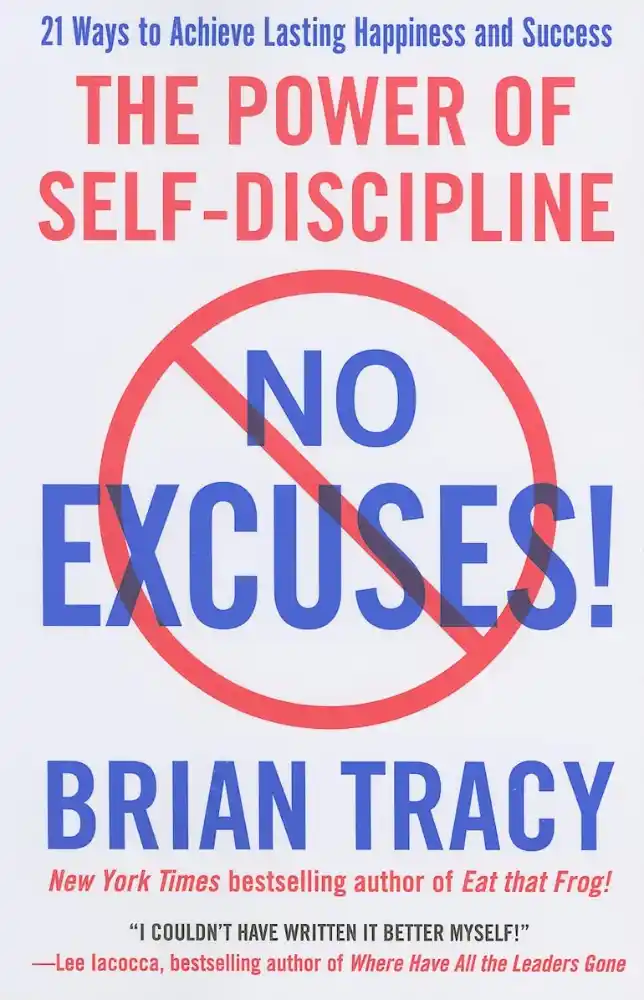
In No Excuses!: The Power of Self-Discipline, Brian Tracy makes a direct and uncompromising claim: the moment you accept complete responsibility for your life, you step onto the path of power.
Not partial responsibility.
Not conditional responsibility.
Complete responsibility.
This is not a motivational slogan. It is a psychological shift — and it is the foundation upon which all self discipline is built.
If self discipline is the ability to do what must be done, then responsibility is the decision to stop blaming circumstances, people, or history for where you stand.
And that decision changes everything.
The Discipline of Saying “I Am Responsible”
Tracy recommends repeating one sentence until it becomes internalized:
“I am responsible.”
At first, this can feel uncomfortable.
We live in a culture where blame is easy and widespread. When something goes wrong, there is always a story available. Someone else’s mistake. The economy. Timing. Childhood. Bad luck.
Responsibility interrupts that reflex.
It shifts the question from:
“Who is at fault?”
to
“What can I do now?”
Self discipline and responsibility begin with that pivot.
The moment you claim responsibility, you reclaim agency.
Blame Weakens; Responsibility Strengthens
Blame feels powerful in the moment. It relieves pressure.
But it has a hidden cost: it removes control.
If your unhappiness is someone else’s fault, your improvement depends on them changing.
If your financial struggle is the system’s fault, your progress depends on external reform.
Responsibility is different.
When you accept responsibility:
- You regain influence.
- You reduce resentment.
- You increase clarity.
- You sharpen focus.
Self discipline becomes possible only when responsibility is present. Without responsibility, discipline feels unfair. With responsibility, discipline feels empowering.
Emotional Control Through Responsibility
Tracy links responsibility directly to emotional maturity.
Negative emotions — anger, resentment, self-pity — are often sustained by blame.
When you say, “I am responsible,” something shifts internally.
You stop rehearsing injustice.
You start searching for solutions.
Self discipline and responsibility create emotional stability because they redirect energy from reaction to action.
You cannot control every event.
But you can control your response.
And response is where power lives.
Responsibility Is Not Self-Blame
It is important to distinguish responsibility from shame.
Responsibility says:
“This is my life, and I will direct it.”
Shame says:
“I am flawed and incapable.”
Tracy does not advocate self-condemnation. He advocates ownership.
There is a grounded strength in that.
You acknowledge mistakes — not to punish yourself, but to improve future decisions.
Self discipline and responsibility grow when you focus on correction, not self-criticism.
The Elimination of Excuses
Excuses thrive in environments where responsibility is absent.
Tracy states clearly that excuses are the enemies of progress.
Excuses sound reasonable:
- “It wasn’t the right time.”
- “I didn’t have support.”
- “Others had advantages.”
But self discipline demands something stronger:
“What could I have done differently?”
Even if circumstances were unfair, the disciplined mind looks for leverage.
Responsibility does not deny difficulty.
It refuses helplessness.
Responsibility in Career and Work
In professional life, self discipline and responsibility are immediately visible.
The responsible professional:
- Meets deadlines.
- Prepares thoroughly.
- Accepts feedback.
- Improves continuously.
- Does not complain about workload.
This attitude separates average performers from high achievers.
When mistakes occur, responsible individuals say, “I’ll fix it.”
That sentence alone builds trust.
And trust builds opportunity.
Responsibility in Relationships
Tracy’s principle extends beyond career.
In relationships, self discipline and responsibility mean:
- Owning your emotional reactions.
- Communicating directly instead of withdrawing.
- Apologizing when wrong.
- Choosing patience over escalation.
Blame escalates conflict.
Responsibility diffuses it.
When both individuals practice responsibility, trust deepens. When neither does, resentment grows.
Discipline in relationships is often quiet. It appears in restraint, clarity, and consistency.
The Law of Control
Tracy references what he calls the Law of Control:
You feel happy to the degree that you feel in control of your life.
You feel unhappy to the degree that you feel controlled by outside forces.
Responsibility strengthens perceived control.
When you accept responsibility, you increase your sense of influence.
This improves:
- Motivation
- Confidence
- Optimism
- Emotional resilience
Self discipline and responsibility enhance psychological stability because they reduce helplessness.
The Shift from Victim to Architect
There is a subtle but powerful identity shift that happens when responsibility becomes habitual.
You stop seeing yourself as a victim of circumstance.
You begin seeing yourself as the architect of your future.
That does not mean ignoring obstacles.
It means designing around them.
Self discipline becomes natural when you view yourself as capable of shaping outcomes.
Identity drives behavior.
And responsibility reshapes identity.
Why Most People Avoid Responsibility
Responsibility requires effort.
Blame requires none.
It is easier to explain away underperformance than to correct it. It is easier to criticize than to build.
Self discipline and responsibility require discomfort.
They require:
- Honest self-assessment.
- Admission of error.
- Commitment to improvement.
But the long-term reward is autonomy.
And autonomy is deeply satisfying.
How to Strengthen Responsibility Daily
Tracy suggests practical discipline in thought patterns:
- When something goes wrong, ask: “What could I have done differently?”
- Replace complaints with solutions.
- Avoid criticizing others.
- Focus on action steps.
- Review daily performance honestly.
Responsibility strengthens through repetition.
It becomes reflexive over time.
And as it does, excuses fade naturally.
Responsibility and Self-Esteem
One of Tracy’s strongest insights is that self discipline increases self-esteem.
Responsibility is the gateway.
When you take responsibility:
- You trust yourself more.
- You feel capable.
- You reduce regret.
- You build internal credibility.
Self-esteem does not grow from praise.
It grows from performance.
And performance improves through disciplined responsibility.
Responsibility Is the Beginning of Leadership
Leadership always begins with self-leadership.
Before you manage others, you must manage yourself.
Self discipline and responsibility form that base.
People respect those who:
- Own mistakes.
- Take initiative.
- Deliver consistently.
- Avoid excuses.
Authority grows from accountability.
Without responsibility, leadership becomes hollow.
Practical Exercise: Radical Ownership for 30 Days
If you want to internalize self discipline and responsibility, commit to this:
For 30 days, eliminate blame language.
Replace:
“They caused this”
with
“I am responsible for my response.”
Track situations where you instinctively deflect responsibility.
Pause. Reframe. Act.
After 30 days, you will notice:
- Reduced emotional volatility.
- Increased clarity.
- Improved decision-making.
- Higher confidence.
Responsibility becomes a habit.

Frequently Asked Questions
1. What does self discipline and responsibility really mean?
It means accepting full ownership of your actions, responses, and results. You stop blaming external forces and focus on what you can control and improve.
2. Is taking full responsibility realistic?
Yes. While you cannot control every event, you can control your response, effort, and improvement. That focus creates growth.
3. How does responsibility improve emotional strength?
Responsibility shifts energy from resentment to action. This reduces negative emotions and increases clarity and resilience.
4. Why do successful people emphasize responsibility?
Because success is predictable. Responsible individuals correct mistakes quickly, maintain focus, and build consistent results.
5. Can responsibility increase confidence?
Absolutely. When you consistently own your decisions and follow through, self-trust strengthens — and confidence follows.
Final Reflection
Self discipline and responsibility are not harsh concepts.
They are empowering ones.
The moment you say, “I am responsible,” you stop waiting for rescue.
You begin building.
And that shift — subtle but powerful — is where growth begins.
In No Excuses!, Brian Tracy makes it clear:
Success starts with responsibility.
And responsibility is a disciplined choice.
Make that choice daily.
Everything else follows.
Take the FULL FREE MINI COURSE on DISCIPLINE here
Related posts:
 Self Discipline and Success: Why Winners Refuse Excuses
 Self Discipline and Leadership: The Foundation of Real Authority
 Self Discipline and Happiness: The Discipline Behind Inner Peace
 Get Smart by Brian Tracy: The Complete Summary Guide to Thinking Like Successful People
 Self Discipline: The Complete Mini Course to Mastery, Success, and a Life Without Excuses Inspired by Brian Tracy & The Power Of Self-Discipline