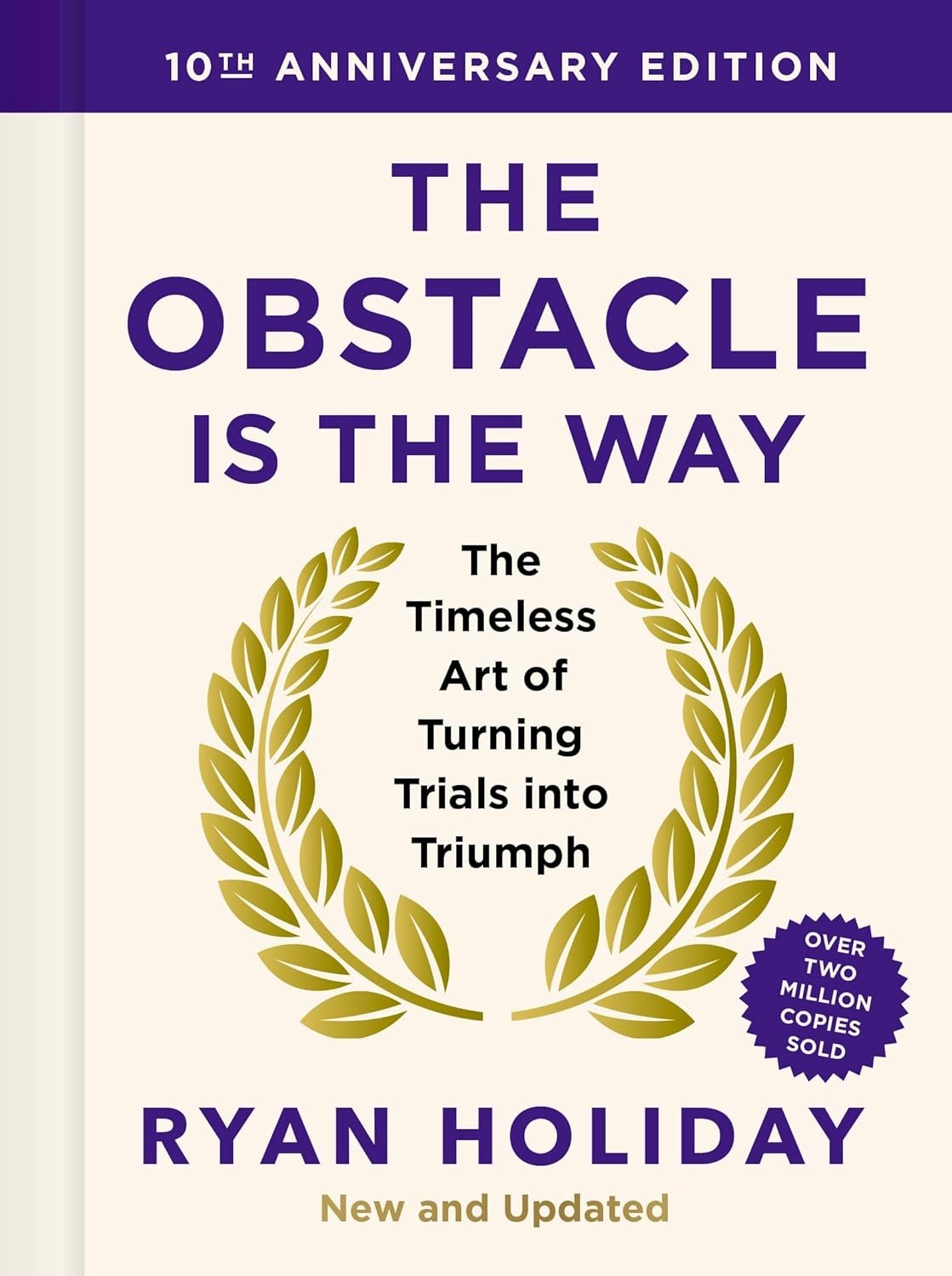
In 2014, a then-unknown author named Ryan Holiday published a book that would become one of the most influential works on personal development and success philosophy of the decade. “The Obstacle is the Way: The Timeless Art of Turning Trials into Triumph” has since sold over two million copies in English alone, been translated into forty languages, and influenced everyone from Super Bowl-winning NFL teams to Silicon Valley entrepreneurs to military leaders.
But what makes this book so powerful? Why has ancient Stoic philosophy captured the imagination of modern readers facing 21st-century challenges? This comprehensive guide explores everything you need to know about “The Obstacle is the Way”—its core principles, key lessons, historical examples, and practical applications that can transform how you face every challenge in your life.
The Origin Story: How Ancient Philosophy Became Modern Bestseller
Ryan Holiday was twenty-five years old when he pitched “The Obstacle is the Way” to his publisher. His previous book had been a bestseller about marketing and media manipulation, and his publishers expected him to write more in that vein. Instead, Holiday proposed a book about an “obscure school of ancient philosophy” called Stoicism.
The initial response was skeptical. The publisher’s offer was less than half what Holiday had received for his first book. His editor hoped he’d “get this philosophy stuff out of his system” and return to business books. Someone Holiday considered a friend privately predicted the book would sell no more than five thousand copies.
They were spectacularly wrong. “The Obstacle is the Way” became a slow-burning success, never hitting huge initial numbers but never going to zero either. Then, in 2015, news broke that both the New England Patriots and Seattle Seahawks had read the book before Super Bowl XLIX. Suddenly, the publisher couldn’t keep it in stock. A decade later, it remains a perennial bestseller.
What Holiday had recognized—and what skeptics initially missed—was that people desperately needed a practical philosophy for navigating obstacles. Not just motivation or positive thinking, but a tested framework for turning adversity into advantage. The Stoics had developed exactly that over two millennia, and Holiday made it accessible for modern readers.

The Three Core Disciplines: Perception, Action, and Will
Holiday structures his entire approach around three disciplines that the ancient Stoics practiced: Perception, Action, and Will. Understanding these three components is essential to grasping the book’s framework and applying its lessons.
Perception: How You See Determines What You See
The first discipline is perception—how we see and interpret the obstacles we face. Holiday argues that we’re rarely defeated by obstacles themselves; we’re defeated by our perception of obstacles. When something goes wrong, we immediately layer judgment, catastrophizing, and negative interpretation onto what happened, transforming manageable challenges into overwhelming crises.
The Stoic approach to perception involves several key practices. First, objective observation—seeing what actually happened, stripped of emotional interpretation. Someone didn’t respond to your email; that’s a fact. “They’re ignoring me and this relationship is ruined” is interpretation. Learning to distinguish between these two is transformative.
Second, deliberate reframing—choosing perspectives that empower rather than paralyze. Rubin “Hurricane” Carter was wrongfully imprisoned for nineteen years. He could have framed this as unendurable injustice (which it was). Instead, he chose to view his cell as a monastery and his time as opportunity for education. His perception didn’t change his circumstances, but it changed everything about his experience and outcome.
Holiday dedicates the first third of the book to perception because it’s the foundation everything else builds on. Master your perception, and you’ve taken the crucial first step toward turning any obstacle into advantage.
Action: Persistent, Creative, Pragmatic Movement
The second discipline is action—what you actually do about your obstacles. Holiday emphasizes that the Stoics weren’t contemplative philosophers debating abstract concepts; they were people of action who faced real challenges requiring real solutions. Philosophy, for them, was something you did, not just something you thought about.
The action discipline involves several key components. First, getting started even when you’re not ready. Waiting for perfect conditions or complete information is often just another form of paralysis. The Stoics believed in moving forward with the information available, learning and adjusting as you go.
Second, persistence through setbacks. Holiday shares the story of Ulysses S. Grant, who failed at farming, business, and multiple careers before the Civil War gave him the opportunity to demonstrate the military genius he’d always possessed. Grant’s persistence through years of failure prepared him for eventual success as the general who won the war.
Third, iteration—treating every attempt as an experiment that generates useful information. Thomas Edison didn’t fail ten thousand times; he successfully found ten thousand ways that didn’t work. This Stoic approach to action means ego death: being willing to be wrong, to look foolish, to fail publicly if it moves you toward what actually works.
Holiday fills this section with practical advice: follow the process rather than fixating on outcomes, practice ruthless pragmatism, use indirect approaches when direct ones fail, and direct your energy toward high-leverage actions rather than busy work.
Will: Enduring What Cannot Be Changed
The third discipline is will—maintaining your purpose, dignity, and inner strength when facing obstacles that cannot be overcome through perception or action. This is where Stoicism reveals its true depth, moving beyond success strategy to become a philosophy for enduring life’s inevitable hardships.
The will discipline involves building what the Stoics called your “inner citadel”—a fortress within your mind that cannot be breached by external events. Holiday explains this through the example of James Stockdale, a Navy pilot who spent seven years as a prisoner of war in Vietnam, much of it in solitary confinement under torture. As his plane was hit, Stockdale said to himself, “I’m leaving the world of technology and entering the world of Epictetus.”
Stockdale survived by applying Stoic principles: accepting what he couldn’t control (imprisonment, torture), focusing on what he could (his conduct, his principles, his relationships with fellow prisoners), and maintaining his dignity regardless of circumstances. His inner citadel remained inviolate even when everything external was taken from him.
Holiday explores several practices for building will: negative visualization (imagining loss to appreciate what you have), amor fati (learning to love your fate), perseverance (maintaining commitment indefinitely), and connecting to something larger than yourself. These aren’t feel-good exercises; they’re tools that enabled people throughout history to endure genuine tragedy without being destroyed by it.
The Central Insight: The Obstacle Is the Way
The book’s title and central principle comes from Marcus Aurelius, the Roman emperor who practiced Stoicism while ruling an empire beset by plague, war, and constant crisis. He wrote in his private journal: “The impediment to action advances action. What stands in the way becomes the way.”
This isn’t a cute saying or motivational slogan. It’s a profound observation about how reality works. Holiday demonstrates through dozens of historical examples that obstacles often contain within themselves the seeds of their own defeat. The energy that creates the problem can be redirected to solve it. The difficulty that threatens to stop you can become the catalyst that propels you forward.
Thomas Edison’s laboratory burned down, destroying years of work. Most people would see only catastrophe. Edison saw an opportunity to start fresh, eliminating past mistakes. Within three weeks, his team invented the modern phonograph. The obstacle became the way.
Steve Jobs was fired from Apple, the company he founded. The rejection seemed devastating. But his years building NeXT and Pixar taught him lessons he later brought back to Apple, leading to the company’s greatest period of innovation. The obstacle redirected him toward necessary growth.
Understanding this principle intellectually is one thing; actually applying it is another. Holiday structures the entire book around practical methods for transforming obstacles using the three disciplines. It’s not enough to believe the obstacle is the way—you must develop the skills to make it so.
Historical Examples That Prove the Philosophy Works
One of the book’s greatest strengths is Holiday’s use of historical examples to prove that Stoic principles work in the real world under real pressure. These aren’t made-up stories or theoretical scenarios; they’re accounts of people who actually transformed devastating obstacles into advantages.
Marcus Aurelius faced unrelenting adversity as Roman emperor: plague that killed millions, constant warfare, betrayal from his most trusted general, the deaths of most of his children. He could have become bitter, angry, or despairing. Instead, he chose to see each challenge as an opportunity to practice virtue. His private writings—later published as Meditations—show someone working daily to maintain Stoic principles under extreme pressure.
Amelia Earhart faced the obstacle of being a woman in early aviation, a field completely dominated by men. Rather than fighting this directly, she used the novelty and attention it generated to promote aviation and advance her career. The obstacle became her platform.
Theodore Roosevelt was a sickly, asthmatic child who doctors warned might not survive to adulthood. His father told him he must “make the body.” Through years of physical training, Roosevelt transformed himself from weak child to one of the most vigorous presidents in history. His childhood weakness became the foundation for his legendary strength.
Holiday fills the book with similar examples spanning millennia: Demosthenes overcoming a speech impediment to become history’s greatest orator, Grant persisting through repeated failures before his ultimate success, Carter finding education and dignity in wrongful imprisonment. Each story illustrates specific Stoic principles in action and proves that the philosophy works for real people facing real obstacles.
Why the Book Resonates With Modern Readers
“The Obstacle is the Way” has found audiences across surprisingly diverse groups: NFL teams, military units, tech startups, Fortune 500 companies, artists, entrepreneurs, and everyday people facing personal challenges. What explains this broad appeal?
First, the book addresses a universal human experience: facing obstacles. Everyone encounters setbacks, failures, and challenges. Unlike many self-help books that promise obstacle-free success through the right technique, Holiday acknowledges that obstacles are inevitable and provides a framework for handling them.
Second, the philosophy is practical, not just inspirational. Holiday doesn’t just tell you that obstacles can become opportunities; he shows you how to make that transformation through specific practices and approaches. The book is a manual, not just motivation.
Third, the historical examples provide both inspiration and instruction. When you’re facing a difficult obstacle, reading about how others overcame similar or worse challenges gives you both hope and practical guidance. You’re not alone in your struggle, and others have found ways through.
Fourth, the book offers an alternative to toxic positivity. Holiday doesn’t pretend bad things are good or tell you to just think positively. He acknowledges genuine difficulty while refusing to add unnecessary suffering through catastrophizing or learned helplessness. This balance resonates with people tired of unrealistic optimism.
Finally, the timing was right. The book published in 2014, just as many people were discovering limitations of conventional success advice and seeking something more substantial. Stoicism offered an ancient but newly relevant approach to modern challenges.
Key Lessons and Takeaways From the Book
While the book contains dozens of lessons and insights, several key takeaways form the core of Holiday’s message:
You control your perception, always. No matter what happens to you, you maintain complete control over how you see it. This isn’t just about positive thinking; it’s about seeing reality clearly without the distorting layers of emotional interpretation, catastrophizing, or victimhood.
Action beats analysis. Thinking about obstacles accomplishes nothing; acting on them changes everything. The Stoic approach favors persistent, creative, pragmatic action over endless planning and preparation.
Focus on what you control. The fundamental Stoic practice is distinguishing what’s within your control from what isn’t, then pouring your energy into the former while accepting the latter. This simple sorting dramatically reduces anxiety and increases effectiveness.
Obstacles are feedback, not failure. Every setback, rejection, and difficulty teaches you something if you’re willing to learn. The question isn’t whether obstacles will come; it’s whether you’ll use them for growth.
Your inner state is your fortress. External circumstances can’t harm you without your consent. Build your inner citadel—your character, your principles, your chosen attitude—and you become nearly impossible to break.
Persistence trumps talent. Many of Holiday’s examples succeeded not because they were the most talented but because they refused to quit. Persistence through difficulty is itself a superpower.
Purpose provides resilience. When you’re fighting for something larger than yourself—a cause, a community, a set of values—you access reserves of strength you didn’t know you had.
Criticisms and Limitations of the Book
No book is perfect, and “The Obstacle is the Way” has faced some legitimate criticisms worth acknowledging. Some philosophers argue that Holiday simplifies Stoicism, stripping away nuance and complexity for popular accessibility. This is partly true—the book is introductory, not comprehensive. But accessibility is also its strength, making ancient wisdom available to people who’d never read Marcus Aurelius.
Some readers note that many of Holiday’s examples are historically privileged individuals—emperors, generals, successful entrepreneurs. The Stoic response is that the philosophy was also practiced by slaves (Epictetus), prisoners (Stockdale), and ordinary people facing ordinary obstacles. The principles apply regardless of station.
Others point out that severe trauma, mental illness, or systemic oppression can’t always be overcome through philosophy alone. Holiday acknowledges this in the tenth anniversary edition, emphasizing that Stoicism isn’t a cure-all but a framework that can help within realistic limitations.
Some critics argue that “the obstacle is the way” can become toxic if interpreted as “all obstacles are good” or used to justify not addressing genuine injustice or avoiding necessary help. Holiday is clear that this is a misreading—the philosophy is about your response to obstacles, not about obstacles themselves being good.
The Book’s Impact and Legacy
A decade after publication, “The Obstacle is the Way” has become one of the foundational texts of the modern Stoicism revival. Before this book, Stoicism was largely confined to academic philosophy departments. Now, it’s discussed in locker rooms, boardrooms, and living rooms worldwide.
The book launched Holiday’s career as a popular philosopher. He’s since written multiple bestselling books on Stoicism, started the Daily Stoic platform that reaches millions of people daily, and opened an independent bookstore (The Painted Porch) that sells Stoic and philosophical texts.
More importantly, the book has influenced how countless individuals face obstacles. NFL teams credit it with championship mindsets. Entrepreneurs cite it as crucial to navigating business challenges. Military personnel have used it in combat zones. Teachers have introduced it in schools. Therapists recommend it to clients.
The book has also sparked broader interest in Stoic philosophy. Sales of ancient Stoic texts like Marcus Aurelius’s Meditations and Epictetus’s Discourses have surged. Academic philosophers note renewed public interest in Stoicism. A new generation is discovering that two-thousand-year-old wisdom remains profoundly relevant.
Practical Application: Using the Book’s Lessons
Reading “The Obstacle is the Way” is valuable; applying it is transformative. Holiday structures the book to facilitate this application, providing not just theory but practical exercises and approaches.
Start by identifying a current obstacle you’re facing. Apply the three-part framework: How can you shift your perception of this obstacle? What action can you take right now? What aspects must you accept while maintaining your will to continue?
Use the historical examples as templates. When Edison faced disaster, what did he do? When Grant faced failure, how did he respond? When Stockdale faced imprisonment, what kept him going? These examples aren’t just inspiring; they’re instructional.
Implement Stoic practices from the book: morning preparation for obstacles, evening review of how you handled challenges, journaling about perception shifts, and regular reading of Stoic texts. These practices compound over time, gradually transforming how you automatically respond to obstacles.
Join the growing community of modern Stoics. Holiday’s Daily Stoic platform, online communities, book clubs, and discussion groups provide support and accountability for maintaining practice. Philosophy isn’t meant to be practiced alone.
Conclusion: Why This Book Matters More Than Ever
Ten years after publication, “The Obstacle is the Way” feels more relevant, not less. The obstacles we face may have changed—pandemic, economic uncertainty, political polarization, technological disruption—but the need for a practical philosophy to navigate them remains constant.
What Holiday accomplished in this book is remarkable: he took ancient wisdom that had been gathering dust in academic libraries and made it accessible, practical, and compelling for modern readers. He proved that Stoicism isn’t just historical curiosity but living philosophy with immediate application to contemporary challenges.
The book’s central message—that obstacles can become opportunities, that what stands in the way can become the way—isn’t just inspiring sentiment. It’s a proven approach that has helped people throughout history turn their worst moments into their best opportunities.
Whether you’re facing career challenges, personal setbacks, health issues, or simply the daily obstacles of modern life, “The Obstacle is the Way” provides a framework for transforming adversity into advantage. Not through denial or toxic positivity, but through clear perception, persistent action, and unshakeable will.
The obstacle is the way. Ryan Holiday’s book shows you how to walk that way. The question isn’t whether obstacles will come—they will. The question is whether you’ll have the philosophy, practices, and perspective to turn them into opportunities.
That’s why this book has sold millions of copies, influenced championship teams and successful companies, and launched a modern Stoicism revival. And that’s why it will continue to matter for anyone facing obstacles—which means everyone.
Related posts:
 Who is Ryan Holiday and His Impact on Philosophy
 From Ancient Philosophy to Modern Success: How Stoicism Solves Today’s Problems
 The Real Stories Behind Stoic Philosophy: People Who Transformed Devastating Setbacks Into Victory
 12 Daily Stoic Exercises to Build Unshakeable Resilience and Mental Strength
 How Stoicism Turns Obstacles Into Opportunity: Lessons From The Obstacle Is the Way