
There’s a famous Zen story that Ryan Holiday revisits in Wisdom Takes Work, and it cuts to the heart of why so many intelligent people fail to become wise. A university professor visits a Zen master to learn about enlightenment. As they sit down for tea, the master begins pouring. He pours and pours, and even as the cup overflows, spilling tea onto the table, he continues.
“Stop!” the professor finally shouts. “The cup is full. No more will go in.”
The master sets down the pot and smiles. “Like this cup, you are full of your own opinions and speculations. How can I show you Zen unless you first empty your cup?”
This ancient parable holds a truth that modern society desperately needs to relearn: wisdom begins with emptiness, not fullness.
The Paradox of Expertise
In Wisdom Takes Work, Holiday explores a troubling paradox of modern life—the more we know, the harder it becomes to learn. Our educational systems reward certainty. Our professional cultures punish doubt. Social media algorithms amplify conviction and bury nuance.
The result? We’ve created a world of full cups, where everyone has opinions but few have wisdom.
Holiday draws from both Stoic philosophy and contemporary research to illustrate why this matters. Studies show that experts are often more overconfident than novices, a phenomenon psychologists call the “expert blind spot.” The more you know about a subject, the harder it becomes to see it with fresh eyes.
This isn’t just an academic curiosity—it’s a practical barrier to wisdom. When your cup is full, new information has nowhere to go. Contradictory evidence bounces off. Alternative perspectives slide away. Growth becomes impossible because growth requires space.
What It Means to Empty Your Cup
Emptying your cup doesn’t mean forgetting everything you know or abandoning your hard-won expertise. Holiday is clear on this point: intellectual humility isn’t intellectual weakness.
Instead, emptying your cup means maintaining what Zen practitioners call “beginner’s mind”—an attitude of openness, eagerness, and lack of preconceptions. It’s the willingness to be wrong. The ability to say “I don’t know.” The courage to change your mind in the face of better evidence.
Holiday shares examples from his own life in Wisdom Takes Work, describing moments when his certainty blinded him to truth. He discusses business decisions made with too much confidence, relationships damaged by stubborn pride, and opportunities missed because he thought he already had the answers.
These failures weren’t from lack of intelligence or effort. They came from a full cup—from the inability to receive new information because existing beliefs occupied all available space.
The Cognitive Barriers We Build
Why is emptying the cup so difficult? Holiday identifies several psychological barriers that keep us clinging to our existing beliefs:
The ego’s investment in being right. We don’t just hold opinions—we identify with them. Admitting error feels like admitting inadequacy. This is why intellectual debates often feel like personal attacks. When someone challenges your beliefs, they’re challenging your identity.
The sunk cost of existing knowledge. You’ve invested time, energy, and perhaps money in developing your current understanding. Abandoning it feels wasteful. But as Holiday notes, wisdom isn’t about defending past investments—it’s about making smart decisions now.
Social pressure and tribal belonging. Our beliefs signal group membership. Changing your mind can feel like betraying your tribe. This is particularly acute in polarized times, when intellectual flexibility is often mistaken for weakness or disloyalty.
The comfort of certainty. Doubt is uncomfortable. Certainty is reassuring. Our brains crave the stability of firm beliefs, even when those beliefs are wrong. Emptying your cup means tolerating ambiguity, and ambiguity creates anxiety.
The Practice of Intellectual Humility
How do you actually empty your cup? Holiday offers practical strategies drawn from both ancient philosophy and modern psychology:
Question your certainty. When you find yourself absolutely sure about something, that’s precisely when you should question yourself. Holiday suggests asking: “What would it take to change my mind about this?” If the answer is “nothing,” your cup is dangerously full.
Seek disconfirming evidence. We naturally gravitate toward information that confirms what we already believe. This is confirmation bias, one of the most powerful cognitive traps. Wisdom requires deliberately seeking out perspectives that challenge your views. Read arguments from people you disagree with. Ask critics to explain their positions. Actively hunt for reasons you might be wrong.
Embrace “I don’t know.” These might be the three most powerful words in the wisdom-seeker’s vocabulary. Holiday emphasizes that admitting ignorance isn’t shameful—it’s honest. More importantly, it creates space for learning. When you say “I don’t know,” you open the door to discovery.
Study your mistakes deeply. Every error is an opportunity to empty your cup. Holiday recommends keeping a “failure resume”—a running list of times you were wrong, what you learned, and how you changed. This practice transforms mistakes from sources of shame into sources of wisdom.
The Socratic Method: Wisdom Through Questions
Holiday dedicates substantial attention in Wisdom Takes Work to Socrates, history’s greatest practitioner of the empty cup. Socrates claimed to know nothing, yet through questioning, he revealed the ignorance of those who claimed to know everything.
The Socratic method isn’t just about winning arguments—it’s about pursuing truth through collaborative inquiry. Socrates would ask simple questions, following the logic wherever it led, often revealing contradictions in his interlocutor’s beliefs.
What made Socrates wise wasn’t what he knew, but his recognition of what he didn’t know. His cup was always empty, always ready to receive new insights. This is why he was sentenced to death—not for what he taught, but for exposing the full cups of Athens’s supposed wise men.
Holiday encourages readers to adopt a Socratic approach in their own lives. Before asserting what you believe, ask yourself: “How do I know this? What assumptions am I making? What evidence would change my view?” These questions keep your cup from filling with unexamined beliefs.
The Relationship Between Humility and Wisdom
There’s a reason intellectual humility appears so prominently in Wisdom Takes Work. Holiday argues that humility isn’t just one aspect of wisdom—it’s the foundation upon which all other wisdom rests.
Without humility, you cannot learn from others. Without humility, you cannot learn from experience. Without humility, you cannot change and grow. A full cup is a static cup—it may contain knowledge, but it cannot cultivate wisdom.
The wisest people Holiday profiles in the book all share this quality. Marcus Aurelius, despite being emperor of Rome, constantly reminded himself of his limitations and mortality. Benjamin Franklin created a system for tracking his virtues and failings. Naval Ravikant, the modern entrepreneur and thinker, regularly admits uncertainty and changes his views publicly.
These individuals achieved wisdom not despite their humility but because of it. Their empty cups allowed them to receive insights that others, full of their own certainty, missed entirely.
Emptying the Cup in the Age of Information Overload
Modern life presents a unique challenge to intellectual humility. We’re bombarded with information, opinions, and hot takes. The pressure to have a position on everything is intense. Admitting ignorance feels like falling behind.
But Holiday argues this makes emptying your cup more important than ever. In Wisdom Takes Work, he writes about the danger of shallow omniscience—the illusion of understanding that comes from skimming headlines and scrolling through threads.
True wisdom in the information age means being selective about what you allow into your cup. It means having the humility to say “I don’t have enough information to form an opinion on that.” It means recognizing that not every question demands an immediate answer.
This is countercultural advice. Our world rewards confidence and punishes doubt. But wisdom has never been about following the crowd—it’s about pursuing truth, regardless of social pressure.
Practical Steps for Daily Practice
Emptying your cup isn’t a one-time event—it’s a daily discipline. Holiday recommends several practices that maintain intellectual humility:
Morning reflection. Start each day by acknowledging what you don’t know. Holiday suggests asking yourself: “What am I sure about that might be wrong?” This primes your mind for learning rather than defending.
Change your mind publicly. When you discover you were wrong about something, announce it. This trains your ego to accept correction and signals to others that growth matters more than being right. Holiday himself does this regularly in his writing and podcast.
Diversify your inputs. If you only consume information from people who think like you, your cup will fill with echo-chamber certainty. Deliberately seek out different perspectives, even—especially—those that challenge you.
Practice saying “Tell me more.” When someone expresses a view you disagree with, resist the urge to immediately argue. Instead, ask them to elaborate. You might learn something. You might not. Either way, you’ve practiced the art of the empty cup.
The Freedom of Not Knowing
Perhaps the most liberating insight from Wisdom Takes Work is this: you don’t have to have all the answers. The pressure to be right about everything is exhausting and ultimately counterproductive.
When you empty your cup, you free yourself from the burden of defending every position. You can change your mind without shame. You can admit confusion without embarrassment. You can learn from anyone, because you’re not competing to prove your superiority.
This freedom is what makes wisdom possible. As long as your cup is full, you’re trapped by what you already believe. Once you empty it, the entire world becomes your teacher.
Holiday closes this section of Wisdom Takes Work with a powerful reminder: the goal isn’t to have an empty cup forever. The goal is to maintain the flexibility to empty and refill your cup as often as truth demands. Some beliefs deserve to stay. Others must go. Wisdom is knowing the difference—and that requires a cup that’s never too full to pour out.
Ryan Holiday’s Wisdom Takes Work: The Ultimate Guide to Ancient Wisdom for Modern Life

Related posts:
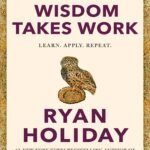 Ryan Holiday’s “Wisdom Takes Work”: Why Philosophy Only Matters When It’s Practiced
 Improve Your Curiosity: Why Asking Questions Is the Beginning of Wisdom (Wisdom Takes Work By Ryan Holiday)
 How to Think for Yourself in an Age of Groupthink (Wisdom Takes Work By Ryan Holiday)
 Stoic Wisdom: How Hardship Builds Character (Wisdom Takes Work by Ryan Holiday)
 Lifelong Learning: Why the Wisest People Never Stop Being Students (Wisdom Takes Work by Ryan Holiday)