Mate Value in Evolutionary Psychology: The Hidden Metric of Attraction
Why do some people attract attention effortlessly while others struggle?
Why does status shift romantic leverage?
Why do dating dynamics feel unequal at times?
The concept of mate value in evolutionary psychology offers a structured answer.
Mate value refers to the overall desirability of an individual in the mating market, based on traits that historically increased reproductive success.
This includes qualities such as:
- Physical attractiveness
- Health
- Status
- Resources
- Intelligence
- Personality stability
- Commitment potential
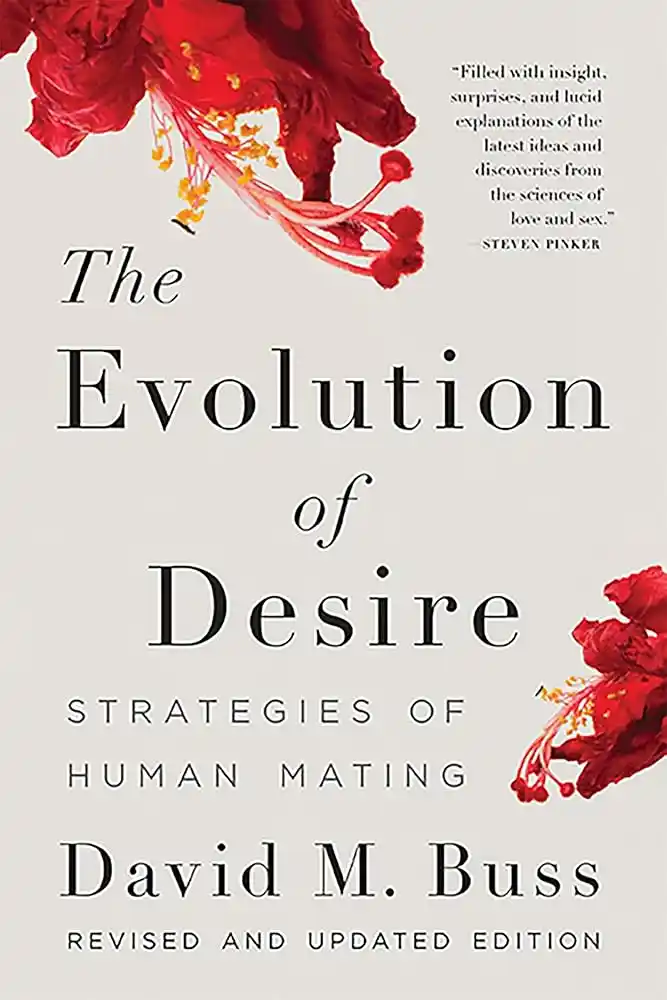
In The Evolution of Desire, David M. Buss explains that mate preferences shape competition and attraction patterns across cultures. When certain traits are consistently desired, individuals possessing those traits gain advantage.
He writes:
“The qualities desired in a mate create the conditions for competition.”
Mate value is not a moral ranking.
It is a strategic positioning concept.
Understanding mate value in evolutionary psychology clarifies much of modern dating behavior — without reducing people to numbers.
What Determines Mate Value?
Mate value is not a single trait.
It is a composite of characteristics that signal reproductive and relational advantage.
For men, high mate value often correlates with:
- Status and social dominance
- Resource acquisition ability
- Ambition
- Confidence
- Emotional stability
For women, high mate value often correlates with:
- Youth
- Physical attractiveness
- Health indicators
- Social warmth
- Nurturing signals
These patterns reflect cross-cultural findings.
Buss notes that women value qualities signaling “ability and willingness to invest.”
Men, by contrast, consistently prioritize cues linked to fertility and health.
Mate value in evolutionary psychology emerges from the interaction between these preferences.
It is not subjective fantasy.
It is shaped by ancestral pressures.

Relative Mate Value and Dating Dynamics
Mate value is not absolute.
It is relative.
Attraction occurs within mating pools.
In smaller communities, mate value calibrates locally.
In digital environments, mate value calibrates globally.
Social media and dating apps distort perception of relative mate value.
Highly attractive individuals receive disproportionate attention.
Algorithms amplify visibility.
This increases perceived competition.
Evolutionary psychology predicts this dynamic.
When mate choice expands, selectivity increases.
When selectivity increases, competition intensifies.
Understanding mate value helps individuals:
- Avoid unrealistic comparison
- Recognize positional dynamics
- Focus on self-development instead of resentment
Resentment toward higher mate value individuals reflects misunderstanding of selection pressure.
Competition is not cruelty.
It is structural.
Assortative Mating: Why Similar Levels Pair Up
One consistent finding in evolutionary psychology is assortative mating.
People tend to pair with others of similar mate value.
Attractive individuals tend to pair with attractive individuals.
High-status individuals tend to pair with high-status individuals.
This stabilizes mating markets.
Buss’s research shows that individuals often seek partners slightly above their own perceived mate value — but typically pair within similar range.
When mismatches occur, instability increases.
Understanding mate value reduces confusion around this pattern.
It explains why:
- High-status individuals have more optionality
- Highly attractive individuals receive more pursuit
- Self-perception influences romantic outcomes
Mate value influences leverage.
But leverage does not equal worth.
Self-Perceived Mate Value
Perception matters as much as objective traits.
Individuals with high self-perceived mate value behave differently.
They:
- Set higher standards
- Show less desperation
- Demonstrate greater selectivity
- Project confidence
Confidence itself increases perceived mate value.
Evolutionary psychology shows that dominance and status signaling influence attraction.
However, inflated self-perception without substance collapses over time.
True mate value integrates:
- External traits
- Internal stability
- Relational reliability
Substance outperforms performance long-term.
Mate Value and Intrasexual Competition
Mate value influences same-sex competition.
Men compete for status and visibility because these increase mate value.
Women compete for attractiveness and social desirability because these increase mate value.
This competition is often subtle.
Status symbols.
Physical enhancement.
Career achievement.
Fitness optimization.
Modern culture amplifies this through constant comparison.
Evolutionary psychology explains why competition feels personal.
Mate value determines romantic opportunity.
Romantic opportunity affects reproduction.
In ancestral environments, this mattered profoundly.
Today, the stakes feel existential — even when they are not.
Understanding this reduces emotional reactivity.
Mate Value and Strategy Choice
Mate value influences short-term vs long-term mating strategy activation.
Individuals with higher mate value often have greater short-term opportunity.
Greater opportunity increases temptation toward short-term strategy.
However, high mate value individuals also possess strong long-term pairing power.
Strategy depends on intention.
Evolution provides flexibility.
Character determines direction.
Buss emphasizes that humans evolved “a repertoire of mating strategies.”
Mate value determines which strategies are accessible.
But accessibility does not mandate action.
Hypergamy and Mate Value
Hypergamy refers to the tendency to seek partners of equal or higher status.
In evolutionary psychology, this is closely related to mate value calibration.
Women historically benefited from selecting partners with higher resource potential.
This created upward selection pressure.
Men, by contrast, historically prioritized fertility cues over status parity.
Hypergamy is often misunderstood as greed.
Evolutionary psychology frames it as strategic investment optimization.
However, modern economic independence shifts dynamics.
When women possess their own resources, selection criteria broaden.
Mate value becomes multidimensional.
Status alone no longer guarantees desirability.
Emotional intelligence, stability, and integrity gain prominence.
The Danger of Reducing Humans to Scores
Mate value in evolutionary psychology explains patterns.
It does not define human dignity.
Reducing oneself or others to “ratings” reflects insecurity, not science.
Evolutionary theory describes tendencies at population levels.
Individuals are complex.
High-status individuals may lack character.
Highly attractive individuals may lack emotional maturity.
True long-term mate value integrates:
- Reliability
- Emotional availability
- Integrity
- Stability
Evolution favored cooperation alongside competition.
We evolved for bonding, not only selection.
Improving Mate Value Without Losing Integrity
Self-improvement is often framed competitively.
But mature development focuses on:
- Physical health
- Skill acquisition
- Financial competence
- Emotional regulation
- Communication ability
These increase mate value naturally.
Not as manipulation.
As alignment.
Confidence rooted in real growth is different from performance.
Evolutionary psychology explains why these traits attract.
It does not require obsession.
Growth motivated by resentment collapses.
Growth motivated by integrity compounds.
Criticisms and Nuance
Critics argue mate value language commodifies relationships.
That risk exists when oversimplified.
But ignoring mate value dynamics creates confusion.
Attraction patterns operate whether acknowledged or not.
The responsible stance is balanced.
Recognize structure.
Preserve dignity.
Mate value explains leverage — not worth.
Frequently Asked Questions
What is mate value in evolutionary psychology?
Mate value refers to an individual’s overall desirability in the mating market based on traits that historically increased reproductive success.
Does mate value mean ranking people?
No. It describes relative desirability patterns, not human worth.
Can mate value change?
Yes. Physical fitness, financial competence, emotional stability, and confidence can all increase perceived mate value.
Why do attractive people pair with attractive people?
Assortative mating leads individuals to pair with others of similar mate value levels.
Is mate value relevant in modern dating?
Yes. Digital environments amplify mate value visibility and competition dynamics.
Conclusion: From Comparison to Conscious Growth
Mate value in evolutionary psychology explains patterns of attraction and competition.
It does not reduce us to commodities.
We inherit selection systems.
We shape character.
The question is not how to dominate the mating market.
The question is how to build substance that attracts naturally.
When mate value aligns with integrity, attraction becomes stable.
And stability is where real connection begins.
Related posts:
 Evolutionary Mating Psychology: The Science of Human Desire
 The Complete Guide to Evolutionary Mating Psychology: How Our History Affects Attraction, Desire, and Human Relationships
 Short-Term vs Long-Term Mating Strategies: An Evolutionary Psychology Guide
 Sexual Competition in Humans Explained By Evolutionary Psychology
 Sexual Selection in Humans: How Evolutionary Psychology Explains Human Attraction