Male vs Female Mate Preferences: What Evolution Reveals
Why do men and women often prioritize different traits in dating?
Why do conversations about attraction become polarized so quickly?
And why, despite cultural change, do certain patterns persist across continents, economic systems, and generations?
Evolutionary psychology offers an explanation that is neither accusatory nor sentimental. It is structural.
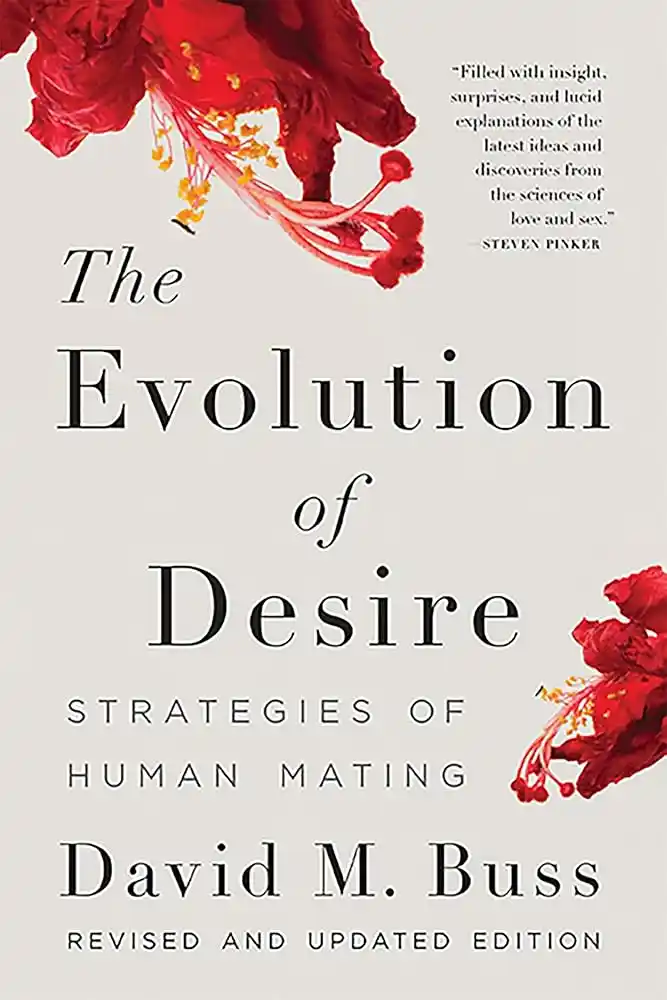
In The Evolution of Desire, David M. Buss summarizes decades of cross-cultural research on mate preferences and concludes that consistent differences between men and women are not random cultural accidents. They reflect different adaptive challenges faced throughout human history.
He writes:
“Women’s greater obligatory parental investment makes them more discriminating in mate selection.”
That sentence alone explains much of modern dating friction.
But to understand it properly, we need nuance.
This article explores male vs female mate preferences through the lens of evolutionary psychology — without reducing individuals to caricatures and without ignoring biological reality.
Understanding difference is not about fueling division. It is about reducing confusion.
The Evolutionary Foundation of Mate Preferences
Every species faces the same fundamental problem: reproduction.
But reproduction is not symmetrical between males and females.
For women, reproduction historically involved:
- Pregnancy
- Childbirth
- Lactation
- Increased physical vulnerability
For men, minimum biological investment could theoretically end at conception.
That asymmetry shaped psychological evolution.
Natural selection favors traits that increase reproductive success. Over generations, preferences that led to better outcomes became more common.
This does not mean conscious calculation. It means evolved emotional biases.
As Buss states:
“Sexual strategies are adaptive solutions to mating problems.”
Different problems. Different solutions.

What Women Tend to Prefer in Long-Term Mates
Across 37 cultures, spanning six continents, research revealed striking consistency in female preferences for long-term partners.
Women, on average, place greater emphasis on:
- Financial prospects
- Ambition and industriousness
- Social status
- Stability
- Emotional commitment
- Intelligence
These preferences appear in both traditional and industrialized societies.
Why?
Because historically, selecting a mate with resources and commitment increased offspring survival rates.
Children raised with reliable provisioning had higher survival odds.
From an evolutionary standpoint, female mate choice became selective.
Buss writes:
“Women value in a mate the qualities that signal the ability and willingness to invest.”
Notice the emphasis on willingness.
Resources alone are insufficient without commitment.
In modern society, resources may manifest as education, career potential, competence, or ambition.
The underlying signal remains stability.
This does not imply that women consciously scan bank accounts. It suggests that cues of competence and direction activate attraction systems.
Understanding this helps men approach growth without resentment.
A grounded man builds himself not to appease preference — but to embody capability.
What Men Tend to Prefer in Long-Term Mates
Men, across cultures, consistently prioritize different traits in long-term mate selection.
The most replicated pattern is a preference for:
- Youth
- Physical attractiveness
- Signs of fertility
Youth correlates with reproductive potential.
Physical cues — such as clear skin, facial symmetry, waist-to-hip ratio — historically signaled health and fertility.
Because men faced paternity uncertainty, reproductive viability became central.
Men could father many offspring, but only if fertile partners were selected.
Buss explains that male preferences reflect the adaptive problem of identifying fertility.
These patterns appear across societies, even where gender equality is high.
That persistence suggests deep evolutionary roots.
It is critical to approach this insight carefully.
Understanding male attraction patterns does not justify objectification. It explains the instinctual architecture.
Maturity transforms instinct into respect.
Short-Term Mating: Where Differences Amplify
The divergence between male and female mate preferences becomes more pronounced in short-term mating contexts.
Men, on average, show greater willingness for casual sex.
Research consistently finds that men report lower thresholds for sexual access, fewer criteria for short-term partners, and greater desire for sexual variety.
Why?
Because from an evolutionary standpoint, short-term mating historically carried lower biological cost for men.
Women, by contrast, faced higher risks:
- Pregnancy
- Resource loss
- Reputation damage
- Reduced long-term mate value
However, evolutionary psychology does not claim women lack short-term strategies.
Under certain conditions — such as access to high genetic quality partners — women also pursue short-term mating.
Human mating psychology is conditional.
Context matters.
Environment matters.
Individual differences matter.
The stereotype of “men always want sex, women always want commitment” oversimplifies reality.
But statistical patterns remain robust.
Emotional vs Sexual Infidelity: A Consistent Difference
One of the most famous findings in evolutionary psychology concerns jealousy triggers.
Studies repeatedly show that:
- Men are more distressed by sexual infidelity.
- Women are more distressed by emotional infidelity.
From an evolutionary perspective, this makes sense.
For men, sexual infidelity threatened paternity certainty.
For women, emotional infidelity threatened resource commitment.
Buss describes jealousy as:
“An emotion designed to alert us to the threat of infidelity.”
Jealousy is not pathology. It is defense.
It becomes destructive when unmanaged, but its existence is adaptive.
Understanding this difference reduces misinterpretation.
When men and women react differently to betrayal, they are not necessarily exaggerating. They are responding to different ancestral threats.
Awareness invites compassion.
Intrasexual Competition: The Hidden Dynamic
Male vs female mate preferences do not operate in isolation.
They shape competition within each sex.
Men compete primarily through status hierarchies.
- Achievement
- Dominance
- Resource acquisition
- Visibility
Women compete more often through attractiveness signaling.
- Physical presentation
- Youth cues
- Social reputation
This does not mean individuals cannot cross patterns. It means the statistical trend is observable.
Intrasexual competition drives self-improvement — but also insecurity.
Modern social media amplifies these dynamics dramatically.
Status is quantified.
Beauty is filtered.
Comparison is constant.
Evolutionary psychology explains why this feels so intense.
We are responding with ancient brains to hyper-modern stimuli.
Are These Differences Changing?
One common question: if society becomes more equal, will mate preferences converge?
Research suggests some convergence occurs — but core differences remain.
In highly egalitarian societies, women still value financial prospects and ambition, though the gap narrows slightly.
Men still value youth and physical attractiveness.
Why do differences persist?
Because cultural change operates faster than biological evolution.
Psychological adaptations formed over millennia do not disappear in a few generations.
The responsible approach is integration.
We acknowledge biology without surrendering agency.
Masculinity, Femininity, and Psychological Maturity
Discussions of male vs female mate preferences often degrade into resentment.
That is immature.
Evolutionary psychology is descriptive, not accusatory.
Men and women evolved complementary strategies — not adversarial ones.
Masculinity, when mature, integrates strength and responsibility.
Femininity, when mature, integrates discernment and emotional depth.
The conflict arises when insecurity meets instinct.
Understanding evolved preferences helps individuals build consciously rather than reactively.
A man who understands female selectivity focuses on becoming stable and capable — not resentful.
A woman who understands male attraction patterns focuses on self-worth — not manipulation.
The deeper invitation is growth.
Criticisms and Nuance
It is important to acknowledge critiques.
Some argue evolutionary psychology overemphasizes biological determinism.
Others worry about reinforcing stereotypes.
These critiques deserve attention.
Individual variation is immense.
Cultural forces matter.
Personal history shapes behavior.
But rejecting evolutionary foundations entirely ignores consistent cross-cultural data.
The mature stance is balance.
Biology shapes probability.
Culture shapes expression.
Character shapes choice.
Why Understanding Mate Preferences Matters
Clarity reduces unnecessary hostility.
When men and women understand that different preferences evolved for different reasons, conflict becomes less personal.
Instead of:
“You are shallow.”
It becomes:
“We evolved with different attraction filters.”
Instead of:
“You are demanding.”
It becomes:
“You are prioritizing long-term stability.”
This does not eliminate friction.
But it removes contempt.
And contempt is what destroys relationships.
Evolutionary psychology gives us a map.
Maturity determines how we use it.
Frequently Asked Questions
Are male and female mate preferences biologically determined?
They are biologically influenced but not rigidly fixed. Evolution shaped broad patterns, but culture and individual differences significantly modify behavior.
Why do women value financial stability more than men?
Historically, women bore greater parental investment. Selecting a resource-stable partner increased offspring survival odds.
Why do men prioritize physical attractiveness?
Physical attractiveness often signals youth and fertility, which historically increased reproductive success.
Do these differences apply to everyone?
No. They are statistical trends across populations. Individual preferences vary widely.
Can understanding evolutionary psychology improve dating success?
Yes. It reduces confusion, clarifies expectations, and encourages intentional self-development.
Conclusion: Difference Without Division
Male vs female mate preferences are not evidence of incompatibility.
They are evidence of evolutionary design.
Understanding these patterns does not trap us.
It frees us.
We cannot erase instinct.
But we can elevate it.
And when instinct meets awareness, relationships become less reactive and more intentional.
That is where modern maturity begins.
Related posts:
 Mate Value in Evolutionary Psychology: What It Really Means
 Evolutionary Mating Psychology: The Science of Human Desire
 The Complete Guide to Evolutionary Mating Psychology: How Our History Affects Attraction, Desire, and Human Relationships
 How Women Choose Men According to Evolutionary Mating Psychology
 Short-Term vs Long-Term Mating Strategies: An Evolutionary Psychology Guide