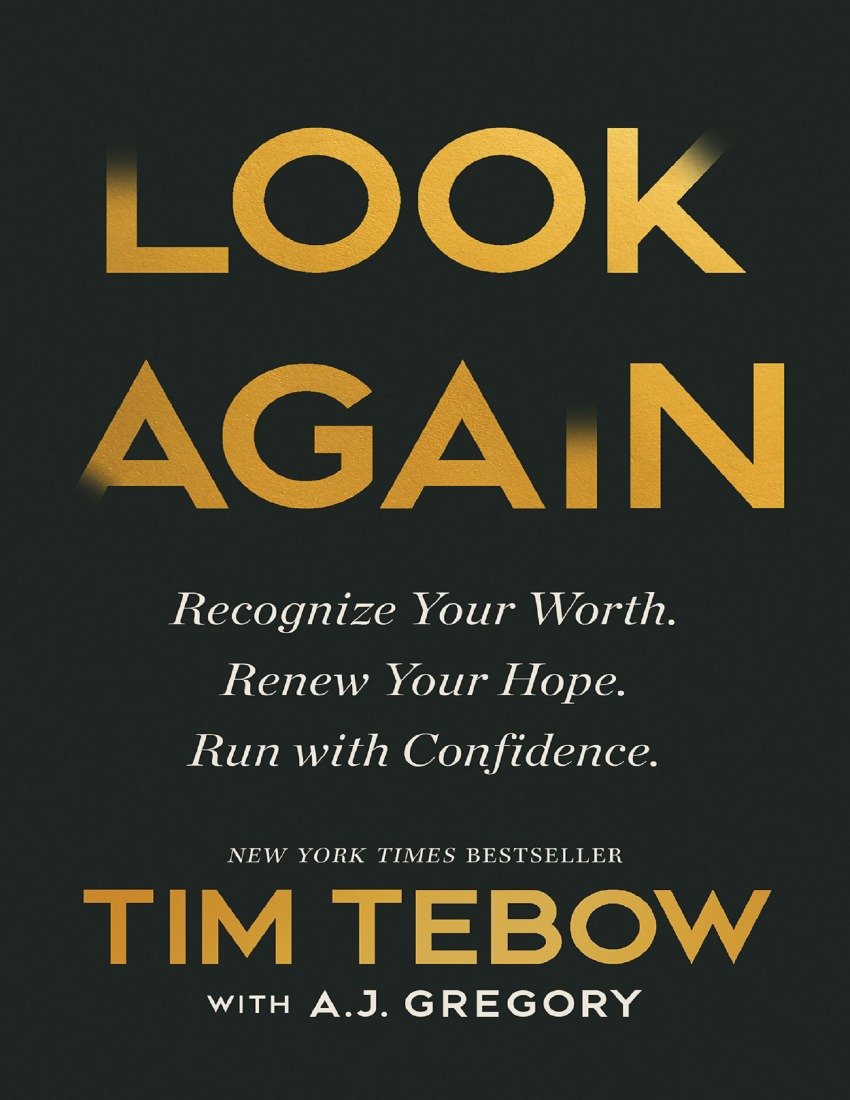
Transform How You See Yourself and Others With These Powerful Insights
Tim Tebow’s groundbreaking book “Look Again: Recognize Your Worth, Renew Your Hope, Run With Confidence” delivers a profound message about human dignity, identity, and purpose. This comprehensive guide breaks down the 25 most impactful takeaways that will transform how you view yourself and the world around you.
Understanding Your Identity and Worth
1. You Are Made in the Image of God—And That Changes Everything
The foundational truth of “Look Again” is that every human being is created in God’s image (imago Dei). This isn’t about what you do, what you achieve, or how others perceive you. Your worth is intrinsic, unchangeable, and divinely established. Unlike animals created “according to their kind,” humans were uniquely crafted “according to God’s image.” This distinction makes you the pinnacle of creation—more valuable than any masterpiece hanging in the world’s greatest museums.
Key insight: When God created humanity, He didn’t just speak us into existence like other creatures. He paused for divine discussion (“Let us make”), personally formed Adam from dust, and breathed His own breath into human nostrils. This intimate act of creation signifies a relationship unlike any other in the universe.
2. Being Comes Before Doing: Your Identity Isn’t Your Resume
In our performance-driven culture, we constantly measure worth by accomplishments, job titles, social status, or productivity. Tim Tebow challenges this toxic mindset by emphasizing that being precedes doing. Your identity as God’s image-bearer is foundational—it comes first. Everything else flows from that launching pad.
When Moses asked God His name, God responded with two simple yet profound words: “I AM.” Your worth isn’t derived from your achievements, failures, or others’ opinions. It stems from who you are as God’s creation—His masterpiece.
3. You Are One of One: Celebrating Uniqueness in a World of Comparison
Out of 8.2 billion people on this planet, there is no one exactly like you. Tim Tebow illustrates this through the fascinating example of bombardier beetles—if God created over 400,000 unique beetle species, how much more intentional was He with humanity?
Scientists can clone genes but cannot clone an individual because God made each person with:
- Unique genetics and gene expression
- Distinct environmental influences
- Individual life experiences
- One-of-a-kind purpose and calling
Practical application: Stop comparing yourself to others on social media or in your workplace. You weren’t created to be anyone else—you were designed to be uniquely you.
Shifting Your Perspective on Others
4. The “Three Words That Changed Everything” Bumper Sticker Revelation
Tim Tebow’s entire ministry was revolutionized by a simple bumper sticker reading: “Image of God.” This profound truth transformed how he saw people with special needs and ultimately every human being. When you see others as God’s image-bearers, it fundamentally changes how you treat them, speak to them, and advocate for them.
5. How You See People Determines How You Treat People
The central question Tebow poses throughout the book is: “How do you see people?” Not surface-level observations, but at your core. Do you measure worth by:
- Social status or achievements?
- What people can do for you?
- Their flaws or failures?
- Their talents or connections?
When we view people through God’s lens rather than society’s flawed standards, we begin to recognize their inherent worth regardless of ability, appearance, or accomplishments.
6. The Hubble Space Telescope Principle: Fix Your Focus
Just as NASA’s Hubble telescope required corrective “glasses” to see the universe clearly after a flawed mirror distorted its vision, our view of people becomes distorted when we judge them by hollow, unreliable standards. With the proper focus—seeing through God’s eyes—the beauty that was always there becomes crystal clear.
The lesson: Small flaws in how we view others can completely distort reality. When we correct our vision to align with God’s perspective, we discover breathtaking worth and dignity in every person.
7. Jesus Spent 70% of His Miracles on the Vulnerable
More than 70% of Jesus’ recorded miracles were for the most vulnerable populations: the poor, widowed, oppressed, and people with disabilities. Sixty percent of His miracles were for those who were “afflicted”—people with special needs in today’s language. This reveals Jesus’ heart and the heart we’re called to emulate.
Learning from Dark History to Protect Human Dignity
8. The Tragic Reality of “Life Unworthy of Life”
Tebow courageously addresses the Nazi T4 program, which systematically murdered at least 275,000 children and adults with disabilities between 1939-1945. This devastating history demonstrates the horrific consequences when society devalues human life based on ability, productivity, or perceived worth.
The book documents heartbreaking stories:
- Erwin, a seven-year-old with Down syndrome, killed in 1943
- Max, a fourteen-year-old who became deaf from meningitis, murdered because he was “unlikely ever to be able to work”
- Adults with disabilities killed simply for failing to meet impossibly high standards of physical and mental capacity
9. History Repeats When We Forget: Guarding Against Dehumanization Today
The phrase “life unworthy of life” hasn’t disappeared—it has simply evolved. Modern society still devalues certain lives through:
- Stigmatizing people with disabilities
- Human trafficking and exploitation
- Aborting babies with special needs
- Neglecting the elderly and marginalized
Critical takeaway: Every time we fail to lift up someone hurting, realize someone’s potential, or stand with someone trying to do right, we’re missing what God has mapped of Himself in each human being.
10. The Olympic Stadium Redemption Story
Tebow describes standing in Berlin’s Olympic Stadium where Hitler once presided over propaganda glorifying the “perfect race” while planning the systematic elimination of people with disabilities. Decades later, that same stadium hosted the Special Olympics—celebrating athletes with special needs.
This powerful image illustrates the concept of “renew”—to flourish once more, to help someone flourish, to begin again. What was created for evil has been reclaimed for God’s glory. Darkness doesn’t get the final word; resurrection lies at the heart of faith.
Practical Application: The Night to Shine Movement
11. Treating People Like Royalty: The Red Carpet Experience
Night to Shine (NTS) is a worldwide prom celebration for individuals with special needs, hosted annually in over 60 countries. The event features:
- Red carpet arrivals with thousands of volunteers cheering
- Crowning ceremonies where each guest becomes a king or queen
- A powerful message: you are valued, seen, and loved
Impact: One mother said, “My daughter will never get married or have children, but tonight she will feel like a princess.” This simultaneously heart-wrenching and hopeful phrase continues to inspire the foundation’s work.
12. The Power of Proximity: Coming Close Changes Everything
When Jesus encountered a man with leprosy—someone society deemed untouchable—He didn’t heal from a distance. He moved closer, touched the man, and said, “I am willing. Be clean!”
The principle: Closeness breeds connection and transcends barriers. By coming close, Jesus showed the man he mattered. We’re called to move toward people who are hurting, not away from them.
13. When It Rains, Stand in the Rain: The Brazil Story
During an NTS event in Brazil, it began pouring rain right before guests arrived. Tebow noticed volunteers running for cover and grew irritated—not because people wanted to stay dry, but because running to shelter sent a clear message to guests that they were less important than personal comfort.
He realized: If we’re going to crown these individuals as royalty, we must treat them that way. Just as Queen Salote Tupou III of Tonga rode in an open carriage during Queen Elizabeth II’s coronation downpour in 1953, showing honor despite personal discomfort, we must demonstrate through actions that people matter more than our convenience.
Application: Your actions reveal your beliefs. What story do your daily choices tell about how you value others?
Renewing Hope in Dark Circumstances
14. The Story of Frantzky: Abandoned Yet Valued by God
Frantzky, a three-year-old Haitian boy weighing only 13 pounds due to severe malnutrition and disabilities, was abandoned by his mother multiple times. In his culture, children with special needs face deep stigma and are often viewed as supernaturally cursed.
After six years of intensive therapy and medical care through myLIFEspeaks ministry, Frantzky impacted countless lives with his trademark smile—stretching from dimple to dimple. Tragically, at age nine, he fell gravely ill. Three hospitals turned him away or provided inadequate care because of his disabilities. He died from a likely treatable virus.
The lesson: Frantzky didn’t die from a virus—he died from being treated like a virus, seen as if he was the problem. This devastating reality fuels the mission to ensure every life is recognized as precious.
15. Hope Is an Anchor for Your Soul
Hebrews reminds us we have a hope that is an anchor for the soul—firm and secure. This anchor doesn’t disappear in darkness; it holds us steady. The gospel didn’t end at the cross. The grave couldn’t contain our reason for hope.
When to remember this:
- Even when you can’t see it—hope
- Even when you don’t feel it—hope
- Even when the pain is loud—hope
16. Human Trafficking: The $236 Billion Industry No One Wants to See
Globally, an estimated 50 million people are trapped in modern slavery, with human trafficking generating $236 billion annually in illegal profits. This industry is larger than the combined value of all 32 NFL franchises.
Shocking statistics:
- Family members are involved in nearly half of child trafficking cases
- Only a small fraction of trafficking victims are identified
- Traffickers take advantage of the vulnerable, exploited, and forgotten
Tim’s challenge: Are we standing for life or watching from a distance? Saying we care while doing nothing? Our actions must reflect our beliefs that every person is created in God’s image and worthy of freedom.
17. Where Evil Exists, God’s Image-Bearers Must Respond
Frank Turek’s question haunts the book: “Where does evil come from?” The answer points to human choice and the brokenness of a fallen world. But the more important question becomes: What will image-bearers of God do in response?
Evil thrives when good people do nothing. Biblical stewardship means leveraging everything we have—time, resources, influence, even our physical well-being—for God’s purposes and the good of others.
Running With Confidence Based on Identity
18. From Royal Identity to Royal Responsibility
Being made in God’s image isn’t just about receiving worth—it comes with a calling. Genesis 1:26-28 reveals humanity’s mandate:
- Rule and have dominion over creation
- Be fruitful and multiply
- Care for and steward God’s creation
This is royal responsibility. We’re called to represent God, reflect His character, and reign with Him over creation. Our role is to manage, protect, and nurture what God has entrusted to us.
19. Stewardship Is About Recognizing “It’s Not Even Mine Anyway”
Tebow shares the story of a military friend who sacrificed his body protecting others and now faces losing his leg. When Tebow apologized about his injury, his friend responded: “It’s not even mine anyway.”
Biblical stewardship means:
- Understanding your life is on loan from God
- Everything—time, resources, even your body—is given for the sake of others and God’s glory
- We’re caretakers (oikonomos), not owners
- Like the parable of the talents, we’re called to leverage everything for His purposes
20. Every Good Gift Demands a Great Response
Just as the demon-possessed man healed by Jesus became one of the first missionaries to non-Jewish communities, believers today have received extraordinary gifts:
- Inheriting eternal life
- The fullness of God’s kingdom
- Empowerment by the Holy Spirit to live out royal identity
These gifts demand a great response. The question isn’t “What do I have to do?” but rather “What do I get to do?”
21. It’s a “Get To,” Not a “Have To” Mindset
There’s a massive difference between obligation and opportunity. In sports, there’s a distinction between the player who groans, “I have to go to practice” versus “I get to go to practice today.” The difference is love.
Mindset shift for sharing the gospel:
- We’re not burdened with a chore—we’re entrusted with the greatest message in history
- God could have used angels, mountains, or the wind, but He chose us
- Sharing hope isn’t an obligation; it’s an incredible privilege
- Someone cared enough to share this message with us—how can we not forward this hope?
22. Setbacks Are Often Setups for Greater Purpose
When Tim Tebow was cut from the Jacksonville Jaguars in 2021, he felt devastated. His sports career appeared over. But immediately after, the Afghanistan crisis unfolded. Because he was available (not on a football team), he could fly to the Middle East and serve refugee families and brave soldiers.
During that flight, something shifted. He thanked God for getting cut. What felt like a setback was actually a setup. God sees the whole picture.
The cross principle: To those watching Jesus on the cross, it looked like despair and defeat. But God saw beyond that moment—the cross wasn’t the end but the gateway to resurrection and eternal life. What looked like loss was actually victory. That’s the power of looking again.
Transforming Your Daily Life
23. Small Steps Matter: The Power of Saying Yes
You might not see the full picture, and you certainly don’t know how God will use your yes, but you can trust:
- His plan is sufficient
- Your yes is always worth it
- Even small obedience creates ripples of impact
Your role: Keep saying yes to Jesus, to people, to the mission, to whatever steps He asks you to take.
24. Look Again at What Many Turn Away From
The book’s title captures a critical principle: transformation begins with awareness. By looking again at what many people turn away from—suffering, injustice, the marginalized, the forgotten—you take the first step toward change.
Three-part framework:
- Recognize Your Worth: Understand your identity as God’s masterpiece
- Renew Your Hope: Find anchor and purpose even in darkness
- Run With Confidence: Take action based on who you are and Whose you are
25. The Red Carpet Isn’t Just for Celebrities—It’s for Everyone
In ancient Greek drama, the color purple signified royalty and was forbidden for common people. Similarly, red carpets have historically been reserved for dignitaries, celebrities, and the elite. But in God’s economy, every person—regardless of ability, status, or condition—deserves to walk the red carpet because they bear His image.
The revolutionary truth: You don’t need to achieve something to be valuable. You don’t need to perform to be worthy. You already are royalty because of who created you.
Conclusion: What Will You Do With This Message?
Tim Tebow’s “Look Again” isn’t just a book—it’s a call to action and a lens adjustment for how we view ourselves and others. The message is clear:
- Every person matters because every person is made in God’s image
- Hope exists even in darkness because resurrection conquered death
- Your actions reveal your beliefs more than your words ever could
- God’s plan is always bigger than our setbacks and disappointments
The question isn’t whether you believe these truths intellectually. The question is: What will you do with them?
Will you look again at:
- Yourself—recognizing your God-given worth beyond achievements and failures?
- Others—seeing the divine image in those society overlooks?
- Your purpose—understanding you’re called to steward everything for God’s glory?
- Your circumstances—trusting that apparent setbacks may be divine setups?
Frequently Asked Questions About Look Again
What is the main message of Tim Tebow’s Look Again?
The core message is that every human being is made in God’s image, possesses inherent worth regardless of ability or circumstances, and is called to recognize this truth in themselves and others while taking action to defend human dignity.
Who should read Look Again?
This book is for anyone struggling with identity issues, purpose, self-worth, or anyone wanting to make a meaningful difference in the world. It’s particularly impactful for people working with vulnerable populations, ministry leaders, and those seeking to align their lives with biblical principles.
What is Night to Shine?
Night to Shine is a worldwide prom night experience for people with special needs ages 14 and older, sponsored by the Tim Tebow Foundation. It takes place annually in February and has served hundreds of thousands of individuals across 60+ countries.
How does Look Again address disability rights?
The book courageously examines historical atrocities against people with disabilities, including the Nazi T4 program, while calling modern readers to recognize the inherent worth of every person regardless of physical or cognitive ability.
What makes Look Again different from other inspirational books?
Unlike books focused solely on personal achievement or feel-good motivation, Look Again challenges readers with difficult historical truths, calls out injustice, and demands action while grounding everything in biblical theology about human dignity.
How can I apply Look Again principles in my daily life?
Start by examining how you see people—especially those who are different from you. Practice proximity by moving toward people who are hurting. Recognize that your worth isn’t tied to performance. Say yes to opportunities to serve others. View your resources as on loan from God to be stewarded for His purposes.
Take Action: Resources and Next Steps
Connect with the Tim Tebow Foundation:
- Visit TimTebowFoundation.org to learn about Night to Shine, anti-human trafficking efforts, and other initiatives
- Volunteer at a local Night to Shine event
- Support efforts to fight human trafficking and exploitation
Deepen Your Understanding:
- Study what Scripture says about imago Dei (image of God)
- Read complementary books on human dignity and identity
- Join or start a book study group focused on Look Again
Make a Difference:
- Identify marginalized or overlooked individuals in your community
- Practice the “coming close” principle—move toward, not away from, people who are hurting
- Evaluate your life through the lens of stewardship: What has God entrusted to you to leverage for His purposes?
Final Thoughts: The Power of Looking Again
Tim Tebow’s journey from football star to advocate for the world’s most vulnerable demonstrates a profound truth: our worth isn’t determined by career success, public recognition, or personal achievements. It’s established by the One who breathed life into us.
As you finish reading these 25 takeaways, remember that awareness is just the beginning. The real transformation happens when you put these principles into action—when you recognize your worth, renew your hope, and run with confidence because you know whose you are and who you’re running to.
The world desperately needs people who will look again—who will see beyond surface appearances, societal labels, and limiting circumstances to recognize the divine image in every human being. Will you be one of them?
Look again. Your perspective matters. Your actions matter. And most importantly, you matter—not because of what you do, but because of who you are: God’s masterpiece, created in His image, for His purposes, with infinite and unchangeable worth.
Share this article: If these 25 takeaways from “Look Again” impacted you, share this comprehensive guide with someone who needs to hear this message. Together, we can change how the world sees human worth, dignity, and purpose.
Related posts:
 Team Human by Douglas Rushkoff: 25 Essential Insights From the Book That Explains Our Digital Crisis (Complete Summary & Analysis)
 Stop Waiting for Things to Get Better: The Power of Hope Over Optimism
 The First Rule of Mastery Summary: Dr. Michael Gervais on Fear, Focus, and Elite Performance
 Why Boundaries Are Essential for Healthy Relationships and Self-Respect
 Douglas Rushkoff’s Team Human: A Complete Guide to Staying Human in the Digital Age