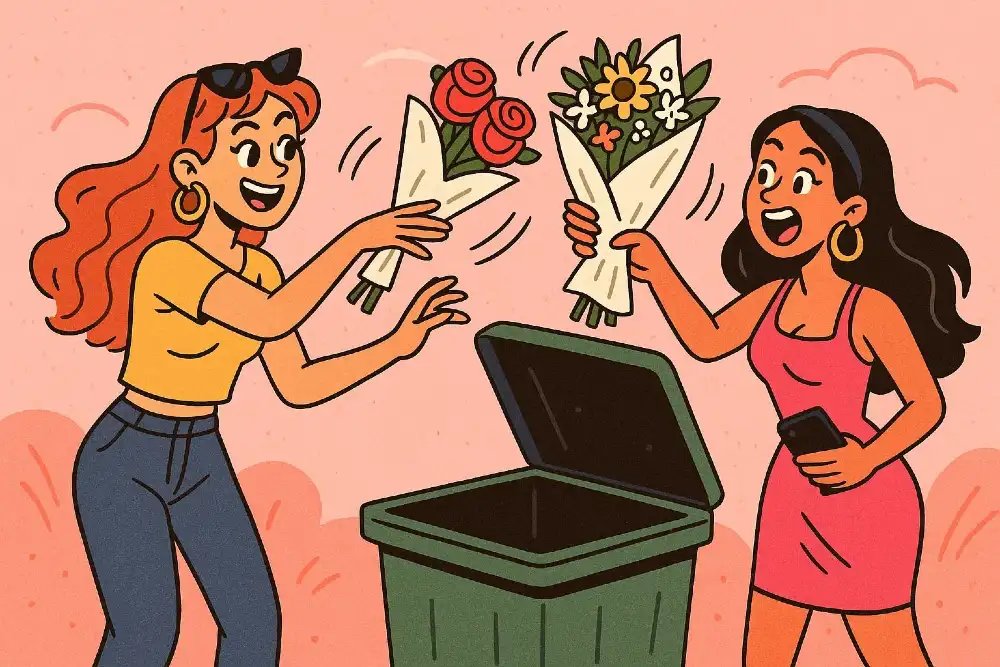
The “Girl Boss Gatekeeping” Phenomenon Explained
When Vogue published “Is Having a Boyfriend Embarrassing Now?” by Chanté Joseph, it sparked a cultural firestorm. But evolutionary psychologist and author Rob Henderson has a deeper, more unsettling explanation for this trend that goes far beyond simple embarrassment. In his viral appearance on Chris Williamson’s Modern Wisdom podcast, Henderson unpacks what he calls “girl boss gatekeeping”—and the evolutionary mechanisms behind why successful women might actually be discouraging other women from entering relationships.
The Vogue Article That Started It All
The Vogue piece highlighted a puzzling phenomenon: influential women with large platforms—podcasters, content creators, and thought leaders—were promoting the idea that having a boyfriend is somehow embarrassing or outdated. These same women would downplay their own relationships, avoid posting about their partners, and encourage their followers to embrace singlehood and independence.
The stated reasons? Solidarity with single women. Not wanting to seem boastful. Understanding how difficult modern dating is.
But Henderson argues there’s something far more primal happening beneath the surface.
Girl Boss Gatekeeping: The Hidden Evolutionary Strategy
Henderson coined the term “girl boss gatekeeping” to describe a specific pattern: women with power, status, and influence subtly discouraging other women from pursuing relationships—while they themselves remain partnered.
This isn’t conscious manipulation. It’s an evolved strategy rooted in what evolutionary biologists call reproductive suppression.
The Science of Reproductive Suppression
As Henderson explains, reproductive suppression is well-documented in primate species. Dominant female baboons and tamarins use intimidation, harassment, and resource restriction to prevent subordinate females from reproducing. They’ll physically push lower-status females away from food, creating malnutrition that suppresses ovulation and fertility.
Humans don’t operate quite so directly—but the underlying mechanism remains.
In humans, reproductive suppression works through culture, social pressure, and information warfare rather than physical intimidation.

The Luxury Belief Framework Applied to Relationships
Henderson’s concept of “luxury beliefs” perfectly captures this dynamic. Luxury beliefs are ideas that confer status on the affluent while inflicting costs on less fortunate members of society.
The pattern with modern relationship discourse follows this framework exactly:
What Elite Women Say vs. What They Do
Public Messaging:
- “Having a boyfriend is embarrassing now”
- “Men are trash”
- “Focus on your career, not relationships”
- “Dating isn’t worth the effort”
- “Heteropaternalism is oppressive”
Private Reality:
- Highest marriage rates among highly educated women
- College-educated women’s fertility has declined only slightly
- Elite women have access to egg freezing, fertility treatments, and surrogates
- They’re in committed relationships themselves
Meanwhile, low-income women’s fertility has declined dramatically—they’re the ones actually following the advice that elite women promote but don’t practice.
The Data Behind the Double Standard
Evolutionary behavioral scientist Danny Silicowski’s research, cited by Henderson, reveals striking patterns:
Fertility Decline by Socioeconomic Status
According to analysis by The Economist:
- Low-income women: Massive fertility decline
- College-educated women: Slight fertility decline
- Elite women: Multiple pathways to motherhood even with delayed childbearing
Happiness Research Contradicts the Messaging
Sociologist Brad Wilcox’s research consistently shows:
- Single women without children: Lowest reported happiness levels
- Married women: Moderately higher happiness
- Married women with children: Highest happiness levels of all
Yet the cultural messaging actively steers women away from the pathway associated with the highest life satisfaction.
Why This Strategy Makes Evolutionary Sense
Henderson explains the cold evolutionary logic: In small-scale ancestral societies, removing even one reproductively capable woman from the mating pool provided significant benefits to other women.
The Math of Female Intrasexual Competition
- One man can potentially father 100+ children
- Removing a single man from the mating pool has minimal impact
- But removing one woman of reproductive age? That’s fewer competitors for resources, attention, social support, and high-quality mates
This makes reproductive suppression of other women a far more effective strategy than trying to remove men from competition.
The Subtle Art of Female Intrasexual Competition
Chris Williamson notes something crucial: male intrasexual competition seems “fairer” because it’s direct and obvious. Guys compete through physical prowess, direct challenges, open displays of status.
Female intrasexual competition is radically different—and far more sophisticated.
The “Bless Her Heart” Effect
Psychologist Tanya Reynolds documented what Henderson calls the “bless her heart effect”: women disguise competitive behavior in the language of care and concern.
Examples from the podcast:
- “I’m really concerned about Katie—she’s been bringing lots of guys home from Hinge. I don’t want to see her get hurt.” (Translation: questioning her sexual propriety)
- “You should cut your hair short! It would look so good on you!” (Research shows women high in intrasexual competitiveness encourage rivals to adopt hairstyles men find less attractive)
- “Men aren’t worth it anyway—focus on self-care and your career!” (Translation: stay out of the mating pool)
Why Women Compete This Way
The sophistication isn’t arbitrary. Henderson explains that women evolved to be indirect because direct competition carried life-threatening risks:
- Physical confrontation could result in serious injury
- Open aggression leads to social ostracism
- Being cast out of the social group historically meant death
Women who could express competitive impulses through plausibly deniable methods survived. Women who were blunt and direct didn’t.
Proximate vs. Ultimate Explanations
Henderson emphasizes a critical distinction from evolutionary psychology:
Proximate explanation: The stated, conscious reason someone gives for their behavior Ultimate explanation: The evolutionary function that shaped that behavior
The Body Positivity Example
Henderson uses body positivity as a striking illustration:
Proximate explanation: “I want to support women of all sizes and fight oppressive beauty standards”
Ultimate explanation: Encouraging potential romantic competitors to eat themselves out of the mating pool—while privately maintaining diet, exercise, and increasingly using GLP-1 medications
As comedian Bill Burr jokes: “If women could support the WNBA the way they support a fat chick who’s proud of her body and no longer a threat to you, that league would do better numbers than the NBA.”
The key insight: You’re far more effective at deceiving others when you’ve also deceived yourself about your motivations.
Real-World Consequences of Girl Boss Gatekeeping
This pattern has tangible effects on modern dating and relationships:
1. Cultural Discouragement of Commitment
Philosopher Freya India observes that modern relationships have become “brand collaborations rather than meaningful connections”—viewed primarily through the lens of how they affect your personal brand and social media presence.
2. The “Red Flag” Discourse
Henderson notes he rarely sees men in comments sections telling other men to leave their girlfriends. But women’s content? Every comment section is filled with women telling the creator to “run” or calling out “red flags.”
This isn’t just helpful advice—it’s intrasexual competition dressed as concern.
3. Fertility Suppression Through Economic Pressure
Elite women set impossible standards for “acceptable” family formation:
- Expensive weddings (average now $50,000+)
- Each child needs their own bedroom
- Private schools, SAT prep, elite college tuition
- Music lessons, sports teams, international vacations
Women who can’t afford these standards delay or avoid childbearing entirely—while elite women have the resources to meet these standards or bypass them entirely through fertility technology.
4. The Swag Gap Relationship Phenomenon
The latest iteration: concerns about “swag gap relationships” where one partner (usually the woman) appears more stylish and “cool” than the other.
Henderson’s analysis: This reveals that relationship satisfaction has been displaced by concerns about how the relationship looks to other women online.
When your social status with your peer group outlasts your relationships, you optimize for peer approval rather than relationship quality.
The Male Response: Confused and Withdrawing
Henderson discusses how this cultural environment affects men, drawing on anthropologist David Gilmore’s research in “Manhood in the Making.”
The Default Male State
Gilmore’s cross-cultural research revealed something uncomfortable: Without societal pressure and rites of passage, young men naturally default to being “withdrawn, self-interested, non-contributing, lazy, and selfish.”
Traditional societies created manhood rituals because they recognized this tendency and needed to actively shape positive masculine qualities.
Modern Men’s Dilemma
As one Instagram commenter Henderson cites put it: “I’m trapped in a generation where I don’t know whether to buy her flowers or ignore her to get her to like me.”
With messaging around “toxic masculinity” and constant criticism of traditional masculine traits, many men have simply stopped trying—using cultural hostility as a convenient excuse for not developing themselves.
Breaking the Pattern: What Actually Works
Henderson, quoting philosopher Alain de Botton, offers a radical alternative:
“We should only contemplate relationships with people who are very enthusiastic about us from the start—without persuasion, without chasing, without strategic games.”
Green Flags vs. Red Flags
Henderson notes that almost all relationship content focuses on what to avoid rather than what to pursue. A healthier approach would emphasize:
- Partners who initiate contact consistently
- Clear, direct communication
- Genuine enthusiasm from day one
- Natural commitment that doesn’t require convincing
- Public acknowledgment of the relationship
The Bridget Phetasy Example
Henderson mentions essayist Bridget Phetasy’s viral piece “Why I Regret Being a Slut”—which grew her audience precisely because she spoke to young women about what actually leads to happiness rather than discouraging them from pursuing fulfilling relationships.
The Absent Father Hypothesis: Why Older Women Stay Competitive
Henderson addresses a key question: Why would women who’ve already “won” the mate competition game continue suppressing younger women’s reproduction?
The Evolutionary Logic
Drawing on the “absent father hypothesis” and “grandmother hypothesis”:
- Throughout human history, high-status men often left wives for younger partners
- Women evolved psychology to remain vigilant against this threat
- Even post-reproductively, women benefit from suppressing competition
Modern manifestation: Older women with successful husbands unconsciously discourage younger women from entering relationships—particularly relationships with older, established men.
The Age Gap Discourse
Henderson observes: “Who is most upset about age gap relationships? Often women who are getting older and becoming stressed about young women dating older men.”
The Pro-Life/Pro-Choice Hidden Dynamic
Henderson discusses Jamie Krems’s research revealing an uncomfortable evolutionary logic behind abortion politics:
The Female-Driven Nature of Pro-Life Politics
Contrary to popular belief that men are controlling women’s bodies:
- Women are more pro-life than men on average
- This skew increases with age
- If the decision were left to men alone, abortion access would likely be unrestricted
The Ultimate Explanation
Pro-life position: Increases the cost of casual sex, which benefits women with monogamous mating strategies by reducing promiscuous competition
Pro-choice position: Decreases the cost of casual sex, which benefits women with short-term, casual mating strategies
Similar patterns appear in drug legalization attitudes—stances on drugs correlate strongly with openness to casual sex, as drugs reduce inhibitions and facilitate promiscuity.
Is This Unfair to Women?
Henderson anticipates the objection: Doesn’t this paint women as manipulative and conniving?
His response:
1. This Is Sophisticated, Not Malicious
Women’s competitive strategies are more complex and socially finessed because they’re more socially intelligent. This is a feature, not a bug.
2. The Evolutionary Context Matters
Women compete indirectly because:
- They’re reproductively more valuable
- Physical confrontation was too dangerous
- Social exclusion meant death
- Subtlety was survival
Women who developed tactical social skills survived and reproduced. Women who were blunt and confrontational didn’t.
3. It’s Unconscious
Like birds don’t consciously understand why they perform mating calls, humans often don’t understand the ultimate evolutionary functions of their behavior.
The proximate reason (stated motivation) differs from the ultimate reason (evolutionary function).
What This Means for Modern Dating
Henderson’s analysis has profound implications:
For Women:
- Recognize the messaging: Influential women may not have your best interests at heart, even when they claim solidarity
- Check revealed vs. stated preferences: What are successful people actually doing, not just saying?
- Prioritize relationship quality over brand collaboration: Your happiness matters more than your follower count
- Seek genuine enthusiasm: If you’re convincing someone to choose you, they’re not your person
- Question whose standards you’re following: Are you delaying family formation based on standards set by women with resources you don’t have access to?
For Men:
- Don’t use cultural criticism as an excuse: The messaging may be hostile, but personal development remains your responsibility
- Understand the intrasexual competition dynamic: Some “advice” other women give your partner isn’t well-intentioned
- Be consistent and clear: In an era of games, straightforward enthusiasm is increasingly valuable
- Invest in substance over style: Real status (resources, character, competence) matters more than aesthetic counter-signaling
The Broader Cultural Question
Henderson frames the ultimate question: Is this everything wrong with modern dating? Obviously not. Is it a big part of it? Yes.
The podcast reveals how:
- Pop culture shapes mate selection criteria
- Media narratives discourage commitment
- Luxury beliefs harm those who can least afford them
- Intrasexual competition has moved from ancestral environments into digital spaces
- Modern technology amplifies ancient psychological mechanisms
Conclusion: Choosing Differently
The good news? Awareness breaks the pattern.
Once you understand that:
- “Solidarity” may mask competition
- “Concern” may disguise reproductive suppression
- Public messaging often contradicts private behavior
- Your happiness data contradicts cultural narratives
You can make different choices.
As Henderson puts it: You don’t need to publicly gain 60 pounds to prove body positivity. You don’t need to stay single to fight heteropaternalism. You don’t need to sacrifice your happiness for someone else’s luxury belief.
The only person you should contemplate being with is someone who, from day one, shows up with enthusiasm matching your own.
The swag gap doesn’t matter. The follower count doesn’t matter. The brand collaboration doesn’t matter.
What matters is building a life with someone who chose you clearly, consistently, and without persuasion—and choosing them the same way.
Watch the full discussion: Chris Williamson’s conversation with Rob Henderson on Modern Wisdom provides nearly two hours of deep evolutionary psychology insights into modern mating dynamics. Watch it here
Read more: Rob Henderson’s Substack explores luxury beliefs, social class, and evolutionary psychology. His memoir “Troubled: A Memoir of Foster Care, Family, and Social Class” is now available in paperback.
Related posts:
 Sexual Competition in Humans Explained By Evolutionary Psychology
 Evolutionary Mating Psychology: The Science of Human Desire
 The Complete Guide to Evolutionary Mating Psychology: How Our History Affects Attraction, Desire, and Human Relationships
 Understanding Why Men Are Walking Away From Modern Dating and Relationships and The Rise of MGTOW movement
 Short-Term vs Long-Term Mating Strategies: An Evolutionary Psychology Guide