
Children ask an average of 300 questions per day. Adults? Barely a handful. This dramatic decline in curiosity marks one of the great tragedies of maturation. In Wisdom Takes Work, Ryan Holiday argues that the death of curiosity is the death of wisdom—and most of us kill our curiosity long before we realize what we’ve lost.
We’re taught that having answers makes us smart. But as Holiday reveals through philosophy, psychology, and personal experience, the truly wise understand something counterintuitive: asking questions is more important than having answers.
Wisdom doesn’t begin with knowledge—it begins with curiosity. It starts with admitting you don’t know and genuinely wanting to find out.
Why Curiosity Dies in Adulthood
Holiday opens this exploration in Wisdom Takes Work by confronting an uncomfortable question: What happens between childhood’s boundless curiosity and adulthood’s rigid certainty?
We learn that questions signal ignorance. School systems often punish questions that slow down the curriculum. Workplaces reward employees who have answers, not those who raise concerns. Social settings make questioning others’ beliefs seem rude or confrontational. The message becomes clear: questions are weakness.
We develop ego investment in appearing knowledgeable. Adults feel pressure to have opinions about everything. Saying “I don’t know” feels like admitting inadequacy. So we stop asking questions and start asserting positions, even on topics we barely understand.
We become comfortable with what we already know. Learning requires effort and often discomfort. It’s easier to operate within familiar frameworks than to question foundational assumptions. Holiday notes that most people reach a point where they stop actively learning and simply maintain their existing knowledge.
Curiosity gets beaten out of us by criticism. When children ask “why” repeatedly, adults often respond with irritation rather than engagement. This teaches that curiosity is annoying, that questions are burdensome, that wondering is childish.
The Two Types of Curiosity
Holiday distinguishes between superficial curiosity and genuine curiosity—a crucial difference that determines whether questioning leads to wisdom.
Superficial curiosity is driven by novelty-seeking. It’s the urge to scroll social media, check notifications, or consume trivia. This type of curiosity jumps from topic to topic without depth, collecting facts like baseball cards but never synthesizing understanding. Holiday warns this is “junk food curiosity”—it satisfies temporarily but provides no lasting nourishment.
Genuine curiosity is driven by wanting to understand. It goes deep rather than broad. It asks follow-up questions. It tolerates ambiguity and uncertainty. It pursues answers even when they’re difficult to find or challenging to accept. This is the curiosity that builds wisdom.
The difference lies not in what you’re curious about but in how you engage with your questions. Are you seeking entertainment or understanding? Distraction or truth?
How the Greatest Minds Maintained Childlike Wonder
Wisdom Takes Work profiles individuals who preserved their curiosity throughout their lives, refusing to let age or expertise dull their sense of wonder.
Leonardo da Vinci filled notebooks with questions. “Why is the sky blue?” “How does a bird fly?” “What is the source of sound?” He never stopped asking basic questions about the world, even as he became one of history’s greatest polymaths. His curiosity wasn’t limited by what he already knew—it was energized by what he didn’t.
Richard Feynman approached physics with a child’s delight in discovery. The Nobel Prize-winning physicist was famous for asking “why” repeatedly until he understood something from first principles. He once said that the pleasure of finding things out was more important than prestige or recognition.
Marcus Aurelius, despite being emperor, constantly questioned his own assumptions. His Meditations is essentially a record of him asking himself hard questions: “Am I doing what I should be doing?” “What makes this worth caring about?” “Am I being the person I want to be?” His wisdom came from refusing to stop interrogating himself.
What united these thinkers? They treated curiosity not as a phase to outgrow but as a practice to maintain.
The Socratic Method: Wisdom Through Questions
Holiday dedicates substantial attention to Socrates, history’s greatest questioner, who transformed asking questions into a philosophical methodology.
Socrates claimed to know nothing, but through strategic questioning, he could expose the contradictions and assumptions in others’ supposedly certain beliefs. He didn’t lecture—he inquired. He didn’t assert—he examined.
The Socratic method reveals that most people don’t actually understand what they claim to know. When pressed to explain their beliefs, define their terms, or follow their logic to its conclusions, certainty crumbles. What seemed obvious becomes questionable. What appeared settled becomes uncertain.
Holiday emphasizes that Socratic questioning isn’t about winning arguments—it’s about pursuing truth collaboratively. When you ask genuine questions, you create space for discovery that assertions foreclose. You invite others to think rather than commanding them to agree.
Questions are more powerful than statements because they engage rather than alienate. Tell someone they’re wrong, and they’ll defend their position. Ask them a thoughtful question, and they might discover their own error.
Ryan Holiday’s Wisdom Takes Work: The Ultimate Guide to Ancient Wisdom for Modern Life
Practical Strategies for Cultivating Curiosity
How do you revive curiosity after years of certainty? Holiday offers concrete practices that anyone can implement:
Ask “why” five times. When you encounter an explanation or belief, don’t stop at the surface. Ask why that’s true. Then ask why the answer to that question is true. Keep going. Toyota developed this “Five Whys” technique for root cause analysis, but it works equally well for philosophical inquiry.
Collect questions, not just answers. Holiday recommends keeping a running list of things you’re curious about. When you wonder about something, write it down. This practice trains your brain to notice what you don’t know rather than only cataloging what you do.
Read outside your expertise. Wisdom requires breadth. Holiday emphasizes reading widely across disciplines, cultures, and time periods. Each field approaches questions differently, and exposure to diverse thinking styles strengthens your own curiosity.
Embrace the phrase “Tell me more.” When someone shares an idea, resist the urge to immediately respond with your own thoughts. Instead, ask them to elaborate. Holiday notes this simple phrase can transform relationships and deepen understanding.
Schedule time for wondering. Curiosity requires mental space. If your calendar is packed and your mind is constantly occupied, you have no room for questions to emerge. Holiday advocates for regular periods of unstructured time—walks, contemplation, or simply sitting with your thoughts.
The Questions Worth Asking
Not all questions are created equal. Holiday distinguishes between trivial curiosity and wisdom-building inquiry.
Questions about yourself: Who am I? What do I value? Why do I believe what I believe? What am I afraid of? These questions of self-examination are the foundation of wisdom. As the Oracle at Delphi commanded: “Know thyself.”
Questions about others: What is their perspective? Why do they see things differently? What experiences shaped their views? These questions build empathy and break down the barriers that certainty creates between people.
Questions about the world: How does this work? Why is this true? What evidence supports this claim? These questions prevent you from accepting received wisdom uncritically and help you build genuine understanding.
Questions about meaning: What matters? Why does it matter? What is good? These fundamental philosophical questions can’t be permanently answered, but wrestling with them is essential to wisdom.
The Dangers of Premature Certainty
Holiday warns extensively about the trap of reaching conclusions too quickly, arguing that premature certainty is the enemy of wisdom.
When you decide you’ve found “the answer,” you stop looking. But most important questions don’t have single, final answers. They require ongoing investigation, reflection, and revision. Wisdom involves living with questions rather than rushing to comfortable conclusions.
Certainty creates rigidity. Once you’re certain about something, you become resistant to contradictory evidence. You defend rather than examine. You close rather than open. Holiday notes that the most dogmatic people aren’t those who know the most but those who question the least.
Early answers often miss deeper truths. The first explanation for a phenomenon is rarely the complete story. Holiday emphasizes that wisdom requires patience—the willingness to sit with questions long enough for more nuanced understanding to emerge.
Curiosity as Connection
One of Holiday’s most powerful insights in Wisdom Takes Work involves the social dimension of curiosity. Genuine questions don’t just build personal wisdom—they build relationships.
Asking thoughtful questions shows you care. When you’re genuinely curious about someone’s experiences, perspectives, or expertise, they feel valued. Curiosity is a form of respect and attention that our distracted age rarely offers.
Questions create collaborative discovery. Instead of parallel monologues where each person waits to speak, curious questioning creates genuine dialogue. Both parties learn, both grow, both walk away wiser.
Curiosity breaks down barriers. It’s hard to hate someone you’re genuinely curious about. Holiday argues that many conflicts persist because people stop asking questions and start making assumptions. Curiosity combats polarization by replacing certainty with understanding.
The Uncomfortable Questions
Not all curiosity is comfortable. Holiday emphasizes that wisdom often requires asking questions you’d rather avoid:
Questions that challenge your identity. What if the thing you’ve built your life around is wrong? What if your fundamental assumptions are flawed? These questions are terrifying, which is precisely why they’re important.
Questions that demand action. If you’re not living according to your values, asking “Am I living well?” creates obligation. It’s easier to avoid the question than face the answer. But wisdom requires this kind of courageous self-examination.
Questions without good answers. Why do bad things happen? What happens after death? What makes life meaningful? Holiday notes that some questions can’t be definitively answered, but asking them anyway stretches our understanding and deepens our wisdom.
Curiosity as a Daily Practice
Holiday concludes this section with a vision of curiosity not as occasional wonder but as continuous practice.
Start each day with questions instead of statements. Rather than immediately forming opinions about the news or your schedule, approach the day with genuine curiosity. What can I learn today? Who can teach me something? What assumptions should I question?
End each day with reflection questions. What surprised me? What did I learn? What remains mysterious? This practice transforms experiences into wisdom by extracting lessons from daily life.
Treat every person as a potential teacher. Holiday emphasizes that everyone knows something you don’t. Approaching interactions with genuine curiosity—”What can I learn from this person?”—transforms ordinary encounters into opportunities for growth.
The Ultimate Question
Holiday saves perhaps the most important question for last: “Am I asking enough questions?”
Most people assume they’re curious enough, knowledgeable enough, wise enough. This assumption is usually wrong. The wisest individuals are those who recognize they’ve barely scratched the surface, that every answer reveals new questions, that learning is infinite.
As Holiday beautifully articulates in Wisdom Takes Work, wisdom isn’t a destination where you finally have all the answers. It’s a journey of increasingly sophisticated questions, a process of trading simple certainties for complex understanding, a practice of maintaining wonder in a world that tries to drain it from you.
The child who asks 300 questions per day is onto something. The tragedy isn’t that adults stop having questions—it’s that we stop asking them. Wisdom, Holiday reminds us, begins with rediscovering the courage to wonder.
Ryan Holiday’s Wisdom Takes Work: The Ultimate Guide to Ancient Wisdom for Modern Life

Related posts:
 Curiosity in Children: Why Protecting It Matters More Than Teaching It
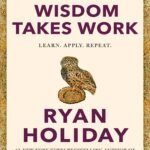 Ryan Holiday’s “Wisdom Takes Work”: Why Philosophy Only Matters When It’s Practiced
 Lifelong Learning: Why the Wisest People Never Stop Being Students (Wisdom Takes Work by Ryan Holiday)
 Practical Wisdom: How to Empty Your Cup and Fill It With Wisdom From Ryan Holiday
 Stoic Wisdom: How Hardship Builds Character (Wisdom Takes Work by Ryan Holiday)