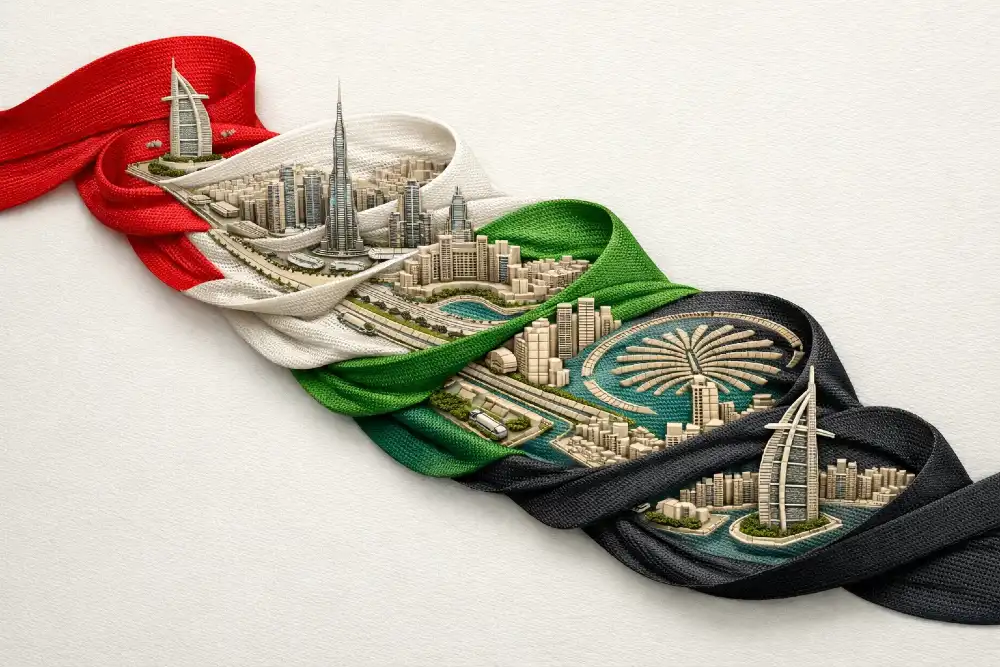
Discover how Dubai transformed from a desert village into a $116B+ economy. It wasn’t just oil (only 1% of GDP). The real story involves bold gambles.
Picture this: A scorching desert in 1940 with temperatures reaching 110°F, no shade, no air conditioning, and just 20,000 people living in mud-brick houses. The economy? Collapsed. The future? Bleak. This was Dubai.
Today, that same patch of sand boasts a GDP exceeding $116 billion, the world’s tallest building, and a reputation as the playground of the global elite. Everyone assumes they know the answer to how did Dubai get rich: oil. But here’s the shocking truth that nobody talks about—today, oil accounts for less than 1% of Dubai’s GDP.
So if the money isn’t coming from the ground, where is it coming from? The answer involves pearl diving disasters, gold smuggling, massive infrastructure gambles, the 2008 financial crash, and a business strategy that borders on insanity. This is the complete, uncensored story of how Dubai got rich.
The Pearl Diving Apocalypse: How Starvation Fueled Ambition
To understand how did Dubai get rich, you first need to understand how desperately poor it was. Before oil, before tourism, before anything, Dubai was a one-trick pony—and that trick was pearl diving.
The Glory Days of Pearl Diving
In the early 1900s, the Gulf pearl was the Rolex of its era. Victorian elites and Roaring Twenties socialites paid fortunes for these precious gems. Jewelers like Cartier traded entire New York buildings for a single string of pearls.
But pearl diving was brutal work. Divers used nose clips made from turtle shells and rocks tied to their feet to sink to the seabed. They held their breath for two minutes at a time, diving 50 times a day, constantly risking the bends or shark attacks. It was dangerous, exhausting—but profitable.
Then Disaster Struck: The Mikimoto Revolution
In the 1920s, Japanese entrepreneur Kokichi Mikimoto figured out how to culture pearls artificially. Suddenly, perfect, round pearls flooded the market at pennies on the dollar. Combined with the Great Depression of 1929, which killed luxury goods demand, Dubai’s pearl economy collapsed virtually overnight.
The price of natural pearls fell by 90% in just a few years.
By the 1940s, Dubai was in famine. British political officers stationed there documented people eating locusts and dried fish bones just to survive. The population was shrinking as residents fled to Saudi Arabia and Kuwait. This crucible of desperation forged the mindset that would define Dubai’s future.
The Lesson That Changed Everything
The ruling Maktoum family learned a critical lesson during this crisis: resources are temporary, but trade is survival. They realized that depending on a single commodity—whether pearls or anything else—was a death sentence.
Sheikh Saeed Al Maktoum made a bold, counterintuitive decision. While neighboring states closed their borders and implemented protectionist policies to preserve their dwindling wealth, Dubai went the opposite direction. They declared Dubai a free trade port and abolished taxes on imports and exports to practically zero.
Think about the audacity: you’re broke, your people are starving, and your solution is to stop collecting taxes? It sounds insane. But merchants from Iran and India, tired of high taxes in their own ports, looked across the water and saw opportunity. This was Dubai’s first major pivot—if they couldn’t have a product, they would become the middleman.
The Creek Gamble: Betting Everything on Infrastructure
Fast forward to the late 1950s. The free port idea was working, but there was a critical physical problem: Dubai Creek, the city’s lifeline, was too shallow. Ocean-going vessels couldn’t enter—they had to anchor miles offshore and transfer cargo to small boats. It was slow, expensive, and dangerous.
Sheikh Rashid’s Billion-Dollar Vision
Enter Sheikh Rashid bin Saeed Al Maktoum, the father of modern Dubai. He looked at that muddy, silt-filled creek and saw the future. He called in British engineers and asked what it would take to dredge the creek deep enough for large ships to dock right in downtown Dubai.
The cost? Approximately $400,000 to $600,000—several times Dubai’s entire annual revenue at the time. Remember, Dubai still had no oil money. They were surviving on minimal trade tariffs.
When Banks Say No, Find Another Way
Sheikh Rashid approached the British Bank of the Middle East for a loan. They laughed. They looked at the feasibility study and essentially said, “You want to dredge a creek in a village with no paved roads? No thanks.”
So Sheikh Rashid went to the Emir of Kuwait, who did have oil money by then, and secured a personal loan between rulers. This was a massive gamble. If the dredging didn’t bring more ships, Dubai would be buried in debt it could never repay—a geopolitical foreclosure.
But Sheikh Rashid had a famous quote that explains everything about Dubai’s strategy: “Dubai will never settle for anything less than first place.”
The Gamble Pays Off
In 1961, the new deep waterway opened. The result was explosive. Ship traffic didn’t just double—it skyrocketed. Hundred-ton vessels that previously bypassed Dubai could now dock right in the city center. Dubai became the primary re-export hub for the entire region.
This is where Dubai earned its nickname as “Gold City.” India had just gained independence and placed massive restrictions on gold imports. But Indians love gold—it’s cultural, financial security, ancestral wealth. Dubai, with its new deep creek and zero taxes, became the funnel.
Millions of ounces of gold were flown or shipped into Dubai from London and Switzerland, then put on fast boats for “unofficial transport” to India. Was it smuggling? According to India, yes. According to Dubai, it was just re-export trade. This gray-area business laid the foundation for Dubai’s reputation as a place where business gets done, no questions asked.
The Oil Discovery: A Head Start, Not the Whole Story
When people ask how did Dubai get rich, they usually stop at this answer: oil. Yes, oil was discovered in Dubai in 1966 and exports began in 1969. But here’s what makes Dubai different from its oil-rich neighbors.
Dubai’s Oil Reality Check
Dubai’s oil reserves were never massive. At its peak in the 1970s-1980s, oil accounted for about 50% of Dubai’s GDP. But unlike Abu Dhabi, which sits on 90% of the UAE’s oil reserves, Dubai’s leaders knew their oil wouldn’t last forever.
Today, oil contributes less than 1% to Dubai’s GDP.
The crucial difference was what Dubai did with its oil money. Instead of just selling crude and depositing the proceeds in foreign banks, Dubai used oil revenues as venture capital. They invested heavily in building world-class infrastructure:
- Port Jebel Ali (1979) – Now the world’s largest man-made harbor
- Dubai International Airport expansion (1960s-1980s)
- Roads, telecommunications, and utilities infrastructure
- Free trade zones (Jebel Ali Free Zone launched in 1985)
This wasn’t luck. It was strategy. Dubai treated oil money as seed funding for a startup, not as the business itself.
The Free Zone Revolution: Creating a Business Paradise
Understanding how did Dubai get rich requires examining one of its most brilliant innovations: free trade zones. In 1985, Dubai launched the Jebel Ali Free Zone (JAFZA), and it changed everything.
What Made Free Zones Revolutionary
Free zones offered international businesses an irresistible package:
- 100% foreign ownership (no need for local partners)
- Zero corporate and personal income taxes
- No import or export duties
- 100% repatriation of capital and profits
- No currency restrictions
Today, JAFZA alone hosts over 6,400 companies and contributes approximately 21% of Dubai’s GDP. Businesses in Jafza account for about $80 billion in non-oil revenue annually. Dubai went on to establish over 30 specialized free zones, each targeting different industries—from technology to media to healthcare.
The Mega-Projects Strategy: Build It and They Will Come
When examining how did Dubai get rich, the iconic mega-projects can’t be ignored. But these weren’t just vanity projects—they were strategic marketing investments.
The Burj Al Arab: Seven-Star Marketing
In 1999, Dubai opened the Burj Al Arab, the sail-shaped hotel on an artificial island. The hotel’s marketing team called it “seven-star,” even though the official hotel rating system only goes to five stars. It was audacious, controversial—and brilliant.
The construction cost was approximately $1 billion. But the global publicity? Priceless. Every major news outlet covered this “impossible” hotel. Dubai was suddenly on every luxury traveler’s radar. The hotel doesn’t need to be profitable on its own—it’s a billboard that says “Dubai is where the extraordinary happens.”
The Palm Islands: Engineering the Impossible
In 2001, Dubai announced the Palm Jumeirah—an artificial island shaped like a palm tree, visible from space. Engineers said it was impossible. Environmental groups said it was reckless. Dubai did it anyway.
The Palm Jumeirah used 94 million cubic meters of sand and 7 million tons of rock. It added 78 kilometers of new coastline. Properties on the Palm sold out before construction was even complete. The project transformed Dubai’s real estate market and created billions in new property values.
Burj Khalifa: Touching the Sky
The Burj Khalifa, completed in 2010, stands 828 meters tall—the world’s tallest building. It cost approximately $1.5 billion to build. But again, the building itself isn’t just about rental income or hotel rooms.
The Burj Khalifa is a statement: “We built the impossible. What can you build here?” It’s marketing for the entire city. Every time someone sees a photo of that needle piercing the clouds, they think of Dubai.
The 2008 Crash: When Dubai Almost Fell
No story about how did Dubai get rich would be complete without acknowledging its near-death experience. In 2008, Dubai’s model almost collapsed entirely.
The Property Bubble Bursts
From 2004-2008, Dubai’s real estate market was on fire. Property values doubled, then tripled. Everyone wanted a piece of Dubai’s future. Banks were lending freely. Developers were launching increasingly ambitious projects.
Then the 2008 global financial crisis hit. Credit dried up overnight. Property values plummeted by 50% or more. Major projects stalled. Dubai had a unique problem: under UAE law at the time, if you couldn’t pay your debts, you went to prison.
Expats who lost their jobs and couldn’t pay their car loans didn’t wait to negotiate—they drove to the airport, left the keys in the ignition, maxed out their credit cards for a one-way ticket, and fled. The international press had a field day: “The dream is over. Dubai is sinking.”
The Abu Dhabi Bailout
By late 2009, Dubai was on the brink of sovereign default. They couldn’t pay the debts of Dubai World, the state conglomerate. The entire experiment—the ports, the airline, the tourism—was about to collapse.
Then Abu Dhabi, Dubai’s conservative, oil-rich big brother, stepped in. Abu Dhabi wrote a check for $10 billion (and later more) to bail Dubai out. But there was a price—and it was public.
The world’s tallest tower was almost finished. It was known as Burj Dubai. But on the night of the opening ceremony in 2010, the announcer shocked the crowd by renaming it Burj Khalifa—after Sheikh Khalifa bin Zayed Al Nahyan, the ruler of Abu Dhabi.
It was a public humbling, a permanent reminder etched in steel and glass: Dubai has the flash, but Abu Dhabi has the cash.
The Comeback
Most cities would have crawled into a hole after that. Dubai? They took the money, restructured their debt, changed bankruptcy laws to be less draconian, and started climbing back up. They realized something crucial: even when the bubble burst, the infrastructure—the port, the airport, the hotels—was still there. The real assets existed.

The Geopolitical Hedge: Profiting from Global Instability
After 2008, Dubai needed a new influx of cash. And unfortunately for the world—but fortunately for Dubai—the Middle East and beyond provided it.
The Arab Spring Effect
In 2011, the Arab Spring erupted. Governments toppled in Egypt, Tunisia, Libya, and Syria. If you were a wealthy businessman in Cairo or a millionaire in Damascus and your country was collapsing, what would you do?
You couldn’t go to Europe—visas took months. You couldn’t go to the US—taxes and scrutiny were high. So you went to Dubai.
Dubai positioned itself as the Switzerland of the Middle East: neutral, stable, open. While the rest of the region dealt with revolutions, Dubai hosted golf tournaments. Billions in capital flight flowed into Dubai’s banks and real estate market between 2011-2015.
The Russian Influx
The pattern repeated dramatically in 2022. When war in Ukraine started and the West imposed unprecedented sanctions on Russia, wealthy Russians couldn’t go to London anymore. So they went to Dubai.
Dubai refused to sanction Russia and kept the flights running. In 2022 alone, real estate transactions in Dubai jumped by over 76%. The Marina was suddenly full of Russians. Rent skyrocketed. Russian investment in Dubai’s real estate since 2022 has been estimated at around $6.3 billion.
Dubai has mastered the art of being the emergency exit for the world’s wealthy. Whether it’s political instability in Pakistan, currency collapse in Lebanon, or war in Europe, Dubai is the bunker. Critics call it money laundering. Dubai calls it being an open economy.
The Diversified Economy: Beyond Oil and Real Estate
When people wonder how did Dubai get rich, they often underestimate the diversity of Dubai’s economy. In 2018, Dubai’s GDP breakdown looked like this:
- Wholesale and retail trade: 26%
- Transport and logistics: 12%
- Financial services: 10%
- Manufacturing: 9%
- Real estate: 7%
- Construction: 6%
- Tourism: 5%
- Oil and gas: Less than 1%
Emirates Airline: The Flying Billboard
Emirates Airlines, founded by the Dubai government in 1985, carried over 49.7 million passengers in 2015. But it’s more than just an airline—it’s a flying advertisement for Dubai. Every Emirates plane is a mobile billboard promoting Dubai as a destination and a hub.
Tourism: 20+ Million Visitors Annually
Dubai welcomed over 14.9 million overnight visitors in 2016, and numbers have only grown. Tourism contributed over $41 billion to the GDP in 2017. The city offers year-round sunshine, luxury hotels, world-class shopping, and unique attractions—from desert safaris to indoor ski slopes.
Financial Services Hub
The Dubai International Financial Centre (DIFC), established in 2004, operates under English common law (separate from UAE Sharia law), making Western banks and financial institutions comfortable. This legal framework has attracted major international financial companies.
Gold and Diamond Trading
Dubai is the world’s third-largest diamond trading hub (after Antwerp and Mumbai). In 2014, Dubai accounted for about 25% of the world’s annual gold trade, competing with Shanghai and London. The UAE imported $15.1 billion worth of gold from Africa in 2016 alone.
The Golden Visa Revolution: From Transient to Permanent
For 50 years, Dubai operated on a simple model: come here, work tax-free, make money, but you’ll never be one of us. When you lose your job, you leave. This created a revolving-door economy where nobody invested long-term because nobody felt at home.
COVID-19 Changes Everything
Then COVID-19 happened. Dubai realized that if everyone leaves when things get tough, the city collapses. So they broke the ultimate taboo: they changed the citizenship rules.
Dubai introduced the Golden Visa program. If you’re an investor, doctor, engineer, coder, or even just famous, you can now get a 10-year residency that isn’t tied to your employer. They even introduced a freelance visa to attract digital nomads.
In 2021, Dubai issued guidelines allowing 100% foreign ownership of businesses—no Emirati partners required. This was revolutionary. Dubai is pivoting from being an ATM where you withdraw cash and leave, to being a home.
The Dark Side: The Cost of Speed
Any honest answer to how did Dubai get rich must acknowledge the human cost. The glittering towers and pristine highways were built by migrant workers—primarily from South Asia—who often work in 120°F heat under conditions that human rights organizations describe as debt bondage.
Workers frequently have their passports withheld by employers. They work 12-hour days, six or seven days a week, for low wages. Those who protest are often deported. Human Rights Watch has documented these issues extensively.
This is the dark foundation that the glitter is built on. It’s the cost of moving this fast, of building this much, this quickly. Dubai’s leadership argues they’re creating opportunity and jobs where none existed. Critics argue it’s exploitation. Both can be true.
The Startup Mindset: How Did Dubai Get Rich by Acting Like a Tech Company
The most important answer to how did Dubai get rich is this: Dubai didn’t act like a country. It acted like a startup.
Dubai made seven key pivots that explain its success:
- Pivot 1: From pearls to free trade (1940s-1950s) – When the commodity failed, become the middleman
- Pivot 2: From shallow creek to deep port (1960s) – Leveraged debt to build infrastructure before having customers
- Pivot 3: From oil dependence to diversification (1970s-1980s) – Used oil revenue as venture capital for other industries
- Pivot 4: From trade hub to business hub (1985+) – Created free zones to attract international companies
- Pivot 5: From business hub to luxury destination (1990s-2000s) – Spent heavily on marketing through mega-projects
- Pivot 6: From boom to bust to comeback (2008-2015) – Restructured, adapted, and emerged stronger
- Pivot 7: From transient workers to permanent residents (2020+) – Golden visas and ownership reforms to attract long-term talent
Each pivot addressed a market reality. Each involved risk. Each could have failed catastrophically. But Dubai moved fast and broke things—literally remaking itself every decade.
Conclusion: How Did Dubai Get Rich? The Complete Answer
So, how did Dubai get rich? It wasn’t just oil. In fact, if Dubai had relied solely on oil, it would probably be a forgotten, sleepy town right now, waiting for the wells to run dry.
Dubai got rich through:
- Learning from desperation – The pearl crash taught them that commodities are temporary
- Bold infrastructure gambles – Borrowing money they didn’t have to build ports they desperately needed
- Using oil as venture capital – Not as the business itself, but as seed funding for everything else
- Creating business-friendly environments – Free zones with zero taxes that attracted global companies
- Strategic marketing through mega-projects – Burj Al Arab, Palm Islands, Burj Khalifa as global advertisements
- Becoming the safe haven – Positioning as the emergency exit for global wealth during crises
- Extreme diversification – Building an economy across tourism, trade, finance, real estate, and logistics
- Constant adaptation – Pivoting like a startup whenever the market changed
Dubai is a miracle of logistics and psychology. They took a patch of sand where you couldn’t grow a tomato and convinced the world it was the center of luxury and opportunity. They realized that in the modern world, geography isn’t just about where you are on the map—it’s about where you decide to be.
Sheikh Rashid’s father rode a camel. Sheikh Rashid rode a Mercedes. His son rides a G-Wagon. And they’re fighting like hell to make sure the great-grandson doesn’t have to go back to the camel.
The Future Question
The world is moving away from fossil fuels. The desert is getting hotter. Can Dubai survive the next 50 years, or will the sand eventually win? Only time will tell. But if history is any guide, don’t bet against Dubai. They’ve already come back from the dead once—and they did it spectacularly.
Key Takeaways: How Did Dubai Get Rich
- Oil accounts for less than 1% of Dubai’s GDP today
- Dubai’s wealth came from strategic pivots, not just natural resources
- The 2008 crash almost destroyed Dubai, but it came back stronger
- Free trade zones and zero taxes attracted over 6,400 international companies
- Mega-projects like Burj Khalifa and Palm Islands were marketing investments
- Dubai profits from being a safe haven during global instability
- The Golden Visa program is transforming Dubai from transient to permanent
- Labor issues remain the dark side of Dubai’s rapid development
- Dubai operates like a startup: pivot fast, take risks, never settle for second place
This article is based on following video:
Related posts:
 Our Place Titanium Pro Cookware Set: Andrew Huberman’s Recommended PFAS-Free, NoCo® Technology Cookware Revolution
 Michael Saylor’s Bitcoin MENA 2025 Keynote: The Blueprint for Digital Capital, Credit, and Banking Revolution
 The Entrepreneurial Path to Integrated Wealth: Building a Business That Serves All Five Dimensions
 Ridge Wallet Review (2026): Is the Minimalist Metal Wallet Actually Worth It?
 Why Am I Not Getting Wealthy? The 7 Hidden Reasons Holding You Back