
Evolutionary Mating Psychology: Understanding the Architecture of Human Desire
Evolutionary mating psychology explains something most people feel but rarely understand:
Attraction is structured.
Desire has patterns.
Conflict is not random.
Across cultures, across centuries, across radically different societies, certain romantic patterns repeat:
Men compete for status.
Women are more selective.
Jealousy feels instinctive.
Novelty tempts commitment.
Status influences attraction.
Beauty influences attention.
These patterns are not accidents.
They reflect evolved mating mechanisms shaped over thousands of generations.
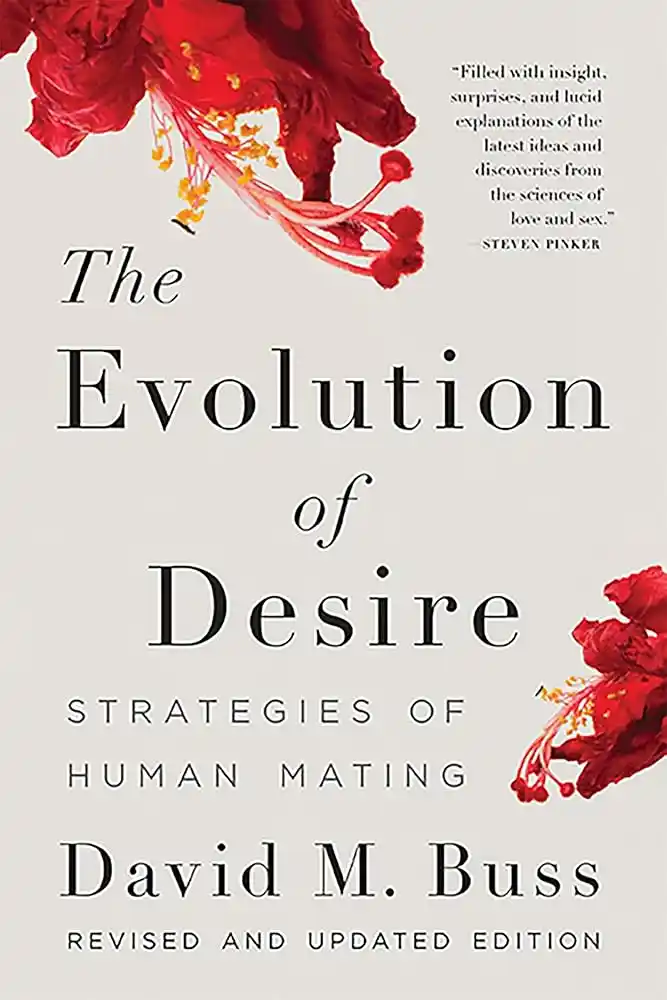
In The Evolution of Desire, David M. Buss writes:
“Our mating minds—the glory of romance, the flush of passion, the triumph of love—are fortunate products of this evolutionary process.”
This guide brings together the core pillars of evolutionary mating psychology into one cohesive framework.
If you want to understand modern dating, relationship conflict, sexual desire, jealousy, hypergamy, and mate value — this is the foundation.
What Is Evolutionary Mating Psychology?
Evolutionary mating psychology studies how natural and sexual selection shaped human attraction, mate preferences, competition, bonding, and infidelity patterns.
The central idea is simple:
Humans evolved psychological adaptations to solve recurring mating problems.
These problems included:
- Selecting a high-quality mate
- Competing with same-sex rivals
- Detecting infidelity
- Securing long-term investment
- Navigating short-term opportunities
Buss explains:
“Sexual strategies are adaptive solutions to mating problems.”
This means:
Romantic conflict is not a glitch.
It is structural tension between strategies.
Understanding evolutionary mating psychology reduces blame and increases clarity.
Pillar 1: Male vs Female Mate Preferences
One of the most consistent findings in evolutionary psychology is sex-differentiated mate preferences.
Across cultures, women tend to prioritize:
- Financial prospects
- Ambition
- Status
- Emotional stability
- Commitment
Men tend to prioritize:
- Youth
- Physical attractiveness
- Fertility cues
Why?
Because historically, women bore higher biological reproductive costs. Selecting a capable partner increased offspring survival.
Men faced paternity uncertainty and benefited from selecting fertility cues.
These patterns are statistical trends — not rigid rules.
Understanding them reduces polarization.
It replaces “You are shallow” with “We evolved under different pressures.”
Pillar 2: Short-Term vs Long-Term Mating Strategies
Humans did not evolve a single mating system.
We evolved flexible strategies.
Long-term mating emphasizes:
- Bonding
- Investment
- Shared parenting
- Stability
Short-term mating emphasizes:
- Novelty
- Genetic opportunity
- Immediate attraction
Buss describes humans as possessing “a repertoire of mating strategies.”
This explains why people can crave commitment and feel tempted by novelty simultaneously.
It is not hypocrisy.
It is dual-system architecture.
Maturity integrates these systems rather than denying one exists.
Pillar 3: Mate Value and Dating Dynamics
Mate value refers to overall desirability in the mating market based on traits historically linked to reproductive success.
For men, mate value often includes:
- Status
- Resources
- Competence
- Confidence
For women, mate value often includes:
- Youth
- Health
- Physical attractiveness
- Warmth
Mate value shapes:
- Who pursues whom
- Selectivity levels
- Dating leverage
- Competition intensity
Most people pair assortatively — with similar mate value partners.
Understanding this reduces confusion about dating inequality.
Mate value explains leverage.
It does not determine worth.
Pillar 4: Hypergamy and Upward Selection
Hypergamy refers to the tendency for women to prefer partners of equal or higher status, particularly in long-term contexts.
This pattern evolved because upward selection historically increased survival odds.
However, hypergamy is directional — not absolute.
Most relationships remain assortative.
Modern digital dating amplifies hypergamy visibility by concentrating attention on high-status individuals.
Resentment misreads structure.
Selection pressure invites growth.
Pillar 5: Why Men Want Sexual Variety
Evolutionary mating psychology shows men report greater desire for sexual variety.
Lower minimum biological investment historically allowed higher reproductive gain from multiple partners.
Buss notes:
“Men, more than women, desire sexual variety.”
This does not excuse betrayal.
It explains temptation.
Humans evolved both short-term and long-term systems.
Character governs which system dominates behavior.
Pillar 6: Female Mate Choice Evolution
Female mate choice evolution reflects selective pressure shaped by higher reproductive investment.
Women consistently value traits signaling:
- Ability to provide
- Willingness to invest
- Stability
- Emotional reliability
Selectivity is not hostility.
It is strategic filtering.
Understanding this reframes dating friction.
Pillar 7: Intrasexual Competition
Intrasexual competition refers to rivalry within the same sex for desirable mates.
Men compete through:
- Status
- Achievement
- Dominance
Women compete through:
- Attractiveness
- Social positioning
- Reputation
Competition evolved because access to high-value mates was limited.
Modern social media amplifies this ancient rivalry mechanism dramatically.
Awareness reduces destructive comparison.
Pillar 8: Evolutionary Jealousy

Jealousy evolved as a mate-guarding mechanism.
Men are statistically more distressed by sexual infidelity.
Women are statistically more distressed by emotional infidelity.
Jealousy is an alarm system — not pathology.
Unregulated jealousy destroys.
Understood jealousy clarifies attachment.
Modern Dating Through an Evolutionary Lens
Digital environments intensify mating dynamics:
- Expanded choice pools
- Visible status hierarchies
- Constant rival exposure
- Algorithmic comparison
Ancient psychology meets infinite visibility.
This creates:
- Heightened selectivity
- Increased dissatisfaction
- Strategic behavior
- Competitive escalation
Evolutionary mating psychology predicts these outcomes.
Understanding the architecture allows conscious navigation.
Masculinity, Femininity, and Responsibility
Evolutionary explanations are often misused to justify immaturity.
That is misunderstanding.
Evolution explains instinct.
It does not eliminate agency.
Healthy masculinity integrates strength with discipline.
Healthy femininity integrates selectivity with emotional intelligence.
Biology sets probability.
Character sets direction.
Common Criticisms
Critics argue evolutionary psychology:
- Overemphasizes biology
- Risks reinforcing stereotypes
- Underestimates cultural flexibility
These critiques matter.
But cross-cultural consistency strongly supports evolutionary foundations.
The mature position integrates:
Biology
Culture
Individual agency
Rejecting any one of the three creates distortion.
Why Evolutionary Mating Psychology Matters
Understanding evolutionary mating psychology helps explain:
- Why attraction feels automatic
- Why jealousy feels intense
- Why status influences dating
- Why commitment conflicts with novelty
- Why competition feels personal
Without this framework, people personalize structure.
With it, they contextualize.
Context reduces resentment.
Resentment destroys relationships.
Clarity strengthens them.
Frequently Asked Questions
What is evolutionary mating psychology?
It is the study of how evolutionary forces shaped human attraction, mate preferences, competition, jealousy, and bonding systems.
Are men and women naturally different in dating?
Statistically, yes. Evolutionary pressures created sex-differentiated mate preferences. Individual variation remains large.
Does evolutionary psychology justify bad behavior?
No. It explains instinctual tendencies but does not excuse unethical actions.
Why does modern dating feel so competitive?
Digital environments amplify intrasexual competition and mate value visibility beyond ancestral levels.
Can understanding this improve relationships?
Yes. Awareness reduces blame and encourages conscious choice.
Conclusion: Architecture Is Not Destiny
Evolutionary mating psychology does not reduce love to cold biology.
It reveals the architecture beneath emotion.
We inherited systems shaped by survival pressures.
We did not inherit permission to act unconsciously.
The goal is not to deny instinct.
It is to integrate it.
When we understand attraction, jealousy, hypergamy, competition, and mating strategies through evolutionary psychology, we stop fighting the structure.
And start building character within it.
That is where biology ends — and maturity begins.
Related posts:
 Evolutionary Mating Psychology: The Science of Human Desire
 Mate Value in Evolutionary Psychology: What It Really Means
 Evolutionary Jealousy: Why It Exists and How to Handle It
 Short-Term vs Long-Term Mating Strategies: An Evolutionary Psychology Guide
 Sexual Selection in Humans: How Evolutionary Psychology Explains Human Attraction