Evolutionary Mating Psychology: Why We Love, Compete, and Clash
Evolutionary mating psychology explores a simple but disruptive idea: our romantic desires, sexual attraction, jealousy, and relationship conflicts are shaped by evolution.
Not culture alone.
Not personal trauma alone.
Not social conditioning alone.
But deep psychological mechanisms formed over thousands of generations.
If you’ve ever searched:
- Why are men and women different in dating?
- Why does jealousy feel so intense?
- Why do people want both commitment and novelty?
- What does evolutionary psychology say about attraction?
You are already circling the core of evolutionary mating psychology.
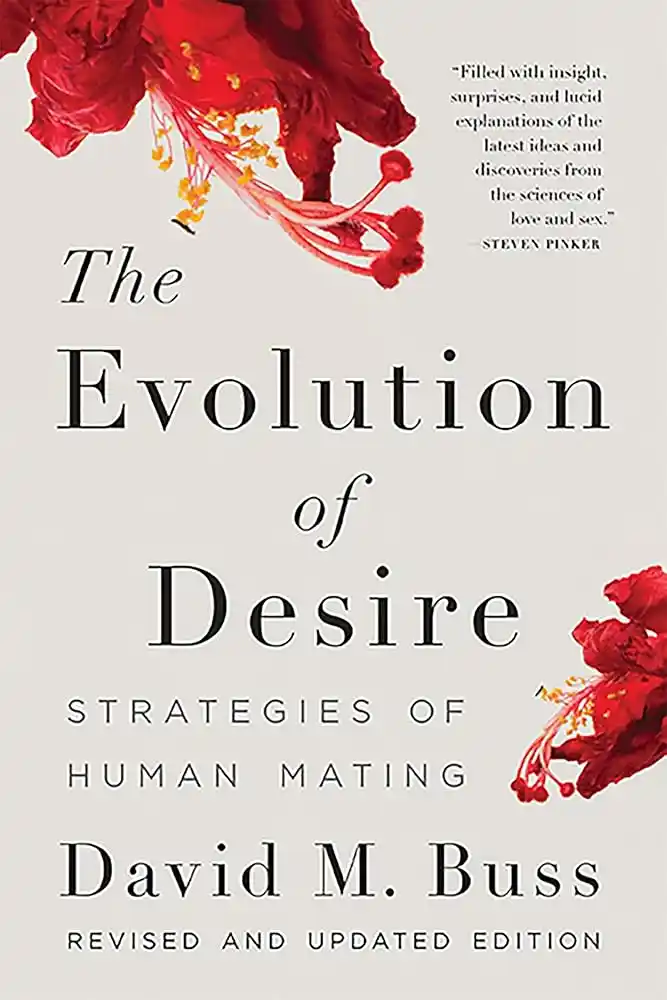
As evolutionary psychologist David M. Buss writes in The Evolution of Desire:
“Sexual strategies are adaptive solutions to mating problems.”
This field does not reduce love to biology. It explains the structure beneath it.
Understanding that structure doesn’t make romance colder. It makes it clearer.
And clarity, handled with maturity, gives us choice.

What Is Evolutionary Mating Psychology?
Evolutionary mating psychology is a branch of evolutionary psychology that studies how natural selection shaped human mate preferences, sexual strategies, jealousy, competition, and long-term bonding.
The central premise is straightforward:
Our ancestors who solved mating challenges successfully passed on their genes. Those who failed did not.
Over time, psychological mechanisms evolved to solve recurring problems such as:
- Selecting a high-quality mate
- Competing with same-sex rivals
- Detecting infidelity
- Securing long-term commitment
- Navigating short-term sexual opportunities
These are not conscious strategies. They operate through emotions.
Desire.
Attraction.
Jealousy.
Attachment.
Regret.
As Buss puts it:
“Conflict in mating is the norm and not the exception.”
That statement alone reframes modern relationship advice. Instead of assuming something is broken when conflict appears, evolutionary mating psychology assumes tension is built into the system.
The goal isn’t to eliminate tension. It’s to understand it.
Why Evolution Shapes Attraction
One of the most consistent findings in evolutionary mating psychology is that mate preferences are not random.
Across cultures, women tend to prioritize:
- Resource potential
- Ambition and industriousness
- Status and competence
- Emotional stability
Men, across cultures, tend to prioritize:
- Youth
- Physical attractiveness
- Signs of fertility
These patterns appear repeatedly in cross-cultural research.
Why?
Because men and women historically faced different reproductive challenges.
Women bore greater biological investment — pregnancy, childbirth, lactation. A poor mate choice could carry enormous cost.
Men faced paternity uncertainty. A man who invested in a child that was not genetically his lost reproductive opportunity.
Different problems.
Different adaptive pressures.
Different evolved preferences.
Buss writes:
“Women’s greater obligatory parental investment makes them more discriminating in mate selection.”
This doesn’t mean individuals are stereotypes. It means certain patterns are statistically robust.
Maturity comes from recognizing patterns without reducing people to them.
Short-Term vs. Long-Term Mating Strategies
Evolutionary mating psychology also explains a tension most people feel but struggle to articulate: the pull between short-term and long-term mating.
Humans evolved flexible strategies.
Sometimes commitment increases reproductive success.
Sometimes short-term mating does.
Men, due to lower minimum biological investment, historically had greater potential reproductive gain from multiple partners.
Women, while more selective, also evolved short-term strategies under certain conditions — particularly when short-term mating could secure better genes.
This is often misunderstood.
Evolutionary theory does not claim that women prefer casual sex in the same way men do. It claims that both sexes have context-dependent strategies.
Buss explains that human mating psychology is conditional — sensitive to environment, status, mate value, and opportunity.
This is why people can genuinely desire marriage and feel tempted by novelty.
It’s not hypocrisy.
It’s adaptive flexibility.
Jealousy: An Evolved Defense Mechanism
Few emotions are as intense as jealousy.
Evolutionary mating psychology sees jealousy not as insecurity alone, but as an evolved mate-guarding mechanism.
Men historically faced the risk of sexual infidelity — raising another man’s child.
Women historically faced the risk of emotional infidelity — loss of a partner’s investment and resources.
Research repeatedly shows a pattern:
- Men are more distressed by sexual infidelity.
- Women are more distressed by emotional infidelity.
This does not mean individuals never deviate. But the trend is strong.
Buss describes jealousy as:
“An emotion designed to alert us to the threat of infidelity.”
Jealousy becomes destructive when unmanaged.
But its existence is not pathology. It is evolutionary design.
The mature question isn’t “How do I eliminate jealousy?”
It’s “How do I regulate it wisely?”
Intrasexual Competition: The Hidden Driver of Behavior
Evolutionary mating psychology emphasizes that competition doesn’t only occur between men and women.
It occurs within sexes.
Men compete with other men for status, dominance, and visibility.
Women compete with other women for attractiveness, youthfulness, and desirability.
This doesn’t mean aggression always looks violent. It can be subtle.
Reputation management.
Social exclusion.
Status signaling.
Appearance enhancement.
In evolutionary terms, mate value relative to rivals matters.
Ignoring this reality does not remove it. It makes us blind to it.
Understanding it allows grounded self-improvement instead of reactive comparison.
The Myth of Pure Social Construction
Modern discussions often frame attraction as entirely socially constructed.
Evolutionary mating psychology does not deny culture. It integrates it.
Culture modifies expression.
Evolution shapes foundation.
For example, standards of beauty vary culturally — but youth and health markers are consistently attractive across societies.
Financial systems differ — but resource stability remains valued.
The framework is biological.
The expression is cultural.
Both matter.
How Evolutionary Mating Psychology Explains Modern Dating
Many frustrations in modern dating make more sense through this lens:
Why do high-status individuals receive disproportionate attention?
Why do dating apps amplify competition?
Why does abundance increase selectivity?
Why does commitment feel risky?
Technology changed the environment.
It did not change evolved psychology.
Our brains still operate on ancient mechanisms — now exposed to unprecedented choice.
Abundance increases comparison.
Comparison increases dissatisfaction.
Dissatisfaction increases strategic behavior.
Without awareness, we become reactive.
With awareness, we become intentional.
Masculinity, Femininity, and Responsibility
Evolutionary mating psychology is often misused to justify immaturity.
That is a mistake.
Understanding male tendencies toward short-term mating does not excuse betrayal.
Understanding female selectivity does not justify manipulation.
The point of insight is responsibility.
A grounded man recognizes sexual desire without being controlled by it.
A mature woman recognizes mate preferences without reducing a partner to utility.
Strength and vulnerability coexist.
Evolution explains impulses.
Character governs behavior.
Criticism of Evolutionary Mating Psychology
No serious discussion is complete without critique.
Common criticisms include:
- Overemphasis on biological determinism
- Underestimation of cultural flexibility
- Risk of reinforcing stereotypes
These critiques matter.
But dismissing evolutionary mating psychology entirely ignores a large body of cross-cultural evidence.
The mature stance is integration.
Biology sets constraints.
Culture shapes expression.
Individual consciousness adds choice.
The deeper question is not “Are we determined?”
It is “How aware are we?”
Why This Knowledge Matters
Understanding evolutionary mating psychology reduces unnecessary blame.
It explains:
- Why attraction can conflict with stability
- Why jealousy arises automatically
- Why competition feels personal
- Why commitment feels both safe and threatening
Instead of framing differences as moral failures, we see them as strategic tensions.
That perspective creates space.
And space allows integrity.
As Buss reminds us, our mating psychology is ancient.
We are not broken.
We are evolved.
The responsibility now is to act with awareness.
Frequently Asked Questions About Evolutionary Mating Psychology
What is evolutionary mating psychology?
Evolutionary mating psychology studies how natural selection shaped human attraction, mate preferences, jealousy, and relationship behavior. It explains romantic patterns as adaptive strategies developed over thousands of generations.
Are men and women naturally different in mate preferences?
Research across cultures shows consistent patterns. Women tend to prioritize resource stability and commitment, while men prioritize youth and physical attractiveness. These trends reflect historical reproductive pressures, though individual variation is significant.
Does evolutionary psychology justify bad behavior?
No. Evolutionary explanations describe tendencies, not moral permission. Awareness increases responsibility, not entitlement.
Why does jealousy feel so intense?
Jealousy evolved as a protective mechanism against infidelity and resource loss. It is an emotional alarm system designed to detect relational threats.
Can understanding evolutionary mating psychology improve relationships?
Yes. It reduces blame, clarifies expectations, and encourages conscious communication about needs, fears, and desires.
Conclusion: Awareness Over Instinct
Evolutionary mating psychology does not remove romance. It grounds it.
It shows that love, attraction, jealousy, competition, and commitment are not random chaos.
They are structured.
We cannot erase evolved tendencies.
But we can rise above unconscious reaction.
The goal is not domination of instinct.
It is integration.
When we understand the architecture of desire, we stop being ruled by it.
And that is where maturity begins.
Related posts:
 Evolutionary Jealousy: Why It Exists and How to Handle It
 The Complete Guide to Evolutionary Mating Psychology: How Our History Affects Attraction, Desire, and Human Relationships
 Short-Term vs Long-Term Mating Strategies: An Evolutionary Psychology Guide
 Mate Value in Evolutionary Psychology: What It Really Means
 Male vs Female Mate Preferences: Evolutionary Psychology Explained